Acupuncture
 84
84

Acupuncture
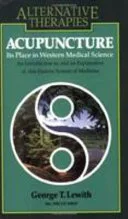
George T. Lewith's "Acupuncture" arrives not with a thunderclap, but a steady, informed voice. As a qualified doctor presenting this ancient practice, Lewith's approach is commendably measured, aiming to bridge the gap between Western skepticism and Eastern tradition. The book’s strength lies in its straightforward exposition of complex ideas like meridians and qi, making them digestible for a medically-minded audience. However, while Lewith meticulously lays out the 'what' and 'how,' the deeper philosophical underpinnings and the energetic 'why' could have been explored with greater depth, particularly for readers drawn to the esoteric dimensions of healing. The section on historical context, while factual, feels somewhat detached from the lived experience of acupuncture’s integration into Western healthcare. Despite this limitation, the work functions effectively as a foundational text, offering a rational introduction to a practice often shrouded in mystery. It is a competent, if not entirely revelatory, primer.
📝 Description
84
G. T. Lewith's 1990 volume examines acupuncture's principles and techniques for a Western audience.
Published in 1990, this book addresses acupuncture, a medical practice with ancient Chinese origins. It aims to clarify the fundamental concepts and methods of acupuncture for readers unfamiliar with the subject. The author presents it not as an obscure practice, but as a valid therapeutic approach that has gained recognition in Western medical fields.
The text is designed for those interested in understanding acupuncture's effectiveness and its philosophical underpinnings. It is particularly suited for individuals with medical or scientific backgrounds who might initially view it with doubt. The book serves as an introduction for students of complementary medicine and for healthcare professionals looking to expand their knowledge of alternative treatments. It also appeals to general readers interested in the convergence of Eastern and Western health philosophies.
The work discusses acupuncture's historical roots in China, dating back millennia. This practice involves using fine needles at specific body points to affect the flow of 'qi', or vital energy. Lewith situates acupuncture's introduction to the West in the late 20th century, a period of increasing interest in Eastern traditions that challenged conventional Western medicine.
This work engages with the tradition of vitalist medicine, a concept that posits a life force or energy animating living organisms. In acupuncture, this energy is known as 'qi', and its smooth circulation through specific pathways, or meridians, is considered crucial for health. Illness is understood as a disruption in this flow. The book details how practitioners identify and stimulate points along these meridians to restore balance and harness the body's innate healing capacities, reflecting a broader esoteric interest in subtle energies and their influence on physical well-being.
💡 Why Read This Book?
• Gain a clear understanding of acupuncture's core principles, including the concept of meridians and qi, as presented by a medical professional in the context of its Western introduction. • Learn about the diagnostic methods and therapeutic aims of acupuncture, providing a framework for how acupoints are understood and stimulated. • Appreciate the historical trajectory of acupuncture's acceptance in the West, recognizing its emergence from ancient Chinese practice into a recognized modality.
⭐ Reader Reviews
Honest opinions from readers who have explored this book.
❓ Frequently Asked Questions
When was George T. Lewith's "Acupuncture" first published?
George T. Lewith's "Acupuncture" was first published in 1998, marking a period of increasing Western interest and acceptance of traditional Chinese medical practices.
What is the central concept of acupuncture discussed in the book?
The book centers on the concept of qi, the vital energy believed to flow through meridians in the body, and how imbalances in this flow are addressed through needle stimulation at specific acupoints.
Is this book suitable for beginners with no prior knowledge of acupuncture?
Yes, the book is designed as an introduction, offering a clear overview for those unfamiliar with acupuncture, including a qualified doctor's perspective.
What is the significance of meridians in acupuncture as explained by Lewith?
Lewith explains meridians as invisible pathways through which qi flows, connecting different body parts. Blockages or imbalances in these pathways are seen as causes of illness.
Does the book discuss the historical background of acupuncture in the West?
Yes, the book touches upon the historical context, noting acupuncture's ancient Chinese origins and its gradual acceptance in Western medical circles.
Who is G. T. Lewith, the author of "Acupuncture"?
G. T. Lewith, also known as George T. Lewith, is a qualified doctor who authored this introductory text on acupuncture, aiming to provide a Western medical perspective.
🔮 Key Themes & Symbolism
Qi and Meridian Theory
The work elucidates the foundational concepts of qi (vital energy) and the meridian system, central to acupuncture's efficacy. It describes qi as the animating force within the body and meridians as specific pathways through which this energy circulates. Imbalances or blockages in qi flow are presented as the root of various ailments, with acupuncture serving as a method to restore harmonious circulation. This understanding forms the bedrock of the therapeutic approach detailed in the book.
Acupuncture as a Therapeutic Modality
This theme focuses on the practical application of acupuncture as a medical intervention. The book outlines the techniques of needle insertion at precise acupoints, explaining how this stimulation influences the body's energetic pathways. It positions acupuncture as a viable complement or alternative to conventional Western medicine, particularly for conditions where traditional treatments may be insufficient or carry significant side effects. The emphasis is on restoring balance and promoting the body's innate healing capacity.
Bridging East and West
A significant aspect explored is the integration of ancient Chinese medical knowledge with contemporary Western scientific and medical understanding. The book addresses the initial skepticism acupuncture faced in the West and charts its path toward greater acceptance. It highlights how a qualified medical doctor, George T. Lewith, presents the subject, thereby lending it credibility within Western healthcare frameworks and demonstrating a potential for dialogue between diverse medical paradigms.
The Body's Energetic Landscape
The book looks at the concept of the body not merely as a physical structure but as an intricate energetic system. It maps this landscape through the network of meridians and acupoints, suggesting that physical health is intrinsically linked to the free and balanced flow of energy. Understanding this energetic dimension is presented as key to comprehending acupuncture's holistic approach to wellness, extending beyond symptom management to address root causes.
💬 Memorable Quotes
Direct passages from the work, attributed to the author.
“Acupuncture, once regarded with scepticism in the West, has gained acceptance in recent years.”
— This observation frames the book's purpose: to document and explain a practice that has transitioned from being viewed with doubt to being recognized within mainstream Western medicine.
“In this book, George Lewith (a qualified doctor) presents an introduction to the subject of acupuncture.”
— This highlights the author's credentials and the book's primary function as an accessible entry point, emphasizing a medically informed perspective.
“Specific acupoints are identified for their therapeutic effects.”
— This interpretation emphasizes the precise and methodical nature of acupuncture practice, where targeted stimulation of particular points is key to achieving healing outcomes.
“The book aims to explain acupuncture for a Western audience.”
— This captures the author's intent to make an ancient, often misunderstood, practice understandable and accessible to readers accustomed to different medical paradigms.
💡 Key Ideas
Editorial paraphrase of the work's core concepts — not direct quotes.
The work explores the concept of meridians as pathways for vital energy.
This paraphrased concept points to the fundamental theoretical framework of acupuncture, explaining the network through which 'qi' is believed to flow and influence health.
🌙 Esoteric Significance
Tradition
While not explicitly aligning with a single esoteric lineage like Hermeticism or Kabbalah, "Acupuncture" engages with concepts that resonate with vitalistic traditions. The notion of 'qi' as a fundamental life force and 'meridians' as energetic pathways finds parallels in various ancient philosophies that posit invisible energetic fields governing existence. The book approaches these concepts from a medical perspective, seeking to rationalize them within a framework understandable to Western science, thus acting as a bridge between empirical medicine and the more subtle energetic models found in esoteric thought.
Symbolism
The primary symbolic elements are the meridians and acupoints themselves. Meridians, often visualized as intricate, invisible networks, symbolize the interconnectedness of the body and the flow of life energy. Acupoints, specific nodes along these meridians, represent focal points where this energy can be accessed, regulated, and harmonized. The act of needle insertion can be seen as a symbolic intervention, a precise manipulation of the body's energetic landscape to restore balance and facilitate healing.
Modern Relevance
In contemporary practice, Lewith's work remains relevant for its clear exposition of fundamental principles. Modern integrative medicine clinics and practitioners of acupuncture, osteopathy, and even some forms of energy psychology draw upon the foundational understanding of energetic pathways and point specificity that Lewith helped to popularize. His approach continues to inform discussions about the placebo effect, neuro-acupuncture, and the psychosomatic aspects of health, demonstrating the enduring influence of well-articulated introductions to complex healing systems.
👥 Who Should Read This Book
• Beginning students of complementary and alternative medicine seeking a medically-informed introduction to acupuncture's principles and practice. • Healthcare professionals interested in understanding the theoretical basis and therapeutic applications of acupuncture to potentially integrate it into their practice. • Individuals curious about holistic health approaches and the energetic model of the body, looking for a rational explanation of ancient healing techniques.
📜 Historical Context
Published in 1998, George T. Lewith's "Acupuncture" arrived at a crucial juncture in the West's engagement with traditional East Asian medicine. The late 20th century saw a burgeoning interest in alternative and complementary therapies, partly fueled by dissatisfaction with the limitations of conventional Western medicine and a growing appreciation for holistic health. This period was marked by significant academic inquiry into practices like acupuncture, moving them from the fringes toward greater medical and scientific consideration. Lewith, a qualified doctor, was part of a cohort of practitioners and researchers seeking to validate and integrate these ancient techniques. The work implicitly engages with the ongoing debate between biomedical reductionism and more vitalistic or energetic models of health. While figures like the World Health Organization (WHO) began standardizing acupuncture guidelines around this time, the book serves as a evidence of the individual efforts to educate and legitimize the practice within established medical discourse, often in contrast to purely philosophical or spiritual interpretations.
📔 Journal Prompts
The concept of qi flow and its potential disruptions.
Identifying specific acupoints and their purported functions.
The historical journey of acupuncture from ancient China to Western acceptance.
Comparing the meridian system to other energetic models in esoteric traditions.
The role of the qualified doctor in presenting alternative therapies like acupuncture.
🗂️ Glossary
Qi (or Chi)
The fundamental concept of vital life force or energy believed to circulate throughout the body in traditional Chinese medicine. Its harmonious flow is essential for health.
Meridians
A network of invisible pathways or channels through which qi is believed to flow throughout the body, connecting organs and tissues.
Acupoints
Specific locations on the body, typically along the meridians, where needles are inserted or pressure is applied to influence the flow of qi.
Skepticism
A questioning or doubting attitude, particularly relevant to the Western reception of acupuncture prior to its wider acceptance.
Therapeutic Modality
A method or approach used in medical treatment to alleviate disease or injury.
Holistic Health
An approach to health that considers the whole person—mind, body, and spirit—rather than focusing solely on symptoms or specific ailments.
Complementary Medicine
Non-Western health approaches used alongside conventional medical treatments.