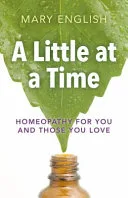
A Little at a Time
 82
82

A Little at a Time
Mary English’s A Little at a Time sidesteps the usual grand pronouncements found in esoteric health literature, opting instead for a grounded, practical approach to homeopathic self-care. Its strength lies in its clarity and focus on everyday conditions, demystifying a practice that can often seem arcane. The book’s accessible presentation of remedies for common complaints, such as headaches or minor digestive upset, is commendable. However, the limitation is perhaps its very scope; while excellent for beginners and common issues, it doesn't delve into the more complex chronic conditions that often prompt deeper homeopathic inquiry. A particularly useful section details the preparation and administration of remedies, stressing the importance of observation and patience, a concept central to Hahnemann's original teachings. This work serves as a reliable entry point for home practitioners.
📝 Description
82
Mary English published 'A Little at a Time' in 2015, a practical guide to gentle homeopathy.
This book offers straightforward instructions for using homeopathy to address common ailments at home. Mary English focuses on self-treatment, making the practice accessible to individuals without prior extensive training. It details a selection of remedies suitable for everyday conditions, advocating for a subtle yet effective path to well-being. The aim is to empower readers to manage minor health concerns using natural methods. The text provides clear guidance for those new to homeopathy or looking to supplement their existing home care routines. Readers interested in self-care and complementary medicine will find actionable advice within its pages.
The central idea is 'home-treatment,' enabling individuals to handle common health issues with homeopathy, reducing the need for constant professional oversight. This involves learning to select remedies that match symptoms and understanding the principle of minimal dosage. The book promotes a slow, incremental approach, echoing the gentle nature of the remedies discussed and the user's own progress toward balance.
Homeopathy, founded by Samuel Hahnemann in the late 18th century, operates on the principle of 'like cures like' and the use of potentized substances. Its practice gained prominence in the 19th century, and despite periods of debate, its core tenets persisted. English's 2015 work appears as interest in alternative and complementary therapies has grown, reflecting a societal shift toward more personalized and less invasive healthcare options. This book fits within that resurgence, focusing on accessible, gentle methods for personal health management.
💡 Why Read This Book?
• Learn to identify and select gentle homeopathic remedies for common ailments, such as those detailed in the 'everyday conditions' section, empowering you to manage minor health concerns at home. • Understand the foundational principles of 'home-treatment' as championed by Mary English, offering a practical framework for self-care that moves beyond conventional approaches. • Gain insight into the subtle yet effective nature of homeopathic intervention, appreciating the 'little at a time' philosophy for gradual restoration of balance, a concept central to its practice since Hahnemann's work.
⭐ Reader Reviews
Honest opinions from readers who have explored this book.
❓ Frequently Asked Questions
What does 'gentle homeopathy' mean in the context of A Little at a Time?
Gentle homeopathy, as presented in Mary English's work, refers to the use of highly diluted and potentized remedies that are intended to stimulate the body's self-healing mechanisms with minimal side effects, focusing on everyday conditions.
Can I use this book for serious medical conditions?
A Little at a Time is specifically designed for 'everyday conditions' and home-treatment. For serious or chronic illnesses, consulting a qualified homeopathic practitioner is recommended, as the book emphasizes gentle, accessible remedies.
When was A Little at a Time first published?
The book A Little at a Time by Mary English was first published in 2015, reflecting a contemporary approach to homeopathic self-care.
What is the core principle behind the remedies discussed?
The core principle is based on Samuel Hahnemann's 'law of similars' (like cures like), where a substance that causes symptoms in a healthy person can be used in a diluted form to treat similar symptoms in a sick person.
Is prior knowledge of homeopathy required to read this book?
No, the book is structured for home-treatment and aims to be accessible to those new to homeopathy. It provides clear guidance for self-administration of remedies for common issues.
What kind of 'everyday conditions' are covered?
The book typically covers common ailments such as minor injuries, digestive disturbances, headaches, sleep issues, and symptoms related to stress or minor infections, offering specific remedies for each.
🔮 Key Themes & Symbolism
Homeopathic Self-Treatment
The central theme revolves around empowering individuals to manage common health issues from home using homeopathic principles. This approach, pioneered by Samuel Hahnemann, emphasizes self-reliance and understanding one's own body. The book provides accessible knowledge, transforming the esoteric practice of homeopathy into a practical tool for daily well-being, focusing on gentle intervention for non-critical ailments.
Gentle Intervention
A core tenet is the 'little at a time' philosophy, advocating for a gradual and subtle approach to healing. This contrasts with more aggressive medical interventions, highlighting the gentle nature of highly diluted homeopathic remedies. The focus is on stimulating the body's innate healing capacity without causing undue stress or side effects, making it suitable for all ages.
Everyday Ailments
The work specifically targets common, non-life-threatening conditions that frequently affect individuals. By detailing remedies for issues like headaches, digestive discomfort, or minor injuries, the book makes the practice of homeopathy relevant to the tangible, day-to-day health concerns of its readers, offering practical solutions for immediate relief.
Accessible Esotericism
Mary English bridges the gap between complex esoteric healing systems and the average person. She translates the principles of homeopathy, often perceived as mystical, into a straightforward guide. This demystification allows readers to engage with a form of alternative medicine that, while rooted in specific historical and philosophical traditions, offers practical application.
💬 Memorable Quotes
Direct passages from the work, attributed to the author.
“Home-treatment with gentle homeopathy for everyday conditions.”
— This is the foundational statement of the book's purpose, encapsulating its focus on accessible, self-administered homeopathic care for common, non-critical health issues.
“The principle of minimum dose is key.”
— This highlights a core homeopathic tenet: using the smallest effective quantity of a remedy to stimulate healing, reflecting the 'gentle' aspect of the approach advocated.
“Observe symptoms carefully for accurate remedy selection.”
— Emphasizes the importance of detailed symptom analysis in homeopathy, a crucial step for matching the remedy to the individual's specific presentation, as taught by Hahnemann.
“Understanding the body's response is essential.”
— This interpretation points to the holistic nature of homeopathy, where the focus is not just on the illness but on the individual's unique reaction and overall state of being.
💡 Key Ideas
Editorial paraphrase of the work's core concepts — not direct quotes.
A gradual approach ensures gentle restoration.
This paraphrased concept speaks to the 'little at a time' methodology, suggesting that healing is often a process, not an instant fix, and that patience is vital.
🌙 Esoteric Significance
Tradition
Homeopathy, while often presented as a medical system, possesses esoteric underpinnings rooted in vitalism and a belief in subtle energetic forces governing health. Its development by Hahnemann drew from Alchemical principles concerning potentization and the essence of substances. It fits within the broader Western Esoteric tradition that seeks understanding of life force (vis vitalis) and employs methods beyond purely materialist explanations, aligning with concepts found in traditions like Hermeticism and Theosophy.
Symbolism
The core symbolism lies in the 'law of similars' itself – the mirroring of disease symptoms in a healthy individual by a substance. This concept of 'as above, so below' echoes Hermetic principles, suggesting a correspondence between the microcosm (the individual) and the macrocosm (the substance's effect). The potentization process, involving serial dilution and succussion (vigorous shaking), symbolizes the refinement and energetic imprinting of a substance's essence, moving from material to energetic form.
Modern Relevance
Contemporary relevance of homeopathic principles can be seen in various holistic health movements and energy medicine practices. Thinkers and practitioners in fields like mind-body medicine, subtle energy therapies (e.g., Reiki, therapeutic touch), and even some forms of naturopathy draw parallels with homeopathy's focus on vital force and individualized treatment. The emphasis on minimal intervention and stimulating self-healing speaks to current trends seeking less invasive healthcare solutions.
👥 Who Should Read This Book
• Individuals new to natural health and seeking an accessible entry into alternative therapies will find practical guidance for managing common ailments without complex jargon. • Practitioners of complementary medicine looking to expand their home toolkit with gentle, effective remedies for everyday family health concerns. • Those interested in the historical development of healing modalities and seeking to understand the practical application of Hahnemannian principles in a modern context.
📜 Historical Context
Homeopathy emerged in the late 18th century through the work of German physician Samuel Hahnemann, proposing the 'law of similars' and potentization. By the 19th century, it had gained significant popularity in Europe and America, with dedicated homeopathic hospitals and colleges. However, it also faced criticism from the established medical community, particularly after the rise of allopathic medicine and scientific advancements that questioned its underlying principles. Competing schools of thought included vitalism and early germ theory. Reception varied wildly; while supported by many, it was also subject to ridicule and skepticism. Contemporary authors like Arthur Conan Doyle championed homeopathy, while figures in conventional medicine often dismissed it. Mary English’s 2015 publication sits within a resurgence of interest in complementary and alternative medicine (CAM), a trend influenced by growing public desire for natural health solutions and a critical view of conventional medicine's side effects.
📔 Journal Prompts
The 'home-treatment' approach and its implications for personal health autonomy.
Reflecting on the 'little at a time' philosophy for managing daily stresses.
Identifying common ailments in your household suitable for gentle homeopathic intervention.
The concept of 'like cures like' as applied to everyday symptoms.
How does the principle of minimum dose inform your understanding of healing?
🗂️ Glossary
Homeopathy
A system of alternative medicine based on the principle that a substance which causes symptoms in a healthy person can cure similar symptoms in a sick person when used in highly diluted doses.
Potentization
The process of diluting a substance and vigorously shaking it (succussion) repeatedly to increase its therapeutic efficacy, according to homeopathic theory.
Law of Similars
The fundamental principle of homeopathy, often stated as 'like cures like' (similia similibus curentur), meaning a substance that produces certain symptoms in a healthy person can treat those same symptoms when they manifest as an illness.
Minimum Dose
The smallest amount of a homeopathic remedy that will stimulate the body's healing response effectively, reflecting the principle of minimal intervention.
Home-treatment
The practice of using homeopathic remedies for common ailments at home, without direct supervision from a professional practitioner for minor issues.
Vis Vitalis
Latin for 'life force'; a concept central to vitalist philosophies, including early homeopathy, referring to an animating energy that distinguishes living organisms from non-living matter.
Succussion
The vigorous shaking or striking of a homeopathic dilution during the potentization process, believed to enhance the energetic properties of the remedy.