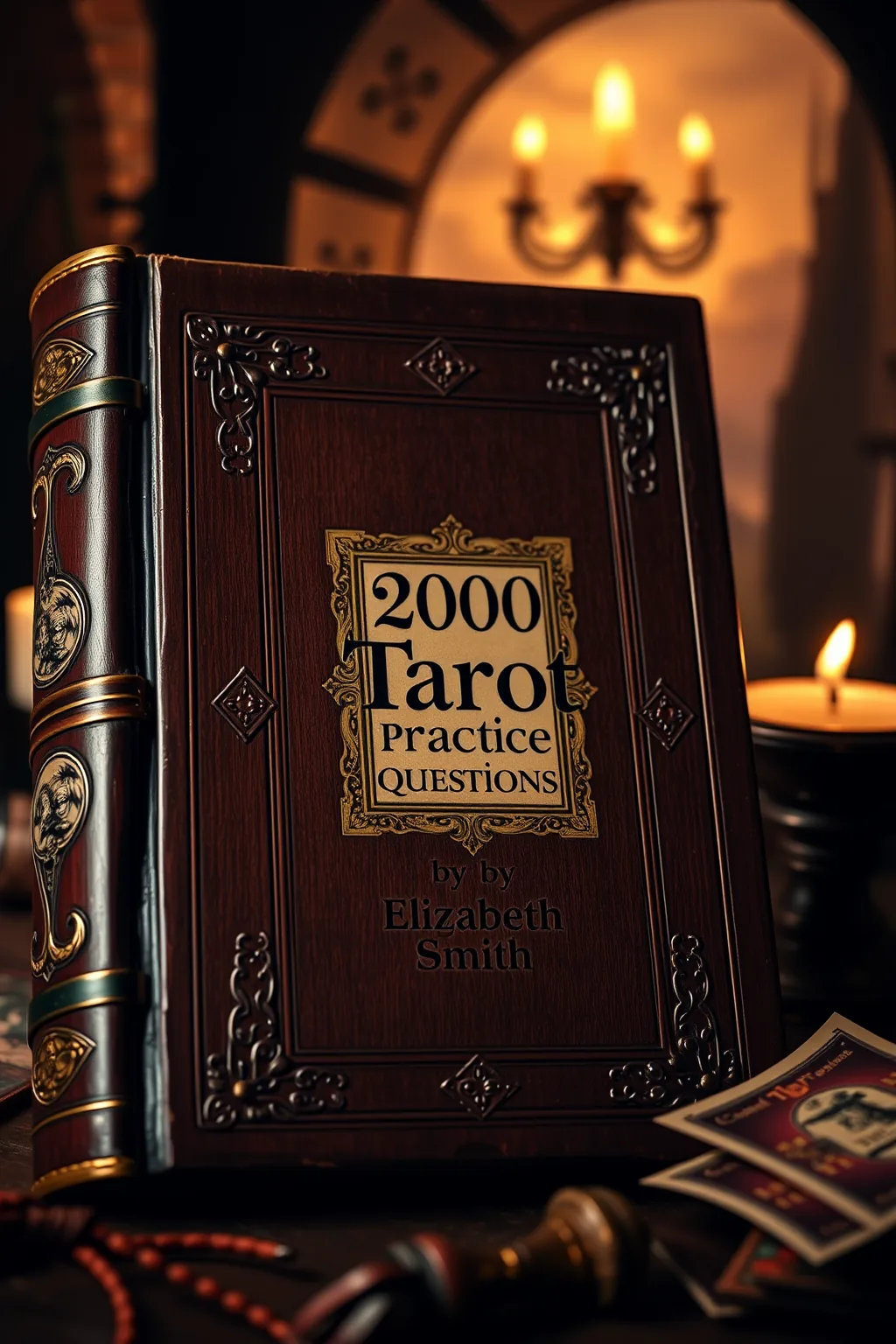
2000 Tarot Practice Questions
 71
71

2000 Tarot Practice Questions
Elizabeth Smith's "2000 Tarot Practice Questions" tackles a palpable hurdle for nascent Tarot practitioners: the sheer lack of varied practice material. The book's strength lies in its direct, no-nonsense approach. Instead of lengthy theoretical disquisitions, it offers a substantial bank of questions designed to mimic real-world inquiries. This is invaluable for anyone who finds their friends are tired of being asked about love lives or career paths for the hundredth time. Smith avoids the common pitfall of presenting overly simplistic or generic questions; the prompts often hint at the nuanced concerns that lead people to seek a reading. A limitation, however, is the inherent lack of interactivity. While it provides the questions, the reader must still generate their own spreads, interpret the cards, and crucially, self-assess. One particularly useful section implicitly covers questions around "shadow work" or confronting difficult truths, a common request in contemporary readings, pushing the reader to consider how they'd handle sensitive topics. The book is a functional tool, best used alongside other learning resources rather than as a standalone guide. It fulfills its promise of providing practice fodder, though the reader must supply the interpretive muscle and feedback loop.
📝 Description
71
Elizabeth Smith's 2000 Tarot Practice Questions, published in 2019, offers a large set of simulated client scenarios for Tarot learners.
This volume provides a practical approach to Tarot study by offering a substantial collection of practice questions. Elizabeth Smith structured the book to move beyond theory, presenting readers with a toolkit designed to mimic real client interactions. The core of the book is its extensive question bank, intended to help aspiring Tarot readers gain experience without relying on limited personal contacts or repeating the same exercises.
Smith's aim was to close the gap between understanding the Tarot cards and applying that knowledge effectively in readings. The book offers a controlled environment for individuals to refine their interpretive skills. It is particularly useful for those who prefer structured, self-directed learning and need concrete exercises to cement their grasp of the 78-card deck. Teachers and mentors can also use it as a supplementary resource for their students' practical development.
Published in 2019, "2000 Tarot Practice Questions" arrived during a period of renewed interest in divination and esoteric practices. This era saw a growing online community for Tarot enthusiasts, with many sharing their learning journeys. Smith's work addresses a practical need that arose from this accessible learning environment. It differs from older Tarot texts by focusing directly on applied practice rather than historical or purely theoretical aspects.
💡 Why Read This Book?
• Gain exposure to a wide spectrum of client-style inquiries, moving beyond common beginner questions about love and career, as exemplified by the book's extensive list of potential readings. • Develop practical interpretive skills by facing diverse scenarios presented in the 2000 questions, helping to build confidence for real client interactions. • Understand the breadth of topics people seek guidance on through Tarot, as demonstrated by the variety of questions covering personal growth, finances, and spiritual matters.
⭐ Reader Reviews
Honest opinions from readers who have explored this book.
❓ Frequently Asked Questions
What is the primary purpose of "2000 Tarot Practice Questions"?
The book's main goal is to provide aspiring Tarot readers with a vast number of practice questions. This allows users to simulate real client readings and hone their interpretive skills without needing actual clients or relying on repetitive scenarios.
Who is Elizabeth Smith, the author of "2000 Tarot Practice Questions"?
Elizabeth Smith is the author who compiled "2000 Tarot Practice Questions." The first edition was published on October 19, 2019, and she developed this resource out of her own need for extensive practice material.
What makes the questions in this book different from typical beginner Tarot exercises?
The questions are designed to reflect the complexity and variety of inquiries real clients bring to Tarot readers, moving beyond simple yes/no or single-topic queries to cover nuanced life situations.
How does this book help someone who feels intimidated by reading Tarot for others?
By offering a large, structured set of practice questions, the book allows users to build confidence in a low-stakes environment. Repeatedly answering diverse questions helps solidify understanding and interpretation techniques.
Is this book suitable for advanced Tarot readers?
Yes, advanced readers can use the book to refresh their skills, explore less common question types, or use the prompts as inspiration for journaling and deeper personal study.
When was "2000 Tarot Practice Questions" first published?
The book "2000 Tarot Practice Questions" by Elizabeth Smith was first published on October 19, 2019.
🔮 Key Themes & Symbolism
Practical Application Focus
The book centers entirely on the practical application of Tarot knowledge. It bypasses extensive theoretical discussions on card meanings, historical origins, or complex spread designs. Instead, it provides a direct pathway to skill development through sheer volume of practice questions. This focus is crucial for learners who find that theoretical study alone doesn't translate into confident reading abilities. The 2019 publication date places it within a modern context where practical, skill-based learning is highly valued, especially in online esoteric communities. It addresses the need for a bridge between knowing the cards and performing a reading.
Simulating Client Interactions
A primary objective is to simulate the experience of reading for actual clients. The questions are crafted to represent the diverse range of concerns—from career and relationships to personal growth and existential queries—that people bring to a Tarot reader. This simulation helps aspiring readers anticipate different types of inquiries and practice formulating relevant interpretations. The sheer number of questions, 2000, ensures exposure to a wide variety of scenarios, preventing the reader from becoming overly familiar with only a limited set of prompts and encouraging adaptability.
Developing Interpretive Fluency
By engaging with numerous questions, the reader aims to develop 'interpretive fluency.' This means becoming adept at drawing connections between card meanings and the specific context of a question, delivering insights that are both relevant and helpful. The book implicitly encourages the development of a flexible approach to card interpretation, recognizing that a single card can signify different things depending on the query. This practice is essential for moving beyond rote memorization of card meanings to a more intuitive and responsive reading style.
Bridging the Learning Gap
The book directly addresses the gap many learners experience between studying Tarot and feeling ready to offer readings to others. It acknowledges the common frustration of having limited practice partners or facing repetitive questions from friends and family. Smith's solution is a self-contained resource that empowers individuals to practice independently and comprehensively. The 2019 publication date reflects a contemporary need for accessible, self-guided learning tools in esoteric fields, catering to a generation that often relies on digital resources and independent study.
💬 Memorable Quotes
Direct passages from the work, attributed to the author.
“Are you trying to learn Tarot but can't find anyone to practice on...besides your cat?”
— This opening line from the original blurb immediately identifies a common, relatable pain point for Tarot students. It humorously highlights the scarcity of willing practice partners and sets a practical, problem-solving tone for the book.
“Are you curious about the types of questions a real client will ask you as a Tarot reader?”
— This question directly addresses the reader's potential curiosity about professional or serious client inquiries. It emphasizes that the book aims to prepare them for the real-world application of Tarot, moving beyond casual or experimental readings.
“Are you wanting to learn Tarot but don't feel ready to practice with a real person yet?”
— This highlights a key segment of the target audience: those who are still building confidence. It positions the book as a safe stepping stone, allowing practice and skill-building without the immediate pressure of live client interaction.
“I came up with my own solution. I took a few...”
— This snippet suggests the author's personal journey and the development of the book as a practical answer to a common learning challenge. It implies a self-taught, hands-on approach to creating useful learning tools.
💡 Key Ideas
Editorial paraphrase of the work's core concepts — not direct quotes.
Are your friends and relatives giving you 'that look' when they see you approaching them with your Tarot cards?
This quote captures the social awkwardness and potential apprehension some Tarot learners face when trying to practice. It suggests that people might be hesitant to be read for, or perhaps are tired of the same old questions, signaling a need for a more structured practice method.
🌙 Esoteric Significance
Tradition
While not explicitly tied to a single esoteric lineage like Hermeticism or Kabbalah, "2000 Tarot Practice Questions" functions within the broader contemporary Western esoteric tradition. This tradition often emphasizes personal development, divination as a tool for self-understanding, and practical application of esoteric knowledge. The book's focus on skill-building through practice aligns with this, providing a secularized yet potent method for honing intuitive and interpretive faculties, essential components in many esoteric paths.
Symbolism
The book itself is less about interpreting specific Tarot card symbolism and more about the *application* of those symbols in response to diverse human queries. However, the very act of engaging with 2000 questions implicitly requires the reader to confront the symbolic language of the Tarot. Each question serves as a lens, directing the reader to explore the symbolic meanings of cards like The Fool (new beginnings), The Lovers (choices/relationships), or The Tower (sudden change) within varied, real-world contexts, thereby deepening their understanding of the cards' complex symbolism.
Modern Relevance
In contemporary esoteric circles, "2000 Tarot Practice Questions" is relevant to the growing number of individuals seeking practical, accessible tools for spiritual and personal growth. It appeals to online learning cultures and the DIY ethos prevalent in modern occultism. Thinkers and practitioners focused on applied divination, psychological Tarot interpretation, or coaching-style readings can draw on this resource to refine their client-facing skills. It supports the trend of integrating esoteric practices into everyday life for guidance and self-discovery.
👥 Who Should Read This Book
• Aspiring Tarot readers seeking a structured method to build confidence and interpretive skills before reading for others. • Self-learners who benefit from extensive, repetitive practice exercises to solidify their understanding of card meanings in diverse contexts. • Tarot mentors or teachers looking for supplementary materials to provide their students with ample practice scenarios for developing practical reading abilities.
📜 Historical Context
Published in 2019, "2000 Tarot Practice Questions" emerged during a period of significant digital expansion for esoteric practices. Online communities, particularly on platforms like YouTube and Instagram, fostered a new wave of Tarot enthusiasts and self-taught readers. This environment, while democratizing learning, also highlighted a practical bottleneck: acquiring sufficient and varied reading experience. Elizabeth Smith's work directly addresses this gap, offering a structured, self-directed resource. It contrasts with earlier, often more academic or tradition-bound approaches to Tarot study, such as those found in the works of Arthur Edward Waite or Aleister Crowley, which focused heavily on symbolism, Kabbalah, and historical lineage. While those foundational texts provided theoretical frameworks, Smith's book caters to the immediate need for practice. The contemporary reception of such practical guides is generally positive among learners seeking tangible skill development, though they may be viewed as supplementary rather than definitive texts by more traditional scholars.
📔 Journal Prompts
The concept of 'real client questions' and how they differ from theoretical exercises.
Your personal approach to interpreting cards for relationship-focused inquiries.
Reflecting on The Tower's potential meanings when asked about career stability.
Developing interpretations for questions involving financial uncertainty.
How to handle questions about spiritual paths using the Tarot.
🗂️ Glossary
Tarot Deck
A collection of 78 cards, typically divided into the Major Arcana (22 cards) and Minor Arcana (56 cards), used for divination, self-reflection, and spiritual guidance.
Major Arcana
The 22 trump cards of the Tarot deck, representing significant life events, archetypal figures, and major spiritual lessons or challenges.
Minor Arcana
The 56 cards of the Tarot deck, divided into four suits (Wands, Cups, Swords, Pentacles), representing everyday situations, personal interactions, and practical matters.
Reading
The process of interpreting Tarot cards laid out in a specific pattern (a spread) to gain insight into a question or situation.
Interpretation
The act of understanding and explaining the meaning of Tarot cards in relation to a specific question or spread, often involving intuition and knowledge of card symbolism.
Practice Questions
Queries designed specifically for learning and developing Tarot reading skills, simulating the types of questions real clients might ask.
Client
In the context of Tarot reading, a person seeking guidance or insight from a reader through the use of Tarot cards.