Rohit
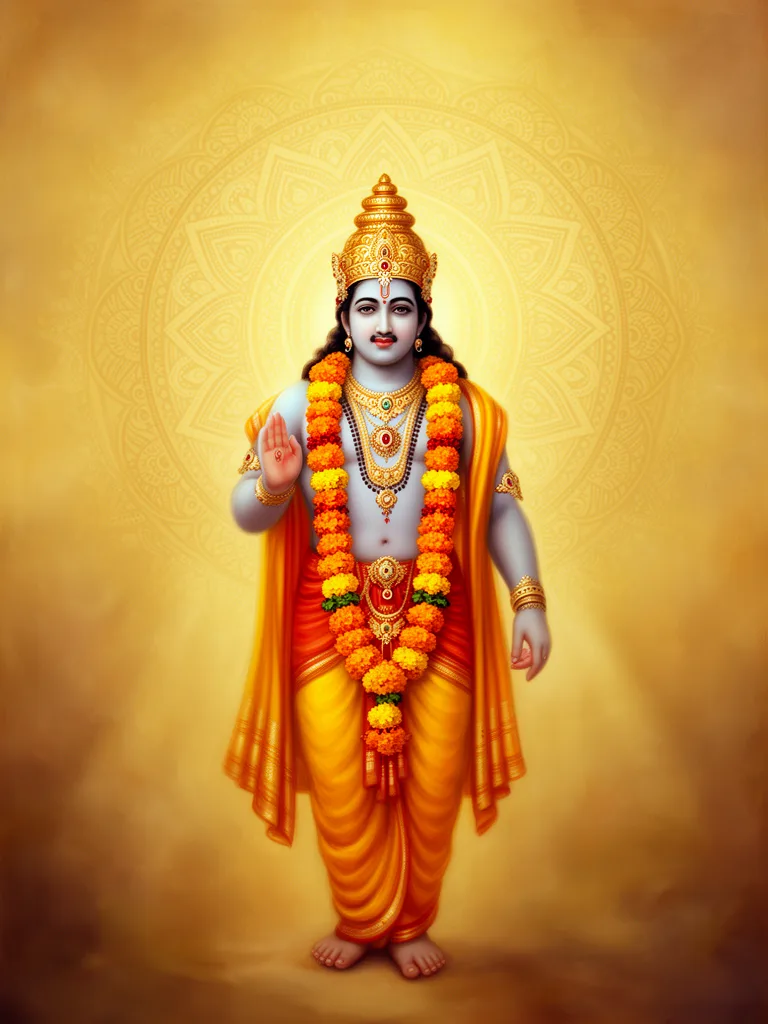
Rohit, meaning "red" or "ruddy" in Sanskrit, refers to a celestial deer or a specific constellation. In Hindu mythology, it signifies a divine form, often associated with creation and divine pursuit, symbolizing the interplay between creator and creation.
Where the word comes from
The Sanskrit word "rohit" (रोहित) derives from the Proto-Indo-European root *h₁rew-, meaning "red" or "ruddy." It first appeared in Vedic literature, denoting a specific color and later a celestial entity, possibly a constellation or a divine animal.
In depth
A female deer, a hind; the form assumed by Vach (the femah' Logos and female aspect of Brahma, who createil her out of one half of his body) to escape the amorous pursuits of her "father", who transformed himself for that pnrpnse into a buck or rid deer (the colour of Brahma being red).
How different paths see it
What it means today
The image of Rohit, the red deer, resonates with a primal archetypal resonance. Mircea Eliade, in his exploration of myth and reality, often pointed to the sacred animal as a mediator between the human and the divine, a manifestation of cosmic energies. The story of Vach assuming the form of a hind to escape Brahma, who himself transforms into a buck, is not merely a tale of divine dalliance but a profound allegory. It speaks to the intrinsic duality within the creative act, the push and pull of existence. The "redness" of Rohit itself carries symbolic weight, often associated with vitality, passion, and the dawn of creation, the primal energy that animates the cosmos. This pursuit, a cosmic chase, can be seen as a metaphor for the soul's yearning and the divine's persistent call, a dynamic interplay that underpins the very fabric of reality. It suggests that creation is not a static event but an ongoing process, a perpetual dance of attraction and evasion, of immanence and transcendence. The transformation of Brahma into a buck mirrors the divine's willingness to embody and pursue, to engage with the created world, even in its most elusive forms. This narrative offers a lens through which to understand the complex, often paradoxical, relationship between the Absolute and its manifestations, a relationship that is both intimate and eternally seeking. It reminds us that the divine is not merely an observer but an active participant, a lover and pursuer within the grand drama of existence. The pursuit itself, the movement across the cosmic plains, becomes a sacred act, a testament to the enduring power of divine desire.
Related esoteric terms
Books on this concept






No reflections yet. Be the first.
Share your interpretation, experience, or question.
