Nanna
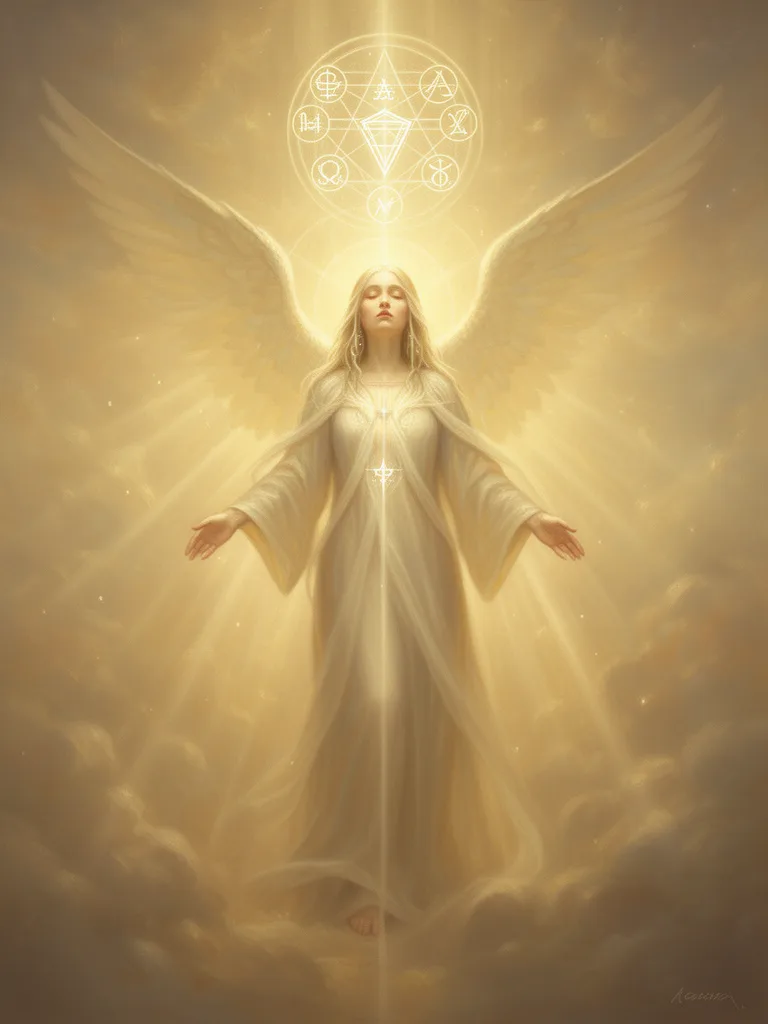
Nanna is a figure in Norse mythology, often associated with the moon, dawn, and the goddess of spring. She is the wife of Baldr, the god of light and beauty, and her story is intertwined with themes of life, death, and rebirth, representing the cyclical nature of existence.
Where the word comes from
The name Nanna has uncertain origins, possibly linked to Proto-Germanic roots related to "woman" or "mother." In Akkadian and Sumerian mythology, the moon god Sin (also Nanar) shares phonetic similarities, suggesting potential ancient cross-cultural echoes, though direct etymological lineage is debated among scholars.
In depth
The beautiful bride of Baldur. who fouj^bt with tlie blind Ilodur ("he who rules over darkness") and received bis death from the latter by magic art. Baldur is the personilication of Day. Hodur of Night, and the lovely Nanna of Dawn. Nannak (ChahL), also Nanar and Sin. A name of the moon; said to be the son of Mulil, the older Bel and the Sun, in the later mythology. In tile earliest, the ]Moon is far older than the Sun.
How different paths see it
What it means today
Blavatsky, in her characteristic synthesis of mythologies, casts Nanna as a luminous bridge between the celestial spheres of day and night, a personification of dawn whose beauty is tragically extinguished by the forces of darkness. This interpretation draws from the Norse Eddas, where Nanna is the devoted wife of Baldr, the radiant god of light. When Baldr is slain by the blind Hodr, a victim of Loki's treachery, Nanna's grief is so profound that she dies of a broken heart and joins Baldr in Hel, the underworld. Her story, therefore, becomes a potent allegory for the perennial human experience of loss and the yearning for reunion, a theme explored by mystics across traditions. Mircea Eliade, in his study of archaic religions, highlights how death and rebirth myths often center on celestial bodies, with the moon's phases mirroring the cycle of waxing and waning, death and resurrection. Nanna, as a dawn figure linked to the moon, embodies this cosmic dance. Her death and subsequent journey to the underworld, a place of shadow and silence, can be seen as a descent into the unconscious, a necessary prelude to spiritual renewal. Carl Jung would likely interpret Nanna as an embodiment of the anima, the feminine principle within the psyche, whose integration is crucial for wholeness. Her unwavering devotion and profound sorrow represent the deep emotional currents that, when faced and understood, can lead to a more integrated self. The ancient Akkadian and Sumerian moon god Sin, also known as Nanar, shares a phonetic resonance that Blavatsky notes, hinting at a possible ancient archetype of the lunar deity that transcends specific cultural narratives. This shared symbolism underscores the universal human fascination with the moon, its mysterious luminescence, and its association with cycles of life, death, and renewal. Nanna's narrative, therefore, is not merely a tale of mythological figures but a profound exploration of the soul's journey through darkness towards an enduring light.
Related esoteric terms
Books on this concept








No reflections yet. Be the first.
Share your interpretation, experience, or question.
