Lanka
Lanka is the ancient Sanskrit name for the island now known as Sri Lanka. In Hindu epics, it is depicted as a magnificent city of demons, a mythical realm of immense power and grandeur, founded by divine architects and later a contested territory.
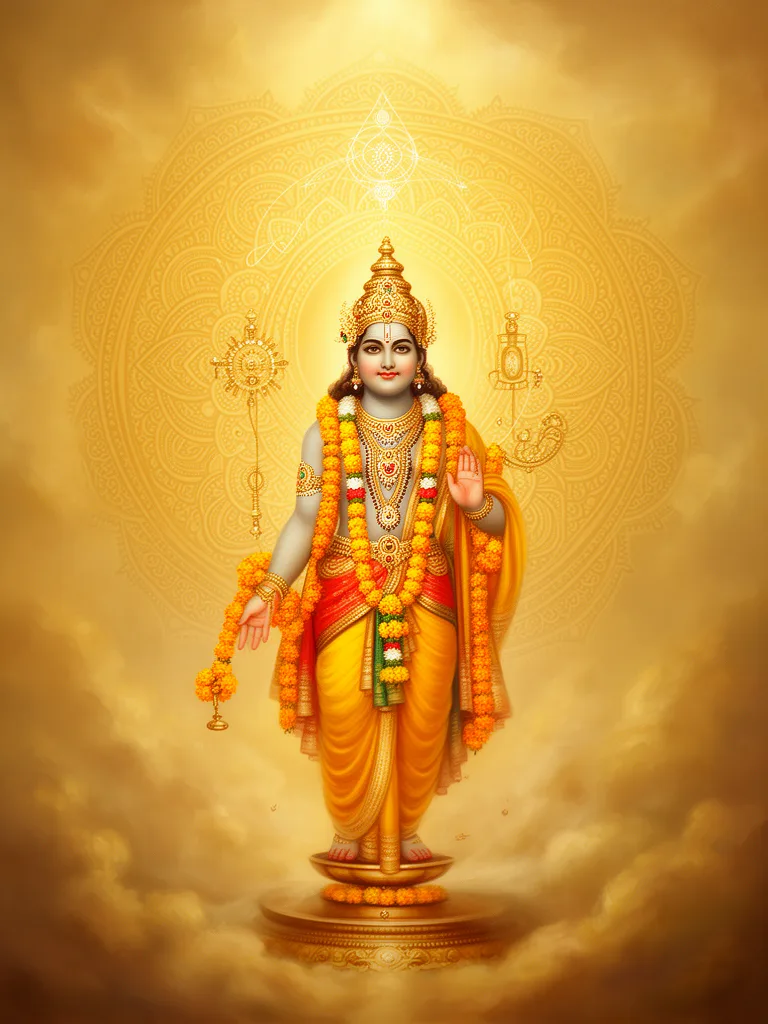
Where the word comes from
The Sanskrit word "Lanka" (लङ्का) is of uncertain etymology, possibly deriving from "langha" meaning "to leap" or "to cross over." It first appears prominently in ancient Indian literature, notably the Ramayana, as the name of a mythical island kingdom.
In depth
The aneieiit name of the island now called Ceylon. It is also the name of a mountain in the South East of Ceylon, where, as tradition says, was a town peopled with demons named Lankapuri. It is described in the epic of the Ramayana as of gigantic extent and magnificance, "with seven broad moats and .seven stupendous walls of stone and metal". Its foundation is attributed to Visva-Karma, who built it for Kuvera, the king of the demons, from whom it was taken by Ravana, the ravisher of Sita. The Bhdgavat Purdna shows Lanka or Ceylon as primarily the summit of ]\Iount Meru, which was broken off by Vayu, god of the wind, and hurled into the ocean. It has since become the seat of tiie Southern Buddhist Church, tiie Siamese Sect I headed at present by the High Priest Sumangala), the representation of the purest exoteric Buddhism on this .side of the Himalyas.
How different paths see it
What it means today
The island of Lanka, as rendered in the grand narratives of the Ramayana, transcends mere geography to become a potent symbol in the human psyche. It is not simply a place, but a state of being, a dazzling citadel of power and illusion guarded by formidable forces. Blavatsky’s inclusion of its legendary construction by Visva-Karma for Kuvera, and its subsequent conquest by Ravana, paints a picture of cosmic ambition and the inevitable clash between divine order and demonic might. This fortified city, with its "seven broad moats and seven stupendous walls of stone and metal," speaks to the formidable defenses we erect around our desires and ego, creating internal fortresses that are difficult to breach.
The narrative of Ravana, the Rakshasa king who abducts Sita, the consort of Rama, is a profound allegory. Ravana represents the egoistic, materialistic self, ensnared by its own desires and pride, which then seeks to possess or corrupt the divine feminine principle, the pure essence of consciousness (Sita). Rama’s epic quest to reclaim Sita from Lanka is the soul’s journey to overcome these internal obstacles, to dismantle the illusory fortifications of the self, and to restore harmony and truth. The very foundation of Lanka, as described in the Puranas, being a fragment of Mount Meru hurled by the wind god Vayu, suggests that even the most seemingly solid and eternal structures of worldly power are ultimately impermanent, subject to cosmic forces and prone to disruption.
The transformation of Lanka from a demon king's stronghold to a center of Buddhist learning, as Blavatsky observes, offers a compelling arc of redemption. It suggests that even the most deeply entrenched realms of illusion and ego can, through spiritual endeavor, become places of wisdom and enlightenment. This echoes the alchemical principle of transmutation, where the base metal of the self can be refined into the gold of spiritual realization. The island thus becomes a microcosm of the spiritual journey, illustrating the battle against inner demons and the possibility of achieving liberation, even from the most formidable citadels of the mind. The enduring power of Lanka lies in its multifaceted representation of both the pitfalls of worldly attachment and the potential for profound spiritual transformation.
Related esoteric terms
Books on this concept








No reflections yet. Be the first.
Share your interpretation, experience, or question.
