Raka
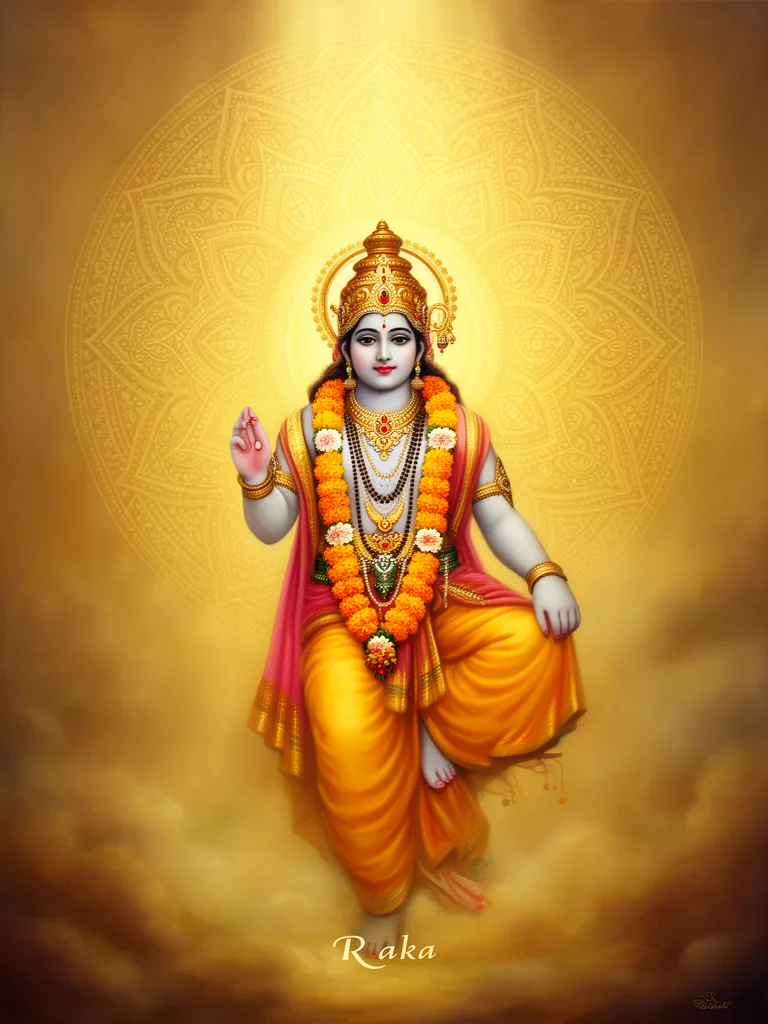
Raka signifies the full moon day in Hindu traditions, a time considered auspicious for spiritual practices, meditation, and rituals. It marks a peak of lunar influence, believed to enhance psychic receptivity and facilitate deeper connection with the divine or cosmic energies.
Where the word comes from
Raka (or Purnima) derives from the Sanskrit root pūrṇa, meaning "full" or "complete." It specifically refers to the day of the full moon, the fifteenth lunar day of the waxing or waning fortnight. The term has been in use since ancient Vedic times, appearing in astronomical and calendrical texts.
In depth
The day of the full moon: a day for occult practices.
How different paths see it
What it means today
The concept of Raka, the full moon day, offers a profound insight into how ancient cultures perceived the interplay between the celestial and the terrestrial, the cosmic and the personal. Mircea Eliade, in his seminal work "The Myth of the Eternal Return," explored how societies often structured their lives around cyclical time, imbuing natural phenomena with sacred significance. The full moon, in this context, becomes more than just a phase of the moon; it is a potent symbol of fullness, completion, and heightened energy.
For the Hindu tradition, Raka is a day when the veil between the material and the spiritual is thought to thin. This is why it is designated for occult practices, a term Blavatsky uses, which we might understand today as practices aimed at developing inner faculties or connecting with subtle energies. It's a time for intensified meditation, for chanting mantras, for performing pujas that honor the divine. The amplified lunar energy is believed to aid in concentration and to open the practitioner to deeper levels of consciousness. This resonates with Carl Jung's exploration of archetypal symbols and their influence on the psyche; the moon, as a universal symbol of the feminine, the unconscious, and cyclical change, carries immense psychological weight.
The practice on Raka is not passive observation but active engagement. It is a deliberate act of aligning oneself with a perceived cosmic flow. This is not dissimilar to the alchemical pursuit of solve et coagula, the dissolution and coagulation, where moments of heightened energy are seized for transformation. The day invites a conscious effort to purify the mind and body, to release what is no longer needed (like the waning moon), and to embrace the fullness of being (like the full moon). It is a reminder that the external world, in its grand cycles, can serve as a mirror and a catalyst for our internal journey. The potential for heightened psychic receptivity on this day suggests an understanding that our inner states are not isolated but are influenced by, and can influence, the subtle energies of the cosmos.
The very idea of designating a specific day for intensified spiritual practice underscores a worldview where time is not merely linear but also qualitative. Certain moments are imbued with a greater potential for spiritual work. Raka, therefore, is an invitation to pause, to look up at the luminous disc in the night sky, and to recognize in its fullness a reflection of the potential for completeness within ourselves, a potential that can be consciously nurtured and realized through dedicated practice. It is a call to make the sacred visible in the ordinary passage of days.
RELATED_TERMS: Purnima, Lunar Cycle, Puja, Mantra, Meditation, Auspicious Days, Kali Yuga, Yoga ---
Related esoteric terms
Books on this concept






No reflections yet. Be the first.
Share your interpretation, experience, or question.
