Chinese numerology
Chinese numerology assigns symbolic meaning to numbers based on their phonetic resemblance to auspicious or inauspicious words in the Chinese language. This practice influences everything from choosing lucky dates to naming businesses and even selecting phone numbers, reflecting a deep cultural belief in the power of sound and number to shape destiny.
Where the word comes from
The concept of Chinese numerology is deeply embedded in the linguistic and cultural fabric of China, with its roots stretching back to ancient philosophical systems like the I Ching. While not a single etymological origin, the practice relies on the homophonic nature of Chinese characters and their spoken sounds, a phenomenon observed and utilized for millennia.
In depth
Some numbers are believed by some to be auspicious or lucky (吉利, pinyin: jílì; Cantonese Yale: gātleih) or inauspicious or unlucky (不吉, pinyin: bùjí; Cantonese Yale: bātgāt) based on the Chinese word that the number sounds similar to. The numbers 6 and 8 are widely considered to be lucky, while 4 is considered unlucky. These traditions are not unique to Chinese culture, with other countries with a history of Han characters also having similar beliefs stemming from these concepts.
How different paths see it
What it means today
The practice of Chinese numerology, as noted by Blavatsky, hinges on the delightful and often profound accident of language: the way a number sounds like a word. This is not mere superstition; it is a sophisticated system of symbolic resonance, a testament to how human culture imbues the abstract with tangible significance. Consider the number four (四, sì), which sounds remarkably like death (死, sǐ). This phonetic echo is not an arbitrary association but a deeply felt connection, leading to an aversion to the number four in addresses, phone numbers, and even hospital room assignments. Conversely, six (六, liù) sounds like smooth or flowing (流, liú), and eight (八, bā) echoes prosperity or wealth (發, fā). These are not just sounds; they are sonic anchors for deeply held desires and fears.
This phenomenon speaks to a fundamental aspect of human cognition, a drive to perceive order and meaning in the universe. As Carl Jung explored in his work on synchronicity, meaningful coincidences suggest an underlying order that transcends cause and effect. Chinese numerology, in its own way, taps into this by creating a framework where phonetic similarity becomes a bridge between the material world of numbers and the intangible realm of fortune and misfortune. It is a form of sympathetic magic, where the utterance of a sound, or the choice of a number, is believed to attract or repel certain energies.
The cultural implications are vast. A business owner might choose a founding date or a phone number that resonates with auspicious sounds, not out of blind faith, but as a deliberate act of aligning their venture with perceived positive forces. This practice, while seemingly quaint to some, reflects a worldview where the subtle vibrations of language and number are seen as active participants in shaping human experience. It is a reminder that our understanding of reality is often mediated through the symbolic systems we create, systems that, in turn, shape the very reality we inhabit. The choice of a number becomes an act of subtle creation, a whispered invocation of fortune.
RELATED_TERMS: I Ching, Feng Shui, Yin and Yang, Tao, Karma, Synchronicity, Symbolic Language, Homophones
Related esoteric terms
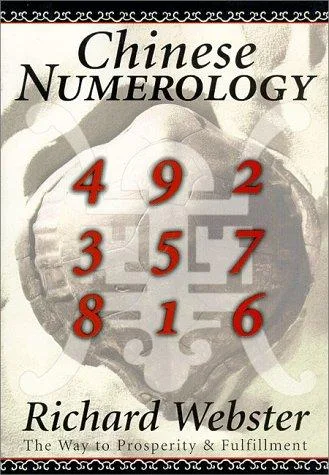
Books on this concept







No reflections yet. Be the first.
Share your interpretation, experience, or question.
