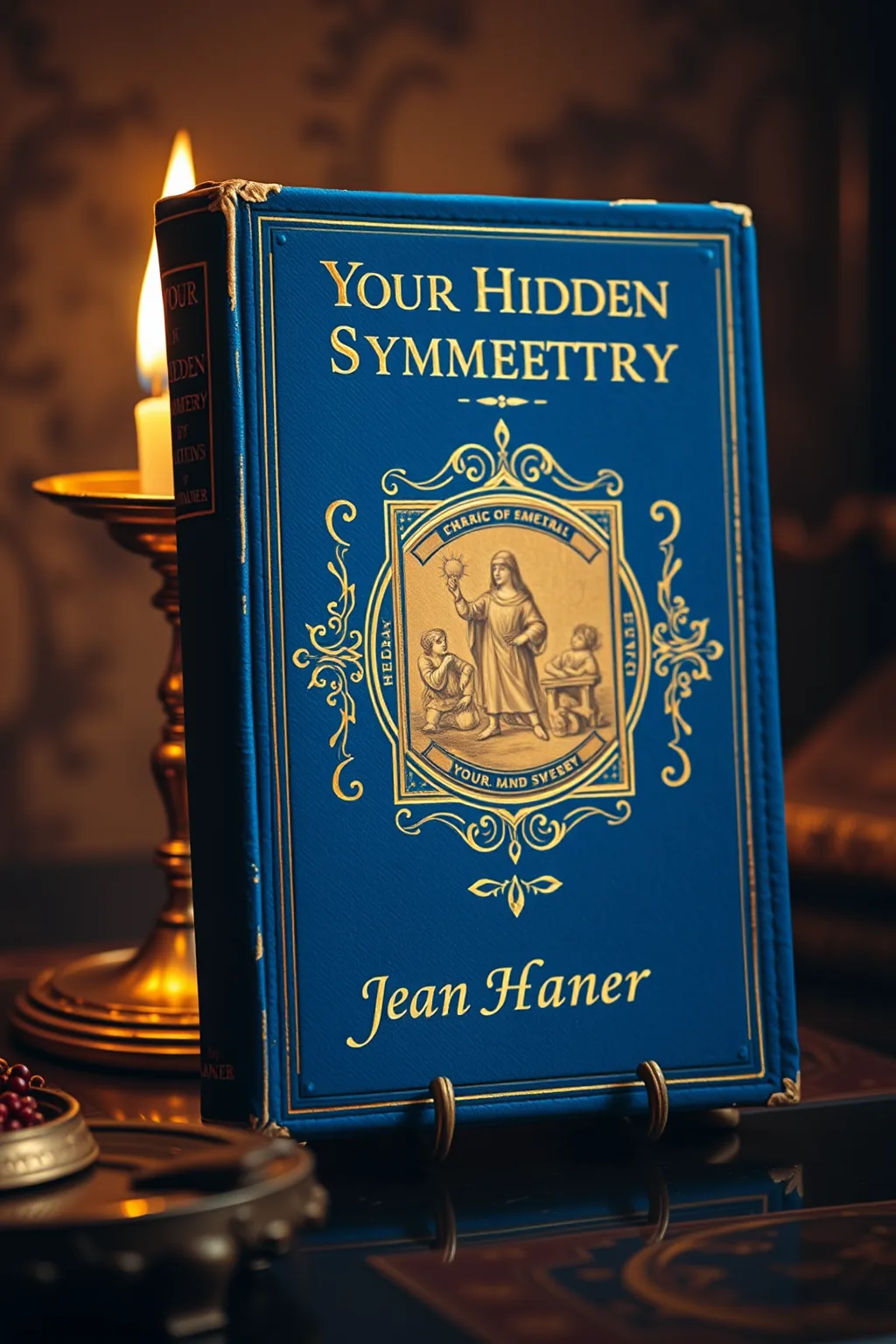
Your Hidden Symmetry
 82
82

Your Hidden Symmetry
Jean Haner’s *Your Hidden Symmetry* presents a compelling case for the application of ancient Chinese numerological principles to contemporary self-understanding. Unlike many superficial numerology guides, Haner’s approach is grounded in the Five Elements and Yin/Yang theory, providing a sophisticated framework for analyzing personal energetic patterns. The book's strength lies in its clear exposition of a complex system, making it accessible without sacrificing depth. A particular passage detailing the interplay of the Metal element with emotional expression offers a sharp, insightful observation on the internal struggles of certain personality types. However, the book occasionally leans towards oversimplification when translating these intricate energetic dynamics into definitive personality traits, leaving some nuance unexplored. Despite this, Haner offers a valuable and distinctive tool for introspection.
Verdict: A well-articulated system for self-discovery rooted in classical Chinese thought.
📝 Description
82
Jean Haner's 2013 book, Your Hidden Symmetry, decodes life's patterns using Chinese numerology.
Published in 2013, *Your Hidden Symmetry* by Jean Haner uses Chinese numerology and philosophy to offer a structured path to self-understanding. The book moves beyond simple prediction, focusing instead on the energetic patterns that influence an individual's life. Haner provides a system for self-discovery, designed to highlight innate strengths, potential difficulties, and a person's core nature. It functions less as a fortune-telling device and more as a blueprint of psychological and energetic makeup.
This work is for individuals seeking a more ordered method for self-awareness, one that goes beyond typical psychology or general New Age advice. Those interested in how ancient wisdom traditions connect with modern personal development will find it valuable. It appeals to people who appreciate analytical tools for understanding personality and life paths, especially those drawn to Eastern philosophy applied to Western ideas of self. It is a resource for the introspective seeker.
Emerging in 2013, *Your Hidden Symmetry* fits within a growing interest in cross-cultural spiritual and philosophical ideas. While Western traditions have long used systems like astrology, Haner's book draws from Chinese metaphysics, a field with ancient roots. It contributes to a current fascination with applied numerology and elemental systems. The book interprets principles that predate the common era for a contemporary audience interested in applying these ancient concepts.
💡 Why Read This Book?
• Understand your innate energetic blueprint using the Five Elements system, as detailed in Haner's unique birth date calculations, to identify core strengths and potential challenges. • Gain practical insights into navigating personal relationships by recognizing the elemental interactions between individuals, a concept explored throughout the book's analytical framework. • Discover a structured approach to self-acceptance by learning how your "hidden symmetry" influences your life path, offering a distinct perspective not found in Western psychological models.
⭐ Reader Reviews
Honest opinions from readers who have explored this book.
❓ Frequently Asked Questions
What is the core philosophy behind Jean Haner's 'Your Hidden Symmetry'?
The book is rooted in ancient Chinese metaphysics, specifically utilizing the principles of Yin/Yang and the Five Elements (Wood, Fire, Earth, Metal, Water) to map an individual's energetic blueprint based on their birth date.
How does 'Your Hidden Symmetry' differ from Western astrology?
While both systems analyze destiny, *Your Hidden Symmetry* relies on Chinese numerological calculations derived from birth dates and the Five Elements, rather than planetary positions and zodiac signs used in Western astrology.
Can this book help improve relationships?
Yes, by understanding the elemental dynamics between yourself and others, the book provides insights into potential harmonies and conflicts, aiding in more skillful interpersonal interactions.
Is 'Your Hidden Symmetry' a predictive tool?
Haner positions the book more as a map for self-understanding and navigating life's energies rather than a strict predictive tool, focusing on inherent potentials and patterns.
What are the 'Five Elements' in this context?
The Five Elements are Wood, Fire, Earth, Metal, and Water, which are fundamental energetic forces in Chinese philosophy believed to interact and influence all aspects of existence, including human personality.
When was 'Your Hidden Symmetry' first published?
The book was first published in 2013, offering a contemporary interpretation of ancient Chinese numerological systems.
🔮 Key Themes & Symbolism
The Five Elements
Central to Haner's system are the Five Elements: Wood, Fire, Earth, Metal, and Water. Each element possesses distinct energetic qualities and corresponds to specific personality traits, emotional tendencies, and life experiences. The book details how these elements manifest within an individual's 'hidden symmetry' based on their birth date, revealing their innate strengths, potential imbalances, and the energetic cycles they navigate throughout life. Understanding their interplay is key to self-awareness.
Birth Date Numerology
Haner employs a unique numerological calculation derived from a person's birth date to construct their energetic map. This system goes beyond simple birth numbers to analyze the complex interplay of elements and Yin/Yang at the moment of birth. The resulting 'symmetry' reveals core aspects of one's destiny, life force, and inherent patterns, offering a personalized framework for understanding one's unique path and predispositions.
Yin and Yang Balance
Complementing the Five Elements is the ancient principle of Yin and Yang, representing complementary opposites. Haner uses this duality to analyze the balance of energies within an individual's map. An excess or deficiency in Yin or Yang can indicate areas of potential challenge or harmony. Recognizing this balance helps in understanding internal polarities and striving for equilibrium in one's life and actions.
Energetic Architecture
The book frames personal identity not as fixed, but as an 'energetic architecture' shaped by fundamental forces. This perspective encourages readers to see themselves as dynamic systems influenced by elemental and numerological patterns. By understanding this architecture, individuals can consciously work with their inherent energies, mitigate challenges, and enhance their strengths, leading to a more integrated and purposeful existence.
💬 Memorable Quotes
Direct passages from the work, attributed to the author.
“Your birth date is a blueprint of your energetic system.”
— This highlights the core premise: that the moment of birth contains fundamental energetic information that shapes an individual's life patterns and potential.
“The Five Elements show how you are designed to interact with the world.”
— This emphasizes the practical application of the elemental system, suggesting it offers a framework for understanding one's natural inclinations and relational dynamics.
“Understanding your symmetry helps you accept yourself.”
— This points to the therapeutic benefit of the system, implying that self-knowledge gained through numerology fosters self-compassion and acceptance.
“Imbalance in the elements indicates areas needing attention.”
— This suggests the book's utility as a diagnostic tool, identifying energetic disharmonies that may manifest as personal challenges or obstacles.
“Your life force is a combination of your elemental energies.”
— This defines personal vitality and essence through the lens of the Five Elements, framing it as a dynamic interplay of these fundamental forces.
🌙 Esoteric Significance
Tradition
This work draws heavily from the tradition of Chinese metaphysics, specifically the principles of Yin/Yang and the Five Elements (Wu Xing). It adapts these ancient cosmological concepts into a personalized numerological system, departing from purely philosophical or medical applications to focus on individual destiny and psychology. While not strictly Hermetic or Kabbalistic, it shares with these traditions a belief in an underlying order and symbolic language governing the universe and human life.
Symbolism
The core symbols are the Five Elements: Wood, Fire, Earth, Metal, and Water. Each represents distinct qualities, energies, and phases. Wood symbolizes growth and expansion, Fire represents dynamism and passion, Earth signifies stability and nourishment, Metal denotes structure and refinement, and Water embodies flow and introspection. Haner uses these as the primary symbolic language to interpret birth dates and map an individual's energetic constitution and life path.
Modern Relevance
Contemporary practitioners of Chinese Five Element theory, particularly in applied contexts like personalized wellness and coaching, find Haner's accessible numerological approach highly relevant. It bridges classical theory with modern self-help, appealing to individuals seeking structured, non-Western frameworks for personal development, similar to how some modern interpreters engage with the I Ching or traditional astrology.
👥 Who Should Read This Book
• Individuals interested in Chinese metaphysics and numerology seeking a practical system for self-understanding beyond basic horoscopes. • Those exploring alternative psychological frameworks who appreciate analytical tools for mapping personality and life paths. • Seekers of esoteric knowledge looking for a structured method to uncover innate strengths and navigate personal challenges based on ancient wisdom.
📜 Historical Context
Published in 2013, *Your Hidden Symmetry* arrived during a period of increased global interest in Eastern philosophies and practical esoteric systems. While Western esoteric traditions have long explored numerology through Kabbalistic and Pythagorean lenses, Haner's work taps into the distinct framework of Chinese metaphysics, particularly the Five Elements and Yin/Yang theory, which have a history spanning over two millennia. This book emerged in a landscape where practitioners of systems like Western astrology and Tarot were increasingly open to complementary modalities. Its approach offered a structured, analytical method rooted in classical Chinese thought, providing an alternative or supplement to existing Western esoteric practices that often focused on celestial bodies or symbolic imagery. The work engages with a long-standing tradition of applying elemental correspondences to human nature, a practice found in various ancient cultures.
📔 Journal Prompts
Analyze the dominant elements in your "hidden symmetry" and how they manifest in your daily life.
Reflect on a challenge you've faced, considering how the interplay of Yin and Yang might have influenced it.
How does the "life force" described in the book relate to your personal energy levels and vitality?
Consider the "energetic architecture" of your relationships, as suggested by the Five Elements.
Identify a potential imbalance in your elemental map and brainstorm practical steps to address it.
🗂️ Glossary
Five Elements
The fundamental energetic forces in Chinese metaphysics: Wood, Fire, Earth, Metal, and Water. Each has unique qualities and influences personality, health, and destiny.
Yin and Yang
The ancient Chinese concept of complementary, interconnected opposites (e.g., dark/light, passive/active) that represent the dynamic balance of the universe and all things within it.
Hidden Symmetry
Jean Haner's term for the unique energetic blueprint or pattern of an individual, derived from their birth date using Chinese numerological principles.
Life Force
The inherent vital energy or essence of an individual, understood in this context as a combination of their specific elemental and Yin/Yang balance.
Energetic Architecture
The underlying structure and arrangement of an individual's core energies, as mapped by the Five Elements and their interactions, influencing personality and life path.
Destiny Map
The composite numerological chart derived from a birth date, revealing inherent potentials, challenges, and the overall trajectory of one's life according to Chinese metaphysics.
Elemental Balance
The state of harmony or disharmony among the Five Elements within an individual's energetic map, indicating areas of strength or potential imbalance.
🔮 Readers Also Liked
Browse all →


![Mr. Patridge's [sic] judgement and opinion of this frost. Foretelling how long it is like to continue, according to the rules of astrology. ... 1709](/img/thumb/mr-patridge-s-sic-judgement-and-opinion-of-this-frost-foretelling-how-long-it-is-like-to-continue-according-to-the-rules-of-astrology-1709-patridge-mr.webp)





More by Jean Haner
All books →

More Free Astrology & Cosmology Books
View all →