Arupa
Arupa, meaning "formless" or "bodiless" in Sanskrit, refers to a state of existence or consciousness beyond the physical and subtle material realms. It is associated with pure spirit, abstract thought, and ultimate reality, transcending all sensory perception and conceptualization.
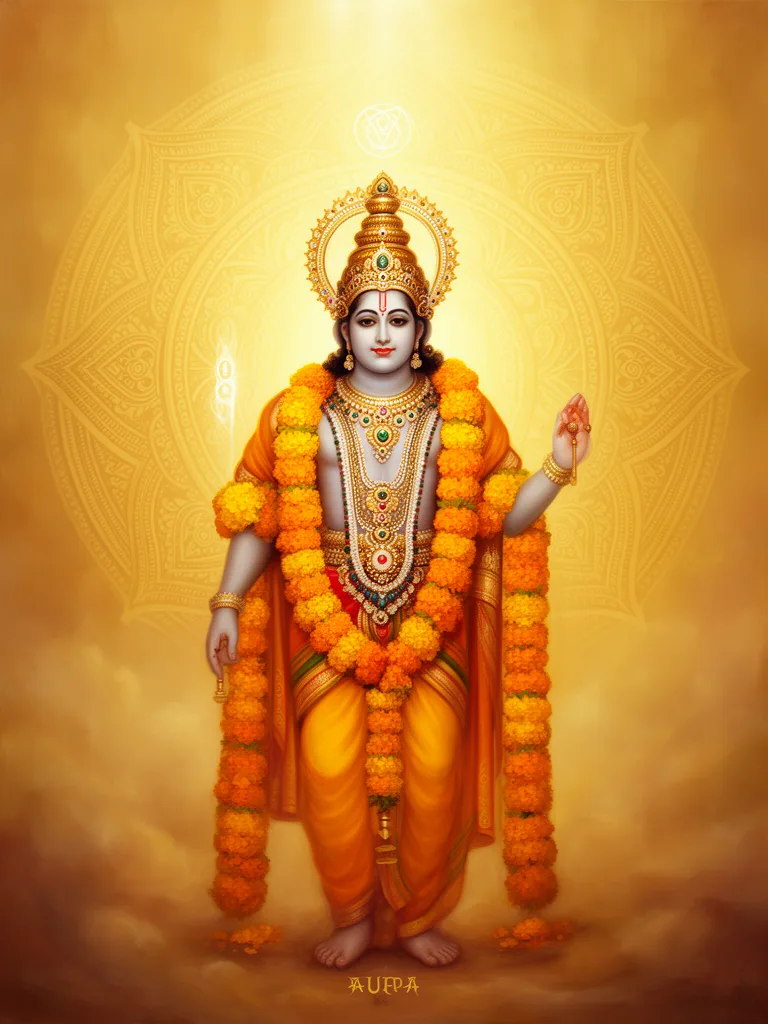
Where the word comes from
The Sanskrit term "Arupa" (अरूप) is a compound of "a-" (not, without) and "rupa" (form, shape, appearance). It signifies the absence of any material or perceptible form. The concept appears in Vedic literature and is central to philosophical discussions of ultimate reality and liberation.
In depth
"Bodiless", formless, as opposed to rvpa, "body", or form. 30 TiiEosopnirAL
How different paths see it
What it means today
The Sanskrit word "Arupa," meaning "formless," serves as a potent counterpoint to our default mode of perception, which is intrinsically tied to the tangible and the visible. We, as modern beings, are steeped in a world of objects, of defined shapes and boundaries, a world where existence is often equated with physical presence. The ancient traditions, however, offer a profound corrective, pointing towards a reality that lies beyond the grasp of the senses and the confines of conceptual thought.
In Hinduism, particularly within the Advaita Vedanta school, Arupa describes Nirguna Brahman, the Absolute Reality stripped of all attributes and qualities. It is not a thing to be seen, touched, or even conceived in its entirety, but rather the ground of all being, the silent, unmanifest source from which all forms arise and to which they return. This is not an empty void, but a fullness that transcends our limited understanding of fullness. Mircea Eliade, in his exploration of sacred time and space, often touched upon the ways in which archaic consciousness perceived the world as imbued with invisible forces and dimensions, hinting at an underlying reality that was not strictly material.
The Buddhist tradition similarly engages with the concept of Arupa, most notably in the Four Formless Realms of existence. These are not physical heavens but states of consciousness attained through deep meditative practice. Here, the meditator, having transcended the gross and subtle material realms, experiences pure awareness, unburdened by form. This echoes Carl Jung's explorations of the collective unconscious and the archetypal realm, a dimension of psychic reality that operates beyond individual consciousness and sensory input. The attainment of such states, as described by scholars like D.T. Suzuki in his writings on Zen Buddhism, involves a radical deconstruction of the ego and its sensory attachments, leading to a state of profound equanimity and insight.
The pursuit of Arupa is not merely an intellectual exercise; it is a call to a transformative practice. It invites us to look beyond the superficial, to question the very nature of what we consider real. It suggests that liberation, whether understood as moksha or nirvana, lies in the realization of this formless essence, a realization that dissolves the illusion of separate selfhood and its attachment to ephemeral forms. It is a journey inward, towards the uncarved block, the still point, the silent awareness that underpins all phenomena. To seek Arupa is to seek the source, the boundless and the unconditioned.
RELATED_TERMS: Brahman, Nirvana, Shunyata, Moksha, Samadhi, Tao, Void, Pure Consciousness
Related esoteric terms
Books on this concept




No reflections yet. Be the first.
Share your interpretation, experience, or question.
