ChaCha Israel
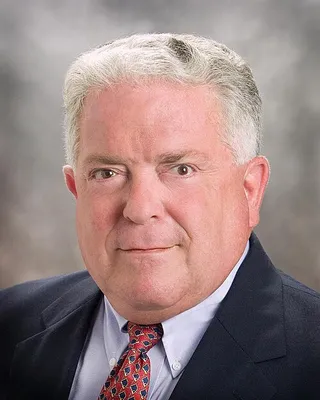
Charles Freeman Jr. is a retired American diplomat and writer known for his extensive career in foreign service and his writings on statecraft and international relations.
Charles W. Freeman Jr., born March 2, 1943, is a retired American diplomat and writer with a distinguished career spanning thirty years in the U.S. Foreign Service. He held various significant positions, including serving as the main interpreter for Richard Nixon during his 1972 visit to China and as the U.S. Ambassador to Saudi Arabia from 1989 to 1992, where he was involved in matters related to the Gulf War. Freeman also held positions in the State and Defense Departments, and later served as Assistant Secretary of Defense for International Security Affairs. His career has been described as remarkably varied, with a focus on international affairs and diplomacy.
Beyond his government service, Freeman has been active in policy organizations and has authored several books. He is a past president of the Middle East Policy Council and co-chair of the U.S. China Policy Foundation. His writings include books on statecraft, diplomacy, and U.S. foreign policy concerning the Middle East and China. Freeman is fluent in multiple languages, including Chinese, French, Spanish, and Arabic. In 2009, he was nominated to chair the National Intelligence Council but withdrew his name from consideration following public criticism.
Early Life and Education
Born in Washington, D.C., on March 2, 1943, Charles W. Freeman Jr. spent part of his childhood in Nassau, The Bahamas, due to his father's business. He attended St. Andrew's School in Nassau before returning to the United States at age 13 to complete his secondary education at Milton Academy. Freeman matriculated at Yale University in 1960, graduating magna cum laude in 1963. He briefly studied at the National Autonomous University of Mexico during his time at Yale. After Yale, he attended Harvard Law School, leaving during his second year to join the U.S. Foreign Service in 1965. He resumed his legal studies later, completing his JD degree at Harvard in 1975, with his legal research forming the basis for the Taiwan Relations Act.
Diplomatic and Government Career
Freeman's career in the United States Foreign Service began in 1965, with early assignments in India and Taiwan before he joined the State Department's China desk. He gained prominence as the principal American interpreter during President Richard Nixon's historic 1972 visit to China. He held subsequent roles within the State Department, including Deputy Director for Republic of China (Taiwan) affairs, and served overseas as chargé d'affaires and deputy chief of mission in Beijing and Bangkok. In 1986, he was appointed principal deputy assistant secretary of state for African affairs, playing a role in negotiations for Cuban troop withdrawal from Angola and Namibian independence. From November 1989 to August 1992, he served as the U.S. Ambassador to Saudi Arabia, navigating the period before and after Operation Desert Storm. His government service also included roles as a Distinguished Fellow at the Institute for National Strategic Studies and Assistant Secretary of Defense for International Security Affairs.
Private Sector and Later Activities
Following his government service, Freeman transitioned to the private sector, becoming Chairman of the Board of Projects International, Inc., a business development firm. He also served on advisory boards for various organizations, including China National Offshore Oil Corporation and diplomatic institutes. Freeman was the editor for Encyclopædia Britannica's entry on "Diplomacy." He has received numerous awards for his public service, including two Distinguished Public Service Awards and multiple Presidential Meritorious Service Awards. Fluent in several languages, including Chinese, French, Spanish, and Arabic, Freeman has authored books on statecraft, diplomacy, and U.S. foreign policy in the Middle East and China. He led the Middle East Policy Council from 1997 and was involved in publishing controversial papers on U.S. foreign policy. In 2009, he was nominated to chair the National Intelligence Council but withdrew amid controversy.
Notable Quotes
“I do not believe the National Intelligence Council could function effectively while its chair was under constant attack by unscrupulous people with a passionate attachment to the views of a political faction in a foreign country”
Books by ChaCha Israel
1 free public domain book · Read online or download