What is Animal Magnetism?
Animal magnetism, also known as mesmerism, refers to a supposed invisible natural force exerted by living beings, often believed to be transferable and capable of inducing therapeutic effects or altered states of consciousness. Popularized by Franz Mesmer in the late 18th century, the concept posits that this force can be manipulated through specific techniques, such as passes and magnetic rods, to influence the health and mind of another person. While largely discredited by mainstream science, the principles influenced early psychology, hypnosis, and spiritualist movements.
Best Books for Complete Beginners
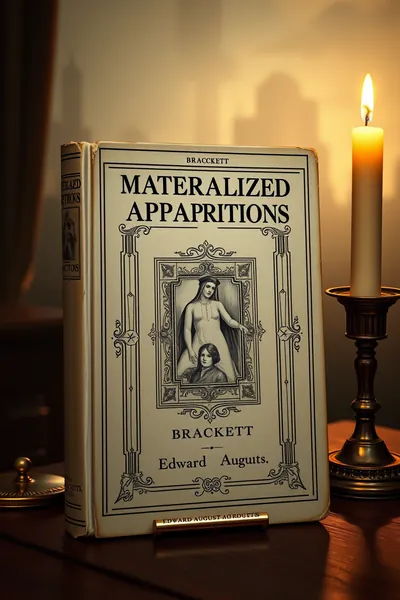
For those new to animal magnetism, starting with foundational explorations is crucial. Alfred Binet's 'Animal Magnetism' offers a comprehensive overview of the historical and theoretical aspects. Edward Augustus Brackett's 'Materialized apparitions : if not beings from another life, what are they' touches upon phenomena often discussed alongside magnetism. Harriet Martineau's writings, such as 'Feats on the Fiord', while fictional, engaged with contemporary scientific and social ideas that included these concepts. These works provide accessible entry points into the subject's early discourse and related phenomena.
Intermediate Reading
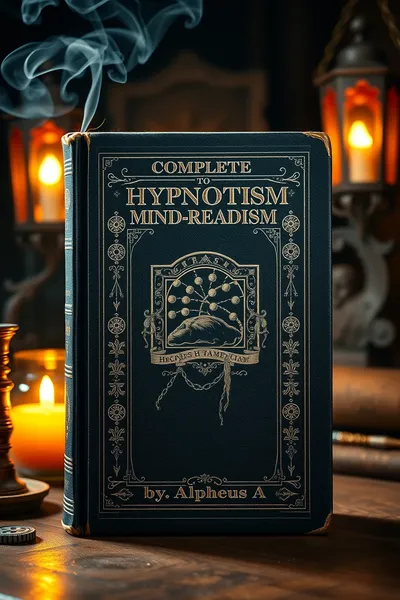
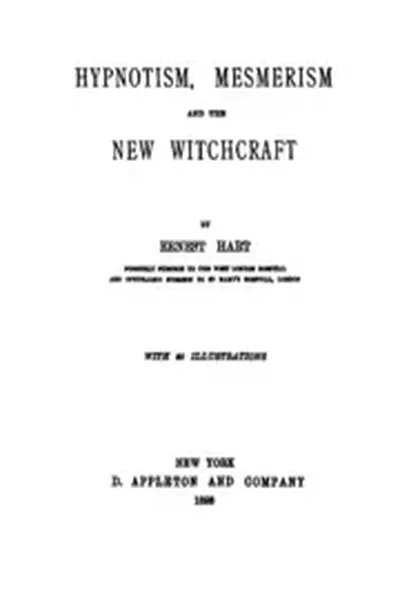
Moving beyond introductory concepts, explore more detailed investigations. Ernest Abraham Hart's 'Hypnotism, Mesmerism and the New Witchcraft' critically examines the subject, contrasting it with emerging scientific understanding. Alpheus, A.'s 'Complete Hypnotism, Mesmerism, Mind-Reading and Spiritualism' provides practical methods and applications for those seeking hands-on knowledge. Walter J. Kilner's 'The Human Atmosphere' explores the concept of an aura, often linked to vitalistic forces discussed in magnetism.
Classical / Advanced Texts
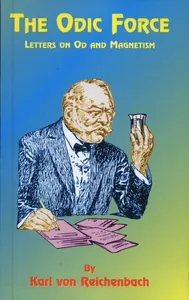
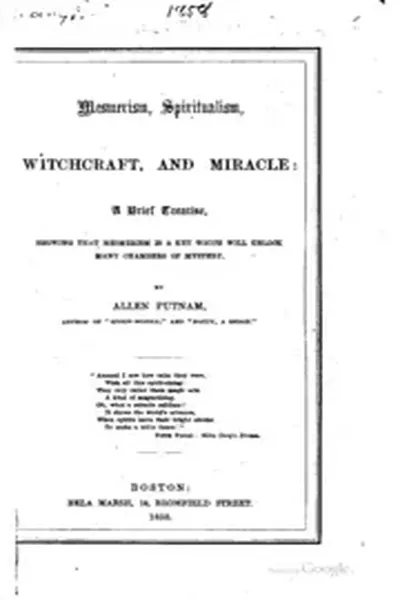
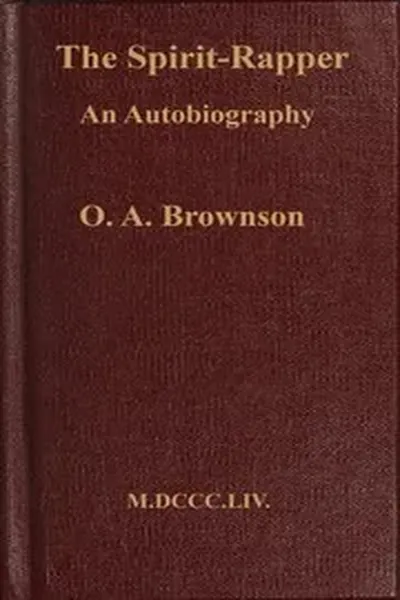
For serious students, primary source material and in-depth theoretical works are essential. Baron Karl von Reichenbach's 'Researches on (Magnetism, Electricty, Heat, Light, ...' and 'The Odic Force' are seminal works detailing his experiments and theories on the 'odic' or vital force. James Braid's 'Magic, witchcraft, animal magnetism [&c.]' offers a historical perspective from a key figure in the development of hypnotism. Orestes Augustus Brownson's 'The spirit-rapper; an autobiography' provides a personal account within the spiritualist milieu where magnetism was often discussed.
Reading Order — Step by Step
Begin with Alfred Binet's 'Animal Magnetism' for a broad historical and theoretical survey. Follow with Harriet Martineau's relevant works to understand the societal context. In Month 2, explore practical applications with Alpheus, A.'s 'Complete Hypnotism, Mesmerism, Mind-Reading and Spiritualism'. Simultaneously, engage with Ernest Abraham Hart's critical analysis. For Month 3 and beyond, immerse yourself in the primary research of Baron Karl von Reichenbach's 'The Odic Force' and James Braid's 'Magic, witchcraft, animal magnetism [&c.]' to grasp the foundational scientific and philosophical underpinnings.
Frequently Asked Questions
Which animal magnetism book should I read first?
For a comprehensive introduction, start with Alfred Binet's 'Animal Magnetism'. It provides a solid historical and theoretical foundation, making it ideal for beginners.
Is animal magnetism related to modern hypnosis?
Yes, animal magnetism, particularly as developed by Mesmer, is a direct precursor to modern hypnotism. James Braid's work, for instance, bridged the gap between mesmerism and what he termed 'hypnotism'.
What is the Odic Force?
The Odic Force is Baron Karl von Reichenbach's term for a hypothetical universal energy field he believed permeated all living things and certain substances, central to his research on magnetism.
Are there practical guides to performing mesmerism?
Yes, Alpheus, A.'s 'Complete Hypnotism, Mesmerism, Mind-Reading and Spiritualism' offers practical instructions and methods for those interested in applying mesmeric techniques.
How did animal magnetism influence spiritualism?
The concepts of invisible forces and energy transfer in animal magnetism resonated with spiritualist beliefs about spirits and unseen influences, often leading to discussions and phenomena being interpreted through a magnetic lens.
Was animal magnetism ever considered a science?
In the late 18th and 19th centuries, animal magnetism was a subject of intense debate and investigation, with some viewing it as a scientific phenomenon. However, it was largely dismissed by mainstream science due to lack of reproducible evidence and the rise of more empirical methods.
What is the difference between mesmerism and hypnotism?
Mesmerism, pioneered by Franz Mesmer, focused on directing a supposed 'animal magnetic' fluid. Hypnotism, as developed later by James Braid, is understood as a psychological state of focused attention and suggestibility, distinct from the fluid theory.








![Magic, witchcraft, animal magnetism [&c.].](/img/thumb/magic-witchcraft-animal-magnetism-c-james-braid.webp)