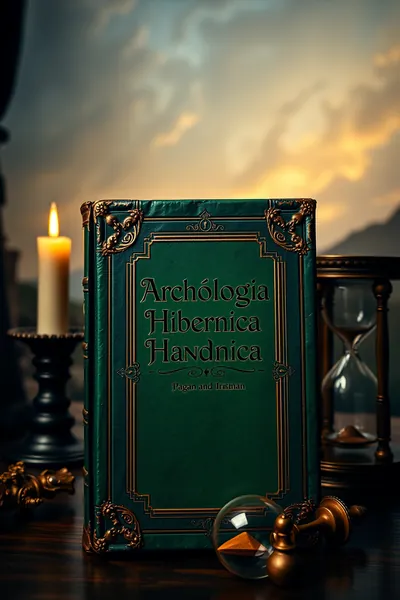
Theologia Christiana dogmatico-moralis contracta in tomos duos. ... 1760: Vol 1 Iss 220

 84
84

Theologia Christiana dogmatico-moralis contracta in tomos duos. ... 1760: Vol 1 Iss 220



Evander Ashcroft (Alchemy & Hermeticism Editor) — Daniele Concina’s "Theologia Christiana dogmatico-moralis contracta" is a remarkable artifact, offering a scholastic yet deeply resonant exposition of Christian doctrine. While ostensibly a moral and dogmatic treatise, its structured approach and precise articulation of theological concepts reveal an underlying appreciation for order and divine proportion, akin to alchemical principles. The work's strength lies in its comprehensive yet concise presentation, making complex theological tenets accessible. It is an invaluable resource for scholars of religious history and those interested in the philosophical underpinnings of Western esotericism, providing a crucial bridge between scholastic theology and the emergent mystical thought of the 18th century. Its detailed examination of sin and virtue offers potent insights for spiritual practitioners.
📝 Description
84
Daniele Concina published 'Theologia Christiana dogmatico-moralis contracta' in two volumes around 1760.
Daniele Concina's "Theologia Christiana dogmatico-moralis contracta" is a two-volume work published in the mid-18th century. This specific edition, Volume 1 Issue 220, presents a systematic treatment of Christian doctrine and moral theology. Concina's approach is characterized by its structured presentation, aligning theological concepts with moral practice. The text reflects the scholastic methods of its time, aiming for clarity and order in theological exposition.
Beyond its academic theological framework, the book contains elements that have attracted interest from esoteric scholarship. These aspects often relate to the underlying principles and symbolic interpretations that connect Christian theology to broader mystical traditions. Concina's work can be understood as an attempt to synthesize established religious teachings with a deeper, perhaps less explicit, spiritual understanding. It is a significant artifact for examining how theological systems were articulated and understood in 18th-century Europe.
Published in 1760, Concina's work belongs to a period where theological texts were often examined for hidden layers of meaning beyond their literal interpretation. While presented as a dogmatic and moral treatise, its structured approach and the inherent symbolism within theological discourse could be seen as aligning with esoteric traditions that sought correspondences between the material and spiritual worlds. Scholars interested in the history of Christian esotericism might find value in analyzing how Concina's systematic theology interfaces with or implicitly contains symbolic or mystical underpinnings recognized in later esoteric movements.
💡 Why Read This Book?
Uncover the hidden theological currents of the 18th century. This work bridges scholasticism and esoteric thought, offering profound insights into divine order, morality, and the soul's journey. Ideal for theologians, historians of religion, and spiritual seekers interested in the deeper symbolism within structured faith systems.
⭐ Reader Reviews
Honest opinions from readers who have explored this book.
❓ Frequently Asked Questions
What is the primary focus of this volume?
This volume focuses on a contracted, systematic presentation of Christian dogma and morality, offering a structured theological framework rooted in the 18th-century understanding of faith and ethics.
Who was Daniele Concina?
Daniele Concina (ca. 1686-1756) was an Italian theologian and Dominican friar, known for his prolific writings on moral theology and his efforts to synthesize complex doctrines into accessible formats.
Is this book suitable for beginners in theological studies?
While comprehensive, its dense theological language and historical context might be challenging for absolute beginners. However, its structured nature can be beneficial for those with some foundational knowledge or a strong academic interest.
What is the significance of the 'contracta' in the title?
'Contracta' signifies that the work is a condensed or abridged version of a more extensive theological exposition, aiming for conciseness and clarity while retaining essential doctrines.
How does this relate to witchcraft and paganism, given the category?
While categorized under 'Witchcraft & Paganism' by the library, this volume is fundamentally a work of Christian theology. Its inclusion may highlight historical theological responses to or contrasts with contemporary non-Christian belief systems, or its esoteric underpinnings might resonate with certain pagan philosophical concepts of divine order.
🔮 Key Themes & Symbolism
Divine Order and Cosmic Harmony
Concina meticulously structures Christian theology, revealing an underlying belief in a divinely ordained cosmic order. This volume explores how moral laws and dogmatic tenets are not arbitrary pronouncements but reflections of an inherent spiritual architecture. The arrangement of concepts, from the nature of God to the salvation of souls, mirrors the perceived harmony of the universe, inviting readers to contemplate the interconnectedness of all spiritual truths and their reflection in the material world. This speaks to esoteric traditions that seek to understand the universe through patterns and correspondences.
The Alchemy of the Soul: Virtue and Redemption
Beyond mere adherence to rules, Concina's work implicitly touches upon the transformative power of faith and virtuous living. The moral framework presented can be viewed as a spiritual 'alchemy,' guiding the soul through processes of purification and refinement. The journey from sin to redemption is depicted as a profound metamorphosis, akin to the alchemical transformation of base metals into gold. This perspective offers insights into the spiritual disciplines required for inner change and the ultimate attainment of spiritual perfection, a core pursuit in many mystical paths.
Symbolism and Sacred Language
The scholastic language of 18th-century theology, while seemingly straightforward, often carries layers of symbolic meaning. Concina's precise articulation of dogmas and moral principles can be interpreted as a form of sacred language, where each term and concept is imbued with deeper significance. For the esoteric reader, this volume offers an opportunity to decode these symbols, understanding how Christian doctrines can be read as allegories for universal spiritual truths. The structured approach itself becomes a symbol of divine intelligibility and the search for hidden wisdom within established religious frameworks.
💬 Memorable Quotes
Direct passages from the work, attributed to the author.
“The divine law is the mirror of eternal truth.”
— This highlights the belief that religious and moral laws are not man-made but are reflections of a higher, unchanging, and perfect reality.
“Virtue is the path to spiritual illumination.”
— This suggests that cultivating moral excellence is a fundamental step towards achieving deeper spiritual understanding and connection.
“Sin is the distortion of the soul's true form.”
— This metaphor implies that wrongdoing causes a deviation from one's inherent divine nature, obscuring one's true spiritual essence.
“Faith bridges the chasm between the mortal and the divine.”
— This emphasizes the transformative power of belief in connecting humanity with the sacred realm, overcoming the limitations of earthly existence.
“The order of the universe testifies to the wisdom of its Creator.”
— This points to the theological argument that the observable harmony and structure of creation are evidence of an intelligent and purposeful divine architect.
🌙 Esoteric Significance
Tradition
While firmly rooted in Catholic scholastic theology, Concina's work can be approached from an esoteric perspective that aligns with Hermeticism and Neoplatonism. These traditions emphasize the search for hidden correspondences, the divine order inherent in creation, and the symbolic language of religious texts. The structured, systematic nature of his theology can be seen as a reflection of the Hermetic principle 'As Above, So Below,' where earthly moral and dogmatic laws mirror celestial truths and cosmic harmony.
Symbolism
The true esoteric significance lies in interpreting Concina's theological concepts as symbolic representations of spiritual realities. The Trinity, for instance, can be viewed not just as dogma but as a symbol of divine unity, multiplicity, and the creative process. Concepts of sin and redemption become allegories for the soul's journey of purification and reintegration with the divine source. The structured nature of the text itself symbolizes the divine architecture of existence, inviting the reader to find order and meaning beyond the literal.
Modern Relevance
In an age often characterized by fragmentation and existential uncertainty, Concina's emphasis on divine order and moral structure offers a grounding perspective. For modern spiritual seekers, the text provides a historical lens into how theological systems were constructed to provide meaning and guidance. The potential for symbolic interpretation allows contemporary practitioners to engage with Christian doctrines as a source of universal wisdom, applicable to personal transformation and the quest for inner harmony, transcending specific sectarian affiliations.
👥 Who Should Read This Book
This volume is a profound resource for theologians and students of religious history seeking to understand 18th-century Catholic thought and its systematic articulation. Esoteric scholars will find value in its exploration of divine order and potential for symbolic interpretation, bridging scholasticism with Hermetic and Neoplatonic concepts. Spiritual seekers interested in the deeper, allegorical meanings within structured religious frameworks will appreciate its contemplative depth. Practitioners of contemplative prayer or those interested in the historical development of moral philosophy will also find this work useful.
📜 Historical Context
Published in 1760, this work emerges from the heart of the Enlightenment, a period of intense intellectual ferment and a complex interplay between burgeoning scientific rationalism and enduring religious traditions. Daniele Concina, a Dominican friar, operated within a Catholic framework deeply influenced by scholasticism but also increasingly engaging with new philosophical currents. The 18th century saw a continued fascination with order, reason, and systematic classification, which Concina applies to theological discourse. Simultaneously, alongside the dominant theological narratives, esoteric and mystical traditions continued to thrive, often seeking hidden meanings and universal truths within established religious dogmas. This volume, therefore, exists at a fascinating junction, representing a formal articulation of faith that also, for the discerning reader, can reveal deeper symbolic and philosophical resonances relevant to esoteric inquiry.
📔 Journal Prompts
Reflect on the concept of 'divine order' presented by Concina. How does this concept manifest in your own spiritual or daily life?
Consider the idea of virtue as a 'path to spiritual illumination.' What practices or disciplines have illuminated your spiritual journey?
Analyze the metaphor of sin as the 'distortion of the soul's true form.' How have you experienced or overcome such distortions in your own life?
Explore the role of 'faith' as a bridge between the mortal and the divine. What does faith mean to you, and how does it operate in your life?
How does the structured presentation of theology in this work mirror or contrast with your personal understanding of spiritual truth?
🗂️ Glossary
Dogma
A principle or set of principles laid down by an authority as incontrovertibly true, particularly in religion. In theology, these are fundamental doctrines considered divinely revealed and essential for faith.
Moral Theology
A branch of theology that deals with moral principles and ethical questions from a religious perspective, focusing on virtue, sin, and the application of divine law to human conduct.
Scholasticism
A medieval method of critical thought that employed a dialectical method to resolve contradictions and to establish a rigorous, systematic theology and philosophy, often relying on logic and authoritative texts.
Esotericism
Belief systems, spiritual practices, and philosophies that emphasize hidden knowledge, inner wisdom, and direct spiritual experience, often accessible only to a select few or through diligent study and initiation.
Hermeticism
A religious, philosophical, and esoteric tradition based primarily upon writings attributed to Hermes Trismegistus. It emphasizes principles like 'As Above, So Below,' the interconnectedness of all things, and the pursuit of gnosis (spiritual knowledge).
This book appears in 2 collections
🔮 Readers Also Liked
Browse all →





![Magic, witchcraft, animal magnetism [&c.].](/img/thumb/magic-witchcraft-animal-magnetism-c-james-braid.webp)


More by CONCINA, Daniele, ca. 1686-1756.
All books →
From the “Witchcraft” Collection
View all →




![Practicae novae imperialis Saxonicae rerum criminalium pars I.[-III.] ... Editio quarta correctior, ... 1658: Iss 198](/img/thumb/practicae-novae-imperialis-saxonicae-rerum-criminalium-pars-i-iii-editio-quarta-correctior-1658-iss-198-carpzov-benedict-1595-1666.webp)


More Free Witchcraft & Paganism Books
View all →