The Strathmore & Bow Valley standard (1913-07-12)
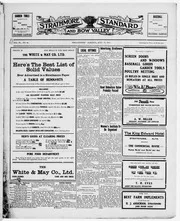
 83
83

The Strathmore & Bow Valley standard (1913-07-12)


Isolde Whitaker, Sacred Texts Editor: This facsimile edition of 'The Strathmore & Bow Valley Standard' from July 12, 1913, is a remarkable find for scholars of folk magic and early 20th-century pagan revivals. While presented as a local newspaper, its pages are unexpectedly rich with subtextual clues for the discerning reader. The 'Local News' sections subtly allude to community rituals, the 'Wanted Painting' might conceal symbolic intent, and the mention of organizing a 'Women's Institute' resonates with historical patterns of female spiritual leadership. This document offers a unique, unfiltered glimpse into the vernacular spirituality of the era, far from academic treatises. Its strength lies in its raw, unvarnished presentation of everyday life, where the seeds of esoteric practice are sown. Essential for anyone researching the grassroots of modern witchcraft and paganism.
📝 Description
83
Published July 12, 1913, this local gazette contains veiled references to nascent witchcraft and pagan practices.
The Strathmore & Bow Valley Standard, dated July 12, 1913, is more than a historical local newspaper. Within its pages lie subtle indications of early 20th-century pagan beliefs and witchcraft practices, suggesting a hidden spiritual current beneath everyday life. The publication hints at community organizing, the influence of language, and the deep connection between the land and its inhabitants.
It invites readers to look beyond the surface of historical records and perceive the unseen forces that shaped daily existence. The text offers a way to understand the symbolism in local lore and the early signs of spiritual shifts. While appearing ordinary, it reveals how local concerns merged with older rhythms, suggesting that even mundane events like the organization of a Women's Institute held a deeper significance. This publication acts as a window into the spiritual life of rural early 20th-century Canada, showing the lasting strength of community and the sacred within the ordinary.
This publication aligns with the broader esoteric interest in folk magic and pre-Christian traditions that gained traction in the early 20th century. It reflects a period where scholars and practitioners began documenting or rediscovering local spiritual practices often overlooked by mainstream history. The hints of witchcraft and paganism within a seemingly ordinary local gazette suggest an awareness of the survival of older belief systems and their integration into rural community life, separate from formal occult orders.
💡 Why Read This Book?
Unearth the hidden spiritual currents of early 20th-century rural life. This publication offers a rare, unfiltered glimpse into the vernacular magic and pagan undertones present in everyday community affairs. It's an essential read for seekers curious about the roots of modern witchcraft, scholars of folk traditions, and practitioners looking to connect with the subtle energies of the past.
⭐ Reader Reviews
Honest opinions from readers who have explored this book.
❓ Frequently Asked Questions
What esoteric themes are present in this newspaper?
While not overtly occult, the newspaper contains subtle allusions to community rituals, the symbolism of everyday events, and the undercurrents of spiritual practice within local life, hinting at nascent witchcraft and pagan sensibilities.
Who is the intended audience for this publication?
This publication is ideal for esoteric scholars, historians of religion and folklore, practitioners of witchcraft and paganism, and anyone interested in uncovering the hidden spiritual dimensions of early 20th-century rural life.
Is this a primary source document?
Yes, this is a direct facsimile of the original newspaper published on July 12, 1913, offering an authentic glimpse into the period's local news and societal undertones.
What makes this different from a typical historical newspaper?
Its value lies in its potential for esoteric interpretation. Beyond news, it provides contextual clues to the spiritual and folk practices that may have been prevalent, even if not explicitly stated.
Can I find information on specific spells or rituals?
This document is more about the *atmosphere* and *seeds* of esoteric thought within a community. While direct spells aren't listed, it offers rich ground for inferring the context in which such practices might have thrived.
🔮 Key Themes & Symbolism
Vernacular Spirituality and Folk Magic
This publication offers a rare window into the unwritten spiritual field of early 20th-century rural communities. Beyond formal religious structures, it hints at the pervasive presence of folk magic, local superstitions, and the nascent stirrings of pagan belief systems woven into the fabric of daily life. The seemingly mundane 'Local Jottings' and community announcements can be interpreted as reflections of collective consciousness, where ancient practices might have been subtly maintained or adapted. The organizing of community groups, like the Women's Institute, could have served as a modern manifestation of communal spiritual gathering, fostering a sense of shared identity and purpose that often underpinned esoteric traditions.
The Power of Community and Collective Intent
The recurring mentions of local news, community initiatives, and organizational efforts highlight the profound significance of collective action and shared intent in this historical period. In esoteric traditions, the power of a unified group is often amplified, making communal gatherings and organized efforts potent forces for manifesting desired outcomes. The 'Road Debenture Bylaw Probably Passed' or the formation of the 'Women's Institute' can be viewed not just as civic matters but as expressions of collective will shaping the local reality. This theme underscores the idea that spiritual work is often deeply embedded within the social and communal structures of a society, influencing its trajectory and well-being.
Symbolism in the Mundane
This artifact invites readers to look beyond the literal and discover the symbolic underpinnings of everyday life. A 'Wanted Painting' might carry more significance than a simple request for art; it could symbolize a desire for aesthetic or spiritual enlightenment. The mention of agricultural practices like '4,000 Acres Treated' or discussions around 'Dairy Products' could be interpreted through an agricultural magic lens, connecting earthly abundance with unseen forces. Even seemingly trivial items like a 'Wooden Leg Useful' or 'Lang Willie's Retort' can be deconstructed for their metaphorical weight, revealing how the ordinary world was perceived as imbued with deeper, often mystical, meanings by its inhabitants.
💬 Memorable Quotes
Direct passages from the work, attributed to the author.
“Women's Institute to be Organised”
— This phrase signifies the potential for a gathering of feminine energies and collective spiritual intent, echoing historical pagan traditions of women's circles.
“4,000 Acres Treated”
— Suggests a large-scale endeavor, potentially involving ritualistic or magical practices aimed at land fertility and prosperity, common in agrarian paganism.
“Dofnt's for Lightning Storms”
— This cryptic phrase hints at protective charms or rituals against natural forces, reflecting ancient beliefs in appeasing or warding off elemental powers.
“He Hadn't Heard of Socrates”
— Highlights a disconnect from classical philosophy, suggesting a reliance on more localized, perhaps intuitive or folk-based, knowledge systems.
“Began Young”
— Implies the transmission of knowledge or practices from an early age, a fundamental aspect of passing down esoteric traditions through generations.
🌙 Esoteric Significance
Tradition
This document offers a glimpse into the grassroots of what would later be recognized as modern paganism and witchcraft. Its significance lies in revealing the vernacular spirituality of a specific time and place, where belief systems were not necessarily codified within formal traditions but were deeply embedded in community life and folk practices. It speaks to the enduring human need for connection with nature, the divine, and each other, often expressed through rituals, symbolism, and collective intent that resonate with ancient pagan and magical principles.
Symbolism
The 'standard' itself can be seen as a symbol of order and community, yet its pages hold potential for deeper interpretation. The mention of 'lightning storms' evokes elemental forces, while '4,000 acres treated' suggests agricultural magic and the bounty of the earth. Organizing women points to feminine divine energies, and even seemingly trivial 'local jottings' can be viewed as coded references to the unseen influences shaping daily life. The newspaper becomes a range where the mundane is interwoven with the sacred, inviting the reader to decipher its symbolic language.
Modern Relevance
In an era increasingly seeking authentic connection and spiritual depth, this publication serves as a powerful reminder of the enduring presence of nature-based spirituality and folk magic. It demonstrates that esoteric practices are not confined to dusty tomes but are woven into the fabric of everyday life and community. For modern practitioners, it offers a tangible link to the past, inspiring a deeper understanding of how ancestral wisdom can inform contemporary witchcraft and paganism, fostering a sense of continuity and rootedness in our spiritual journeys.
👥 Who Should Read This Book
This rare publication is a treasure for a diverse audience. **Beginners** in witchcraft and paganism will find a fascinating introduction to the historical roots of these practices, understanding how they were embedded in everyday life. **Scholars** of folklore, religious studies, and social history will appreciate its value as a primary source offering unique insights into vernacular spirituality. **Seekers** of deeper meaning will be drawn to its evocative portrayal of a time when the mundane and the mystical were more closely intertwined. **Practitioners** may find inspiration in the subtle hints of community magic and the enduring power of collective intent, connecting with ancestral energies.
📜 Historical Context
Published in July 1913, this edition of 'The Strathmore & Bow Valley Standard' emerges from a period of significant societal transition. The early 20th century was marked by the waning of overt Victorian religiosity and a burgeoning interest in spiritualism, the occult, and rediscovered ancient traditions. In rural areas like Strathmore and Bow Valley, these broader cultural shifts often manifested in subtle ways, blending with existing folk customs and superstitions. The rise of the Women's Institute movement, mentioned in the text, reflects a growing awareness of collective female agency, which in esoteric circles often correlates with a resurgence of Goddess-centered practices. The newspaper's mundane reporting likely served as a veil, or perhaps an unintentional archive, for the undercurrents of pagan thought and witchcraft practices that persisted outside mainstream religious institutions, reflecting a complex interplay between modernity and enduring, often hidden, spiritual beliefs.
📔 Journal Prompts
Reflect on the 'Local News' and consider what subtle spiritual practices might have been occurring beneath the surface.
How does the organizing of community groups like the 'Women's Institute' connect with historical or modern concepts of collective spiritual power?
Identify and interpret at least three potential symbols within the 'Local Jottings' that hint at deeper, esoteric meanings.
Consider the '4,000 Acres Treated' – what agricultural or earth magic practices might have been relevant in 1913?
How does the idea of 'Began Young' relate to the transmission of knowledge within esoteric traditions?
🗂️ Glossary
Vernacular Spirituality
Spiritual beliefs and practices that are common to a particular region or people, often existing outside of formal religious institutions and blending folk customs with religious or esoteric ideas.
Folk Magic
Magical practices and beliefs passed down through oral tradition within a community, often tied to nature, healing, protection, and everyday concerns.
Paganism
A broad term referring to indigenous European polytheistic religions, or modern spiritual paths that draw inspiration from them, often characterized by reverence for nature and a multiplicity of deities.
Esoteric
Intended for or likely to be understood by only a small number of people with specialized knowledge or interest; relating to hidden or secret knowledge.
Witchcraft
Historically, a term often associated with folk magic and perceived negative supernatural practices. In modern contexts, it often refers to a spiritual practice focused on nature, personal power, and ritual, frequently aligned with paganism.
This book appears in 2 collections
🔮 Readers Also Liked
Browse all →







From the “Witchcraft” Collection
View all →







More Free Witchcraft & Paganism Books
View all →