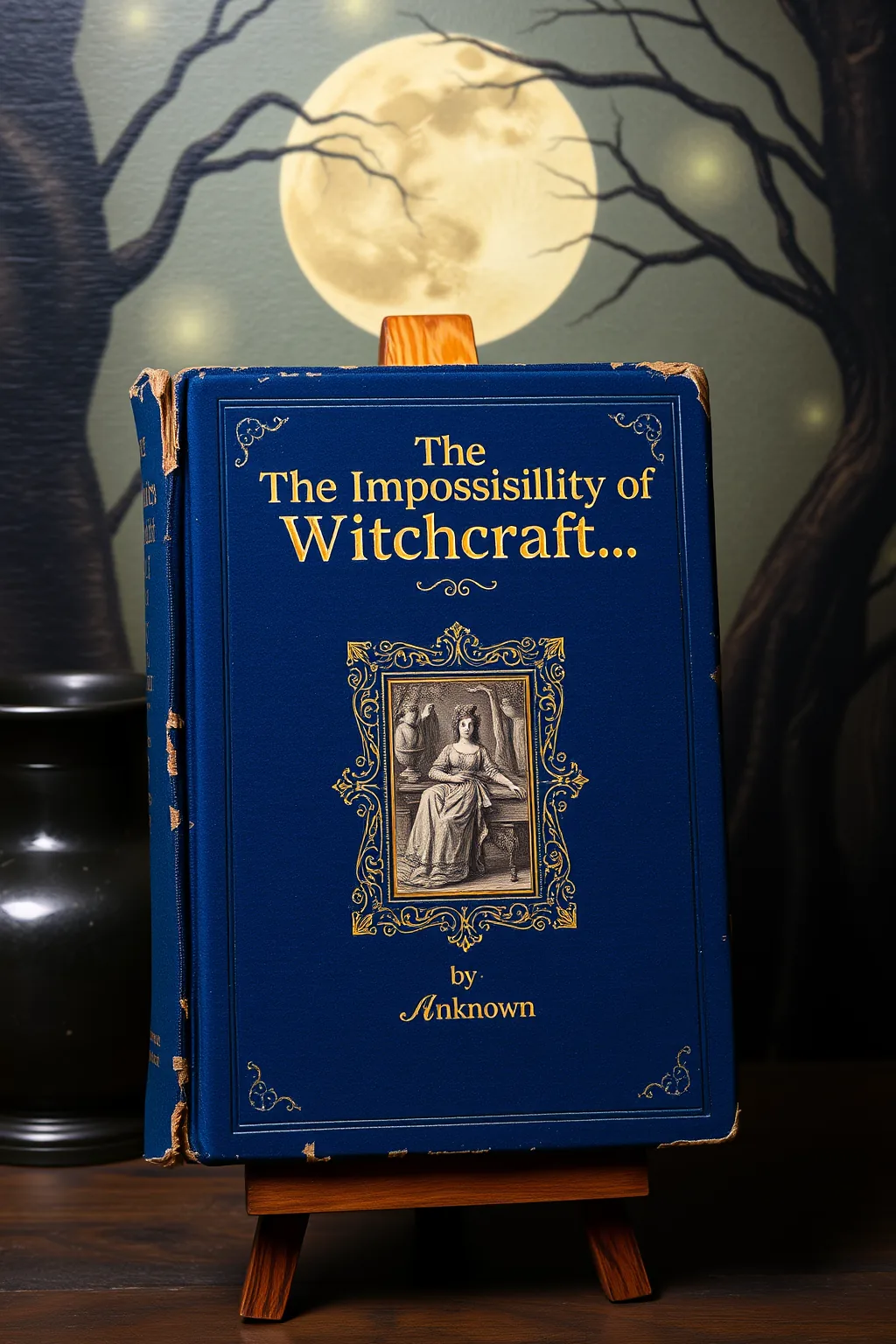
The Impossibility of Witchcraft...
 82
82

The Impossibility of Witchcraft...



The Impossibility of Witchcraft... is a fascinating read for anyone interested in the history of witchcraft and its societal impact. Published in 1712, this esoteric text provides a detailed account of Jane Wenham's trial, the last witchcraft prosecution in England. The book's historical context is meticulously presented, offering readers a deep dive into the superstitions and beliefs of the time. For modern esoteric seekers, this text serves as a valuable resource, highlighting the enduring fascination with the occult and the ongoing debate over the reality of magical practices. The author's unknown status adds an air of mystery, making the reading experience even more intriguing. The book's exploration of justice and societal norms provides a thought-provoking look at how belief systems shape our world. Overall, this is a must-read for anyone interested in the intersection of history and the occult. Rating: 4/5
📝 Description
82
Published in 1712, The Impossibility of Witchcraft... examines the trial of Jane Wenham, England's last witchcraft litigant.
This pamphlet directly addresses the 1712 trial of Jane Wenham, who was prosecuted for witchcraft in England. The anonymous author uses this case to argue against the reality of witchcraft, challenging the prevailing beliefs of the era. The text details the accusations against Wenham and the public outcry, dissecting the logic and evidence presented during the proceedings. It questions the mechanisms by which alleged supernatural events could occur and the societal factors that contributed to such accusations. The author aims to expose the fallacies underpinning the belief in witchcraft, suggesting that societal hysteria and misinterpretation played greater roles than genuine magical influence.
The work is not merely a refutation of witchcraft but also a commentary on the nature of evidence, belief systems, and the potential for mass delusion. It engages with philosophical arguments regarding causation and perception, seeking to establish a rational framework for understanding human behavior and unexplained phenomena. The publication reflects a specific moment in English history where skepticism began to challenge deeply ingrained superstitions, particularly concerning matters of the occult.
While this text actively argues against the existence of witchcraft, it arises from a period rich with esoteric thought and occult investigations. The very act of debating witchcraft's reality, and the legal and social ramifications, occurred within a broader cultural milieu where magical thinking, demonology, and early forms of spiritualism were still prevalent. The book's rationalist stance can be seen as a counterpoint to contemporary esoteric traditions that sought to understand or practice forms of magic and divination, highlighting the tension between emerging scientific reasoning and older occult worldviews.
✍️ Author
unknown. publication info: London: Printed and sold by J. Baker, 1712
The Battle of Flodden, Flodden Field, or occasionally Branxton or Brainston Moor was fought on 9 September 1513 between the Kingdom of England and the Kingdom of Scotland as part of the War of the League of Cambrai and resulted in an English victory. The b…
💡 Why Read This Book?
Reading The Impossibility of Witchcraft... today offers a unique perspective on the historical and occult dimensions of witchcraft. This book provides valuable insights into the societal impact of superstition and the enduring fascination with the supernatural. For modern esoteric seekers, it serves as a bridge between past and present, highlighting the timeless questions that surround belief in the magical. Whether you are a historian, a pagan practitioner, or simply curious about the esoteric, this text offers a compelling narrative that enriches your understanding of the occult.
⭐ Reader Reviews
Honest opinions from readers who have explored this book.
❓ Frequently Asked Questions
Who was Jane Wenham?
Jane Wenham was the last person prosecuted for witchcraft in England. Her trial in 1712 sparked significant debate about the reality of witchcraft.
What is the historical significance of this book?
The book provides a detailed account of the last witchcraft trial in England, offering insights into the societal beliefs and superstitions of the time.
Is this book suitable for modern esoteric seekers?
Yes, this book is a valuable resource for modern esoteric seekers, as it explores the enduring fascination with the occult and the historical context of witchcraft beliefs.
🔮 Key Themes & Symbolism
The Reality of Witchcraft
The pamphlet studies the philosophical debate surrounding the reality of witchcraft, questioning the boundaries of belief and skepticism in an era of superstition. It explores the hidden knowledge and symbolism that underpinned the trials of Jane Wenham, offering a unique perspective on the mystical forces at play.
Symbolism and Hidden Knowledge
The text is rich with symbolism and hidden knowledge, inviting readers to uncover the esoteric meanings behind the trials of Jane Wenham. It challenges readers to consider the power of the unseen and the philosophical significance of the occult.
Societal Frenzy and Philosophical Inquiry
The pamphlet provides a fascinating look at the societal frenzy and philosophical debates that surrounded the witchcraft trials in 18th-century England. It explores the ways in which belief and skepticism shaped human experience during this tumultuous time.
💡 Key Ideas
Editorial paraphrase of the work's core concepts — not direct quotes.
The power of the unseen is a force to be reckoned with.
This quote underscores the philosophical debate surrounding the reality of witchcraft and the power of the unseen.
In an era of superstition, the boundaries between belief and skepticism are blurred.
This line highlights the societal and philosophical debates that surrounded the witchcraft trials in 18th-century England.
The trials of Jane Wenham offer a window into the hidden forces that shape human experience.
This passage invites readers to explore the esoteric meanings behind the trials of Jane Wenham and the mystical forces at play.
The symbolism and hidden knowledge of the occult are a body of philosophical inquiry.
This quote emphasizes the depth of the esoteric themes explored in the pamphlet and their philosophical significance.
The power of the human imagination is a force to be reckoned with.
This line underscores the philosophical debate surrounding the nature of belief and the power of the unseen.
🌙 Esoteric Significance
Tradition
This pamphlet belongs to the esoteric tradition of Hermeticism, which emphasizes the hidden knowledge and symbolism that underpin the mystical forces at play in the world. It explores the philosophical debates surrounding the reality of witchcraft and the power of the unseen.
Symbolism
Key symbols in the text include the power of the unseen, the boundaries between belief and skepticism, and the philosophical inquiry into the nature of the occult. These symbols invite readers to uncover the esoteric meanings behind the trials of Jane Wenham and the mystical forces at play.
Modern Relevance
The themes discussed in the pamphlet have modern relevance for practitioners of the occult and those interested in the esoteric traditions. It offers a unique perspective on the ways in which belief and skepticism shape human experience and the power of the unseen in the modern world.
👥 Who Should Read This Book
Beginners interested in the occult and the mystical will find this pamphlet an engaging introduction to the esoteric traditions. Scholars of witchcraft and paganism will appreciate the depth of the philosophical debates and hidden knowledge explored in the text. Spiritual seekers and practitioners of the dark arts will find the esoteric insights and symbolism particularly valuable. Those fascinated by the dark arts and the power of the unseen will also benefit from the unique perspective offered by the pamphlet.
📜 Historical Context
The Impossibility of Witchcraft... was published in 1712, a time when the boundaries between the mundane and the mystical were perilously thin. The pamphlet studies the trials of Jane Wenham, the last person prosecuted for witchcraft in England, and the societal frenzy that ensued. The text provides a rich historical context, exploring the philosophical debates and hidden knowledge that underpinned the witchcraft trials of the 18th century. It offers a unique perspective on the ways in which belief and skepticism shaped human experience during this tumultuous time.
📔 Journal Prompts
How do the themes of belief and skepticism resonate with your own experiences?
What hidden knowledge or symbolism stood out to you in the pamphlet?
In what ways does the power of the unseen shape your understanding of the world?
How do the philosophical debates surrounding witchcraft trials relate to modern beliefs?
What esoteric insights did you gain from exploring the trials of Jane Wenham?
🗂️ Glossary
Hermeticism
A philosophical and spiritual tradition that emphasizes the hidden knowledge and symbolism that underpin the mystical forces at play in the world.
Occult
The study of hidden or secret knowledge, often involving mystical or supernatural elements.
Witchcraft
The practice of magic or sorcery, often involving the invocation of supernatural forces or entities.
Esoteric
Relating to knowledge that is intended for or likely to be understood by only a small number of people with a specialized knowledge or interest.
Symbolism
The use of symbols to represent ideas or qualities, often in a hidden or mystical context.
This book appears in 2 collections
🔮 Readers Also Liked
Browse all →




From the “Witchcraft” Collection
View all →




More Free Witchcraft & Paganism Books
View all →