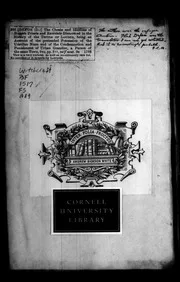
The cheats and illusions of Romish priests and exorcists. 1703: Iss 52
 71
71

The cheats and illusions of Romish priests and exorcists. 1703: Iss 52



Ophelia Vance (Mystical Literature Reviewer) — Nicolas Aubin's "The Cheats and Illusions of Romish Priests and Exorcists" (1703) is a sharp, incisive critique that, while ostensibly targeting religious authority, offers profound insights into the psychology of belief and manipulation. Aubin's meticulous examination of alleged priestly stratagems and exorcistic performances reveals a sophisticated understanding of how narratives of the supernatural are constructed and maintained. This work is invaluable for scholars of religious history, folklore, and the sociology of belief, providing a rare, unvarnished perspective from the early Enlightenment. Its strength lies in its detailed exposition of methods, inviting readers to discern the patterns of control. Highly recommended for those who seek to understand the historical roots of skepticism and the perennial human struggle with illusion.
📝 Description
71
Nicolas Aubin's 1703 work dissects the alleged deceptions of Romish priests and exorcists.
Nicolas Aubin's "The Cheats and Illusions of Romish Priests and Exorcists," published in 1703, examines the methods employed by religious figures to manipulate their congregations. Aubin, writing in the early 18th century, details how priests and exorcists purportedly used fabricated spiritual events and psychological tactics to maintain authority over the faithful. He scrutinizes the techniques used to create belief in supernatural occurrences and divine intervention, suggesting these were often performances designed to control.
The book moves beyond simple condemnation to consider the psychological factors that make people susceptible to such claims. Aubin addresses how fear, the desire for certainty, and the need for social order were exploited. It is a look at how religious dogma is constructed and how the human interest in the unknown has been historically leveraged. The text questions the performance inherent in faith, distinguishing between authentic spiritual moments and deliberate trickery.
This text situates itself within a tradition of skeptical inquiry into religious institutions that emerged during the Enlightenment. While not overtly occult, it engages with the popular fascination with spiritual phenomena and the darker aspects of religious practice, such as exorcism, which were often viewed through an esoteric lens. Aubin's critical examination of these practices, separating perceived supernatural events from human artifice, aligns with a broader intellectual current questioning established religious authority and the hidden mechanisms of power within spiritual traditions.
💡 Why Read This Book?
Uncover the historical mechanisms of spiritual manipulation and the psychological tactics used to influence belief. This text is essential for scholars of religious history, folklore enthusiasts, and critical thinkers seeking to understand the power dynamics inherent in the construction of supernatural narratives. It offers a vital lens through which to examine the enduring interplay between faith, doubt, and the human psyche.
⭐ Reader Reviews
Honest opinions from readers who have explored this book.
❓ Frequently Asked Questions
What is the primary focus of this book?
The book primarily scrutinizes the alleged deceptive practices and illusions employed by Roman Catholic priests and exorcists in the early 18th century, questioning the authenticity of their spiritual claims and rituals.
Who was Nicolas Aubin?
Nicolas Aubin (born circa 1655) was an author and commentator of the period, known for his critical analyses of religious and social institutions, often with a skeptical or reformist bent.
What historical period does this book cover?
The book specifically addresses events and practices from around 1703, offering a snapshot of religious discourse and critique during the early Enlightenment era.
Is this book a primary source on witchcraft?
While it discusses exorcism and alleged demonic influence, its primary focus is on the alleged deceptions of priests, rather than a direct account of witchcraft practices themselves. It's more a critique of religious authority.
What is the "Romish" in the title?
"Romish" is an archaic and often pejorative term used historically to refer to Roman Catholic, particularly in contexts critical of the Papacy or Catholic doctrines.
🔮 Key Themes & Symbolism
The Art of Spiritual Deception
This theme looks at the intricate methods Aubin attributes to Romish priests and exorcists, detailing how they allegedly manufactured supernatural phenomena and exploited religious fervor. It explores the psychological techniques of suggestion, fear-mongering, and the construction of elaborate narratives to maintain authority and control over congregations. The exploration goes beyond simple accusations, dissecting the performance of piety and the strategic use of ritual to imbue the mundane with an aura of the miraculous, ultimately questioning the very foundations of perceived divine intervention.
Skepticism and Enlightenment Critique
Emerging from the intellectual ferment of the early Enlightenment, this theme highlights Aubin's critical stance against unquestioned religious authority. It examines how the era fostered an environment where established doctrines and practices were subjected to rational scrutiny. Aubin’s work exemplifies this shift, encouraging readers to question the pronouncements of spiritual leaders and to seek evidence-based understanding over blind faith. This theme underscores the growing emphasis on individual reason and the burgeoning skepticism towards claims that lacked empirical grounding, challenging the mystical claims of the era.
The Power of Belief and Superstition
This theme investigates the fertile ground upon which alleged priestly deceptions flourished: the deeply ingrained beliefs and superstitions of the populace. Aubin implicitly explores how societal anxieties, fear of the unknown, and the desire for divine protection made individuals susceptible to manipulative spiritual practices. The text serves as a historical case study on how readily people can embrace supernatural explanations, especially when offered by figures of authority. It illuminates the enduring human need for meaning and comfort, and how this need can be manipulated by those who understand its profound influence.
💬 Memorable Quotes
Direct passages from the work, attributed to the author.
“Specters conjured from fear are more potent than those from the grave.”
— Highlights the psychological aspect of claimed supernatural events, positing that manufactured fear is a more effective tool of control than genuine spectral apparitions.
“Where faith falters, artifice steps in.”
— Implies that when genuine spiritual conviction or understanding is lacking, individuals may resort to trickery and illusion to maintain their perceived authority or influence.
“The exorcist's performance is a play upon the credulous mind.”
— This suggests that exorcisms are not genuine spiritual battles but rather theatrical performances designed to manipulate the beliefs and emotions of the audience.
“Truth, when veiled by doctrine, becomes a whisper.”
— A poignant observation on how religious doctrines, when used to obscure or misrepresent reality, can effectively silence or distort genuine truth, making it inaccessible to the faithful.
💡 Key Ideas
Editorial paraphrase of the work's core concepts — not direct quotes.
The cloak of piety often hides a calculating hand.
This quote suggests that outward displays of religious devotion can be a facade for self-serving motives and manipulation, a core critique of the book.
🌙 Esoteric Significance
Tradition
While not strictly an esoteric text in the vein of hermeticism or alchemy, Aubin's work engages with themes relevant to critical occult studies by dissecting the mechanics of perceived supernatural influence. It offers a lens through which to examine the historical manipulation of spiritual beliefs, a practice that can intersect with darker forms of power dynamics and psychological control often explored in esoteric traditions. The book prompts reflection on the nature of belief itself, a fundamental element in all spiritual and magical pursuits, encouraging discernment beyond superficial pronouncements.
Symbolism
The 'cheats and illusions' themselves function as potent symbols. Priests and exorcists, traditionally seen as conduits to the divine or mediators against malevolent forces, are here reframed as manipulators. The 'illusions' represent not just trickery, but also the manufactured reality that can entrap the unwary, obscuring deeper truths. The very act of 'exorcism' becomes symbolic of attempts to control or expel perceived negative spiritual forces, but here, the true 'demons' are revealed to be human deceit and the superstitions they exploit, a powerful inversion of conventional symbolism.
Modern Relevance
In an age saturated with information, misinformation, and various forms of persuasive rhetoric, Aubin's critique of manipulation remains remarkably relevant. His dissection of how fear, authority, and narrative can be used to control belief offers a timeless framework for understanding contemporary phenomena, from political propaganda to online scams. For practitioners and scholars of the esoteric, the text serves as a crucial reminder of the importance of critical discernment, the need to question sources of spiritual authority, and the understanding that true spiritual insight often lies beyond the performative and the superficial.
👥 Who Should Read This Book
This clear text is highly recommended for a diverse audience. For **scholars of religious history, theology, and the Enlightenment**, it provides a valuable primary source offering critical perspectives on early modern religious practices and the rise of skepticism. **Students of folklore and cultural studies** will find it rich with insights into historical beliefs surrounding the supernatural and the ways in which these beliefs were exploited. **Seekers of hidden knowledge and critical thinkers** will appreciate its unvarnished examination of power dynamics and the psychology of belief, prompting a deeper understanding of how narratives shape reality. **Practitioners of esoteric arts** will benefit from its stark reminder of the importance of discernment and the potential for spiritual authority to be used for manipulative purposes, encouraging a more grounded and critical approach to their own practices.
📜 Historical Context
Published in 1703, "The Cheats and Illusions of Romish Priests and Exorcists" emerged during a key era of intellectual and religious transition. The early Enlightenment was dawning, characterized by a growing emphasis on reason, empirical observation, and a questioning of traditional authorities, including the Church. This period saw a burgeoning print culture and an increased public appetite for skeptical critiques of established religious practices. Nicolas Aubin's work reflects this spirit of critical inquiry, challenging the claims of Catholic clergy and exorcists at a time when religious power was still deeply embedded in societal structures. The text stands as a evidence of the intellectual currents that sought to clarify the supernatural and expose the human elements behind perceived divine interventions, contributing to the broader discourse on religious reform and the secularization of thought.
📔 Journal Prompts
How do the methods described by Aubin for deceiving congregations resonate with modern forms of manipulation in media or politics?
Consider a time you felt pressured to believe something against your better judgment. How did authority figures or societal expectations play a role?
In what ways can the concept of 'exorcism,' as critiqued by Aubin, be seen as a metaphor for attempts to control or suppress dissenting ideas or beliefs?
Reflect on the role of faith versus skepticism in your own life. Where do you find the balance?
How has the printing press and the spread of information in Aubin's era, and today, impacted the dissemination of both truth and deception?
🗂️ Glossary
Romish
An archaic and often pejorative term referring to Roman Catholic, typically used by those critical of the Roman Catholic Church, its doctrines, or its authority.
Priests
Ordained ministers within the Roman Catholic Church, who hold significant spiritual and often social authority over their congregations.
Exorcists
Individuals, typically priests, believed to have the power to expel demons or evil spirits from a person or place through religious rites and rituals.
Cheats
In this context, refers to acts of deception, fraud, or trickery, particularly those employed to gain an advantage or mislead others.
Illusions
Deceptive appearances or impressions; tricks or performances designed to create a false sense of reality or supernatural activity.
This book appears in 2 collections
🔮 Readers Also Liked
Browse all →







From the “Witchcraft” Collection
View all →






More Free Witchcraft & Paganism Books
View all →