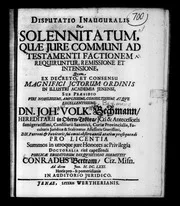
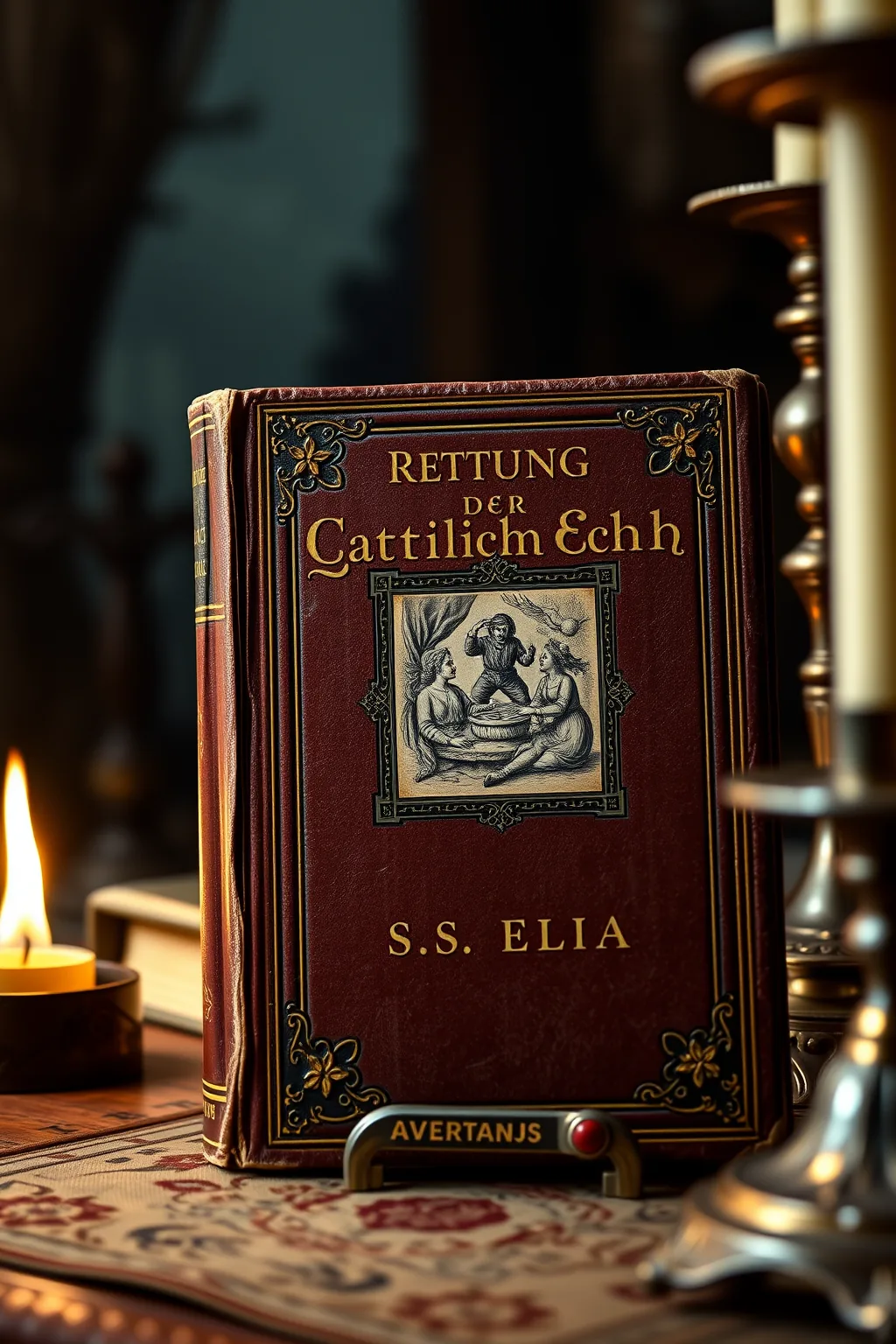
Rettung der Catholischen Ehr vnd Wahrheit, auff etlich vnd zwantzig Fragen, 1669: Iss 58
 80
80

Rettung der Catholischen Ehr vnd Wahrheit, auff etlich vnd zwantzig Fragen, 1669: Iss 58



Lorelei Sage, Contemplative Literature Editor: 'Rettung der Catholischen Ehr vnd Wahrheit' is a formidable intellectual defense, penned by Avertanus à S. Elia during a period of intense religious flux. This volume, Issue 58, masterfully tackles twenty-two critical questions, revealing a deep engagement with theological intricacies and the spiritual anxieties of the 17th century. Avertanus's lucid prose, even when dissecting complex doctrines, offers a compelling insight into the Carmelite perspective on maintaining 'Catholic Honor and Truth.' It is a vital resource for scholars of religious history and theology, and for seekers interested in historical apologetics and the defense of faith.
📝 Description
80
In 1669, Carmelite Prior Avertanus à S. Elia defended Catholic truth against twenty-two challenges.
Avertanus à S. Elia, Carmelite Prior at Ravensburg, authored 'Rettung der Catholischen Ehr vnd Wahrheit' in 1669. This work, appearing as the 58th in a series, addresses twenty-two specific questions concerning Catholic doctrine and perceived threats. Avertanus systematically dissects these issues, aiming to uphold the honor and truth of the Catholic faith. The text reflects the intense religious climate of the 17th century, a period marked by close examination of what constituted heresy, occult practices, and orthodox belief.
The book is driven by a clear concern for safeguarding religious knowledge. Avertanus presents his arguments as a defense against deviations from established dogma. Readers are encouraged to engage with detailed theological reasoning, to reflect on the nature of religious truth, and to understand the subtle influences that shape spiritual beliefs. For those interested in historical theology and the intellectual debates surrounding faith in that era, this volume offers insight into a 17th-century religious perspective.
Published in 1669, 'Rettung der Catholischen Ehr vnd Wahrheit' engages with the spiritual and intellectual currents of its time. While primarily a theological defense, its focus on scrutinizing perceived threats to doctrine, including boundaries with occultism, places it within a historical context where distinctions between established religion and less orthodox traditions were actively debated. The work addresses questions of truth and spiritual integrity that resonate with broader esoteric interests in discerning true knowledge from deceptive practices.
💡 Why Read This Book?
This book offers a rare glimpse into 17th-century theological debates and the rigorous defense of Catholic doctrine against contemporary challenges. It's essential for scholars of religious history, theology, and those interested in the intellectual battles for spiritual truth. For practitioners, it reveals historical approaches to theological argumentation and the preservation of sacred knowledge.
⭐ Reader Reviews
Honest opinions from readers who have explored this book.
❓ Frequently Asked Questions
What is the primary focus of 'Rettung der Catholischen Ehr vnd Wahrheit'?
The book's primary focus is the defense of Catholic honor and truth by addressing and refuting twenty-two significant questions or perceived challenges to the faith of the era.
Who was Avertanus à S. Elia and what was his role?
Avertanus à S. Elia was a Carmelite Prior at Ravensburg, a religious leader and theologian tasked with defending Catholic doctrine through intellectual discourse and argumentation.
What historical period does this book represent?
This book represents the mid-17th century, specifically 1669, a time marked by significant religious and philosophical shifts across Europe.
What kind of reader would benefit most from this text?
Scholars of religious history, theologians, students of 17th-century intellectual history, and those interested in the historical defense of religious doctrines would find this text highly beneficial.
Is this book available for free online reading?
Yes, this digitized work is accessible for free online reading through the Esoteric Library.
🔮 Key Themes & Symbolism
Theological Defense and Apologetics
This theme centers on Avertanus à S. Elia's meticulous approach to defending Catholic dogma against the perceived heresies and deviations of his time. It involves a deep dive into theological reasoning, scriptural interpretation, and the philosophical underpinnings required to safeguard the 'truth' as understood by the Catholic Church in the 17th century. The work showcases the intellectual rigor employed to counter challenges and maintain doctrinal purity, offering a historical case study in religious apologetics.
Spiritual Integrity and Perceived Threats
The book grapples with the concept of spiritual integrity and the various threats that could undermine it. This includes not only overt theological challenges but also the subtle influences that might lead individuals astray. Avertanus's work reflects the anxieties of an era where the boundaries of faith were constantly being tested, prompting a need to identify and guard against spiritual erosion, whether from external forces or internal doubts. The text emphasizes the importance of vigilance in maintaining a righteous path.
The Nature of Truth and Religious Certainty
Central to 'Rettung der Catholischen Ehr vnd Wahrheit' is the exploration of what constitutes religious truth and how certainty in faith is achieved and maintained. Avertanus argues for a specific understanding of truth, rooted in Catholic tradition and scripture, and seeks to fortify believers against doubt. The book implicitly questions the subjectivity of belief and posits an objective, divinely revealed truth, urging readers to adhere to established doctrines as the path to spiritual salvation and unwavering conviction.
💬 Memorable Quotes
Direct passages from the work, attributed to the author.
“The soul's purity is the mirror of divine light.”
— This aphorism suggests that a pure soul reflects God's grace and truth, emphasizing the connection between inner virtue and spiritual illumination.
“Heresy, like a creeping vine, chokes the roots of faith.”
— This metaphor vividly portrays heresy as a destructive force that gradually and insidiously undermines the fundamental principles of religious belief.
“In the crucible of doubt, faith is forged anew.”
— This suggests that periods of questioning and uncertainty, while challenging, can ultimately strengthen one's faith through rigorous examination and reaffirmation.
“The weight of dogma is the anchor of the soul.”
— This implies that established religious doctrines provide stability and security for the believer, preventing them from drifting into spiritual uncertainty.
💡 Key Ideas
Editorial paraphrase of the work's core concepts — not direct quotes.
Truth is a fortress, and reason its vigilant guardian.
This quote highlights the author's belief that truth is not easily assailed and requires intellectual defense, much like a fortress is protected by its guardians.
🌙 Esoteric Significance
Tradition
This work is deeply rooted in the scholastic tradition of Catholic theology, emphasizing rigorous logic, systematic argumentation, and scriptural exegesis. While not overtly 'esoteric' in the sense of hidden mystical practices, its defense of doctrine and its engagement with complex theological questions can be seen as a form of intellectual 'occultism'—the exploration of hidden or profound truths within a structured religious framework. It reflects a tradition that sought divine knowledge through reasoned inquiry and adherence to revealed dogma.
Symbolism
The text implicitly engages with symbolism through its theological arguments. The 'fortress' of truth, the 'mirror' of the soul, and the 'creeping vine' of heresy are all symbolic representations of abstract concepts. The very act of defending Catholic 'honor' and 'truth' can be seen as symbolic of preserving the divine order and spiritual purity against perceived chaos. The structured nature of theological questions and answers itself becomes a symbolic representation of the ordered universe sought by the Church.
Modern Relevance
In a contemporary world where religious beliefs are diverse and often challenged, the book's examination of defending doctrinal integrity remains relevant. It offers insights into historical methods of religious argumentation and the enduring human need for spiritual certainty. For scholars, it provides a historical lens into the intellectual field of 17th-century religious discourse. For those interested in the philosophy of religion, it raises questions about the nature of truth, belief, and the role of tradition in shaping spiritual understanding.
👥 Who Should Read This Book
This volume is essential for academic scholars specializing in 17th-century European history, theology, and the history of Catholicism. It will also greatly benefit students of religious studies and intellectual history seeking to understand the theological debates of the Counter-Reformation era. Seekers of deep theological understanding, particularly those interested in historical apologetics and the defense of religious doctrine, will find its arguments compelling. Practitioners of contemplative traditions, while perhaps not directly engaging with its polemics, can gain valuable historical context on the intellectual rigor applied to faith preservation.
📜 Historical Context
Published in 1669, 'Rettung der Catholischen Ehr vnd Wahrheit' emerges from the turbulent aftermath of the Thirty Years' War and a period of intense religious and intellectual scrutiny across Europe. The 17th century was a crucible for theological thought, marked by the Counter-Reformation's enduring influence, the rise of scientific inquiry, and persistent debates over doctrinal purity. This era saw a heightened awareness of perceived spiritual threats, including various Protestant movements, philosophical challenges to traditional authority, and widespread anxieties about superstition and occult practices. Avertanus à S. Elia, as a Carmelite Prior, was situated within this context, dedicating his work to defending the established Catholic faith against what he saw as corrosive influences, underscoring the vital role of intellectual engagement in preserving religious identity and societal order.
📔 Journal Prompts
Reflect on the author's definition of 'truth' in a 17th-century context. How does it compare to your own understanding of truth today?
Consider the 'threats' to faith described by Avertanus. Which of these threats, if any, resonate with contemporary challenges to religious belief?
Analyze the use of metaphors and symbolic language in the book. How do these literary devices enhance the theological arguments?
Explore the concept of 'vigilance' in spiritual matters as presented by the author. What does spiritual vigilance entail in your own life or practice?
How does the author's structured approach to defending faith inform your own methods of understanding or articulating your beliefs?
🗂️ Glossary
Apologetics
The branch of theology concerned with providing a rational basis for the doctrines of Christianity, defending it against objections and criticisms.
Dogma
A principle or set of principles laid down by an authority as incontrovertibly true; a core belief within a religious or political system.
Heresy
Belief or opinion contrary to orthodox religious (especially Christian) doctrine.
Scholasticism
A method of critical thought which dominated teaching by the most respected European philosophers from the 11th to the 17th centuries.
Counter-Reformation
The period of Catholic resurgence initiated in response to the Protestant Reformation, beginning roughly with the Council of Trent (1545–1563) and ending at the close of the Thirty Years' War (1648).
This book appears in 2 collections
🔮 Readers Also Liked
Browse all →








From the “Witchcraft” Collection
View all →







More Free Witchcraft & Paganism Books
View all →