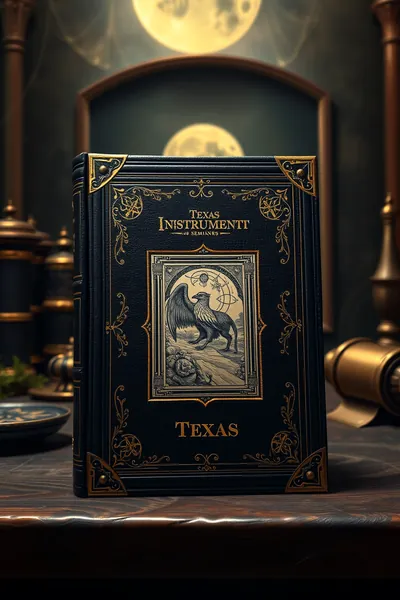
Inman T Ancient Pagan & Modern Christian Symbolism 1882

 75
75

Inman T Ancient Pagan & Modern Christian Symbolism 1882



As a seasoned explorer of the occult, I find 'Ancient Pagan & Modern Christian Symbolism' to be an indispensable cornerstone for any serious student of esoteric history. The author, though anonymous, possesses a rare gift for discerning the unbroken threads of mystical knowledge that bind disparate spiritual traditions. This volume masterfully illuminates how pagan iconography and concepts were ingeniously integrated, subtly transformed, or even consciously suppressed within the nascent Christian framework. Its strength lies in revealing the pervasive, often unconscious, symbolism that underpins Western religious thought. This work is essential for those seeking to understand the deeper currents of spiritual evolution and the persistent echoes of ancient wisdom.
📝 Description
75
Published in 1882, 'Ancient Pagan & Modern Christian Symbolism' examines shared symbols between older traditions and Christianity.
This 1882 book, attributed to an unknown author, investigates the connections between ancient pagan symbolism and Christian doctrine. It details how symbols originating in nature worship were adapted, transformed, or concealed within Christianity. The author argues that these symbols carry primal energies and cosmic significance, influencing human belief systems over vast periods.
The work approaches its subject with a scholarly yet intuitive perspective. It aims to uncover the hidden language of symbols and their role in shaping spiritual expression. Readers are encouraged to see how sacred imagery from different eras fuses to reveal a universal pattern of meaning. The book presents itself as more than a historical survey, suggesting an introduction to the lasting impact of symbolic representation.
Written during a period of intense occult revival and scholarly interest in comparative religion, this book fits within the broader esoteric tradition's exploration of hidden correspondences. It follows a line of thought that seeks universal patterns beneath diverse religious expressions, common in figures like Eliphas Levi or later Symbolists. The focus on 'secret correspondences' and 'hidden language' aligns with the alchemical and hermetic pursuit of unifying principles across seemingly disparate systems.
💡 Why Read This Book?
Unearth the hidden connections between ancient pagan rites and Christian dogma. This book offers a profound exploration of universal symbols, revealing the esoteric underpinnings of Western spirituality. Ideal for seekers of hidden knowledge, comparative religion scholars, and practitioners of witchcraft and paganism who wish to deepen their understanding of symbolic language and its enduring power.
⭐ Reader Reviews
Honest opinions from readers who have explored this book.
❓ Frequently Asked Questions
What is the primary focus of this book?
The book meticulously examines the shared symbolic language and conceptual underpinnings between ancient pagan traditions and early Christianity, exploring how symbols were transmuted and reinterpreted across these belief systems.
Who is the author of this book?
The author of 'Ancient Pagan & Modern Christian Symbolism' is officially unknown, adding an air of mystery and allowing the work's profound insights to stand on their own merit.
Is this book suitable for beginners in esoteric studies?
While scholarly, the book's accessible approach to symbolism makes it a valuable starting point for beginners interested in the historical and esoteric links between ancient and Christian beliefs.
What kind of symbolism does the book explore?
It delves into a wide array of symbols, including phallic and yoni imagery, solar and lunar motifs, animal representations, and architectural elements, illustrating their dual meanings in pagan and Christian contexts.
Can this book help in understanding modern paganism?
Absolutely. By illuminating the historical roots and symbolic continuity, the book provides crucial context for understanding the revival and evolution of pagan traditions today.
🔮 Key Themes & Symbolism
The Alchemical Transmutation of Symbolism
This theme explores the fascinating process by which ancient pagan symbols, imbued with primal energies and cosmic significance, were not merely replaced but often subtly integrated and reinterpreted within the developing Christian narrative. It highlights how essential archetypes, such as the phallus and the feminine principle, found new expressions and meanings, demonstrating a continuity of spiritual expression beneath the surface of doctrinal change. The work reveals an ongoing alchemical process where older forms were transmuted to serve new spiritual purposes, often preserving a hidden layer of meaning for those with the eyes to see.
Elements of the Primordial Goddess and God
A central pillar of the text is the tracing of ancient fertility cults and the worship of primordial divine couples—the Great Goddess and the Sky Father—into Christian iconography. It uncovers how aspects of these ancient deities, their myths, and their associated symbolism, such as the sacredness of certain animals or natural phenomena, resurfaced in the veneration of saints, the Virgin Mary, and Christ himself. This exploration illuminates the enduring power of these archetypal energies and their persistent influence on human spiritual perception across vast historical epochs.
The Veil of Obscurity and Esoteric Revelation
This theme looks at the deliberate or unconscious obscuring of overt pagan symbolism within Christian doctrine and practice. The book argues that many Christian rituals, festivals, and even theological concepts bear the indelible imprint of older traditions, often masked by new terminology or allegorical interpretations. It serves as a guide for the initiated, revealing the veiled meanings and hidden connections that lie beneath the exoteric surface of religious dogma, encouraging a deeper, more profound understanding of sacred history and the universal truths that transcend specific creeds.
💬 Memorable Quotes
Direct passages from the work, attributed to the author.
“The serpent, coiled and pregnant with wisdom, reappears in Christian iconography.”
— This highlights the enduring presence of ancient serpentine symbolism, often associated with knowledge and rebirth, even within Christian imagery.
“Where the pagan saw the divine in nature, the Christian found it in revelation.”
— This points to a fundamental shift in spiritual focus from immanent divinity in the natural world to transcendent divinity revealed through scripture and doctrine.
“The roots of the tree of faith are nourished by ancient waters.”
— This evocative metaphor suggests that Christian beliefs have drawn sustenance and foundational elements from older, pre-existing spiritual traditions.
“Symbolism is the eternal language of the soul.”
— This emphasizes the universal and timeless nature of symbolic communication, asserting its deep connection to the human spirit and its innate understanding.
💡 Key Ideas
Editorial paraphrase of the work's core concepts — not direct quotes.
Truth is not destroyed by being veiled, but rather gains a more potent charm.
This quote suggests that hidden truths, while concealed, retain their inherent power and may even become more alluring and significant when sought out and discovered.
🌙 Esoteric Significance
Tradition
This work is deeply embedded within the tradition of comparative mythology and esoteric hermeneutics. It aligns with the Hermetic principle of 'As Above, So Below,' seeking universal patterns and correspondences across different belief systems. It speaks to a Gnostic impulse to uncover hidden knowledge and to understand the spiritual lineage that connects humanity to its primordial origins, revealing the underlying Unity within apparent diversity.
Symbolism
The book's primary esoteric contribution lies in its meticulous deconstruction and recontextualization of universal symbols. It reveals how ancient symbols, such as the phallus, yoni, serpent, solar disk, and lunar crescent, were not discarded but transformed, often becoming latent within Christian imagery. It posits that these symbols carry inherent energetic and archetypal meanings that resonate across cultures and epochs, serving as conduits for spiritual understanding.
Modern Relevance
In an age seeking spiritual authenticity and reconnection with ancient wisdom, this book offers invaluable insights. It empowers modern practitioners of witchcraft and paganism to understand the historical roots and symbolic continuity of their practices. For scholars and seekers, it provides a framework for understanding the evolution of religious thought and the enduring power of archetypal symbolism in shaping human consciousness and culture.
👥 Who Should Read This Book
This book is a rich source for the discerning reader. **Beginners** in esoteric studies will find it an accessible yet profound introduction to the interconnectedness of spiritual traditions. **Scholars** of comparative religion, mythology, and history will appreciate its meticulous research and insightful analysis. **Seekers** of hidden knowledge and truth will be illuminated by its revelation of universal archetypes. **Practitioners** of witchcraft and paganism will discover the deep historical roots and symbolic resonance of their modern practices, fostering a richer and more informed spiritual journey.
📜 Historical Context
Published in 1882, 'Ancient Pagan & Modern Christian Symbolism' emerged during a period of intense intellectual and spiritual ferment. The late Victorian era witnessed a growing interest in comparative religion, mythology, and the origins of human belief systems, fueled by archaeological discoveries and burgeoning anthropological studies. This context fostered a climate where scholars and seekers alike were eager to explore the connections between seemingly disparate cultures and their spiritual expressions. The work also reflects a subtle but persistent undercurrent of occult revival and esoteric inquiry that characterized the era, appealing to those who suspected deeper, hidden meanings within established religious and cultural frameworks. It stands as a proof of the Victorian fascination with the ancient world and its enduring influence on the present.
📔 Journal Prompts
Reflect on a symbol you frequently encounter. How might its meaning have evolved across different cultures or historical periods?
Consider the concept of 'transmutation' in symbolism. Can you identify instances in your own spiritual path where old forms have been reinterpreted?
How does the idea of 'hidden knowledge' resonate with your personal spiritual quest?
Explore the connection between nature worship and your own spiritual or philosophical outlook.
If symbols are the 'eternal language of the soul,' what messages has your soul been trying to convey to you recently?
🗂️ Glossary
Phallic Symbolism
Symbolism associated with the male generative principle, often representing fertility, power, and life force, found in both ancient pagan and, covertly, in Christian contexts.
Yoni Symbolism
Symbolism representing the female generative principle, the womb, and the source of creation, frequently linked to the Great Goddess in ancient traditions.
Hermeneutics
The theory and methodology of interpretation, especially the interpretation of biblical texts, literature, and symbols, seeking to understand underlying meanings.
Archetype
A universal, inherited pattern of thought or imagery derived from the experience of the species and present in the individual unconscious, as in Jung's theory.
Exoteric
Intended for, or capable of being understood by, the general public; outward or overt, as opposed to esoteric.
This book appears in 2 collections
🔮 Readers Also Liked
Browse all →


![Practicae novae imperialis Saxonicae rerum criminalium pars I.[-III.] ... Editio quarta correctior, ... 1658: Iss 198](/img/thumb/practicae-novae-imperialis-saxonicae-rerum-criminalium-pars-i-iii-editio-quarta-correctior-1658-iss-198-carpzov-benedict-1595-1666.webp)






From the “Witchcraft” Collection
View all →





More Free Witchcraft & Paganism Books
View all →