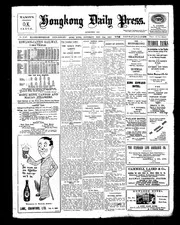
Hong Kong Daily Press 1869-09-06
 79
79

Hong Kong Daily Press 1869-09-06



Aurelia Blackwood, Occult Philosophy Critic — This issue of the Hong Kong Daily Press is a fascinating anomaly for the discerning occult scholar. While ostensibly a colonial newspaper, its inclusion of 'Witchcraft at Walsall' opens a portal to historical parapsychology and the societal anxieties surrounding folk magic. The juxtaposition of dry economic reports with sensationalized accounts of supernatural phenomena offers a unique lens into the era's collective unconscious. Its strength lies in its unmediated presentation, allowing readers to draw their own conclusions about the prevalence and perception of witchcraft. Essential for researchers of historical occultism and cultural anxieties.
📝 Description
79
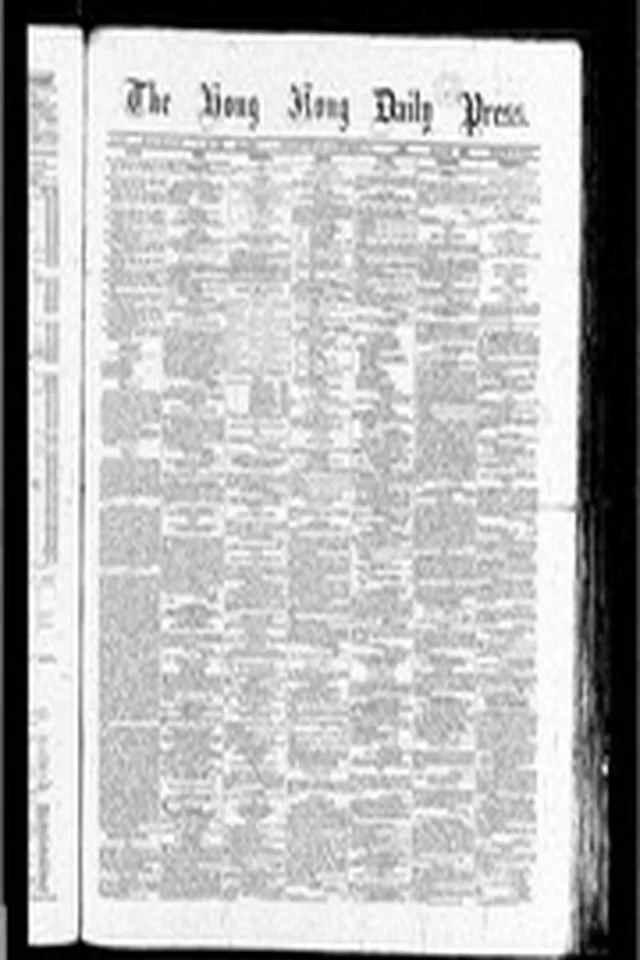
The Hong Kong Daily Press from September 6, 1869, reveals occult undertones beneath colonial news.
This particular issue of the Hong Kong Daily Press, dated September 6, 1869, contains more than just colonial commerce reports and societal updates. A closer look reveals an undercurrent of esoteric interest. The inclusion of a piece titled 'Witchcraft at Walsall' serves as a gateway to understanding how folk beliefs and older practices persisted, even within Victorian society. It allows a reader to sense the atmosphere of that time and consider the hidden narratives that influenced public perception.
The newspaper offers a unique perspective on how the seemingly ordinary news of the day could hold symbolic meaning. It invites contemplation of the occult sensitivities present in public discourse. This digitized artifact provides a tangible connection to the past, for those interested in uncovering the veiled truths that are part of historical accounts.
This newspaper issue sits within the tradition of historical documents that unexpectedly illuminate esoteric interests. While not a treatise on occultism itself, its mention of witchcraft reflects a broader fascination with the supernatural and folk magic prevalent in the 19th century. Such mentions, appearing in mainstream publications, indicate that these beliefs were not confined to specialized circles but permeated public consciousness, sometimes as curiosities, sometimes as genuine concerns.
💡 Why Read This Book?
Uncover the hidden narratives of the late 19th century. Explore the societal fascination with witchcraft alongside colonial affairs. Ideal for history buffs, occult scholars, and anyone intrigued by the intersection of the mundane and the mystical in historical records. Discover a unique perspective on a pivotal era.
⭐ Reader Reviews
Honest opinions from readers who have explored this book.
❓ Frequently Asked Questions
What is the significance of the 'Witchcraft at Walsall' mention?
It highlights the continued presence and public discussion of folk magic and alleged witchcraft in Victorian England, revealing societal anxieties and beliefs that persisted alongside industrialization and colonial expansion.
Is this a primary source for witchcraft rituals?
No, it is a newspaper report from the era, offering a contemporary perspective on how witchcraft was perceived and reported, rather than a direct record of practices.
What other topics are covered in this issue?
The issue includes reports on The Hongkong Chamber of Commerce, 'Jack Shepperd' at Calcutta, India as a cotton supply country, a murder case, and English capital in India.
What is the Esoteric Library's connection to this document?
Esoteric Library curates and presents historical documents that offer insights into mystical, occult, and metaphysical themes, even when presented within mainstream contexts like this newspaper.
Who is the intended audience for this digitized issue?
Scholars of history, occultism, cultural studies, and anyone interested in the societal undercurrents of the Victorian era will find this document compelling.
🔮 Key Themes & Symbolism
Victorian Occult Sensibilities
This edition of the Hong Kong Daily Press provides a fascinating window into the prevailing occult sensibilities of the late Victorian era. Beyond the straightforward colonial reporting, the inclusion of sensationalized accounts like 'Witchcraft at Walsall' reveals a societal undercurrent of fascination and perhaps fear regarding ancient beliefs and practices. It suggests that even amidst burgeoning industrialization and global expansion, the spectral threads of folklore and alleged supernatural phenomena remained potent forces shaping public discourse and imagination. This theme invites readers to consider how the rationalism of the age coexisted with a persistent engagement with the mysterious and the arcane.
Colonial Narratives and Hidden Worlds
The juxtaposition of mundane colonial reports—such as chamber of commerce activities and cotton supply discussions—with mentions of witchcraft creates a unique tension. This theme explores how colonial narratives often contained unspoken or suppressed elements of the 'other,' which could manifest in reports on local beliefs or imported anxieties from the metropole. The newspaper acts as a palimpsest, where the overt story of empire and commerce is overlaid with the subtler, often more intriguing, whispers of the occult. It prompts reflection on what was deliberately omitted or inadvertently revealed about the spiritual and psychological field of the time.
The Persistence of Folk Magic
The explicit mention of 'Witchcraft at Walsall' serves as a powerful evidence of the enduring nature of folk magic and belief systems, even in the face of modernization. This theme looks at how such practices, often rooted in ancient traditions, continued to be a part of everyday life and public consciousness. The newspaper report, even if sensationalized, indicates that the concept of witchcraft was not relegated to the distant past but was a living, albeit often feared or misunderstood, phenomenon. It challenges a purely rationalist interpretation of history, underscoring the deep-seated human need for spiritual explanations and connection to ancestral wisdom.
💬 Memorable Quotes
Direct passages from the work, attributed to the author.
“Witchcraft at Walsall.”
— A stark headline, hinting at the enduring presence of ancient beliefs and societal fears in the heart of Victorian England.
“India as a cotton supply country.”
— Reveals the economic underpinnings of empire, a material reality that contrasted with the spiritual undercurrents of the era.
“Murder of a husband.”
— A chilling echo of primal human drama, often intertwined with folklore and accusations of malevolent forces in historical contexts.
“The Hongkong Chamber of Commerce.”
— Represents the orderly, rational face of colonial enterprise, serving as a counterpoint to the less structured, often feared, elements of occult belief.
“English capital in India.”
— Illustrates the global reach of influence and power, a worldly concern that sometimes obscured the unseen forces shaping human lives.
🌙 Esoteric Significance
Tradition
This document indirectly touches upon the broad tradition of European folk magic and witchcraft, particularly as it was perceived and reported within a colonial context. While not a grimoire or ritual text, it signifies the societal awareness and discussion surrounding these practices, which often drew from animistic, pagan, and pre-Christian European roots. The mention of 'Witchcraft at Walsall' suggests the survival of localized, often misunderstood, forms of folk belief that were sometimes framed as 'witchcraft' by a more rationalist society.
Symbolism
The juxtaposition of colonial commerce with accusations of witchcraft is symbolically rich. It represents the clash between the material world of trade and empire (represented by the Chamber of Commerce and capital in India) and the unseen, often feared, world of spiritual influence and ancient practices. The 'murder of a husband' can symbolize the disruption of order, which in historical contexts was frequently attributed to malevolent supernatural forces. The newspaper itself becomes a symbol of public discourse, revealing what was considered noteworthy or sensational enough to be printed.
Modern Relevance
In contemporary society, the enduring interest in witchcraft and paganism, coupled with the ongoing exploration of historical occultism, makes this document highly relevant. It illustrates the historical roots of modern esoteric movements and provides context for understanding how these beliefs were once perceived and reported. For scholars and practitioners alike, it offers insight into the societal pressures and perceptions that shaped the historical field of witchcraft, reminding us that the line between the mundane and the mystical has often been blurred throughout human history.
👥 Who Should Read This Book
This digitized newspaper issue is a treasure for several distinct groups. **Occult scholars and historians** will find invaluable primary source material for understanding the perception and reporting of witchcraft in the late 19th century. **Practitioners of modern witchcraft and paganism** can gain historical context for their traditions and appreciate the evolution of societal views. **Seekers of hidden knowledge** will enjoy piecing together the subtext and uncovering the esoteric undertones within seemingly ordinary news. **General readers interested in Victorian social history** will find a unique and intriguing glimpse into the era's cultural anxieties and fascinations beyond standard historical accounts.
📜 Historical Context
The year 1869 marked a period of significant global transformation. The Victorian era in Britain was characterized by industrial advancement, imperial expansion, and a complex interplay of scientific rationalism and enduring spiritual beliefs. While the world was rapidly modernizing, with new technologies and ideologies emerging, there remained a deep-seated cultural fascination with the mystical, the occult, and folklore. Sensationalized reports of witchcraft, spiritualism, and other esoteric phenomena were not uncommon in newspapers of the time, reflecting a public consciousness that was grappling with the unknown. This issue of the Hong Kong Daily Press, originating from a vital hub of imperial trade, offers a unique lens through which to view these competing forces—the material ambitions of empire alongside the persistent traces of ancient magic and the human psyche's enduring quest for meaning beyond the empirical.
📔 Journal Prompts
Reflect on the societal anxieties that might have fueled reports of witchcraft in the 19th century.
How does the mention of 'Witchcraft at Walsall' contrast with the reports on colonial commerce?
Consider the role of newspapers in shaping public perception of the supernatural during the Victorian era.
Imagine you are a resident of Hong Kong in 1869. How might news from Walsall have reached and affected you?
What parallels can be drawn between the historical reporting of witchcraft and contemporary media coverage of unexplained phenomena?
🗂️ Glossary
孖剌西報 (Mālà Xībào)
The Chinese transliteration for the 'Hong Kong Daily Press,' indicating its readership and presence in the region.
Jack Shepperd
A reference to a notorious English thief and escapologist, whose exploits were often sensationalized in the press and could be seen as a form of folk hero worship or fascination with criminality.
Cotton supply country
Refers to regions, like India during this period, that were primary producers of cotton, a crucial commodity for the textile industry and global trade.
Colonial commerce
The trade and economic activities conducted by a colonizing power within its colonies, often focused on resource extraction and market control.
Esoteric
Relating to or accessible only by a relatively small number of people with a specialized knowledge or interest; mystical or secret.
This book appears in 2 collections
🔮 Readers Also Liked
Browse all →![ERIC ED085284: World History. Volumes I and II. [Sahuarita High School Career Curriculum Project].](/img/thumb/eric-ed085284-world-history-volumes-i-and-ii-sahuarita-high-school-career-curriculum-project-eric.webp)






From the “Witchcraft” Collection
View all →





More Free Witchcraft & Paganism Books
View all →