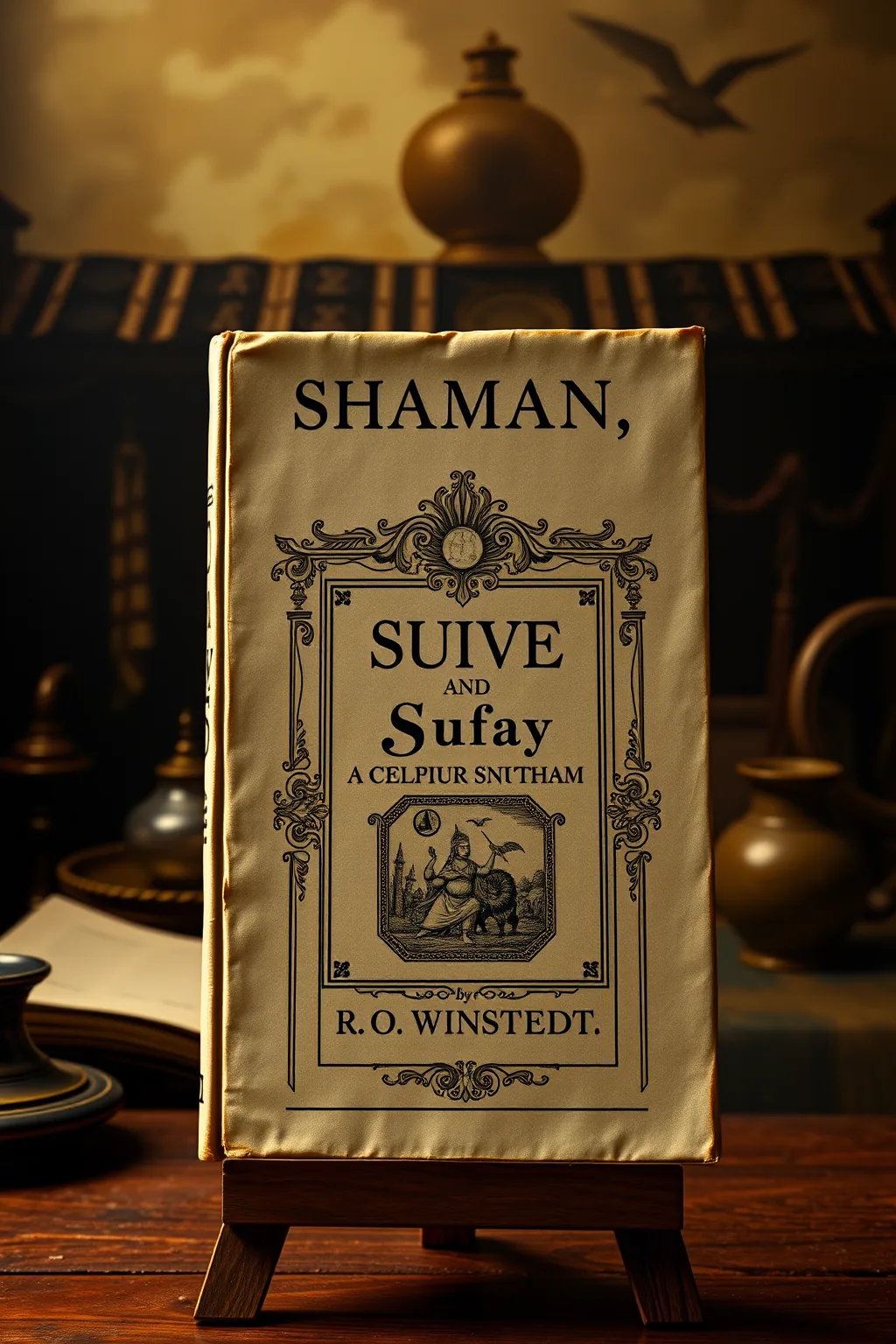
Shaman, Saiva and Sufi
 82
82

Shaman, Saiva and Sufi


Aurelia Blackwood (Occult Philosophy Critic) — R. O. Winstedt’s 'Shaman, Saiva and Sufi' is an indispensable key for unlocking the esoteric underpinnings of Malay culture. Winstedt masterfully deciphers the syncretic evolution of magic, demonstrating how shamanic practices absorbed and transmuted influences from Saivism and Sufism. His rigorous scholarship illuminates the complex symbology and ritualistic efficacy that form the bedrock of this unique magical tradition. This volume is essential for serious students of comparative mysticism, occult historians, and practitioners seeking to understand the deep currents of spiritual technology. It offers profound insights into the adaptive nature of esoteric knowledge across diverse cultural milieus.
📝 Description
82
First published in 1939, R. O. Winstedt's Shaman, Saiva and Sufi examines Malay magic's roots.
R. O. Winstedt's 1939 study, 'Shaman, Saiva and Sufi,' investigates the complex origins of Malay magical practices. The book details how indigenous animism, Hindu Saiva traditions, and Islamic Sufi mysticism converged to form this unique spiritual system. Winstedt analyzes specific elements like spells, amulets, and healing rituals, showing their symbolic meanings and historical development.
The work illuminates the cross-cultural influences that shaped Southeast Asian spiritual life over centuries. It presents a view of a world where the sacred and everyday existence were closely connected. The book invites readers to consider how these diverse influences reflect a broader human search for meaning and control over the forces of nature.
This book sits within the study of religious syncretism, specifically examining how distinct spiritual traditions interacted and merged in a particular geographic region. It maps the transmission and adaptation of shamanic, Hindu ascetic, and Islamic mystical elements within the Malay world. The work contributes to understanding how local beliefs absorb and transform external religious influences, creating unique spiritual expressions.
💡 Why Read This Book?
Embark on an intellectual and spiritual voyage to uncover the layered history of Malay magic. This book is for seekers of hidden knowledge, scholars of comparative religion and occultism, and practitioners interested in the cross-pollination of mystical traditions. Discover the profound connections between shamanism, Saiva philosophy, and Sufi mysticism, and understand their enduring impact on Southeast Asian spiritual practices.
⭐ Reader Reviews
Honest opinions from readers who have explored this book.
❓ Frequently Asked Questions
What is the central thesis of 'Shaman, Saiva and Sufi'?
The book's central thesis is that Malay magic evolved through a significant syncretism, absorbing and transforming elements from indigenous shamanism, Hindu Saivism, and Islamic Sufism over centuries.
What specific types of magic are explored?
It delves into various forms of Malay magic, including healing rituals, protective charms, divination practices, and the symbolic use of language and amulets.
Who was R. O. Winstedt?
R. O. Winstedt was a prominent scholar and administrator in the Malayan Civil Service, known for his extensive research into Malay culture, language, and history.
Is this book suitable for beginners in occult studies?
While scholarly, the book's clear explanations of concepts make it accessible to dedicated beginners interested in the historical and comparative aspects of magic and mysticism.
What is the significance of studying Saivism and Sufism in relation to Malay magic?
Studying Saivism and Sufism reveals how these major religious traditions influenced and were integrated into local magical systems, enriching their complexity and spiritual depth.
🔮 Key Themes & Symbolism
The Syncretic Nature of Malay Magic
This theme explores how the indigenous animistic and shamanistic practices of the Malay world did not exist in isolation but actively absorbed and integrated elements from more widespread religious and philosophical systems. Winstedt meticulously traces the infusion of Hindu Saiva asceticism and the mystical doctrines of Islamic Sufism into local magical traditions. This process wasn't a simple overlay but a deep transformation, where external ideas were reinterpreted and adapted to fit the existing cultural and spiritual framework, creating a unique and potent form of magic that reflects a long history of cultural exchange and spiritual synthesis.
Shamanism as a Foundational Force
The book highlights the enduring power and foundational role of shamanism in the Malay spiritual landscape. It examines the shaman's role as an intermediary between the human and spirit worlds, their methods of trance, healing, and divination, and the specific cosmologies that underpin their practice. Winstedt illustrates how these core shamanistic elements provided the structure into which later influences were woven, demonstrating the resilience and adaptability of ancient spiritual technologies. The shaman’s connection to nature, spirits, and ancestral powers remains a vital thread throughout the evolution of Malay magical practices.
The Esoteric Dimensions of Saivism and Sufism
Here, the focus shifts to the specific contributions of Saivism and Sufism to the development of Malay magic. Winstedt explores the yogic practices, philosophical concepts, and devotional aspects of Saivism that found resonance in Malay amulets, incantations, and ritualistic disciplines. Similarly, he investigates the influence of Sufi mysticism, including its emphasis on divine love, spiritual states, and esoteric knowledge, and how these ideas were incorporated into local healing arts and protective magic. This theme reveals the profound esoteric wisdom embedded within these major traditions and its transformative effect on regional spiritual practices.
💬 Memorable Quotes
Direct passages from the work, attributed to the author.
“The shaman, a conduit between worlds, still dances at the heart of the ancient rites.”
— This highlights the enduring power and centrality of shamanistic practices, portraying the shaman as a vital link to primal spiritual forces and traditions.
“Saiva yoga and Sufi dhikr find echoes in the whispered incantations and potent amulets.”
— This illustrates the tangible influence of Indian asceticism and Islamic mysticism on the practical manifestations of Malay magic, such as spells and talismans.
“In the Malay world, the sacred and the mundane are not separate realms, but intimately intertwined.”
— This speaks to the holistic worldview presented, where spiritual forces and practices permeate everyday life and actions, blurring the lines between the physical and the metaphysical.
“Knowledge of the unseen is power over the seen.”
— This profound statement captures the essence of magical philosophy, suggesting that understanding spiritual or hidden realities grants influence and control over the material world.
💡 Key Ideas
Editorial paraphrase of the work's core concepts — not direct quotes.
The magic of the Malay is a collection woven from the threads of indigenous belief, Hindu asceticism, and Islamic mysticism.
This quote expresses the book's core argument, emphasizing the blended nature of Malay magical practices as a result of significant cultural and religious cross-pollination.
🌙 Esoteric Significance
Tradition
The book looks at the esoteric dimensions of multiple traditions, primarily focusing on the syncretic magical practices of the Malay world. It illuminates how indigenous animism, the yogic and ascetic paths of Saivism, and the mystical, devotional aspects of Sufism converge. This exploration highlights the universal search for spiritual liberation, divine connection, and mastery over hidden forces, demonstrating how these diverse esoteric currents manifest in practical ritual and belief systems.
Symbolism
Central to Winstedt's work is the decoding of detailed symbolism embedded within Malay magic. This includes the symbolic language of incantations, the spiritual significance of natural elements used in rituals, the protective iconography on amulets, and the gestural and meditative practices derived from Saiva yoga and Sufi dhikr. The book reveals how these symbols act as conduits for spiritual power, facilitating communication with the unseen, invoking specific energies, and achieving desired outcomes in both the physical and spiritual realms.
Modern Relevance
In an age seeking deeper spiritual understanding and alternative healing modalities, 'Shaman, Saiva and Sufi' offers clear insights into enduring human practices. It demonstrates the adaptability and resilience of ancient mystical traditions in a globalized world. For modern practitioners and scholars, it provides a rich case study in comparative esotericism, offering timeless wisdom on the integration of diverse spiritual paths and the potent efficacy of symbolic ritual and focused intention in navigating life's challenges.
👥 Who Should Read This Book
This key work is essential for scholars of comparative religion, anthropology, and Southeast Asian studies, offering rigorous academic insight. Esoteric practitioners and occultists will find invaluable knowledge on the evolution of magical systems, cross-cultural spiritual technologies, and the practical application of symbolism. Seekers of hidden knowledge and alternative spiritual paths will discover a fascinating exploration of how diverse mystical traditions can interweave to create potent forms of ritual and belief. Beginners interested in the historical roots of magic and mysticism will find a comprehensive yet accessible introduction to a complex and vibrant tradition.
📜 Historical Context
Published in 1925, 'Shaman, Saiva and Sufi' emerged during a period of burgeoning anthropological and historical scholarship, particularly concerning colonial territories. The British Empire's reach facilitated extensive documentation of indigenous cultures and their belief systems. Winstedt, a product of this era and a member of the Malayan Civil Service, was uniquely positioned to conduct fieldwork and access archival materials. The early 20th century saw a growing academic interest in comparative religion, folklore, and the 'exotic' spiritual practices of non-Western societies. This book contributed to a broader understanding of cultural exchange and the complex interplay of religious and magical traditions, reflecting both the scholarly trends of its time and the colonial context that enabled its creation.
📔 Journal Prompts
Reflect on a personal experience where seemingly disparate beliefs or practices coalesced into a meaningful whole.
Consider the role of nature and its symbolism in your own spiritual or magical understanding.
How might the principles of intermediary roles (like the shaman) apply to modern forms of guidance or healing?
Explore the concept of 'hidden knowledge' and its pursuit in contemporary society.
Imagine a personal ritual that blends elements from different spiritual or cultural traditions you connect with.
🗂️ Glossary
Shaman
An individual who acts as an intermediary between the visible world and the spirit world, often performing healing, divination, and ritualistic ceremonies.
Saivism
A major tradition within Hinduism that worships Shiva as the supreme being, often involving ascetic practices, yoga, and devotion.
Sufism
The mystical dimension of Islam, focused on direct personal experience of God, spiritual discipline, and the pursuit of divine love through practices like dhikr (remembrance).
Animism
The belief that spirits inhabit natural objects, such as plants, animals, rocks, and rivers, and that these spirits can influence events.
Dhikr
A Sufi devotional practice involving the remembrance of God, often through repetitive chanting of divine names or phrases.
This book appears in 2 collections
🔮 Readers Also Liked
Browse all →








From the “Witchcraft” Collection
View all →


![Aloysii Charitini [pseud.] Discurs von trüglichen Kennzeichen der Zauberey, worinnen viel abergläubische Meinungen vernunfftmässig untersucht und verworffen; wie auch ... 1708: Iss 174](/img/thumb/aloysii-charitini-pseud-discurs-von-tr-glichen-kennzeichen-der-zauberey-worinnen-viel-abergl-ubische-meinungen-vernunfftm-ssig-untersucht-und-verworffen-wie-auch-1708-iss-174-brunneman-jacob-d-1735.webp)

More Free Witchcraft & Paganism Books
View all →