Discovrs prodigievx et espouuentable, de trois Espaignols & vne Espagnolle, magiciens & sorciers, qui se faisoient porter par les diables, de ville en ville, auec leurs declarations d'auoir fait mourir plusieurs personnes & bestail par leurs sorcille
 83
83

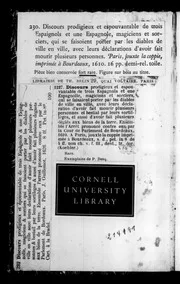
Discovrs prodigievx et espouuentable, de trois Espaignols & vne Espagnolle, magiciens & sorciers, qui se faisoient porter par les diables, de ville en ville, auec leurs declarations d'auoir fait mourir plusieurs personnes & bestail par leurs sorcille


Isolde Whitaker (Sacred Texts Editor) — This 'Prodigious and Terrifying Discourse' is an essential, albeit grim, primary document for anyone delving into the history of European witchcraft. The raw, unadulterated confessions, detailing diabolical transportation and widespread harm, offer a stark window into the fears that fueled persecution. Its strength lies in its unflinching portrayal of alleged sorcery, providing invaluable insights into the beliefs and accusations of the era. While not for the faint of heart, scholars and practitioners seeking to understand the historical roots of magical anxieties and the perceived power of dark arts will find this volume profoundly illuminating. A crucial addition to any collection on historical occultism.
📝 Description
83
Published in the 17th century, 'Discovrs prodigievx et espouuentable' details confessions of alleged sorcerers.
This 17th-century text recounts the confessions of four Spanish individuals accused of sorcery. Three men and one woman claimed to be transported between towns by demonic forces, a practice they attributed to their pacts with devils. Their declarations also included confessions of causing deaths among people and livestock, along with widespread agricultural destruction, all blamed on their malevolent enchantments.
The book provides a direct look at the fears surrounding witchcraft in early modern Europe. It reveals anxieties about threats to social structures and the natural world. This primary source is valuable for understanding historical manifestations of fear and superstition. It shows the narratives that propelled witch hunts and touches on themes of forbidden knowledge, dealings with dark entities, and the results of violating divine and natural laws.
This account falls within the tradition of demonological literature that circulated widely in early modern Europe. Such works often presented confessions and testimonies of individuals accused of witchcraft, framing their alleged powers and actions as direct results of pacts with demonic forces. These narratives served to both document and reinforce prevailing beliefs about the supernatural, the perceived dangers of heresy, and the mechanisms by which evil was thought to operate in the world.
💡 Why Read This Book?
Unearth authentic confessions of alleged diabolical pacts and dark magic. Explore the historical anxieties surrounding witchcraft and its perceived destructive power. Gain a raw, unfiltered glimpse into the fears and beliefs of 17th-century Europe. Ideal for scholars, occult practitioners, and history enthusiasts fascinated by the darker aspects of human belief.
⭐ Reader Reviews
Honest opinions from readers who have explored this book.
❓ Frequently Asked Questions
What is the primary focus of this discourse?
The primary focus is the confessions of four Spanish individuals accused of being magicians and sorcerers, detailing their alleged pacts with devils, supernatural transportation, and acts of harm against people and livestock.
What year was this discourse originally published?
This discourse was originally published in 1610.
What historical events or periods does this document relate to?
It directly relates to the period of intense witch hunts and anxieties surrounding magic and the occult in early modern Europe.
Are the claims in this document factual accounts of magic?
This document presents alleged confessions and accusations from a specific historical context. It is crucial to approach it as a primary source reflecting beliefs and societal fears of the time, rather than a factual account of magic.
What kind of 'degats' (damages) are mentioned?
The 'degats' mentioned refer to damages inflicted upon property and land, suggesting the sorcerers were accused of causing blight, destruction, or other forms of agricultural ruin.
🔮 Key Themes & Symbolism
Diabolical Pacts and Infernal Transportation
This theme examines the core accusation: the alleged pacts made with demonic entities, which enabled the sorcerers to defy natural laws. The 'transportation by devils' is a powerful metaphor for the perceived ability of witches to traverse vast distances instantaneously, facilitated by dark forces. This concept highlights the fear of unseen powers and the belief in a spiritual hierarchy that could be manipulated for malevolent purposes. It speaks to a worldview where the boundaries between the physical and spiritual realms were fluid and fraught with peril, and where human agency could be usurped by infernal influence.
Witchcraft as a Force of Destruction
The discourse vividly portrays witchcraft as a destructive force, capable of causing death to humans and animals, and ruin to the land. This reflects the deep-seated anxieties of early modern societies, particularly those reliant on agriculture, where unexplained calamities like famine, disease, or pestilence could be readily attributed to malevolent supernatural intervention. The accusations of 'degats aux biens de la terre' underscore the fear of witches undermining the very sustenance of life, positioning them as enemies of prosperity and divine order, and justifying harsh punitive measures.
Confession and Accusation as Historical Evidence
This text is invaluable as a primary source, offering direct (albeit coerced) confessions that reveal the language, beliefs, and perceived mechanisms of witchcraft during the period. The act of confession itself, often extracted under duress, becomes a crucial element in understanding the legal and social machinery of witch hunts. Examining these declarations allows scholars and practitioners to reconstruct the narrative frameworks used to identify, prosecute, and condemn individuals accused of sorcery, providing a tangible link to the mindset of those who believed in and feared such practices.
💬 Memorable Quotes
Direct passages from the work, attributed to the author.
“Qui se faisoient porter par les diables, de ville en ville.”
— This phrase captures the terrifying spectacle of supernatural mobility, suggesting a defiance of earthly limitations through infernal aid, a core fear in witchcraft accusations.
“leurs declarations d'auoir fait mourir plusieurs personnes & bestail.”
— The chilling admission of causing death to both humans and animals highlights the perceived direct and devastating impact of witchcraft on the community's well-being.
“& aussi d'auoir fait plusieurs degats aux biens de la terre.”
— This speaks to the accusation of witches as agents of agricultural ruin, threatening the very foundation of sustenance and prosperity for the community.
“Discovrs prodigievx et espouuentable.”
— This opening captures the extraordinary and terrifying nature of the confessions, immediately setting a tone of dread and fascination for the reader.
“trois Espaignols & vne Espagnolle, magiciens & sorciers,”
— The identification of the accused as Spanish magicians and sorcerers places the narrative within a specific cultural and geographical context, hinting at regional variations in witchcraft lore.
🌙 Esoteric Significance
Tradition
This text aligns with the broader tradition of demonology and historical witchcraft studies, offering a tangible, albeit grim, proof of the beliefs surrounding pacts with infernal forces. While not explicitly part of a formal esoteric school, it illuminates the popular understanding and fear of occult practices, particularly those involving direct engagement with demonic entities. It provides insight into the historical anxieties that shaped perceptions of magic and the supernatural, a foundational element for understanding many later esoteric movements that sought to reclaim or redefine these practices.
Symbolism
The 'transportation by devils' symbolizes the ultimate loss of human autonomy and the terrifying prospect of being utterly controlled by malevolent spiritual forces. The destruction of crops and livestock ('degats aux biens de la terre') serves as a potent symbol of chaos and the subversion of divine order, representing the fear of nature itself being corrupted. The confessions, in their starkness, symbolize the vulnerability of individuals within a society where such accusations could lead to devastating consequences, highlighting the symbolic power of confession in the machinery of control and damnation.
Modern Relevance
In contemporary times, this discourse remains relevant for understanding the historical roots of occult studies and the enduring human fascination with forbidden knowledge and power. It provides a stark contrast to modern, often more nuanced, explorations of magic and witchcraft, highlighting the historical context of fear and superstition. For practitioners, it offers a cautionary tale and a deep dive into the historical perception of dark arts. For scholars, it remains an invaluable primary source for analyzing societal anxieties, religious beliefs, and the socio-legal constructs surrounding witchcraft, offering lessons on the dangers of mass hysteria and the manipulation of fear.
👥 Who Should Read This Book
Scholars of early modern history, religious studies, and folklore will find this a crucial primary source for understanding the realities and perceptions of witchcraft. Occult practitioners interested in the historical development of magical beliefs and demonology will gain valuable context. Seekers of dark histories and enthusiasts of the macabre will be captivated by the raw confessions and chilling narratives. Beginners in occult studies should approach with an awareness of the historical context and the coercive nature of confessions, while advanced practitioners may find resonance with historical depictions of pacts and their perceived consequences.
📜 Historical Context
Published in 1610, 'Prodigious and Terrifying Discourse' emerges from the heart of the European witch craze, a period marked by widespread fear and persecution of individuals accused of practicing witchcraft. This era, spanning roughly from the late 15th to the mid-18th century, witnessed thousands of trials and executions across the continent. The prevailing belief systems, deeply intertwined with religious dogma and folklore, attributed natural disasters, illnesses, and misfortunes to the malevolent actions of witches who allegedly consorted with the Devil. This text, in its raw and sensational recounting of confessions, provides a vital primary source reflecting the anxieties, legal practices, and demonological theories that fueled these witch hunts. It offers a window into the collective psyche of a society grappling with perceived threats from both earthly and supernatural realms, where the fear of the unknown was often projected onto marginalized individuals.
📔 Journal Prompts
Reflect on the concept of 'diabolical transportation' – what does it symbolize about societal fears of control and freedom?
How might the accusations of destroying crops and livestock reflect the anxieties of an agrarian society?
Consider the role of confession in historical witch trials. What does it reveal about power dynamics and belief systems?
If you were living in 1610, how might you interpret unexplained misfortunes based on the beliefs presented in this text?
Analyze the psychological impact of living in a society where such accusations could lead to severe punishment.
🗂️ Glossary
Discovrs
An old French term for discourse, meaning a spoken or written account of events or ideas, often formal or public.
Prodigievx
Prodigious; extraordinary, marvelous, or unusually great in size or degree, often implying something beyond natural explanation.
Espouuentable
Appalling, dreadful, or terrifying; inspiring extreme fear or horror.
Sorciers
Sorcerers; individuals who practice magic, often with malevolent intent, believed to have supernatural powers.
Degats
Damages or destruction, particularly to property, crops, or livestock, as attributed to the actions of witches in this context.
This book appears in 2 collections
🔮 Readers Also Liked
Browse all →






![Magic, witchcraft, animal magnetism [&c.].](/img/thumb/magic-witchcraft-animal-magnetism-c-james-braid.webp)

From the “Witchcraft” Collection
View all →


![Aloysii Charitini [pseud.] Discurs von trüglichen Kennzeichen der Zauberey, worinnen viel abergläubische Meinungen vernunfftmässig untersucht und verworffen; wie auch ... 1708: Iss 174](/img/thumb/aloysii-charitini-pseud-discurs-von-tr-glichen-kennzeichen-der-zauberey-worinnen-viel-abergl-ubische-meinungen-vernunfftm-ssig-untersucht-und-verworffen-wie-auch-1708-iss-174-brunneman-jacob-d-1735.webp)

More Free Witchcraft & Paganism Books
View all →