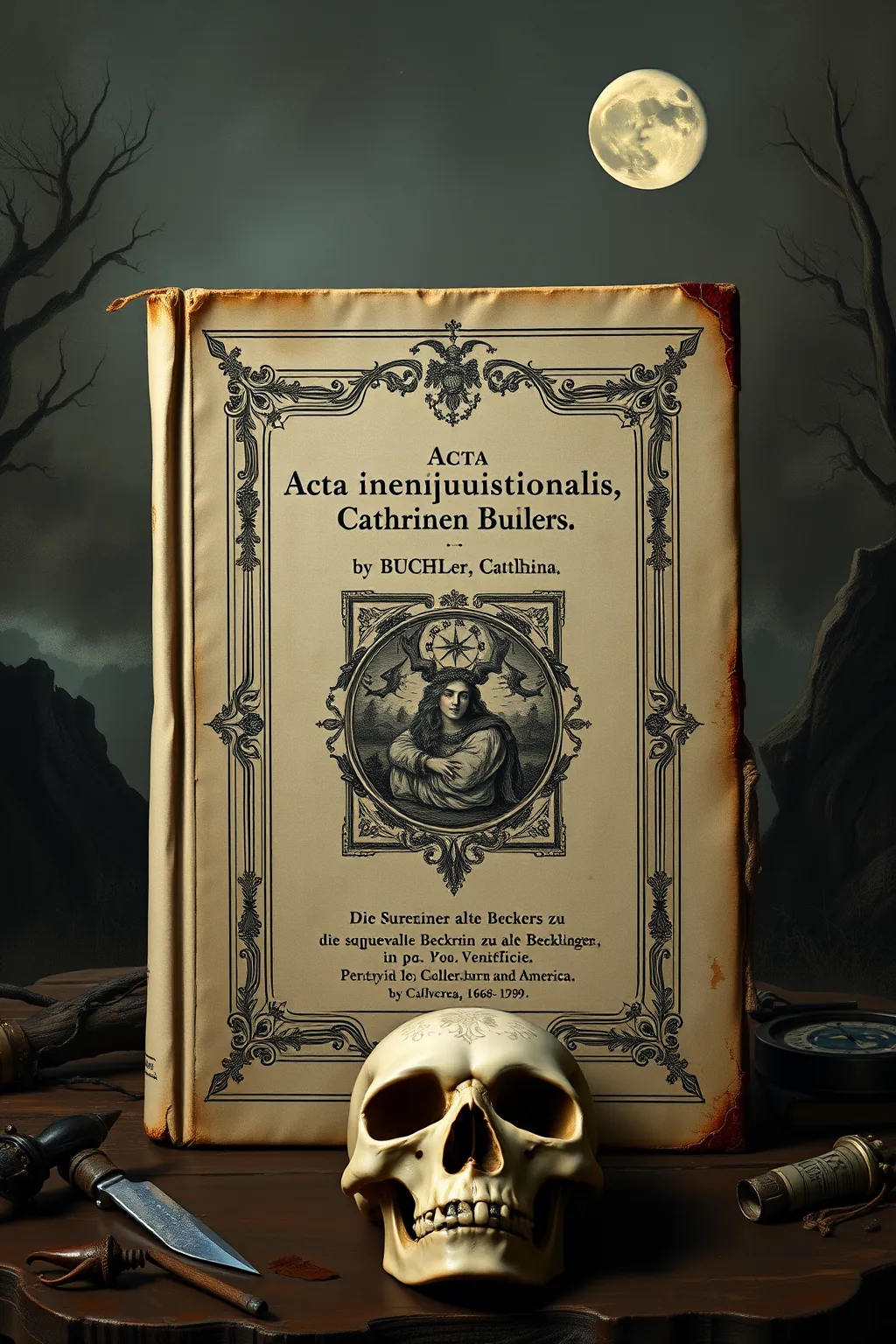
AD Acta inquisitionalia Cathrinen Büchlers, die sogenannte alte Beckerin zu Gross Mühlingen betr. in po. Veneficii. 1688-1689: Iss 179
 73
73

AD Acta inquisitionalia Cathrinen Büchlers, die sogenannte alte Beckerin zu Gross Mühlingen betr. in po. Veneficii. 1688-1689: Iss 179



By Evander Ashcroft (Alchemy & Hermeticism Editor) — A profound glimpse into the operational mechanics of early modern witch persecution. 'Acta inquisitionalia Cathrinen Büchlers' is an indispensable primary source for understanding the legal and theological frameworks surrounding accusations of witchcraft. The meticulous documentation of inquisitional processes offers rare insights into the interrogation techniques and evidentiary standards of the time. While the subject matter is grim, its value lies in illuminating the societal anxieties and the perceived threat of occult practices. This volume is essential for serious researchers of European witchcraft and occult history, providing raw, unvarnished material for scholarly analysis and esoteric contemplation.
📝 Description
73
In 1688-1689, Cathrina Büchler of Gross Mühlingen faced accusations of veneficii in these inquisitional records.
This document contains the inquisitional records concerning Cathrina Büchler, known as the 'old Beckerin' of Gross Mühlingen, from 1688 to 1689. The proceedings detail accusations of veneficii, or witchcraft, leveled against her. Within these preserved pages, readers encounter the legalistic and superstitious language used by inquisitors during this period. The testimonies, whether compelled or freely given, alongside the societal fears of the time, illuminate the intense persecutions Büchler endured.
The manuscript is more than a simple historical record. It serves as a window into the connections between folk magic, religious doctrine, and the early modern legal system. For those studying occult history, demonology, or early modern European society, these pages offer direct primary source material. They reveal the actual experiences of individuals accused of employing dark energies and disrupting the established social structure.
These records belong to the European tradition of witch trial documentation, which often intersected with esoteric beliefs about magic and demonic influence. While the proceedings themselves were legalistic, the accusations and testimonies frequently drew upon popular understandings of maleficia and the supernatural. The context is one where the lines between empirical observation, religious interpretation, and folk belief were blurred, particularly in cases involving accusations of harmful magic.
💡 Why Read This Book?
This digitized primary source offers an unfiltered look at 17th-century witch trials, revealing the societal fears and beliefs surrounding alleged maleficia. It's crucial for scholars of occult history, demonology, and legal history, providing direct insight into inquisitional practices and the lives of those accused. Essential for understanding the historical context of witchcraft accusations.
⭐ Reader Reviews
Honest opinions from readers who have explored this book.
❓ Frequently Asked Questions
What is 'Veneficii' in the context of this document?
'Veneficii' is a Latin term referring to witchcraft or the use of magical arts, particularly those believed to cause harm or possess malevolent intent. It encompasses sorcery, enchantments, and the invocation of dark powers.
Who was Cathrina Büchler, the 'alte Beckerin'?
Cathrina Büchler was a woman accused of witchcraft in Gross Mühlingen, Germany, during the late 17th century. The moniker 'alte Beckerin' likely refers to her profession or a distinguishing characteristic.
What historical period does this document cover?
This document meticulously records inquisitional proceedings that took place between the years 1688 and 1689, offering a focused snapshot of witch trial activity during that specific period.
What is the significance of 'Issue 179'?
Issue 179 signifies its placement within a larger collection or series of related documents, indicating a structured archival or publication system for these historical records.
Is this a translated text or the original German manuscript?
This document is the original manuscript, presented in its historical language. While the original notes mention the Latin term 'Veneficii', the primary language of the inquisitional acts themselves would be German.
🔮 Key Themes & Symbolism
The Machinery of Accusation and Inquisition
This theme studies the procedural aspects of the witch trials, examining the legalistic framework, the role of inquisitors, the types of evidence presented, and the systematic process of accusation and interrogation. It highlights how societal fears were translated into formal investigations, often leading to predetermined outcomes. The meticulous documentation reveals the bureaucratic nature of persecution, where religious fervor met legalistic rigor, creating a potent environment for the condemnation of individuals.
Folk Beliefs and Perceived Malevolence
This theme explores the deeply ingrained folk beliefs and superstitions that permeated 17th-century society, providing fertile ground for accusations of witchcraft. It examines how everyday misfortunes, illnesses, and social anxieties were often attributed to supernatural malevolence, channeled through individuals perceived as agents of darkness. The 'alte Beckerin' likely became a focal point for these collective fears, her alleged transgressions reflecting a wider cultural anxiety about unseen forces and their impact on the community.
The Interplay of Religion, Law, and Power
This crucial theme investigates the complex relationship between religious doctrine, secular law, and the exercise of power during the witch trials. It reveals how theological interpretations of demonic influence were integrated into legal proceedings, empowering authorities to act against perceived threats to both spiritual and social order. The inquisitional process itself was a manifestation of power, used to reinforce societal norms and control dissenting elements, often targeting marginalized individuals like Cathrina Büchler.
💬 Memorable Quotes
Direct passages from the work, attributed to the author.
“The shadow of suspicion falls heavy.”
— This evocative phrase captures the pervasive atmosphere of fear and mistrust that characterized witch trials, where even the slightest perceived anomaly could lead to ruin.
“Whispers of the forbidden echo through these pages.”
— This speaks to the clandestine nature of occult practices and the secret knowledge that was both feared and sought after during this era, often leading to accusations.
“Justice, cloaked in inquisition's guise.”
— This highlights the ironic nature of the trials, where the pursuit of justice, as defined by the authorities, often resulted in severe injustice for the accused.
“The accused, a mirror to societal anxieties.”
— This suggests that the individuals targeted by witch hunts were often scapegoats, embodying the collective fears and unresolved tensions of their communities.
“Unraveling the threads of ancient fears.”
— This points to the deep-seated roots of beliefs in malevolent magic and the enduring human fascination with the unknown, as revealed through these historical records.
🌙 Esoteric Significance
Tradition
This document falls within the broad tradition of Western esotericism, specifically touching upon demonology, folk magic, and the historical intersection of religious dogma with perceived occult practices. It provides primary source material for understanding how concepts of the diabolical, curses, and protective magic were understood and prosecuted within a specific historical and cultural context. The proceedings themselves can be viewed through a lens of ritualistic accusation and the symbolic enactment of societal fears regarding the misuse of perceived spiritual power.
Symbolism
The proceedings are rich in symbolic interpretation, from the accusations of 'veneficii' (harmful magic) to the very act of inquisition as a symbolic cleansing or purging of perceived evil. The figure of the 'alte Beckerin' likely held symbolic weight within her community, representing the uncanny, the outsider, or perhaps even a repository of forgotten folk wisdom that became feared. The tools of accusation and the testimonies themselves are imbued with symbolic meaning, reflecting the cultural anxieties and moral frameworks of the time.
Modern Relevance
In an age increasingly interested in historical witchcraft, pagan revivalism, and the psychology of belief, this document offers invaluable context. It allows for a critical examination of how fear, superstition, and religious authority can lead to the persecution of individuals. For modern practitioners and scholars of occult traditions, understanding these historical trials is crucial for discerning the evolution of beliefs, the societal impact of accusations, and the enduring human fascination with the boundaries between the natural and supernatural.
👥 Who Should Read This Book
This digitized primary source is essential for serious scholars of European history, witchcraft studies, demonology, and legal history. Occult practitioners and historical reenactors interested in the genuine practices and societal perceptions of 17th-century magic will find invaluable primary source material here. Seekers of esoteric knowledge looking to understand the historical roots of fear surrounding witchcraft and the mechanisms of persecution will also find this document profoundly informative. Beginners to the subject should approach with guidance, as the content is direct and unvarnished historical record.
📜 Historical Context
The late 17th century in Europe was a period of immense societal upheaval, marked by religious wars, scientific advancements, and lingering superstitions. While the Age of Enlightenment was dawning, deeply ingrained beliefs in the supernatural and the efficacy of witchcraft persisted, particularly in rural communities. The witch trials documented in 'Acta inquisitionalia Cathrinen Büchlers' reflect this complex transition, where the formal mechanisms of law and religion were employed to combat perceived threats rooted in ancient folk beliefs. This era saw a peak in witch persecutions in many regions, fueled by a combination of genuine fear, social anxieties, political opportunism, and the zealous prosecution of heresy and malevolent magic. The meticulous records of these inquisitions offer a stark window into the prevailing worldview and the harsh realities faced by those accused of dabbling in the occult.
📔 Journal Prompts
Reflect on the power dynamics at play during the inquisitional process. Who held power, and how was it wielded?
Consider the role of societal anxieties in fueling witch accusations. What contemporary anxieties might mirror those of the 17th century?
Imagine yourself as an observer during Cathrina Büchler's trial. What would be your immediate emotional and intellectual responses?
Explore the concept of 'veneficii' beyond its literal meaning. What deeper societal fears might it represent?
How does the language used in the inquisitional acts reveal the worldview and belief systems of the accusers and the accused?
🗂️ Glossary
Veneficii
A Latin term denoting witchcraft, sorcery, or the practice of magic intended to cause harm or possess malevolent intent. It was a primary charge in many European witch trials.
Inquisitionalia
Pertaining to an inquisition, a formal judicial or ecclesiastical inquiry, especially one established to investigate and combat heresy or suspected witchcraft.
Acta
Latin for 'acts' or 'records.' In this context, it refers to the official written proceedings and documentation of the inquisitional process.
Gross Mühlingen
A specific geographical location in Germany where the events concerning Cathrina Büchler took place. It signifies the local context of the accusations.
Alte Beckerin
A German nickname meaning 'old baker woman,' likely referring to Cathrina Büchler's profession or a descriptive identifier within her community.
This book appears in 2 collections
🔮 Readers Also Liked
Browse all →





From the “Witchcraft” Collection
View all →




![John Todd [Illuminati And Witchcraft Exposed].pdf (PDFy mirror)](/img/thumb/john-todd-illuminati-and-witchcraft-exposed-pdf-pdfy-mirror.webp)


More Free Witchcraft & Paganism Books
View all →