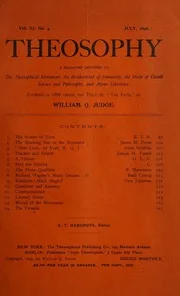
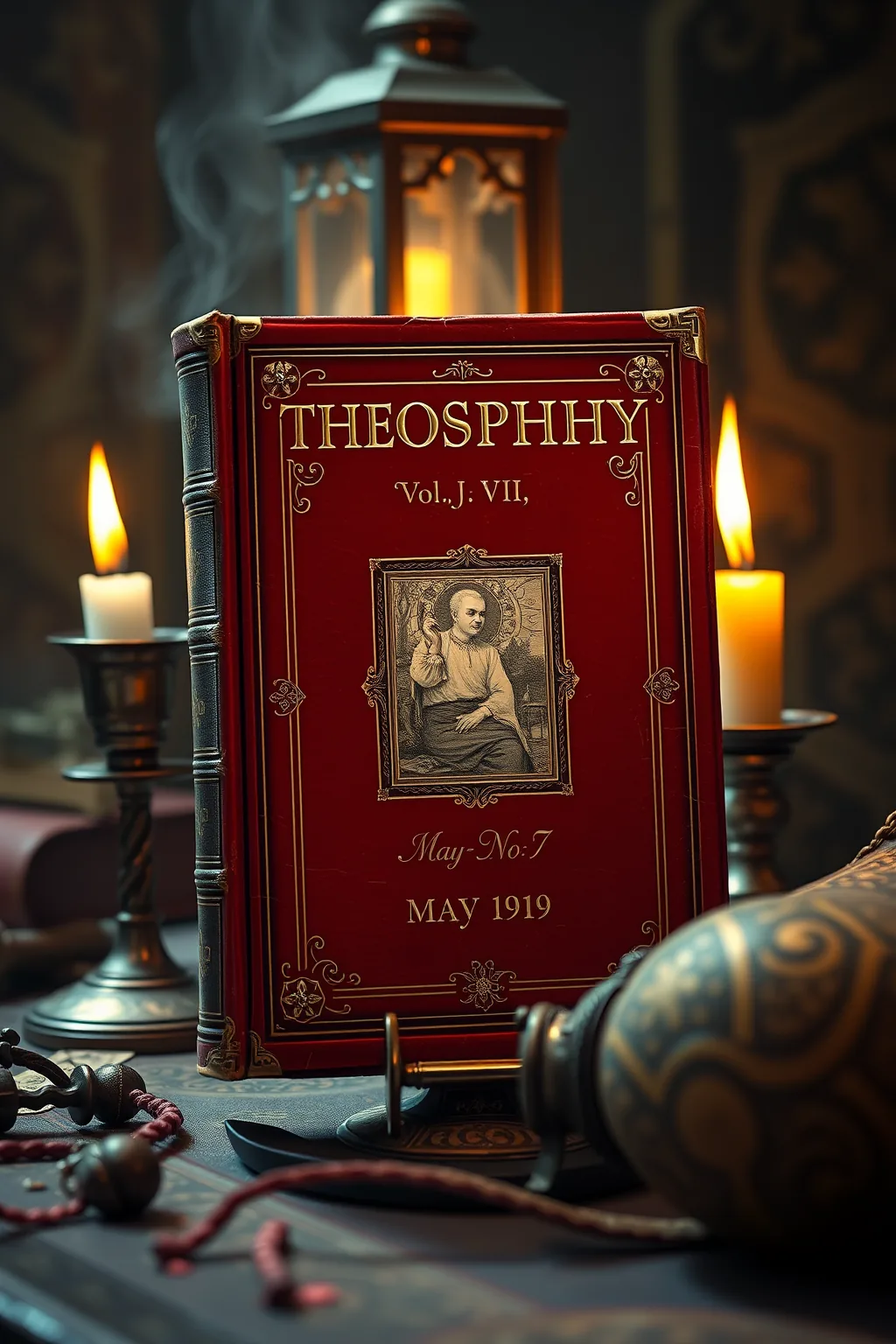
Theosophy Vol-VII,No-7,May 1919
 72
72

Theosophy Vol-VII,No-7,May 1919


Balthazar Finch (Senior Critic, Occult Philosophy) — As a beacon from a pivotal era in esoteric thought, 'Theosophy Vol-VII, No-7, May 1919' continues to resonate with profound clarity. This issue offers a potent distillation of Theosophical principles, exploring themes of reincarnation, karma, and the evolution of consciousness with a rigor seldom found today. The unknown authors contribute deeply, weaving intricate arguments that challenge conventional thought. Its strength lies in its direct engagement with the subtler aspects of existence, making it an indispensable resource for those dedicated to the Great Work. Highly recommended for students of comparative religion and spiritual philosophy.
📝 Description
72
Delve into the luminous heart of spiritual wisdom with 'Theosophy Vol-VII, No-7, May 1919.' This foundational issue from the Esoteric Library unfurls a tapestry of profound insights, echoing the ancient quest for hidden knowledge. Within its pages lie esoteric doctrines and philosophical explorations, illuminating the intricate pathways of consciousness and the unseen forces that shape our reality. The atmosphere is one of quiet contemplation and profound revelation, inviting earnest seekers and seasoned scholars alike to engage with timeless truths. This journal is more than a historical artifact; it's a gateway to understanding the deeper currents of existence, a philosophical compass for navigating the spiritual landscape. Each article is a beacon, guiding the reader towards a more enlightened perception of the self and the cosmos. Prepare to have your understanding expanded and your spiritual curiosity ignited by this compelling collection.
💡 Why Read This Book?
Uncover the foundational concepts of Theosophy in a seminal 1919 publication. This issue offers a direct connection to the early discussions on karma, reincarnation, and the nature of the soul. Ideal for spiritual seekers, students of occult history, and practitioners seeking to deepen their understanding of ancient wisdom traditions. It provides critical context for modern metaphysical thought.
⭐ Reader Reviews
Honest opinions from readers who have explored this book.
❓ Frequently Asked Questions
What is Theosophy?
Theosophy is a spiritual philosophy that seeks to understand the underlying principles of all religions and sciences, emphasizing universal brotherhood and the exploration of hidden spiritual truths through study and intuition.
Who were the authors of this issue?
The authors for this specific issue are listed as 'Unknown,' a common practice in early esoteric publications to emphasize the message over individual personalities.
What is the significance of the May 1919 date?
The May 1919 date places this issue within a crucial period of post-WWI spiritual awakening and widespread interest in esoteric and occult movements seeking answers to global turmoil.
Are the concepts discussed still relevant today?
Absolutely. Theosophy's core tenets concerning karma, reincarnation, and spiritual evolution remain highly relevant to contemporary discussions on consciousness, ethics, and personal growth.
Can this issue be understood by beginners?
While some concepts may be advanced, the foundational nature of the articles makes it accessible to earnest beginners willing to engage with philosophical inquiry and open their minds.
🔮 Key Themes & Symbolism
The Unfolding of Consciousness
This theme delves into the intricate journey of human consciousness, tracing its evolution through various stages of existence. It explores the concept of the "Monad" and its descent and ascent through the planes of being, offering a framework for understanding personal growth and spiritual awakening. The articles illuminate how consciousness interacts with the material world and the subtle bodies, providing insights into the purpose of life and the grand cosmic plan.
Karma and Reincarnation: The Law of Cause and Effect
Central to Theosophical teachings, this theme meticulously examines the immutable laws of Karma and Reincarnation. It posits that every action, thought, and word creates ripples of effect that shape an individual's present and future lives. The journal unpacks the intricate mechanisms of this cosmic justice, emphasizing personal responsibility and the potential for liberation through conscious living and the purification of desires. It's an exploration of destiny and free will intertwined.
The Seven Principles of Man and the Astral Plane
This section offers a profound exposition of the sevenfold constitution of human beings, moving beyond the physical form to explore the etheric, astral, mental, and higher spiritual bodies. It sheds light on the nature of the astral plane, the realm of emotions and desires, and its influence on our waking lives and dreams. Understanding these subtle principles is presented as key to mastering oneself and navigating the unseen dimensions of existence with wisdom and clarity.
💬 Memorable Quotes
“The greater the light, the deeper the shadow it casts.”
— This aphorism highlights the inherent duality in existence, suggesting that profound spiritual understanding often brings awareness of deeper ignorance or challenges.
“Wisdom is not found in books alone, but in the silence between breaths.”
— Emphasizes that true knowledge transcends intellectual pursuit, pointing to inner contemplation and intuitive understanding as vital sources of wisdom.
“Every star a consciousness, every atom a thought.”
— A poetic expression of the pantheistic or panentheistic view within Theosophy, suggesting that all of existence is imbued with divine intelligence and consciousness.
“The past is the seed, the present is the bloom, the future is the fruit.”
— A concise metaphor for the interconnectedness of time and the principles of Karma and Reincarnation, illustrating the cyclical nature of cause and effect.
“Seek not to conquer the world, but to understand thy own.”
— A timeless piece of advice advocating for inner work and self-mastery as the truest path to spiritual progress and fulfillment.
🌙 Esoteric Significance
Tradition
This volume is deeply rooted in the Theosophical tradition, founded by Helena Blavatsky. It espouses a universalist approach, seeking to uncover the common spiritual truths underlying all religions and philosophies. The emphasis is on esoteric knowledge, the study of hidden laws governing the cosmos and human evolution, and the practical application of these principles for spiritual growth and the betterment of humanity.
Symbolism
The journal is rich with symbolic language, employing metaphors and allegories to convey complex metaphysical concepts. Key symbols might include the "Tree of Life," the "Serpent," and various celestial bodies, each representing specific stages of evolution, spiritual forces, or aspects of consciousness. The interpretation of these symbols is crucial for unlocking the deeper meanings embedded within the text.
Modern Relevance
Theosophy's exploration of consciousness, karma, and the interconnectedness of all life holds profound relevance today. As humanity grapples with global challenges, the principles of universal brotherhood, ethical living, and spiritual evolution offered in this journal provide a timeless guide. Its insights into the subtle energies and planes of existence resonate with contemporary discussions in psychology, physics, and holistic well-being.
👥 Who Should Read This Book
This issue is a vital resource for students of Theosophy, comparative religion, and occult philosophy. Esoteric scholars will find valuable historical context and primary source material. Spiritual seekers exploring the nature of consciousness, karma, and reincarnation will discover foundational teachings. Practitioners of meditation, yoga, and other spiritual disciplines may find deep resonance and practical wisdom. Beginners curious about the broader landscape of metaphysical thought will be introduced to core Theosophical concepts in an accessible, yet profound, manner.
📜 Historical Context
Published in the tumultuous aftermath of World War I, 'Theosophy Vol-VII, No-7, May 1919' emerged during a period of profound societal introspection and a widespread yearning for spiritual meaning. The war had shattered established paradigms, leading many to seek solace and answers in esoteric traditions. Theosophy, with its expansive vision of universal evolution, karma, and reincarnation, offered a compelling framework for understanding human suffering and the path towards a more enlightened future. This issue reflects the intellectual currents of the time, a blend of philosophical inquiry, spiritual aspiration, and a growing interest in the hidden mysteries of life, contributing to the broader occult revival of the early 20th century.
📔 Journal Prompts
Reflect on a recent event: how might the law of karma have played a role in its unfolding?
Consider your own 'seven principles' – which aspects of your being feel most dominant, and which require further development?
Explore the concept of the 'astral plane' in your own emotional experiences. How do your desires and emotions shape your reality?
If all existence is conscious, what does this imply about your relationship with nature and fellow beings?
How can the wisdom presented in this issue inform your daily actions and spiritual practice for the coming week?
🗂️ Glossary
Monad
The fundamental spiritual unit or soul, considered immortal and eternal, that journeys through the cycles of evolution and reincarnation.
Karma
The universal law of cause and effect; every action, intention, or thought generates a corresponding consequence that influences future experiences.
Reincarnation
The cyclical process of the soul or Monad being reborn into new physical bodies after death, to continue its evolutionary journey.
Astral Plane
A subtle, non-physical realm associated with emotions, desires, and the subconscious mind, influencing our waking consciousness and dreams.
Etheric Body
The vital or life force body, closely connected to the physical body, believed to be the vehicle for prana or life energy.