The Theosophical Movement Vol-61,No-12,October 1991

 72
72

The Theosophical Movement Vol-61,No-12,October 1991

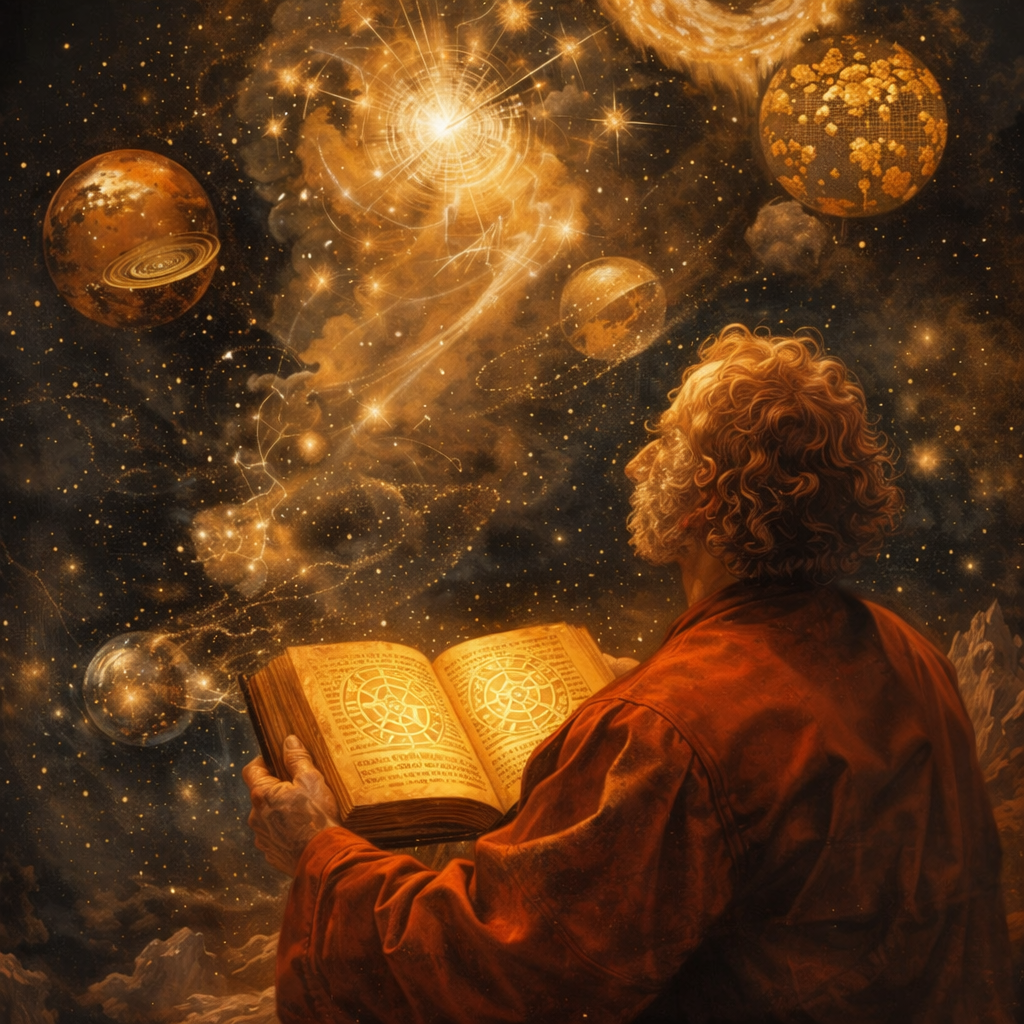

Sophia Crane (Associate Editor) — This October 1991 installment of 'The Theosophical Movement' is a particularly illuminating edition, offering nuanced perspectives on the enduring principles of Theosophy. The articles present complex esoteric concepts with clarity and intellectual rigor, making them accessible yet profoundly insightful. It excels in its exploration of the subtle planes of existence and the symbolic language of the cosmos, providing invaluable guidance for serious students of spiritual science. This issue is a must-read for those deeply engaged with theosophical studies and seeking to deepen their understanding of the Great Plan.
📝 Description
72
The October 1991 issue of The Theosophical Movement (Vol. 61, No. 12) examines spiritual inquiry.
This issue of The Theosophical Movement, published in October 1991, contains discussions related to spiritual inquiry. It touches upon concepts drawn from esoteric philosophy and the pursuit of divine understanding. The content aims to provide ways to understand subtle energies, interpret cosmic symbols, and consider doctrines common to various religions. It is written for individuals interested in metaphysical ideas, particularly those who seek to grasp the underlying structure of reality. The articles suggest a connection among all life forms and discuss the development of consciousness. This volume is intended for those who wish to move beyond surface-level knowledge and connect with universal truths, aiding in personal spiritual growth and liberation.
This issue belongs to the broader Theosophical tradition, which emerged in the late 19th century. Theosophy itself sought to synthesize Eastern and Western esoteric philosophies, including elements of Hinduism, Buddhism, and Western Hermeticism. It often focuses on the study of ancient religions, comparative mythology, and the hidden laws governing the universe. The movement emphasizes the spiritual evolution of humanity and the interconnectedness of all beings. This particular publication from 1991 likely reflects ongoing discussions within this tradition concerning these core tenets.
💡 Why Read This Book?
Uncover foundational Theosophical teachings and their contemporary relevance. This issue is essential for spiritual seekers, academic researchers of esoteric traditions, and practitioners aiming to integrate ancient wisdom into modern life. It offers a gateway to understanding the hidden forces shaping our reality and the evolutionary path of consciousness.
⭐ Reader Reviews
Honest opinions from readers who have explored this book.
❓ Frequently Asked Questions
What is Theosophy?
Theosophy is a spiritual philosophy that seeks to understand the divine nature of humanity and the universe, drawing from ancient wisdom traditions and promoting universal brotherhood.
Who was Helena Blavatsky?
Helena Blavatsky was a pivotal figure in the founding of the Theosophical Society, authoring seminal works like 'The Secret Doctrine' and popularizing its core tenets.
What are the main goals of Theosophy?
The main goals include forming a nucleus of universal brotherhood, encouraging the study of comparative religion, philosophy, and science, and investigating unexplained laws of nature and the powers latent in humanity.
Is this volume suitable for beginners?
Yes, while offering depth for seasoned students, the foundational principles discussed in this issue can provide a solid introduction for those new to Theosophical thought.
Where can I find more information on Theosophy?
The Theosophical Society's official websites and affiliated libraries are excellent resources for further exploration and access to their extensive literature.
🔮 Key Themes & Symbolism
The Unfolding of Consciousness
This theme explores the evolutionary trajectory of human and cosmic consciousness, exploring how individual awareness expands through various stages of spiritual development. It examines the inner mechanisms of perception, intuition, and the awakening of latent psychic faculties, offering a profound understanding of our place in the grand cosmic scheme. Readers will discover insights into the interconnectedness of all beings and the purposeful unfolding of life towards greater unity and wisdom.
The Language of Symbolism
This section illuminates the body of esoteric symbolism that permeates ancient scriptures, myths, and natural phenomena. It deciphers the hidden meanings embedded within archetypal imagery, revealing how symbols serve as keys to unlocking profound metaphysical truths. The exploration extends to understanding the symbolic language of the universe itself, encouraging a deeper, intuitive apprehension of reality beyond the limitations of conventional discourse.
The Perennial Philosophy
Here, the focus is on the underlying unity of all great spiritual traditions. This theme explores the common threads of wisdom that bind diverse religions and philosophies, highlighting the universal principles of truth, compassion, and divine interconnectedness. It argues for a singular, eternal doctrine that transcends cultural and historical differences, offering a holistic perspective on humanity's spiritual heritage and the shared quest for ultimate reality.
💬 Memorable Quotes
Direct passages from the work, attributed to the author.
“Truth is a pathless land.”
— This maxim implies that spiritual truth cannot be confined to dogma or doctrine, but must be discovered through direct experience and personal exploration.
“As above, so below.”
— A fundamental Hermetic principle, this phrase signifies the correspondence between the macrocosm (universe) and the microcosm (human being).
“The greatest discovery of all is to discover the Self.”
— This emphasizes the internal journey of self-realization as the ultimate spiritual pursuit and the source of profound understanding.
“Ignorance is the root of all suffering.”
— This highlights the Theosophical view that a lack of true knowledge about oneself and the universe leads to pain and dissatisfaction.
💡 Key Ideas
Editorial paraphrase of the work's core concepts — not direct quotes.
The universe is a thought-form of the Absolute.
This quote suggests that all existence originates from a divine mind or consciousness, highlighting the idealistic and interconnected nature of reality.
🌙 Esoteric Significance
Tradition
This volume is firmly rooted in the Theosophical tradition, founded by Helena Blavatsky. It draws upon ancient esoteric teachings from Eastern and Western sources, aiming to synthesize them into a coherent philosophy that explains the nature of the universe, humanity, and the divine. Theosophy seeks to reveal the underlying spiritual unity of all existence and the evolutionary path of consciousness.
Symbolism
The issue likely explores the profound symbolism inherent in nature, mythology, and religious texts. Key symbols such as the serpent (wisdom, transformation), the lotus (spiritual unfolding), the triangle (divine trinity), and the circle (unity, eternity) are often central to Theosophical discourse, serving as keys to understanding abstract spiritual concepts and the hidden laws of the cosmos.
Modern Relevance
In an age often characterized by fragmentation and material focus, the Theosophical insights presented here offer a vital counterpoint. The emphasis on interconnectedness, spiritual evolution, and universal brotherhood resonates deeply with contemporary concerns about global unity and ecological balance. The teachings provide tools for personal growth, critical thinking about societal structures, and a framework for understanding the deeper purpose behind human experience.
👥 Who Should Read This Book
This publication is important for dedicated students of Theosophy seeking to deepen their understanding of core principles and historical developments. It is also highly recommended for scholars of comparative religion, philosophy, and esoteric traditions. Furthermore, spiritual seekers interested in exploring the perennial wisdom and practitioners looking for a more profound metaphysical framework for their spiritual journey will find immense value within its pages.
📜 Historical Context
Published in October 1991, this issue of 'The Theosophical Movement' emerges during a period of renewed interest in esoteric and spiritual philosophies worldwide. The late 20th century witnessed a growing disillusionment with purely materialistic paradigms, fostering a fertile ground for the rediscovery of ancient wisdom. Theosophy, with its emphasis on universal brotherhood, comparative study of religions, and the investigation of psychic and spiritual phenomena, offered a compelling alternative. This era saw a continued effort by Theosophical societies to disseminate their teachings, engage in interfaith dialogue, and adapt their message to the evolving intellectual and spiritual range of the modern age.
📔 Journal Prompts
Reflect on a symbol that holds personal significance for you. What deeper meanings might it represent in your spiritual journey?
Consider the concept of 'universal brotherhood.' How can you actively cultivate this principle in your daily interactions and community?
Explore the idea of 'consciousness evolution.' What steps can you take to consciously foster your own spiritual growth and awareness?
Identify a common thread of truth across different spiritual or philosophical systems you are familiar with. How does this unity inform your worldview?
Meditate on the Hermetic principle 'As above, so below.' How do you see the macrocosmic principles reflected in your own life and experiences?
🗂️ Glossary
Theosophy
A spiritual philosophy that seeks to understand the divine nature of humanity and the universe, drawing from ancient wisdom traditions and promoting universal brotherhood.
Esotericism
Teachings and practices related to hidden knowledge, often concerned with spiritual enlightenment and the understanding of concealed realities.
Macrocosm
The universe considered as a whole, encompassing all of existence and its underlying principles.
Microcosm
The human being, viewed as a miniature reflection or representation of the universe (macrocosm).
Perennial Philosophy
The concept that all religions and spiritual traditions share a common, underlying metaphysical truth or wisdom.
This book appears in 2 collections
🔮 Readers Also Liked
Browse all →






From the “Theosophy” Collection
View all →





More Free Theosophy & Anthroposophy Books
View all →