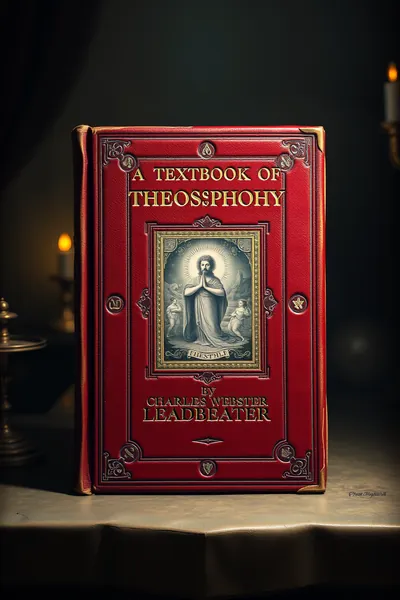
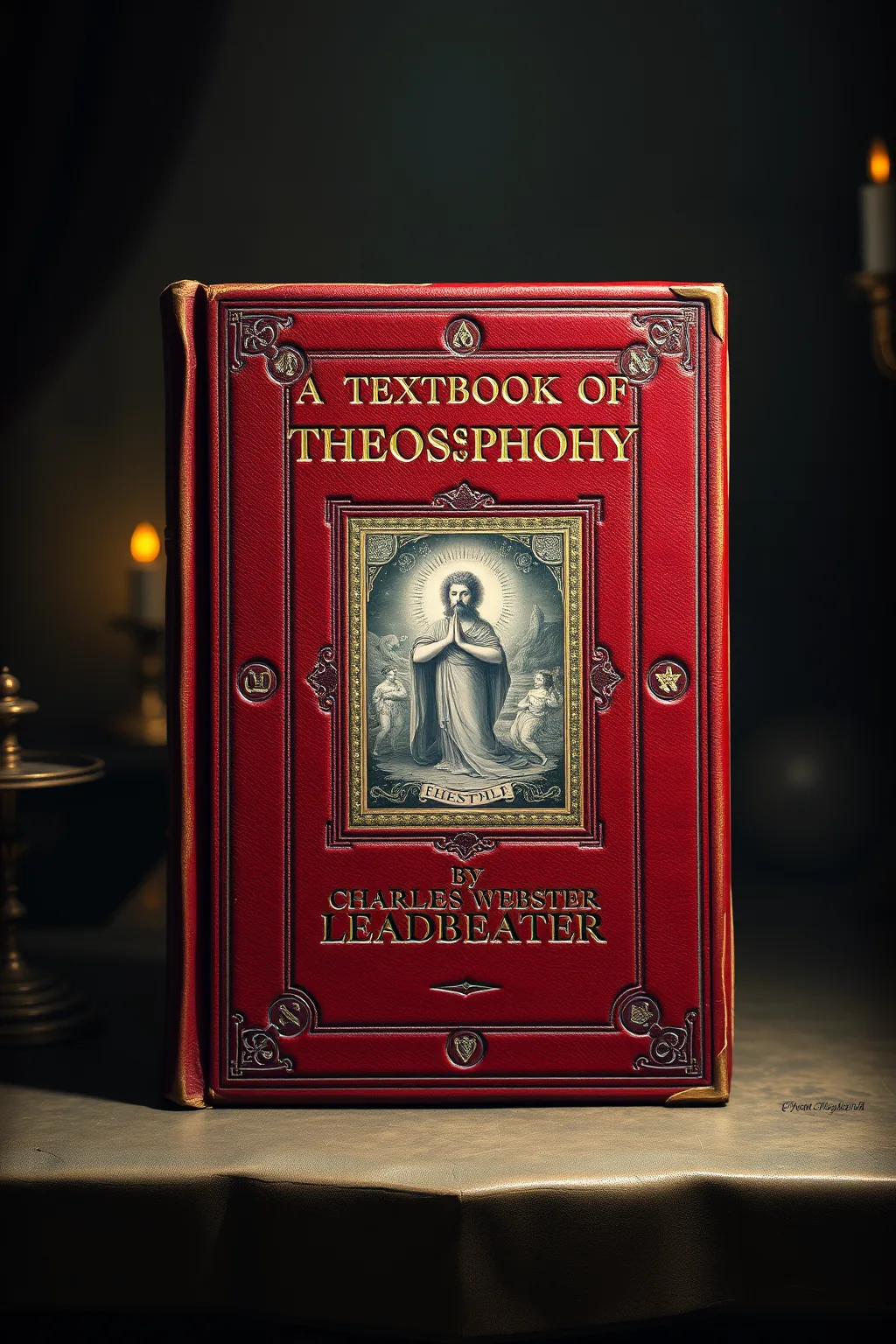
A Textbook of Theosophy
 81
81

A Textbook of Theosophy
Leadbeater’s *A Textbook of Theosophy* offers a systematic, if somewhat dated, exposition of Theosophical tenets. Its strength lies in its methodical approach, breaking down intricate concepts like the seven planes of existence and the mechanics of karma into digestible chapters. The detailed descriptions of the human aura and the etheric body, for instance, provide a framework for understanding subtle anatomy. However, the work’s primary limitation is its inherent dogmatism. Leadbeater presents Theosophical doctrines as established facts rather than hypotheses, which can feel prescriptive to a modern, critical reader. A passage detailing the precise composition of the astral body, while informative within its context, exemplifies this unyielding certainty. Ultimately, it functions as a clear, albeit uncritical, manual for Theosophical doctrine.
📝 Description
81
Charles Webster Leadbeater's A Textbook of Theosophy, published in 1997, explains the unseen worlds.
This book presents the core tenets of Theosophy for readers new to the subject. It details metaphysical concepts such as reincarnation, karma, and the nature of consciousness. Leadbeater outlines the human constitution, describing different planes of existence and the bodies associated with them, including the physical, astral, and mental vehicles. The text guides readers from basic Theosophical ideas to more complex cosmological and anthropological theories within the system.
It is written for those who want a structured introduction to Theosophy. The book requires no prior specialized knowledge of esoteric philosophy. It serves as a guide for students of esoteric thought and individuals interested in understanding the reality beyond the material world. Practitioners of spiritual disciplines may find it useful for grasping the theoretical basis of their practices.
Charles Webster Leadbeater was a key figure in the Theosophical Society during its expansion in the late 19th and early 20th centuries. Theosophy, established by Helena Blavatsky, aimed to synthesize Eastern and Western mystical traditions. Leadbeater's writings were important for spreading these teachings. The movement engaged with contemporary intellectual debates, often contrasting with established religious and scientific views, and addressed claims about psychic abilities and hidden spiritual masters.
💡 Why Read This Book?
• Gain a foundational understanding of the Theosophical model of consciousness, including its explanation of the physical, astral, and mental bodies, and how they interact. • Grasp the Theosophical interpretation of karma and reincarnation, specifically how the law of cause and effect is presented as governing spiritual evolution across lifetimes. • Explore Leadbeater's descriptions of the seven planes of existence, providing a cosmological map that contrasts with conventional scientific or religious cosmologies.
⭐ Reader Reviews
Honest opinions from readers who have explored this book.
❓ Frequently Asked Questions
What is the primary purpose of Charles Webster Leadbeater's A Textbook of Theosophy?
The book aims to systematically explain the core principles of Theosophy, including reincarnation, karma, and the nature of the unseen worlds, for students of esoteric philosophy.
When was A Textbook of Theosophy first published?
The initial publication date for A Textbook of Theosophy was 1997.
Does the book discuss reincarnation and karma?
Yes, the textbook dedicates significant sections to explaining the Theosophical doctrines of reincarnation and karma, presenting them as fundamental laws of spiritual evolution.
What are the 'seven planes of existence' mentioned in the book?
Leadbeater details seven planes of existence, including the physical, astral, mental, and higher spiritual planes, describing them as distinct realms of consciousness and matter.
Is A Textbook of Theosophy suitable for complete beginners?
The book is designed to be introductory, guiding readers with no prior knowledge through complex Theosophical concepts in a structured manner.
Who was Charles Webster Leadbeater in relation to Theosophy?
Leadbeater was a prominent clergyman and writer within the Theosophical Society, known for his extensive teachings on occult subjects and his work with Helena Blavatsky and Annie Besant.
🔮 Key Themes & Symbolism
The Human Constitution
The work meticulously breaks down the human being into a series of sheaths or bodies corresponding to different planes of existence. It details the physical body, the vital or etheric body responsible for life force, the astral body for emotions, the mental body for thought, and higher spiritual principles. Understanding this multi-layered constitution is presented as crucial for comprehending spiritual evolution and the processes of reincarnation and karma.
Planes of Existence
Leadbeater elaborates on the concept of seven planes of existence, extending beyond the physical realm. These include the astral plane, the mental plane (further divided into lower and higher), and the spiritual planes. Each plane is described as having its own unique substance and laws, and the text explains how consciousness traverses these planes during life and after death, particularly during the process of rebirth.
Karma and Reincarnation
Central to the book is the explanation of karma as the universal law of cause and effect, governing the cycles of birth, death, and rebirth. Reincarnation is presented not merely as repeated existence but as a purposeful journey of the soul, driven by the accumulation of karma and the lessons to be learned. The text details how actions in one life shape the circumstances and experiences of future lives.
The Astral and Mental Bodies
Particular attention is given to the astral and mental bodies as vehicles for sensation, emotion, and thought. Leadbeater describes the astral body's connection to feelings and desires, and the mental body's role in cognition. The book explains how the development and purification of these bodies are essential for spiritual progress and for understanding the nature of consciousness beyond the physical senses.
💬 Memorable Quotes
“Theosophy is not a religion, but a philosophy and a science.”
— This statement highlights the Theosophical Society's self-perception as a system of thought offering rational explanations for existence, distinct from devotional religious dogma.
“The astral body is the vehicle of desire and emotion.”
— This concisely defines the function of the astral body within the Theosophical framework, emphasizing its role in subjective experience and as a primary interface with the non-physical world.
“Karma is the unerring law of cause and effect.”
— This paraphrased concept underscores the deterministic aspect of karma in Theosophy, presenting it as a fundamental cosmic principle that dictates the consequences of all actions across lifetimes.
“Man is essentially a divine being, reincarnating to gain experience.”
— This interpretation captures the Theosophical view of human potential and purpose, framing life and multiple incarnations as a structured process for spiritual growth and self-realization.
“The mental body is the instrument of thought.”
— This defines the mental body's specific function within the complex model of the human constitution, clarifying its role in cognitive processes and abstract reasoning.
🌙 Esoteric Significance
Tradition
This work is firmly rooted in the Theosophical tradition, which itself draws heavily from Hinduism, Buddhism, and Western Hermeticism. It presents a systematic, rationalized interpretation of these influences, aiming to provide a comprehensive metaphysical framework. Leadbeater's contribution lies in his detailed, often highly specific, elaborations on concepts like the evolution of consciousness, the nature of the planes, and the mechanics of karma, fitting within the lineage of esoteric philosophy seeking to unveil hidden universal laws.
Symbolism
The book frequently employs symbols that are integral to Theosophical cosmology. The 'Seven Planes of Existence' function as a symbolic map of reality, delineating different states of matter and consciousness. The concept of the 'Aura' serves as a symbolic representation of the human energetic and psychic field, revealing spiritual and physical conditions. The 'Wheel of Samsara,' though not always explicitly named, is implicitly present in the detailed explanations of reincarnation and the cyclical nature of existence governed by karma.
Modern Relevance
Contemporary New Age spirituality, consciousness studies, and various forms of Western esotericism owe a significant debt to Leadbeater's work and Theosophy at large. Concepts like subtle bodies, energy fields (auras), karma, and reincarnation, as systematized by Leadbeater and others, have permeated modern spiritual discourse. Thinkers and practitioners exploring consciousness, past-life regression, and holistic healing often engage with the foundational ideas presented in texts like this, even if they adapt or reinterpret them for contemporary contexts.
👥 Who Should Read This Book
• Students of comparative religion and philosophy seeking to understand the origins and core tenets of the Theosophical movement and its influence on modern spirituality. • Individuals interested in esoteric psychology and cosmology who wish to explore detailed explanations of consciousness, subtle bodies, and the structure of unseen realms. • Aspiring practitioners of meditation or spiritual development who desire a theoretical framework for understanding concepts like karma, reincarnation, and spiritual evolution.
📜 Historical Context
Charles Webster Leadbeater's *A Textbook of Theosophy*, first published in 1997, emerged from a fertile period for esoteric thought in the late 19th and early 20th centuries. The Theosophical Society, founded in 1875 by Helena Blavatsky, Annie Besant, and others, sought to synthesize Eastern and Western wisdom traditions. Leadbeater, a key figure within the Society, was known for his detailed expositions on psychic phenomena, reincarnation, and the nature of the subtle bodies. His writings were instrumental in popularizing Theosophical concepts, though often met with skepticism from both scientific and religious establishments. Contemporaries like Rudolf Steiner, who later founded Anthroposophy, also explored similar themes, sometimes diverging significantly from Theosophical orthodoxy. The Theosophical movement itself engaged with burgeoning fields like psychology and anthropology, attempting to provide a spiritual framework for understanding human existence.
📔 Journal Prompts
The structure of the astral body: How does its description align with your understanding of emotions?
Reincarnation's lessons: Reflect on the purpose of repeated lives as presented in the text.
The seven planes: Map your current experiences onto this Theosophical cosmological model.
Karma's application: Consider how the law of cause and effect might operate in specific life events.
The mental body's function: How does its role in thought differ from the astral body's role in desire?
🗂️ Glossary
Astral Body
In Theosophy, the vehicle of desire and emotion, composed of finer matter than the physical body, through which one experiences feelings and passions.
Karma
The universal law of cause and effect, where actions in one life determine the circumstances and experiences of future lives. It is seen as a principle of justice and spiritual evolution.
Mental Body
The vehicle of thought and intellect, responsible for cognitive processes, reasoning, and abstract ideas. It is considered higher than the astral body in the evolutionary scale.
Reincarnation
The process by which the spiritual self (or soul) is reborn into a new physical body after death, in order to continue its evolutionary journey and learn lessons.
Theosophy
A system of esoteric philosophy, religion, and mysticism that originated in the late 19th century, seeking to reveal fundamental truths about the universe and humanity's place within it.
Etheric Body
Also known as the vital body, it is considered the blueprint of the physical body and the vehicle for life force or prana, closely associated with the physical form.
Planes of Existence
Different levels or realms of reality, each with its own unique substance and laws, beyond the physical. Theosophy typically outlines seven such planes, including astral, mental, and spiritual.