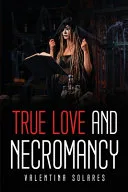
True Love and Necromancy
 82
82

True Love and Necromancy
Valentina Solares' "True Love and Necromancy" attempts an ambitious metafictional framing, immediately setting it apart from typical esoteric narratives. The opening, with its direct address to the reader and self-conscious narrative excavation, is its strongest feature. It creates an immediate intimacy and curiosity, promising a story that understands its own artifice. However, this narrative playfulness, while intriguing, occasionally overshadows the core subject. The titular necromancy, and indeed the proposed "true love," feel somewhat underdeveloped in the initial sections, serving more as narrative devices than fully realized elements. The work explores the idea that the context of a necromancer's life is as vital as their practice, a compelling angle evident when Solares describes the 'squat little cottage at the End of the World' as a formative influence. Despite its unique voice, the book could benefit from a more robust grounding in the actual mechanics or philosophy of necromancy, rather than relying so heavily on its narrative structure. It's a novel about magic, rather than a magical novel.
📝 Description
82
Valentina Solares' 2022 novel, 'True Love and Necromancy,' begins decades before its title character appears.
The narrative of 'True Love and Necromancy' takes an unusual turn by starting with a lengthy backward glance, establishing context before introducing the necromancer. Solares employs a direct address to the reader, pulling them into the story's creation. This approach makes the book less about magical events and more about the genesis of a life and a practice like necromancy. The author uses this framing to question the origins and circumstances surrounding power, suggesting that the path to acquiring it is as important as the power itself.
This book appeals to those interested in meta-narrative and philosophical fiction, especially readers who prefer unconventional storytelling. It favors character development over plot progression and enjoys playing with audience expectations. Readers looking for a unique occult perspective, one that focuses on personal history and narrative construction rather than straightforward magical instruction, will find this novel stands out. It is for anyone who considers the motivations behind magical practice.
Published in 2022, 'True Love and Necromancy' engages with occult themes in a contemporary literary style. While it echoes the Romantic era's interest in necromancy, Solares reinterprets the figure from a modern fictional viewpoint. The work diverges from academic or historical magical studies, offering an introspective, fictionalized portrayal. This approach contrasts with the direct instructional style of grimoires or the ritualistic practices discussed by figures like Lon Milo DuQuette.
💡 Why Read This Book?
• Understand the meta-narrative construction of occult practice, as demonstrated by the narrator's direct engagement with the reader in "True Love and Necromancy," offering a unique perspective on how magical identities are formed. • Explore the symbolic significance of liminal settings like "the End of the World" and their impact on solitary practitioners, a core element of Solares' narrative approach. • Examine the thematic tension between profound emotional connection and the pursuit of forbidden knowledge, as suggested by the juxtaposition of "True Love" and "Necromancy" in the book's title.
⭐ Reader Reviews
Honest opinions from readers who have explored this book.
❓ Frequently Asked Questions
What is the central premise of "True Love and Necromancy"?
The book uses a meta-fictional approach, starting not with the necromancer but with the narrator directly addressing the reader to construct the story's context, exploring the origins and personal history behind necromantic practice.
When was "True Love and Necromancy" first published?
Valentina Solares' "True Love and Necromancy" was first published on December 23, 2022.
Does the book offer practical necromancy instructions?
No, "True Love and Necromancy" is a narrative exploration and philosophical inquiry into the character and context of a necromancer, rather than a practical guide or grimoire.
What is the significance of the setting 'the End of the World'?
The 'End of the World' serves as a symbolic liminal space in the book, influencing the necromancer's isolation and the atmosphere of the narrative, suggesting it's a place where conventional reality bends.
Is the narrator reliable in "True Love and Necromancy"?
The narrator's direct engagement with the reader and self-conscious storytelling suggest a deliberate exploration of narrative reliability, inviting readers to question the construction of the story itself.
What kind of reader would enjoy this book?
Readers who appreciate meta-fiction, unconventional storytelling, character studies, and philosophical explorations of esoteric themes, rather than straightforward occult instruction, will find this book engaging.
🔮 Key Themes & Symbolism
Narrative Construction of Magic
The book foregrounds the act of storytelling itself as a mechanism for understanding esoteric practice. Solares' narrator directly involves the reader, questioning how a necromancer's identity and abilities are shaped not just by innate talent or learned spells, but by the narrative we choose to tell about them. This meta-fictional approach suggests that the 'origin story' is as potent a force as any ritual, especially when set against the backdrop of a world's end.
Liminal Spaces and Isolation
The setting, identified as 'the End of the World,' functions as a powerful symbol of isolation and the breakdown of conventional reality. This extreme environment is presented as conducive to the development of unconventional practices like necromancy. The squat cottage with its blue shingled roof becomes a focal point, a sanctuary or prison where the necromancer’s internal world and external craft are inextricably linked to their solitary existence.
The Paradox of Love and Power
The title itself, "True Love and Necromancy," presents a core paradox. It hints at an exploration of how profound emotional connections might intersect with, motivate, or even corrupt the practice of dark arts. The narrative seems poised to investigate whether love can be a catalyst for necromancy, or if the pursuit of power, even for ostensibly noble reasons, fundamentally alters one's capacity for genuine affection and connection.
Reader Engagement and Perspective
A defining characteristic is the narrator's direct address to the reader, fostering a sense of shared creation and questioning. This technique disrupts passive consumption, forcing the reader to acknowledge their role in interpreting the necromancer's journey. It suggests that perspective is paramount, and that understanding the 'why' behind the magic is achieved through this intimate, albeit constructed, dialogue.
💬 Memorable Quotes
Direct passages from the work, attributed to the author.
“ONCE UPON A TIME, in a squat little cottage with a blue shingled roof at the End of the World, there lived a necromancer.”
— This opening line immediately establishes a fairy-tale tone juxtaposed with dark subject matter and a desolate setting, signaling the book's unconventional approach to esoteric themes.
“Do you-do you mind? I'll imagine you just said, 'No, I don't mind at all,' with an expression of accommodating indulgence...”
— This exemplifies the narrator's direct address to the reader, creating an intimate, almost conspiratorial relationship and underscoring the book's self-aware literary style and reader-centric approach.
“...and wind this story back a few decades so that we might”
— This phrase signals the deliberate narrative choice to explore origins and causality, positioning the past not merely as backstory but as an essential element in understanding the present state of the necromancer.
“Perhaps this is not the best place to begin.”
— This self-correction by the narrator immediately signals the book's deconstructive approach to storytelling, suggesting that conventional starting points are insufficient for exploring the complex subject of necromancy.
💡 Key Ideas
Editorial paraphrase of the work's core concepts — not direct quotes.
He hadn't always been a necromancer, you see; I worry that if we skip directly to the dramatic bits of this story, we'll miss rather a lot of context.
This quote highlights the book's meta-narrative focus, emphasizing the importance of background and developmental context over sensational plot points, and directly engaging the reader in the narrative's construction.
🌙 Esoteric Significance
Tradition
While not adhering to a specific historical esoteric lineage like Hermeticism or Kabbalah, "True Love and Necromancy" engages with the broader archetype of the necromancer, a figure present in various folk magical traditions and occult lore. It functions within a contemporary esoteric landscape that often explores the psychological and narrative dimensions of magic, moving away from strict adherence to ancient texts towards personal interpretation and subjective experience.
Symbolism
The 'squat little cottage with a blue shingled roof' symbolizes a contained, perhaps isolated, space where forbidden knowledge is cultivated, contrasting mundane domesticity with extraordinary power. 'The End of the World' acts as a powerful symbol of liminality and existential crisis, a backdrop that amplifies the necromancer's solitude and the gravity of their craft. The title itself juxtaposes 'True Love,' representing profound connection, with 'Necromancy,' signifying mastery over death, highlighting a central symbolic tension.
Modern Relevance
This work speaks to contemporary interests in the personal narrative behind magical practice and the philosophical underpinnings of occultism. It appeals to modern practitioners and readers who explore the intersection of psychology, storytelling, and esoteric belief, particularly those drawn to character-driven narratives that question the nature of power and identity in a complex world.
👥 Who Should Read This Book
• Aspiring authors interested in blending occult themes with meta-fictional techniques, learning how to use narrative voice to explore character. • Readers of philosophical fiction seeking explorations of isolation, identity, and the construction of belief systems outside conventional frameworks. • Enthusiasts of unconventional narratives who enjoy stories that play with reader expectations and examine the 'why' behind magical or occult pursuits.
📜 Historical Context
Published in 2022, Valentina Solares' "True Love and Necromancy" arrives in an era saturated with genre fiction that often incorporates occult elements. Unlike the direct, instructional grimoires that saw a resurgence in the mid-20th century, or the scholarly analyses of demonology from figures like Montague Summers, Solares opts for a deeply narrative and philosophical approach. The book engages with the trope of the necromancer, a figure historically explored in Gothic literature and Romantic poetry, but reframes it through a modern literary lens that prioritizes meta-narrative and psychological depth. It sidesteps the more dogmatic or ritualistic aspects often found in contemporary esoteric publishing, focusing instead on the personal journey and the construction of magical identity, offering a distinctly fictionalized perspective that contrasts with the more empirically-minded occult revivalists.
📔 Journal Prompts
The 'squat little cottage at the End of the World' as a crucible for identity.
Narrative framing: How does the narrator's direct address shape your understanding of the necromancer?
The tension between 'True Love' and 'Necromancy' as a personal paradox.
Reflecting on the concept of 'context' in the development of esoteric practices.
Exploring the symbolism of liminal spaces in personal journeys.
🗂️ Glossary
Necromancer
An individual who practices necromancy, a form of magic involving the divination of the future through the communication with the dead, or the animation of corpses.
Meta-fiction
Fiction that self-consciously draws attention to its status as a work of fiction, often by discussing its own construction or by having characters acknowledge they are in a story.
Liminal Space
A transitional or in-between place, threshold, or state, often associated with ambiguity, transformation, and the breakdown of ordinary rules and structures.
Origin Story
In a narrative context, the account of a character's beginnings and the events that shaped them, particularly relevant to understanding their powers, motivations, or identity.
The End of the World
A narrative setting signifying ultimate finality or a point of profound transition, often used to explore existential themes and the limits of human experience.
Reader as Confidante
A narrative technique where the narrator directly addresses the reader, creating an intimate relationship and implying a shared understanding or conspiracy.
Narrative Construction
The deliberate process by which a story is built, including choices about plot, character development, voice, and structure, influencing how events and themes are perceived.