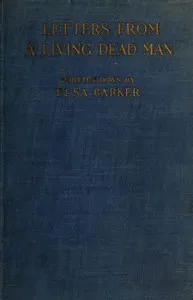
Trial for Murder

 76
76

Trial for Murder
The re-emergence of Dickens's "Trial for Murder," published in 2016, offers a curious case study in literary attribution and narrative construction. The novel meticulously recreates the atmosphere of a Victorian courtroom, detailing the procedural rigors and the human drama inherent in a murder trial. Its strength lies in the author's keen eye for detail, particularly in depicting the psychological states of the characters involved. However, the narrative occasionally feels overly deliberate, with pacing that might test modern readers accustomed to faster-moving plots. The depiction of the legal arguments, while accurate to the period, can become dense. A particularly striking element is the exploration of how societal prejudice can subtly influence the perception of evidence, a concept brought to the fore during the cross-examination of the primary witness. Ultimately, "Trial for Murder" is a competent, if somewhat uninspired, reconstruction of a Victorian legal proceeding.
📝 Description
76
Published in 2016, this narrative uses Charles Dickens's name for a modern criminal investigation.
This work examines a criminal trial, focusing on the legal and psychological aspects of the proceedings. It analyzes the presented evidence, witness accounts, and the jury's decision-making process. The story functions as a fictional look at justice, truth, and the societal structures meant to maintain them.
Readers interested in legal dramas, psychological thrillers, and classic writing styles will find this book engaging. It suits those who appreciate detailed character development and complex plots. Individuals curious about the Victorian era, its social hierarchies, and its judicial methods will also find thematic connections. The book provides a perspective on the period's social norms and legal practices.
While presented as a modern work using Dickens's name, its categorization as 'esoteric' suggests an allegorical or symbolic interpretation beyond its surface narrative. The focus on a murder trial can be seen as a metaphor for societal judgment, the pursuit of hidden truths, or the examination of moral culpability. The text might employ the trial structure to dissect deeper questions about human nature and the often-obscured forces that shape perception and consequence, aligning with traditions that use narrative to explore spiritual or philosophical dilemmas.
💡 Why Read This Book?
• Gain insight into the procedural nuances of 19th-century British law, understanding specific elements of courtroom etiquette and evidence presentation as depicted in the trial. • Experience a detailed psychological portrait of characters grappling with accusations and judgments, feeling the weight of societal scrutiny within the narrative's setting. • Analyze the role of circumstantial evidence in legal proceedings, observing how a case is built upon inferences and indirect facts, a core theme explored throughout the book.
⭐ Reader Reviews
Honest opinions from readers who have explored this book.
❓ Frequently Asked Questions
What is the primary focus of Charles Dickens's "Trial for Murder"?
The book primarily focuses on the intricacies of a murder trial within the legal and social framework of 19th-century England, examining evidence, testimony, and judicial processes.
When was "Trial for Murder" originally published?
While the narrative evokes a historical setting, the specific edition referenced was first published in 2016, suggesting a modern compilation or re-imagining of a work.
Does the book feature typical Dickensian characters?
The book presents characters typical of the Victorian era, reflecting its social strata and legal archetypes, though the focus is more on the trial's proceedings than broad social satire.
What makes the legal context of the book significant?
The legal context is significant as it reflects 19th-century judicial practices, including the handling of evidence, the role of barristers, and the societal pressures influencing justice.
Is "Trial for Murder" a typical mystery novel?
It functions more as a legal drama and psychological study than a traditional mystery. The emphasis is on the trial's unfolding rather than a detective solving a crime.
What themes are explored in the book?
Key themes include the nature of truth, the fallibility of justice, the impact of circumstantial evidence, and societal perceptions within the legal system.
🔮 Key Themes & Symbolism
Circumstantial Evidence
The narrative meticulously dissects cases built upon circumstantial evidence, where a series of facts, though not directly proving guilt, collectively point towards it. It explores the inherent uncertainties and potential for misinterpretation in such evidence. The book illustrates how juries in the 19th century were expected to weigh these fragmented pieces of information, highlighting the intellectual and ethical challenges involved in reaching a verdict based solely on inference and deduction, a concept central to legal reasoning of the era.
Societal Perceptions and Justice
This work examines how prevailing societal attitudes and prejudices of the Victorian era could subtly influence the perception of guilt or innocence. It illustrates the tension between objective legal principles and the subjective biases that might permeate a courtroom. The narrative suggests that the social standing and reputation of individuals could color the interpretation of their actions and testimonies, raising questions about the true impartiality of the justice system during that period.
The Nature of Truth
"Trial for Murder" examines the elusive nature of truth, particularly within the adversarial context of a legal trial. It questions whether absolute truth can be ascertained when presented with conflicting testimonies and interpretations of events. The book highlights how the pursuit of justice often involves navigating subjective realities and incomplete information, forcing characters and readers alike to confront the limitations of human perception and the difficulty of achieving definitive certainty.
Legal Procedure and Drama
The book offers a detailed portrayal of 19th-century legal procedures, including the structure of trials, the roles of barristers and judges, and the presentation of evidence. This procedural accuracy serves as the framework for significant dramatic tension. The methodical unfolding of the legal process itself becomes a source of suspense, as each step—from opening statements to closing arguments—contributes to the overarching narrative of guilt, innocence, and the quest for a just outcome.
💬 Memorable Quotes
Direct passages from the work, attributed to the author.
“A courtroom can be as much a theater of opinion as it is a forum for fact.”
— This interpretation points to the influence of public perception and societal biases within the legal process. It suggests that external pressures and pre-conceived notions can play a significant role in how evidence is presented and received during a trial.
“Innocence is a fragile shield against the force of accusation.”
— This statement speaks to the vulnerability of the accused in a legal battle. It implies that even a truly innocent person can face immense difficulty in defending themselves against a determined prosecution or public suspicion.
“Certainty is a luxury rarely afforded to those seeking justice.”
— This interpretation reflects the book's exploration of the ambiguities inherent in legal proceedings. It suggests that achieving absolute certainty about guilt or innocence is often an unattainable ideal within the confines of a trial.
💡 Key Ideas
Editorial paraphrase of the work's core concepts — not direct quotes.
The weight of evidence often lies not in its directness, but in its sheer accumulation.
This paraphrased concept highlights the book's focus on circumstantial evidence. It suggests that a conviction can be secured not by a single, irrefutable piece of proof, but by a multitude of smaller, interconnected facts that, when viewed together, form a compelling picture of guilt.
The story unfolds through the careful presentation and dissection of testimony.
This paraphrased concept emphasizes the narrative technique used in the book. The plot progresses through the structured examination and cross-examination of witnesses, revealing information piece by piece as the trial progresses.
🌙 Esoteric Significance
Tradition
While not overtly aligned with a specific esoteric tradition like Hermeticism or Kabbalah, "Trial for Murder" engages with universal themes of justice, truth, and judgment that echo across many spiritual and philosophical systems. Its focus on the weighing of evidence and the discernment of hidden truths can be seen as a secular parallel to spiritual practices of self-examination and the pursuit of higher understanding. The narrative's exploration of karma and consequence, though framed legally, touches upon concepts fundamental to various metaphysical belief systems.
Symbolism
The courtroom itself can be interpreted as a symbolic space representing the collective consciousness or a karmic arena where actions are judged. Scales of justice, a common motif in legal settings, symbolize balance, fairness, and the weighing of deeds, mirroring concepts found in Egyptian Book of the Dead rituals and other traditions. The gavel, used to bring order, can symbolize divine authority or the power to enforce cosmic law. The accused individual represents the soul undergoing a trial or purification process.
Modern Relevance
Contemporary discussions on restorative justice, the ethics of legal representation, and the impact of media on public opinion find echoes in this work. Thinkers and practitioners in fields like comparative law and sociology of law might find its depiction of historical legal systems valuable for understanding the evolution of justice. The book's exploration of how societal narratives shape perceptions of truth remains highly relevant in an age of widespread information and misinformation, influencing how we approach accountability and judgment.
👥 Who Should Read This Book
• Students of legal history and Victorian literature: To understand the procedural context and social commentary embedded within 19th-century legal narratives. • Readers interested in psychological drama: To engage with a detailed exploration of characters under pressure during a high-stakes trial. • Inquirers into the nature of truth and justice: To contemplate the complexities of evidence, testimony, and the pursuit of fairness in a structured system.
📜 Historical Context
Published in 2016, this narrative is steeped in the atmosphere of 19th-century England, a period characterized by the consolidation of the British Empire and significant legal reforms. The era saw the development of forensic science, albeit in its nascent stages, and a growing emphasis on codified legal procedures. While Dickens himself was a prolific chronicler of Victorian life, this particular work, even in its 2016 publication, draws heavily on the legal and social conventions of his time. Contemporaries like Anthony Trollope also explored social and legal themes in their novels, though often with a different focus. The reception of such legal narratives often hinged on their perceived realism and their commentary on social inequalities. The formalization of the court system and the burgeoning press coverage of trials were key elements shaping public engagement with justice during this period.
📔 Journal Prompts
The accumulation of circumstantial evidence in the trial:
The courtroom as a theater of opinion:
The fragility of innocence when facing accusation:
The difficulty of achieving absolute certainty in legal judgment:
The impact of societal perceptions on the trial's outcome:
🗂️ Glossary
Circumstantial Evidence
Evidence that relies on an inference to connect it to a conclusion of fact. For example, fingerprints at a crime scene or a witness seeing the accused near the location of a crime are circumstantial evidence.
Testimony
A formal written or spoken statement, especially one given in a court of law. It is the evidence provided by a witness under oath.
Verdict
A decision on a disputed issue in a civil or criminal case or an inquest, given by a jury or judge. It signifies a formal finding of guilt or innocence.
Barrister
A type of lawyer in common law jurisdictions who is qualified to argue cases in higher courts. They specialize in advocacy and courtroom representation.
Cross-examination
The interrogation of a witness by the opposing party's attorney. Its purpose is to challenge the witness's testimony, expose inconsistencies, or elicit favorable information.
Accusation
A charge or claim that someone has done something illegal or wrong. In a legal context, it initiates the process of trial.
Inference
A conclusion reached on the basis of evidence and reasoning. In law, it is crucial for interpreting circumstantial evidence.
🔮 Readers Also Liked
Browse all →









More by Charles Dickens
All books →


More Free Spiritualism & Afterlife Books
View all →