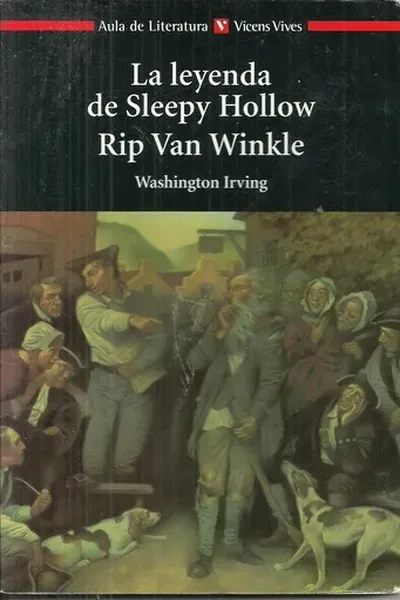
The Legend of Sleepy Hollow

 77
77

The Legend of Sleepy Hollow
Washington Irving’s "The Legend of Sleepy Hollow" remains an atmospheric triumph, its enduring power lying in the masterful evocation of dread. The narrative's strength is its careful, almost anthropological, presentation of local superstition, making the fear palpable without relying on overt supernatural events until the very climax. Ichabod Crane, as a protagonist, is wonderfully drawn – a figure of both pity and mild ridicule, his susceptibility to the lore of Tarry Town making his potential fate all the more unsettling. A notable limitation, however, is the slight meandering of the narrative before the central conflict builds; Irving’s descriptive passages, while beautifully written, occasionally slow the pacing. The passage describing Ichabod’s ride through the glen, surrounded by the terrifying accoutrements of the Headless Horseman legend, is particularly effective in its psychological horror. The tale’s enduring legacy is a testament to Irving’s skill in blending folklore with character study, though its gothic elements feel somewhat muted by modern standards. Ultimately, it is a foundational piece of American gothic literature that rewards patient readers.
📝 Description
77
Washington Irving's 1820 tale, "The Legend of Sleepy Hollow," uses local folklore to create a haunting atmosphere.
Published in 1820, "The Legend of Sleepy Hollow" recounts the story of Ichabod Crane, a superstitious schoolmaster in Tarry Town, New York. The narrative is filtered through a fictional historian, lending an air of authenticity to the unfolding events. Irving builds suspense by weaving together local legends and Ichabod's own anxious imagination.
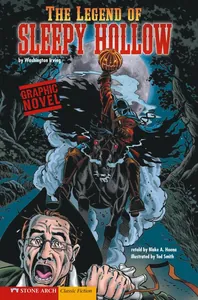
The central figure is the Headless Horseman, a Hessian soldier rumored to have lost his head to a cannonball during the Revolutionary War. This phantom is said to ride through Sleepy Hollow on autumn nights. The story details the community's beliefs about this apparition, making the superstitions themselves a significant element of the plot. Irving's descriptions of the glen, bridge, and churchyard are filled with a sense of the uncanny.
Ichabod flees a terrifying encounter with the Horseman, and by the next morning, he has vanished from Sleepy Hollow. While the story suggests his rival, Abraham Van Brunt, may have orchestrated a prank to scare him away, the ending remains open to interpretation. Readers are left to consider whether Ichabod met a grim fate or simply escaped the village's pervasive superstitions, becoming a legend himself.
This tale taps into the rich vein of American folklore and ghost stories that emerged in the early 19th century. It reflects a broader cultural interest in the supernatural, local legends, and the psychological impact of fear and belief. The story's ambiguity regarding the Headless Horseman's reality and Ichabod's fate aligns with traditions that explore the liminal space between the known and the unknown, where perception and reality blur.
💡 Why Read This Book?
• Understand the foundational elements of American gothic literature by examining the atmosphere and psychological horror Irving crafts, particularly through the character of Ichabod Crane and his encounters with the legend of the Headless Horseman. • Gain insight into the power of folklore and collective belief by analyzing how the superstitions of Tarry Town, New York, directly influence the narrative's outcome and Ichabod's perception of reality. • Appreciate the literary device of narrative framing, as Irving employs a fictional historian to recount the events, adding a layer of verisimilitude to the tale of the 1820 publication.
⭐ Reader Reviews
Honest opinions from readers who have explored this book.
❓ Frequently Asked Questions
When was "The Legend of Sleepy Hollow" first published and in what collection?
The story was first published in 1820 as part of Washington Irving's collection "The Sketch Book of Geoffrey Crayon, Gent."
Who is the main character in "The Legend of Sleepy Hollow"?
The main character is Ichabod Crane, a lanky, superstitious schoolmaster who is new to the village of Sleepy Hollow.
What is the primary legend that haunts Sleepy Hollow?
The central legend is that of the Headless Horseman, the ghost of a Hessian trooper who lost his head to a cannonball during the Revolutionary War.
What is the supposed reason for the Headless Horseman's nightly rides?
According to local lore, the Headless Horseman rides out nightly in search of his lost head, often seen galloping from the churchyard.
What is the most common interpretation of Ichabod Crane's disappearance?
The most common interpretation is that Ichabod was scared away by a prank orchestrated by his rival, Brom Bones, who disguised himself as the Headless Horseman.
What role does the American Revolutionary War play in the story?
The story mentions that the Headless Horseman was a Hessian trooper decapitated during the Revolutionary War, grounding the legend in a specific historical conflict.
🔮 Key Themes & Symbolism
The Power of Folklore
The narrative intricately explores how local legends and superstitions can take on a life of their own, shaping the reality of a community. The tales of the Headless Horseman, passed down through generations in Tarry Town, are presented not merely as stories but as potent forces influencing the characters' actions and perceptions. Ichabod Crane, an outsider, is particularly vulnerable to these ingrained beliefs, demonstrating how firmly established folklore can dictate the atmosphere and events within a specific locale. The story suggests that the collective imagination is a powerful, even dangerous, entity.
Superstition vs. Reason
Ichabod Crane embodies a fragile balance between a rational, albeit timid, intellect and a deeply superstitious nature. He is educated and aware of the world beyond Sleepy Hollow, yet he readily succumbs to the spectral anxieties pervading the village. This internal conflict highlights the tension between Enlightenment rationalism, prevalent in Irving’s time, and the enduring human susceptibility to the uncanny. The story questions whether the true horror lies in the supernatural or in the psychological terror born from belief in it.
Ambiguity and Unreliable Narration
Irving masterfully employs ambiguity, particularly regarding Ichabod's ultimate fate. The narrative leaves open the possibility of both a supernatural encounter and a mundane prank. This uncertainty is enhanced by the narrative voice, which adopts the persona of a folklorist or historian, presenting the events as passed down through tradition rather than direct observation. This technique allows the legend to retain its mystery and power, forcing the reader to engage actively in interpreting the truth behind the tale.
The Outsider Experience
Ichabod Crane serves as a classic archetype of the outsider navigating an insular, tradition-bound community. His foreignness, both in origin and temperament, makes him an easy target for the local superstitions and social rivalries, particularly with Brom Bones. His vulnerability and eventual disappearance underscore the challenges faced by those who do not fully belong or understand the established customs and fears of a place. The tale reflects on how newcomers can be both fascinated and terrified by the unique cultural fabric of a locale.
💬 Memorable Quotes
“The discovering of a new tale, or a strange adventure, from some puttering old dame, or a gruff old soldier, was to him the greatest refreshment.”
— This quote captures Ichabod Crane's intellectual curiosity and his fascination with folklore, highlighting his susceptibility to the very legends that would later terrify him. It reveals his character as one drawn to the uncanny.
“His heart dilated with the joyous anticipation of a feast.”
— This describes Ichabod's eager anticipation of attending the quilting frolic at the Van Tassel's, showcasing his social aspirations and his particular interest in Katrina Van Tassel, a key element in the rivalry with Brom Bones.
“The tales of witchcraft, and of the ghastly apparitions that haunted the woods and the churchyard, were all in his favor.”
— This passage underscores how the local lore and superstitious beliefs of Sleepy Hollow were already working in the Headless Horseman's favor, priming the environment for Ichabod's terror.
“I PRAY you, good people, that you may all be preserved from the Witches, and from the Devil, and from the Headless Horseman, and from all such unnatural, wicked, andInfernal creatures.”
— This is an interpretation of the sentiment expressed by the narrator or a character, reflecting the pervasive fear of the supernatural within Sleepy Hollow and serving as a direct warning related to the primary legend.
“Thus was Ichabod Crane lost to his friends and acquaintances, and completely forgotten in the busy world.”
— This line summarizes the ambiguous and unsettling conclusion of Ichabod's story, emphasizing his disappearance and the world's swift forgetting of him, leaving his fate open to speculation.
🌙 Esoteric Significance
Tradition
While not explicitly aligned with a single esoteric lineage, "The Legend of Sleepy Hollow" taps into universal archetypes found in many traditions, particularly those involving liminal spaces and spectral entities. It echoes elements of folklore prevalent in European ghost stories and cautionary tales, which often carry moral or spiritual implications. The work can be viewed through a lens of animism or nature spirits, where the land itself holds ancient, potentially malevolent, forces tied to historical trauma, a concept explored in various shamanic and pagan traditions.
Symbolism
The Headless Horseman is a potent symbol of dismemberment and the unresolved trauma of war; his lack of a head signifies a loss of reason or consciousness, driven by primal vengeance. Sleepy Hollow itself, a name suggesting a state between waking and dreaming, represents a liminal zone where the veil between the physical and spiritual worlds is thin. The bridge Ichabod must cross is a classic threshold symbol, marking the boundary between the known world and the terrifying unknown, a common motif in spiritual journeys and initiations.
Modern Relevance
Contemporary explorations of folklore, urban legends, and the psychology of fear often draw inspiration from Irving's narrative techniques. Modern horror fiction and film continue to grapple with the ambiguity of the supernatural versus psychological terror, a dichotomy Irving so effectively established. Thinkers interested in collective memory, the persistence of historical trauma in landscape, and the power of narrative in shaping cultural identity find "Sleepy Hollow" a foundational text for understanding how local myths endure and influence contemporary consciousness.
👥 Who Should Read This Book
• Readers interested in the origins of American gothic literature and folklore, seeking to understand foundational texts that shaped the genre. • Students of comparative mythology and cultural studies who wish to analyze the archetypes of spectral beings and the power of localized legends. • Enthusiasts of psychological horror who appreciate stories where the line between supernatural threat and human-induced terror is deliberately blurred.
📜 Historical Context
Published in 1820 within "The Sketch Book of Geoffrey Crayon, Gent.," "The Legend of Sleepy Hollow" emerged during a period of burgeoning American national identity and literary output. Washington Irving, one of the first American authors to achieve international fame, was responding to a desire for distinctly American stories, drawing on local folklore and settings. The tale reflects the Romantic era's fascination with the Gothic, the supernatural, and the power of the past, a current also explored by contemporaries like Sir Walter Scott in Britain. The story's setting in the Hudson Valley, a region steeped in history from the Revolutionary War, grounds the supernatural elements in a tangible past. While not overtly controversial, the tale contributed to a growing body of American literature seeking to define itself apart from European traditions. Irving’s success with "The Sketch Book" influenced subsequent generations of American writers exploring national myth and legend.
📔 Journal Prompts
Ichabod Crane's susceptibility to Sleepy Hollow's superstitions.
The symbolic significance of the Headless Horseman as a figure of unresolved history.
The function of the bridge as a threshold in the narrative.
Brom Bones's role as both rival and potential prankster.
The atmospheric descriptions of Sleepy Hollow's landscape.
🗂️ Glossary
Hessian trooper
Mercenary soldiers hired by the British Crown to fight against the American colonists during the Revolutionary War. The legend of the Headless Horseman specifically names one such trooper.
Tarry Town
A colloquial name for the village of Tarrytown, New York, located in the vicinity of Sleepy Hollow. It is depicted as a place steeped in local lore and superstition.
Sleepy Hollow
A glen and later a village in New York, known for its picturesque, somber atmosphere and the legend of the Headless Horseman. The name itself suggests a state of drowsy or dreamlike enchantment.
Quilting frolic
A social gathering where neighbors come together to sew or quilt, often accompanied by food, music, and dancing. It serves as a key social event in the story where Ichabod and Brom compete for Katrina's attention.
Van Tassel
The name of a prominent Dutch family in Sleepy Hollow, whose daughter Katrina is the object of affection for both Ichabod Crane and Brom Bones, fueling their rivalry.
Cannonball
A round projectile fired from a cannon. In the legend, the Hessian trooper was purportedly killed by a cannonball during the Revolutionary War, which severed his head.
Superstition
Excessively credulous belief in and apprehension of what is uncanny or supernatural. This is a central theme, embodied by Ichabod Crane and the folklore of Sleepy Hollow.