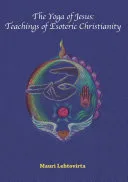
The Yoga of Jesus
 79
79

The Yoga of Jesus
Mauri Lehtovirta's "The Yoga of Jesus" attempts a bold synthesis, framing the Sermon on the Mount through the lenses of karma and reincarnation. The book's strength lies in its detailed exegesis of specific passages, such as the Beatitudes, which it interprets as karmic lessons rather than solely theological pronouncements. Lehtovirta argues convincingly that viewing these teachings through a cyclical understanding of existence offers a potent, actionable spiritual path. However, the work occasionally feels constrained by its singular focus. While the parallels drawn between Western and Eastern thought are illuminating, the book might benefit from a broader engagement with the historical Jesus scholarship that exists outside the esoteric sphere. The interpretation of Jesus's parables as karmic illustrations, while intriguing, sometimes stretches the text thin. Ultimately, "The Yoga of Jesus" is a valuable contribution for those seeking to reconcile Christian ethics with Eastern metaphysical concepts.
📝 Description
79
### What It Is The Yoga of Jesus by Mauri Lehtovirta offers a unique lens through which to examine the teachings of Yeshua of Nazareth. Published in 2022, this work proposes that core elements of Jesus's message, particularly the Sermon on the Mount, can be understood through the frameworks of karma and reincarnation. It seeks to bridge the perceived divide between Western esoteric Christianity and Eastern spiritual philosophies.
### Who It's For This book is intended for readers interested in comparative spirituality, particularly those who seek to harmonize Christian doctrine with concepts common in Dharmic traditions. It appeals to individuals exploring the esoteric dimensions of religious texts, students of karma and rebirth, and those looking for a unified understanding of spiritual liberation across cultures.
### Historical Context Lehtovirta's work emerges in an era marked by a renewed global interest in syncretic spiritualities. The early 21st century has seen increased scholarly and popular engagement with the historical Jesus and his teachings, often viewed through non-traditional lenses. This book contributes to a lineage of thought that began exploring parallels between Christianity and Eastern mysticism in the late 19th and early 20th centuries, influenced by figures like Helena Blavatsky and the Theosophical Society, which actively sought connections between diverse world religions.
### Key Concepts The central concepts explored include the reinterpretation of Jesus's ethical pronouncements (like the Beatitudes) as lessons in karmic causality. The book posits that understanding reincarnation provides a framework for comprehending the long-term consequences of actions and intentions, central to both Christian ethics and the Eastern concept of karma. It aims to demonstrate that the ultimate goals of spiritual insight and liberation are universal, regardless of the originating tradition.
💡 Why Read This Book?
• Learn how the Sermon on the Mount can be reinterpreted through the principles of karma and reincarnation, offering a unique perspective on Jesus's ethical teachings. • Discover specific parallels between the goal of spiritual liberation in Christianity and the concepts of moksha or enlightenment found in Eastern traditions, as discussed in the book's comparative analysis. • Gain a practical framework for understanding the long-term consequences of actions and intentions, directly linking to the book's exploration of karmic causality and its presence in Jesus's words.
⭐ Reader Reviews
Honest opinions from readers who have explored this book.
❓ Frequently Asked Questions
When was "The Yoga of Jesus" first published?
"The Yoga of Jesus" by Mauri Lehtovirta was first published on March 10, 2022.
What is the main thesis of "The Yoga of Jesus"?
The book's central argument is that the teachings of Jesus, particularly the Sermon on the Mount, can be understood through the esoteric concepts of karma and reincarnation, bridging Western and Eastern spiritual traditions.
Does "The Yoga of Jesus" compare Christianity to other religions?
Yes, it specifically draws parallels between esoteric Christianity and Eastern spiritual traditions, focusing on concepts like karma, reincarnation, and spiritual liberation.
Who is the author of "The Yoga of Jesus"?
The author is Mauri Lehtovirta.
What specific part of Jesus's teachings does the book focus on?
The book primarily focuses on the Sermon on the Mount, examining its core messages through an esoteric lens.
What esoteric traditions does the book aim to connect?
It aims to connect Western esoteric Christianity with Eastern spiritual traditions, particularly those that emphasize karma and reincarnation.
🔮 Key Themes & Symbolism
Karma and Reincarnation
This theme is central to Lehtovirta's thesis, reinterpreting Jesus's ethical teachings through the lens of karmic consequences and the cycle of rebirth. The work posits that understanding these Eastern concepts provides a deeper, more logical framework for grasping the long-term implications of spiritual and moral choices presented by Jesus. It argues that the seeds sown in one life bear fruit in subsequent existences, aligning with a universal law of cause and effect that transcends individual lifetimes.
Esoteric Christianity
The book positions itself within the realm of esoteric Christianity, seeking hidden or deeper meanings within the traditional narratives and doctrines. It moves beyond literal interpretations to explore the symbolic and metaphysical dimensions of Jesus's message. This approach aligns with a long tradition of Gnostic and mystical interpretation, aiming to reveal universal spiritual truths embedded within a specific historical and religious context.
Bridging Traditions
A core objective of "The Yoga of Jesus" is to create a bridge between Western and Eastern spiritual philosophies. It highlights that despite differing terminologies and cultural expressions, the ultimate aims of spiritual traditions—insight, freedom, and enlightenment—are remarkably similar. This comparative approach seeks to foster greater understanding and unity among diverse spiritual seekers by demonstrating common ground.
Sermon on the Mount Reimagined
The book offers a novel interpretation of the Sermon on the Mount, one of Jesus's most famous discourses. Instead of viewing its commandments and blessings solely as moral imperatives or theological statements, Lehtovirta proposes understanding them as practical guidelines for navigating the laws of karma and ensuring positive future incarnations. This reframing provides a fresh perspective on familiar texts.
💬 Memorable Quotes
“The Sermon on the Mount offers a way to build a bridge between Western and Eastern spiritual traditions.”
— This statement encapsulates the book's central aim: to find common ground and shared principles between seemingly disparate spiritual systems, using Jesus's teachings as the focal point for this synthesis.
“Both traditions lead us to insight, freedom, and enlightenment.”
— This highlights the author's belief in the universal goals of spiritual practice. Regardless of cultural or religious origin, the path seeks to liberate the consciousness and lead to higher understanding.
“Understanding the Sermon on the Mount from the point of view of karma and reincarnation.”
— This phrase describes the core methodology of the book, applying Eastern metaphysical concepts to Western religious scripture to uncover deeper layers of meaning.
“Addressing the very core of teachings of Jesus.”
— This indicates the book's focus on the fundamental essence of Jesus's message, aiming to distill its most vital principles beyond superficial or dogmatic interpretations.
“Opens a fresh perspective to understand esoteric Christianity.”
— This suggests the book provides novel interpretations and insights for those interested in the mystical and hidden aspects of Christian tradition.
🌙 Esoteric Significance
Tradition
This work aligns with the modern esoteric tradition of comparative spirituality, drawing heavily from the lineage influenced by Theosophy and Anthroposophy. It seeks to demonstrate an underlying unity between the esoteric interpretations of Christianity and the philosophical underpinnings of Dharmic religions. Lehtovirta's approach departs from orthodox Christian theology by emphasizing reincarnation and karma as integral, rather than peripheral or incompatible, elements within Jesus's original message, offering a Gnostic-like unveiling of deeper truths.
Symbolism
The book likely engages with the symbolism inherent in the Sermon on the Mount. For instance, the Beatitudes, traditionally seen as blessings, are re-examined as karmic principles: the meek inheriting the earth implies a future fruition of present non-aggression. The concept of 'treasure in heaven' can be interpreted not just spiritually but as the accumulation of positive karma that benefits future lives, transcending material or temporal concerns.
Modern Relevance
In contemporary times, "The Yoga of Jesus" speaks to a growing audience interested in non-dualistic spirituality and the integration of personal ethics with metaphysical understanding. It resonates with practitioners of mindfulness, yoga, and meditation who seek a spiritual framework that encompasses both Eastern wisdom and Western religious heritage. Thinkers exploring conscious evolution and the ethical implications of cyclical existence find common ground with Lehtovirta's synthesis.
👥 Who Should Read This Book
• Students of comparative religion and esoteric Christianity: Those seeking to understand how core Christian teachings can be interpreted through Eastern metaphysical frameworks like karma and reincarnation. • Practitioners of yoga and Eastern philosophies: Individuals looking for connections between their existing spiritual paths and the ethical teachings of Jesus, seeking a unified worldview. • Seekers of spiritual synthesis: Readers interested in bridging cultural and religious divides, who believe in a universal spiritual truth that transcends specific doctrines or historical origins.
📜 Historical Context
Mauri Lehtovirta's "The Yoga of Jesus," published in 2022, enters a contemporary landscape of spiritual inquiry marked by a robust interest in comparative religion and esoteric studies. This intellectual milieu has been shaped by earlier movements, notably the Theosophical Society founded in the late 19th century, which actively promoted the idea of a universal wisdom underlying all religions. Thinkers like Helena Blavatsky and later Rudolf Steiner explored parallels between Eastern philosophies and Western mysticism, paving the way for syncretic interpretations. Lehtovirta's work builds upon this foundation, seeking to reconcile Christian doctrine with concepts like karma and reincarnation, which were popularized in the West through translations and scholarly engagement with Hindu and Buddhist texts in the late 1800s and early 1900s. While not facing overt censorship, such integrative works often exist on the fringes of mainstream theology, appealing to a niche audience seeking deeper, cross-cultural spiritual understanding.
📔 Journal Prompts
The karmic implications of the Beatitudes as presented in the book.
Jesus's teachings on forgiveness and their relationship to karmic resolution.
Reincarnation as a framework for understanding spiritual progress discussed by Lehtovirta.
The concept of 'building a bridge' between Eastern and Western traditions.
Personal insights gained from viewing the Sermon on the Mount through a karmic lens.
🗂️ Glossary
Karma
In the context of the book, karma refers to the universal principle of cause and effect, where actions (and intentions) in this life determine future experiences, potentially across multiple lifetimes.
Reincarnation
The concept that the soul or consciousness is reborn into a new physical body after death, continuing a cycle of lives to learn and evolve, as explored in relation to Jesus's teachings.
Sermon on the Mount
A foundational discourse attributed to Jesus in the Gospel of Matthew, containing key ethical and spiritual teachings such as the Beatitudes and the Lord's Prayer.
Esoteric Christianity
A branch of Christian thought focused on the hidden, mystical, or inner meanings of Christian scripture and tradition, often exploring Gnostic or Gnostic-like interpretations.
Spiritual Liberation
The ultimate goal of many spiritual paths, referring to freedom from the cycle of suffering, ignorance, and rebirth, often termed enlightenment or moksha in Eastern traditions.
Western Spiritual Traditions
Refers broadly to the religious, mystical, and philosophical heritage originating in Europe, including but not limited to Christianity, Hermeticism, and Neoplatonism.
Eastern Spiritual Traditions
Encompasses the religious and philosophical systems originating in Asia, such as Hinduism, Buddhism, Jainism, and Sikhism, often characterized by concepts like karma and reincarnation.