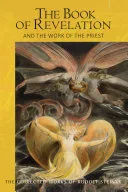
The Book of Revelation
 72
72

The Book of Revelation
Rudolf Steiner's "The Book of Revelation" eschews the sensationalism often attached to St. John's Apocalypse, instead offering a rigorous, albeit dense, exploration through the lens of spiritual science. Steiner presents Revelation not as a static prophecy but as a dynamic account of spiritual evolution, a perspective that demands significant intellectual and imaginative engagement from the reader. His interpretation of the "beast" as a force of materialistic consciousness is particularly striking, demanding a re-evaluation of traditional eschatological views. However, the sheer density of his conceptual framework can be a barrier; readers unfamiliar with Anthroposophical terminology will find themselves frequently consulting supplementary material. The strength lies in its profound reorientation of apocalyptic thought toward inner development, though its abstraction may leave some longing for more concrete applications. Ultimately, Steiner’s "Revelation" is a challenging but rewarding re-visioning for dedicated spiritual seekers.
📝 Description
72
Rudolf Steiner delivered lectures on the Book of Revelation in the early 20th century.
Rudolf Steiner's "The Book of Revelation" reinterprets the Apocalypse, moving away from typical prophetic or speculative readings. In this collection of lectures, Steiner applies his method of spiritual perception to the text. He proposes that Revelation is not a prophecy of future disasters, but a description of human consciousness's development and the spiritual challenges that accompany it.
This work is for individuals who want a spiritually informed, non-literal understanding of biblical prophecy and esoteric Christianity. It will appeal to students of Anthroposophy, those interested in Steiner's spiritual science, and readers of comparative religion looking for alternative views on apocalyptic literature. The book is especially relevant for those focused on personal spiritual growth and the study of cosmic evolution.
Steiner delivered these lectures around 1900-1924, a time of significant spiritual inquiry and the emergence of various esoteric movements. His perspective differed from mainstream theology and the prevailing materialistic science of his day. The lectures address Revelation as an internal, spiritual experience, not an external event, and introduce ideas about consciousness evolution and the symbolic language of initiation.
Steiner's lectures on Revelation are situated within the context of Theosophy and early Anthroposophy. These movements aimed to connect ancient spiritual traditions with contemporary understanding. Steiner's spiritual science sought to investigate the spiritual world through disciplined perception, contrasting with both religious dogma and scientific materialism of his era. His interpretation views Revelation as a map of human spiritual development rather than a literal prediction.
💡 Why Read This Book?
• Understand the "living book" of Revelation not as future prediction but as a map of consciousness evolution, as detailed in Steiner's lecture cycles from the early 20th century. • Grasp the symbolic meaning of the "beast" and "dragon" not as external entities but as forces opposing spiritual development, a core concept in Steiner's spiritual science. • Explore the Apocalypse as a text of initiation, revealing pathways for individual spiritual transformation, a perspective distinct from traditional theological commentaries.
⭐ Reader Reviews
Honest opinions from readers who have explored this book.
❓ Frequently Asked Questions
When was Rudolf Steiner's interpretation of The Book of Revelation first published?
While Rudolf Steiner delivered lectures on The Book of Revelation throughout his active career (early 20th century), a specific comprehensive edition of "The Book of Revelation" by him was first published on May 1, 2026, indicating a modern compilation of his extensive work on the subject.
What is Rudolf Steiner's primary approach to interpreting the Book of Revelation?
Steiner approaches Revelation through direct spiritual perception and experiential knowledge, viewing it not as a prophecy of external future events but as a depiction of the evolution of human consciousness and the inner challenges of spiritual development.
How does Steiner's interpretation differ from traditional views of Revelation?
Unlike traditional interpretations that focus on literal prophecy or symbolic predictions of end times, Steiner emphasizes Revelation as a spiritual-initiation text illustrating the soul's journey and the evolution of consciousness across cosmic and human epochs.
What does Steiner identify as the 'beast' in his interpretation?
In Steiner's framework, the 'beast' often represents the force of materialistic thinking and the deadening of spiritual perception, a significant challenge to human consciousness in its evolutionary journey.
Is this book suitable for beginners in esoteric studies?
While accessible to those familiar with Steiner's Anthroposophy, beginners in esoteric studies might find the conceptual density challenging. It's best approached after some familiarity with his broader work on spiritual science and cosmology.
What is the role of 'spiritual perception' in Steiner's reading of Revelation?
Spiritual perception, for Steiner, is an awakened inner faculty allowing direct experience of spiritual realities. He uses this faculty to interpret the symbolic language of Revelation, revealing its inner, spiritual meaning beyond literal or speculative readings.
🔮 Key Themes & Symbolism
Consciousness Evolution
Steiner posits Revelation not as a fixed prophecy but as a dynamic chronicle of human consciousness's unfolding. He details how spiritual forces influence this evolution, presenting the text as a guide to understanding the stages of awareness and the inner work required to navigate them. This perspective reframes apocalyptic imagery as a symbolic language for the soul's developmental trajectory through cosmic time.
The Living Book of Initiation
Central to Steiner's thesis is that Revelation functions as a living book of initiation. Its cryptic visions and pronouncements are not mere predictions but symbolic keys that unlock inner spiritual faculties. Through direct spiritual perception, Steiner interprets these elements as revealing the process of spiritual awakening and transformation necessary for humanity's ongoing development.
Spiritual Beings and Forces
Steiner elaborates on the active role of spiritual beings and forces within the evolutionary process depicted in Revelation. He moves beyond simplistic good-versus-evil dualism to describe complex spiritual dynamics that shape human destiny. The "beast" and other symbolic figures are understood as representing specific spiritual influences, particularly those that challenge or support the development of free, spiritual consciousness.
Experiential Spiritual Knowledge
The work champions experiential knowledge derived from direct spiritual perception as the valid method for understanding Revelation. Steiner contrasts this with purely speculative or historical-critical approaches, arguing that the text's true meaning is accessible only through cultivated inner sight. This emphasis underscores the practical, inner dimension of spiritual study.
💬 Memorable Quotes
“The Apocalypse is not a prophecy of a future cataclysm, but a living book of initiation.”
— This statement encapsulates Steiner's core argument: that St. John's visions describe an internal, spiritual process of human evolution and awakening, rather than predicting external, world-ending events.
“The beasts of the Apocalypse are not external monsters, but forces within human consciousness.”
— Steiner interprets the symbolic beasts not as literal creatures but as representations of materialistic tendencies and spiritual limitations that individuals and humanity must confront and overcome.
“Revelation addresses the evolution of human awareness.”
— This highlights the text's relevance to the ongoing development of human consciousness, suggesting it offers insights into the stages and challenges of spiritual growth across epochs.
“We must approach Revelation through direct spiritual perception.”
— Steiner advocates for a method of spiritual clairvoyance or inner perception as the essential tool for truly understanding the symbolic language and profound truths contained within the Apocalypse.
“The text describes the inner path of the soul.”
— This interpretation frames Revelation as a spiritual guide, detailing the inner journey and transformation required for the soul to progress through its evolutionary stages.
🌙 Esoteric Significance
Tradition
Steiner's work on Revelation is deeply rooted in the Western esoteric tradition, particularly drawing from Christian Gnosticism and Hermeticism, but synthesized within his unique framework of Anthroposophy. He sought to bridge ancient spiritual insights with a modern, scientifically-informed spiritual understanding. While acknowledging earlier interpretations, he departs by emphasizing the evolutionary aspect of consciousness and the developmental stages of the human soul, moving beyond fixed symbolic meanings to a dynamic, living understanding.
Symbolism
Key symbols like the "Seven Seals" represent stages of spiritual revelation and evolutionary epochs accessible through inner perception. The "Four Living Creatures" around the throne are interpreted not merely as angelic beings but as archetypal forces of consciousness that guide and protect the spiritual development of humanity. The "New Jerusalem" symbolizes a future state of perfected human consciousness, achieved through conscious spiritual work.
Modern Relevance
Contemporary spiritual thinkers and practitioners within Anthroposophy and related movements continue to draw on Steiner's interpretation of Revelation for understanding spiritual evolution and the challenges of modern life. His work informs contemporary discussions on consciousness, the nature of evil, and the potential for spiritual transformation, influencing fields such as esoteric psychology and spiritual pedagogy.
👥 Who Should Read This Book
['• Students of Rudolf Steiner and Anthroposophy: To gain a deeper understanding of his specific interpretation of biblical apocalyptic literature and its place within his broader spiritual science.\n', '• Comparative religion scholars: To examine alternative, non-traditional approaches to interpreting ancient religious texts, particularly those focused on esoteric or spiritual dimensions.\n', '• Seekers of spiritual development: Individuals interested in understanding the symbolic language of transformation and the evolution of consciousness beyond conventional religious or secular frameworks.']
📜 Historical Context
Rudolf Steiner delivered his lectures on The Book of Revelation in the early 20th century, a period characterized by burgeoning interest in esoteric traditions and spiritual science, partly as a reaction against prevailing materialism. His work emerged alongside the Theosophical Society, from which he later separated to found Anthroposophy. While movements like Spiritualism focused on communication with the dead, Steiner aimed for a more rigorous, cognitive approach to the spiritual world. His interpretations of biblical texts, including Revelation, often diverged sharply from both orthodox theology and contemporary esoteric interpretations, which might have focused more on Kabbalistic or Hermetic systems. Reception was primarily within his growing Anthroposophical circles; wider academic engagement with his specific interpretations of Revelation was limited during his lifetime, though his overall influence on esoteric thought is significant.
📔 Journal Prompts
The "living book" metaphor for Revelation: How might its meaning unfold through personal spiritual experience?
Interpreting the "beast" as a force of materialistic consciousness: What modern manifestations of this force are evident?
The symbolic journey of the soul through Revelation's imagery: What inner initiations does it suggest?
Spiritual perception as a tool: How can one cultivate inner faculties to understand esoteric texts?
The "New Jerusalem" as an ideal state: What steps are necessary for its realization within oneself or the collective?
🗂️ Glossary
Anthroposophy
A spiritual philosophy founded by Rudolf Steiner, aiming to bridge the spiritual and material worlds through a path of knowledge accessible via the thinking of every individual.
Spiritual Perception
Steiner's term for an awakened inner faculty that allows direct, conscious experience of the spiritual realities and beings beyond the physical senses.
Evolution of Consciousness
The concept that human awareness and spiritual understanding progress through distinct stages over cosmic and historical time, influenced by spiritual forces.
Initiation
A process of spiritual development and awakening, often symbolized in esoteric texts, leading to higher states of consciousness and knowledge.
Materialistic Consciousness
A state of awareness primarily focused on the physical world, often denying or ignoring spiritual realities and forces.
Apocalypse
Literally 'unveiling' or 'revelation,' referring to texts that reveal hidden spiritual truths, often concerning cosmic events and spiritual battles.
Spiritual Science
Steiner's term for a disciplined, cognitive approach to understanding the spiritual world, analogous to natural science but employing inner faculties.