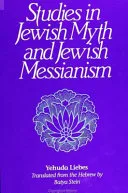
Studies in Jewish Myth and Messianism
 73
73

Studies in Jewish Myth and Messianism
Yehuda Liebes’s *Studies in Jewish Myth and Messianism* offers a granular examination of how foundational narratives and eschatological hopes shaped Jewish religious identity. The strength of this work lies in its detailed tracing of conceptual shifts, particularly its argument for Kabbalah as an internal unfolding of Jewish myth rather than an external imposition. Liebes is particularly adept at showing how figures like the Zohar, a key Kabbalistic text, reinterpreted earlier scriptural and rabbinic traditions. A potential limitation for some readers might be the dense academic prose, which, while precise, can be demanding. The section discussing the spiritual personalities within messianic movements, for instance, requires careful attention to follow the intricate theological arguments. Nevertheless, the book provides a crucial lens for understanding the persistent imaginative power of Jewish myth.
📝 Description
73
### What It Is
This scholarly volume investigates the dynamic evolution of Jewish myth and messianic thought across centuries. It traces the transformation of these concepts from their origins in the Talmudic period, through the mystical heights of Kabbalah, and into the devotional fervor of Hasidism. The work meticulously examines how external cultural and religious currents influenced these internal developments, while simultaneously arguing for the inherent mythical nature of Judaism itself.
### Who It's For
Academics specializing in Jewish studies, comparative religion, and the history of esotericism will find this book indispensable. Students of Kabbalah and Hasidism seeking to understand the foundational myths and messianic expectations that shaped these movements will benefit greatly. Those interested in the interplay between religious belief, myth-making, and historical context will appreciate its rigorous analysis.
### Historical Context
The book was originally published in 1993, a period of renewed academic interest in Jewish mysticism and its historical roots. It emerged within a scholarly landscape increasingly open to understanding religious traditions through their internal symbolic language and mythic structures, moving beyond purely historical or sociological explanations. This work engaged with ongoing debates concerning the origins of Kabbalah, particularly the extent to which it represented a radical innovation versus a development rooted in earlier Jewish sources.
### Key Concepts
Central to the study is the assertion that myth is not an external accretion but a fundamental component of Jewish religious expression. The author posits that Kabbalah, rather than being solely an import from other traditions, is a profound manifestation of this inherent Jewish mythical consciousness. The exploration of messianism delves into the spiritual figures and eschatological expectations that have propelled Jewish historical consciousness, examining their changing forms and significations.
💡 Why Read This Book?
• Learn how the concept of the 'Shekhinah' evolved across Talmudic, Kabbalistic, and Hasidic thought, offering a unique perspective on divine immanence within Judaism. • Understand the specific historical influences, such as the impact of Abraham Abulafia's prophetic Kabbalah in the 13th century, on the development of messianic ideas. • Gain insight into the author's argument that Kabbalah is a natural manifestation of Jewish myth, challenging purely externalist explanations of its origins.
⭐ Reader Reviews
Honest opinions from readers who have explored this book.
❓ Frequently Asked Questions
What is the primary argument regarding Kabbalah's origins in Yehuda Liebes's work?
Liebes argues that Kabbalah is not merely an external influence on Judaism but an intrinsic manifestation of Jewish myth and religious consciousness, deeply rooted in earlier traditions.
Which periods of Jewish history does *Studies in Jewish Myth and Messianism* cover?
The book spans from the Talmudic period (roughly 2nd to 5th centuries CE) through the development of Kabbalah (medieval period) and into Hasidism (18th century onwards).
What role does messianism play in the book's analysis?
Messianism is explored as a central theme, examining the changes in Jewish eschatological expectations and the spiritual personalities associated with these beliefs throughout history.
Who would benefit most from reading this book?
Scholars of Jewish studies, comparative religion, Kabbalah, Hasidism, and those interested in the history of esoteric thought will find this work particularly valuable.
Does the book discuss the influence of non-Jewish ideas on Jewish myth?
Yes, the book examines external influences on the development of Jewish myth while emphasizing its inherent Jewish character and internal transformations.
What is the significance of the Zohar in the context of this study?
The Zohar, a foundational Kabbalistic text, is analyzed as a key example of how Jewish myth and messianic concepts were reinterpreted and expressed within the Kabbalistic framework.
🔮 Key Themes & Symbolism
Myth as Intrinsic Judaism
This work posits that myth is not an external addendum but a fundamental essence of the Jewish religious experience. Liebes argues against viewing Jewish myth and mysticism solely through the lens of foreign influences, instead presenting them as organic developments. He demonstrates how concepts and narratives transform and re-emerge, showing the continuity of a mythical consciousness from rabbinic literature to the mystical circles of Kabbalah and the devotional world of Hasidism.
Kabbalah's Mythic Roots
A central thesis is that Kabbalah represents a profound manifestation of Jewish myth. The book analyzes how Kabbalistic texts and ideas, particularly those found in works like the Zohar, draw upon and reinterpret earlier Jewish sources. This perspective challenges interpretations that see Kabbalah as solely a product of Gnostic or other external esoteric traditions, highlighting its deep embeddedness within the Jewish spiritual landscape.
The Evolution of Messianism
The study meticulously traces the development of messianic thought within Judaism. It examines how the concept of the Messiah and the expectation of redemption have been articulated and transformed across different historical periods and spiritual movements. This includes exploring the specific spiritual personalities and theological frameworks that shaped these messianic visions, from ancient prophecies to later mystical interpretations.
Interplay of Myth and History
Liebes explores how Jewish myth and messianic ideas are not static but dynamically interact with historical circumstances and external cultural currents. The book details how these internal traditions adapt, reconfigure, and respond to the wider world, while retaining their core identity. This dynamic relationship is key to understanding the enduring vitality and adaptability of Jewish spiritual thought across centuries.
💬 Memorable Quotes
“Myth is in the essence of the Jewish religion.”
— This statement encapsulates the core argument that mythic narratives and structures are not peripheral but foundational to understanding Jewish spirituality and practice across its historical development.
“Kabbalah is one of its manifestations.”
— Referencing the inherent mythical nature of Judaism, this highlights the author's view that Kabbalah arises organically from within the Jewish tradition, rather than being solely an import.
“The changes in this myth in its various stages.”
— This indicates the book's focus on historical development, showing how Jewish myths and messianic concepts were not fixed but underwent significant transformations from the Talmudic era through Kabbalah and Hasidism.
“External influences on it.”
— This points to the book's methodological approach, which considers the impact of surrounding cultures and ideas on the evolution of Jewish myth and religious thought, while still emphasizing internal drivers.
“The special spiritual personalities of some.”
— This suggests an exploration of key figures and their unique contributions to the development of messianic ideas and mystical traditions within Judaism, analyzing their specific theological and spiritual characteristics.
🌙 Esoteric Significance
Tradition
This work is situated within the study of Jewish esotericism, specifically Kabbalah and Hasidism, and their connections to earlier rabbinic traditions. It engages with the lineage of Jewish mystical thought, examining how concepts of divinity, creation, and redemption are expressed through mythic narratives and symbolic language. Liebes's approach highlights the internal coherence and development within this tradition, while acknowledging external influences.
Symbolism
Key symbols explored include the concept of the Shekhinah (divine presence), which undergoes transformations in its representation from rabbinic literature to Kabbalistic cosmology, often symbolizing immanence and the feminine aspect of the divine. The book also delves into the symbolism of messianic figures and eschatological events, which serve as archetypal representations of hope, transformation, and ultimate redemption within the Jewish spiritual framework.
Modern Relevance
Contemporary scholars of religion and mysticism continue to draw on Liebes's rigorous analysis of Jewish myth and messianism. His work informs modern discussions on the nature of religious language, the role of narrative in shaping belief, and the enduring power of esoteric traditions. Thinkers exploring comparative mysticism and the psychology of religious experience find his nuanced account of Kabbalah and Hasidism valuable.
👥 Who Should Read This Book
• Students of Kabbalah and Jewish mysticism seeking to understand the foundational myths and messianic underpinnings of these movements. • Comparative religion scholars interested in the development of religious narratives and their historical context across different traditions. • Researchers of esoteric thought who wish to explore the intricate relationship between myth, theology, and spiritual practice within Judaism.
📜 Historical Context
Published in 1993, Yehuda Liebes's *Studies in Jewish Myth and Messianism* emerged during a period of robust academic engagement with Jewish mysticism. The late 20th century saw a significant scholarly re-evaluation of Kabbalah, moving beyond earlier dismissals or purely historical analyses to appreciate its complex theological and symbolic systems. Liebes's work contributed to ongoing debates, particularly concerning the origins and development of Kabbalistic thought. He engaged with scholars like Gershom Scholem, whose foundational work on Kabbalah had shaped the field, but offered distinct interpretations. This book positioned itself against purely externalist explanations for Kabbalah, emphasizing its deep roots in earlier Jewish traditions and its role as a manifestation of inherent Jewish myth. The academic reception of such works often involved nuanced discussions about the relationship between Jewish mysticism and other esoteric or philosophical currents of the medieval and early modern periods.
📔 Journal Prompts
The concept of Kabbalah as an internal manifestation of Jewish myth.
Messianic expectations during the Talmudic period versus later developments.
The evolving symbolism of the Shekhinah across different Jewish traditions.
How external influences are presented as shaping Jewish myth.
The role of specific spiritual personalities in the development of Hasidism.
🗂️ Glossary
Talmudic Period
Refers to the era during which the Talmud, a central text of Rabbinic Judaism containing legal discussions and narrative material, was compiled and redacted, generally spanning from the 2nd to the 5th centuries CE.
Kabbalah
The esoteric system of Jewish mysticism, originating in the medieval period, which explores the nature of God, creation, and the relationship between the divine and the human through symbolic interpretation of religious texts.
Hasidism
A spiritual movement within Orthodox Judaism founded in 18th-century Eastern Europe, emphasizing mystical experience, joy, and the immanence of God in everyday life, often through charismatic leadership.
Messianism
The belief in a messiah or a messianic era, involving a future redeemer who will bring about a period of peace, justice, and spiritual perfection, a concept central to Jewish eschatology.
Shekhinah
A Hebrew term representing the immanent dwelling or presence of God, often associated with the feminine aspect of the divine, particularly significant in Kabbalistic and rabbinic thought.
Zohar
The foundational text of Kabbalah, a collection of mystical commentaries on the Torah, attributed to Rabbi Shimon bar Yochai (2nd century CE) but largely believed to have been written by Moses de León in 13th-century Spain.
Eschatology
The branch of theology concerned with the final events of history, or the ultimate destiny of humanity and the world, particularly as related to messianic beliefs and the end times.