Nag Hammadi, Gnosticism, and Early Christianity
 80
80

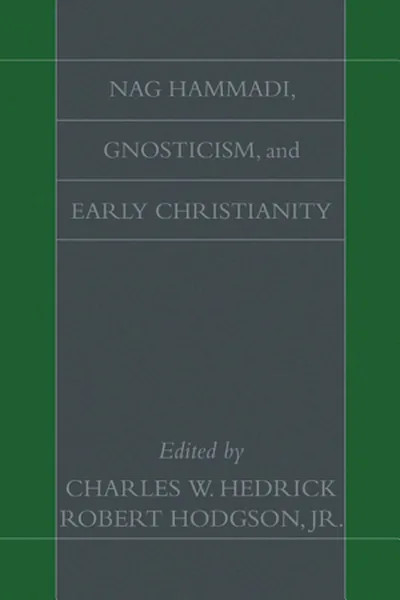
Nag Hammadi, Gnosticism, and Early Christianity
Hedrick and Hodgson's compilation offers a valuable academic survey, particularly in its bridging of introductory material with specialized research frontiers. The strength lies in its multidisciplinary approach, presenting diverse scholarly perspectives on the Nag Hammadi texts. However, the collection's breadth occasionally leads to a lack of depth on individual topics, leaving the reader wanting more detailed engagement with certain Gnostic treatises. A particularly illuminating section explores the Gospel of Thomas's distinct christology, a topic frequently debated. Ultimately, the book serves as a solid, albeit sometimes uneven, academic resource for understanding early Christian diversity.
📝 Description
80
Published in 2005, this collection revisits the Nag Hammadi library's link to early Gnosticism.
This volume addresses the Nag Hammadi collection and its relationship to early Christian groups, particularly Gnosticism. It moves beyond basic overviews to consider scholarly discussions on these ancient writings and their significance. The book is organized for both newcomers to Gnosticism and experienced researchers. It offers essential knowledge about origins, core beliefs, and textual links, while also noting current academic debates. The work's publication in 2005 coincided with a time of significant scholarly re-examination of the Nag Hammadi finds. Researchers were actively discussing the connections between Gnostic documents and the emerging Christian canon, moving away from earlier, less complex classifications. Key elements include the examination of Gnostic cosmology, the analysis of particular Nag Hammadi texts, and a critical look at how these groups interacted with and were often opposed by developing Christian authorities.
The Nag Hammadi library, discovered in 1945, provided direct access to Gnostic texts previously known only through the critiques of their opponents. This collection engages with the scholarly reassessment of these documents, which began in earnest after their translation. It situates Gnosticism not as a fringe heresy, but as a complex set of traditions that coexisted and contended with early orthodox Christianity. The discussions within this book reflect a shift towards understanding Gnostic systems on their own terms, examining their unique cosmologies, soteriologies, and social dynamics within the broader religious environment of the Roman Empire.
💡 Why Read This Book?
• Gain a nuanced understanding of Gnosticism's origins and core ideas, moving beyond common misconceptions, by examining its relationship to early Christianity as presented in the 2005 collection. • Appreciate the scholarly debates surrounding the Nag Hammadi library, specifically how researchers in the early 2000s were re-evaluating its significance. • Explore the unique theological perspectives found in texts like the Gospel of Thomas, understanding their potential divergence from later orthodox doctrines.
⭐ Reader Reviews
Honest opinions from readers who have explored this book.
❓ Frequently Asked Questions
What is the significance of the Nag Hammadi library?
The Nag Hammadi library, discovered in 1945, comprises a collection of ancient Gnostic texts. These writings offer crucial insights into diverse early Christian beliefs and practices that differed significantly from the doctrines that eventually became dominant.
Who were the Gnostics?
Gnostics were adherents of various religious movements in the early centuries CE who emphasized gnosis, or spiritual knowledge, as the path to salvation. Their beliefs often involved complex cosmologies and a dualistic worldview.
How does Gnosticism relate to early Christianity?
Gnosticism represents a spectrum of beliefs and practices that emerged alongside, and often in dialogue or conflict with, early Christianity. Some Gnostic groups considered themselves Christian, while others developed entirely separate mythologies.
What kind of literature is found in the Nag Hammadi library?
The library contains a variety of texts, including gospels (like the Gospel of Thomas), apocalypses, philosophical treatises, and interpretations of other scriptures. Many are attributed to figures like Thomas, Philip, and Mary Magdalene.
When was the book 'Nag Hammadi, Gnosticism, and Early Christianity' first published?
The book 'Nag Hammadi, Gnosticism, and Early Christianity', edited by Charles W. Hedrick and Robert Hodgson, was first published on October 17, 2005.
What does 'gnosis' mean in a Gnostic context?
In Gnosticism, 'gnosis' refers to a special, intuitive, and often mystical knowledge of the divine. This knowledge is seen as liberating, enabling the individual to escape the material world and achieve spiritual enlightenment.
🔮 Key Themes & Symbolism
The Nag Hammadi Corpus
This collection focuses on the significance of the Nag Hammadi library, discovered in Egypt in 1945. It highlights how these texts, written primarily in Coptic, offer a counter-narrative to the development of orthodox Christianity, revealing a diverse landscape of early religious thought and practice.
Gnostic Cosmology and Soteriology
Central to the discussions are the complex cosmologies and salvation doctrines of Gnosticism. The work examines concepts like the Pleroma, the Demiurge, and the role of divine sparks trapped within the material world, emphasizing gnosis as the means of liberation.
Interactions with Early Christianity
The essays explore the intricate and often contentious relationship between Gnostic movements and the burgeoning Christian church. It addresses questions of shared terminology, divergent interpretations, and the historical processes that led to the marginalization of Gnostic perspectives.
Scholarly Frontiers
Beyond introductions, the book delves into the ongoing academic exploration of Gnosticism. It showcases how scholars in the early 2000s were pushing the boundaries of understanding, using new analytical tools and interdisciplinary approaches to re-examine these ancient texts.
💬 Memorable Quotes
“Concise introduction to Gnosticism covering origin, literature, leading ideas, and possible links with early Christianity.”
— This represents the foundational goal of certain contributions: to equip newcomers with the essential framework for understanding Gnosticism's historical and theological context.
“Presents to the specialist some of the new frontiers their colleagues are exploring.”
— This highlights the collection's dual purpose, aiming to inform both beginners and advanced scholars by showcasing cutting-edge research and evolving academic discussions.
“Each contributor has prepared a preface to his or her paper that points to its salient features and explains how the essay fits into the overall subject.”
— This structural element ensures clarity and coherence, allowing readers to grasp the specific focus and contribution of each essay within the broader exploration of Gnosticism.
“The book acquaints the beginner with the topic of gnosticism and early Christianity.”
— This statement underscores the accessibility of the work, designed to serve as an entry point for those unfamiliar with the complex subject matter of Gnostic studies.
“Explores the issues of origin, literature, leading ideas, and possible links with early Christianity.”
— This outlines the core thematic areas covered, providing a roadmap of the foundational knowledge and critical inquiries addressed throughout the collection.
🌙 Esoteric Significance
Tradition
This work is firmly situated within the study of Gnosticism, a complex spiritual and philosophical movement that profoundly influenced early religious thought. It engages directly with texts considered foundational to Gnostic traditions, exploring their unique cosmologies and paths to spiritual liberation, often diverging from mainstream Abrahamic doctrines.
Symbolism
Key symbols explored include the divine Pleroma (fullness) and the entrapment of divine sparks within the material world created by a lesser deity (the Demiurge). The concept of 'gnosis' itself, a direct, intuitive knowledge of the divine, functions as a central symbolic key to liberation and spiritual awakening.
Modern Relevance
Contemporary esoteric thinkers and practitioners, particularly those interested in Western esotericism, Hermeticism, and psychological interpretations of myth, continue to draw from Gnostic thought. The exploration of the self, consciousness, and liberation from perceived limitations resonates with modern spiritual seekers.
👥 Who Should Read This Book
• Students of comparative religion and early Christian history seeking to understand the diversity of beliefs beyond the canonical texts. • Academic researchers and scholars specializing in Gnosticism and the Nag Hammadi library looking for current analyses and scholarly discussions. • Individuals interested in esoteric philosophy and the historical roots of alternative spiritual traditions seeking foundational knowledge on Gnostic thought.
📜 Historical Context
The publication of 'Nag Hammadi, Gnosticism, and Early Christianity' in 2005 occurred during a vibrant period of Gnostic studies, significantly energized by the discovery of the Nag Hammadi library in 1945. Scholars were actively reassessing the diversity of early Christianity, moving away from a singular narrative of orthodox development. This era saw robust debate with scholars like Elaine Pagels, whose works had popularized Gnostic themes, prompting further critical engagement. The volume reflects this ongoing scholarly conversation, seeking to integrate the latest research with accessible introductions, addressing the challenges of interpreting texts from a milieu often in opposition to the emerging Nicene Christianity.
📔 Journal Prompts
The concept of gnosis as a liberating force within Gnostic cosmology.
The relationship between Gnostic creation myths and the orthodox biblical narrative.
The specific role of the Demiurge in Gnostic systems.
The Gospel of Thomas's unique sayings and their interpretation.
The historical reception and suppression of Gnostic texts by early Church authorities.
🗂️ Glossary
Gnosticism
A diverse set of religious and philosophical movements in antiquity that emphasized salvation through esoteric knowledge (gnosis). Gnostics often held dualistic views and complex cosmologies.
Nag Hammadi Library
A collection of thirteen Coptic Gnostic texts discovered near Nag Hammadi, Egypt, in 1945. It includes gospels, apocalypses, and other religious writings providing crucial insights into Gnosticism.
Gnosis
Greek for 'knowledge.' In Gnosticism, it refers to a special, intuitive, salvific knowledge of the divine that leads to spiritual liberation from the material world.
Demiurge
In Gnostic cosmology, a subordinate creator deity, often identified with the God of the Old Testament, who fashioned the material world, which is seen as flawed or evil.
Pleroma
In Gnostic theology, the divine realm or totality of spiritual beings and powers emanating from the ultimate, unknowable God.
Coptic
A late stage of the Egyptian language, written using the Greek alphabet with additional signs. Many Nag Hammadi texts were translated into Coptic.
Soteriology
The doctrine or theory of salvation. Gnostic soteriology typically involves attaining gnosis to escape the material prison.