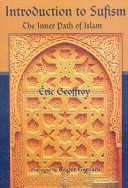
Introduction to Sufism
 83
83

Introduction to Sufism
Eric Geoffroy’s "Introduction to Sufism" presents a clear, if somewhat dry, exposition of a profoundly rich spiritual tradition. Unlike many popular introductions, Geoffroy grounds his work in historical scholarship, offering precise definitions and historical timelines that are invaluable for serious study. His discussion of the *shaykh* as a pivotal figure in the transmission of esoteric knowledge is particularly well-articulated, moving beyond romanticized notions to the practicalities of spiritual guidance. However, the text occasionally suffers from an academic detachment that, while ensuring accuracy, may not fully convey the ecstatic or devotional heart of Sufism to a reader seeking a more experiential understanding. A notable strength is Geoffroy's careful distinction between historical Sufism and later appropriations or misrepresentations. The book serves as an excellent primer for the uninitiated, providing a solid foundation before one explores more devotional or poetic Sufi texts. It is a dependable, if not always inspiring, guide to an ancient path.
📝 Description
83
### What It Is An "Introduction to Sufism" by Eric Geoffroy offers a scholarly yet accessible overview of the mystical dimension of Islam. Published in 2010, the book aims to demystify Sufi traditions, explaining their core tenets, practices, and historical development. It addresses common misconceptions and highlights Sufism's unique spiritual path within the broader Islamic context.
### Who It's For This work is designed for students of comparative religion, scholars of Islamic studies, and individuals interested in esoteric spirituality who seek a grounded understanding of Sufism. It is also valuable for practitioners of other mystical paths looking to draw parallels or understand Sufi approaches to spiritual realization.
### Historical Context Sufism's roots trace back to the early days of Islam, with figures like Hasan al-Basri in the 8th century CE contributing to its ascetic foundations. Over centuries, it evolved into diverse orders (tariqas) like the Naqshbandi and Qadiri, spreading across the Islamic world. Geoffroy's book situates this rich history against the backdrop of Islamic intellectual history, exploring its interactions with various philosophical and theological movements.
### Key Concepts The book introduces fundamental Sufi concepts such as *dhikr* (remembrance of God), *tawhid* (divine unity), the role of the *shaykh* (spiritual guide), and the stages of the spiritual journey (*maqamat* and *ahwal*). It clarifies the importance of love (*ishq*) and divine intoxication (*sukr*) in the Sufi quest for proximity to the Divine.
💡 Why Read This Book?
• Gain a clear understanding of the concept of *dhikr* as a core Sufi practice, differentiating it from more general Islamic prayer, as explored in Geoffroy's detailed explanations. • Appreciate the historical evolution of Sufism from its 8th-century ascetic origins to the development of distinct *tariqas*, providing context unavailable in generalized spiritual texts. • Grasp the role and significance of the *shaykh* as a spiritual guide, a concept central to Sufi transmission and personal spiritual development, as analyzed by Geoffroy.
⭐ Reader Reviews
Honest opinions from readers who have explored this book.
❓ Frequently Asked Questions
What is the primary goal of Sufism as explained by Eric Geoffroy?
Geoffroy explains that the primary goal of Sufism is the direct experience of God, achieving proximity and union with the Divine through spiritual purification and remembrance (*dhikr*).
When was Eric Geoffroy's 'Introduction to Sufism' first published?
Eric Geoffroy's 'Introduction to Sufism' was first published on May 16, 2010, making it a relatively contemporary scholarly overview.
Does the book cover the different Sufi orders (tariqas)?
Yes, the book discusses the historical development and characteristics of various Sufi orders, or *tariqas*, illustrating the diversity within the Sufi tradition.
What is 'dhikr' in the context of Sufism?
As detailed in the book, *dhikr* is the ritual remembrance of God, often involving chanting divine names or phrases, a central practice for cultivating spiritual awareness and attaining union.
Is Sufism a separate religion from Islam?
Geoffroy clarifies that Sufism is not a separate religion but rather the mystical and esoteric dimension of Islam, focusing on the inner spiritual journey towards God.
Who is a 'shaykh' in Sufism?
A *shaykh* is a spiritual master or guide within a Sufi order, responsible for leading disciples on their spiritual path and transmitting the tradition's teachings and practices.
🔮 Key Themes & Symbolism
The Path of Love
Geoffroy illuminates the central role of divine love (*ishq*) in the Sufi path. This is not mere human affection but a burning desire for union with the Divine Beloved, often expressed through ecstatic states (*ahwal*) and intense devotion. The book explores how this love motivates the seeker's journey and shapes their perception of reality, distinguishing it from purely intellectual or legalistic approaches to spirituality within Islam.
Spiritual Guidance and Transmission
Central to Sufism is the concept of the *shaykh* (spiritual master) and the *silsila* (chain of transmission). Geoffroy explains how this lineage ensures the authenticity and integrity of the teachings passed down from the Prophet Muhammad through generations of masters. The *shaykh* acts as a guide, mentor, and spiritual father, helping disciples navigate the stages (*maqamat*) of the soul's journey towards God.
Remembrance and Divine Presence
The practice of *dhikr* (remembrance) is presented as the cornerstone of Sufi spiritual discipline. Geoffroy details various forms of *dhikr*, from silent contemplation of God's names to communal chanting. The aim is to cultivate a constant awareness of the Divine Presence, transforming the practitioner's inner state and perception of the world, leading towards the realization of *tawhid* (divine unity).
The Inner Dimension of Islam
Geoffroy positions Sufism as the heart or esoteric dimension of Islam, emphasizing its focus on inner purification (*tazkiyah*) and the direct experience of God, rather than solely on external religious observances. The book seeks to integrate Sufi practices and beliefs within the broader Islamic framework, countering common misunderstandings that portray Sufism as separate or heterodox.
💬 Memorable Quotes
“The spiritual journey is characterized by stages and states.”
— This concept highlights the structured nature of Sufi spiritual progress, involving both defined phases of effort (*maqamat*) and spontaneous divine graces (*ahwal*) that the seeker experiences.
“Sufism is the path of love and longing for God.”
— This encapsulates the emotional and devotional core of Sufism, emphasizing that the primary motivation for the spiritual quest is an intense, often ecstatic, love for the Divine.
“The shaykh is essential for guiding the disciple.”
— This points to the crucial role of a spiritual mentor in Sufism, who provides knowledge, support, and spiritual authority necessary for the disciple's progress on the path.
“Dhikr is the constant remembrance of God.”
— This defines the central practice of Sufism, emphasizing continuous mindfulness and invocation of the Divine Name as a means to spiritual purification and awareness.
“Tawhid is the realization of divine unity.”
— This refers to the ultimate goal of Sufi practice: the profound understanding and experience that God is the sole reality, and all existence is a manifestation of this unity.
🌙 Esoteric Significance
Tradition
Sufism is the esoteric and mystical dimension of Islam. Geoffroy's work fits within this lineage by explicating its core principles and practices, such as *dhikr* and the pursuit of divine union. It aligns with Hermetic and Gnostic traditions in its emphasis on inner knowledge and direct experience of the Divine, though it remains firmly rooted within an Islamic framework, distinguishing it from purely Hellenistic or Neoplatonic esoteric schools.
Symbolism
Key symbols in Sufism discussed by Geoffroy include the 'heart' (*qalb*), representing the seat of spiritual perception and divine illumination, and the 'veil' (*hijab*), symbolizing the barriers (ignorance, ego) that obscure the vision of God. The concept of 'unity' (*tawhid*) itself functions as a profound symbol, pointing towards the ultimate non-duality of existence in relation to the Divine Source.
Modern Relevance
Geoffroy's scholarly approach makes Sufism accessible to contemporary thinkers grappling with spirituality in a secularized world. Modern practitioners of mindfulness, comparative religion enthusiasts, and those exploring non-dual philosophies find resonance in Sufi concepts of presence and unity. His work provides a crucial reference point for understanding how ancient Islamic mystical practices continue to offer profound insights into the human condition and the search for meaning.
👥 Who Should Read This Book
• Students of comparative religion and Islamic studies seeking a foundational academic text on Sufism's history, beliefs, and practices. • Individuals interested in esoteric traditions who wish to understand the mystical heart of Islam from a reliable scholarly source. • Spiritual seekers exploring paths to inner peace and direct experience of the Divine, looking for clear explanations of core Sufi concepts like *dhikr* and the role of the *shaykh*.
📜 Historical Context
Published in 2010, Eric Geoffroy's "Introduction to Sufism" emerges at a time when scholarly interest in Islamic mysticism has matured, moving beyond earlier Orientalist interpretations. The book builds upon decades of academic research into Sufi traditions, which gained significant traction in the West following the translations and popularizations of figures like Idries Shah in the mid-20th century. Geoffroy’s work provides a corrective to overly romanticized or simplified accounts, grounding Sufism in its historical Islamic context. It engages with the intellectual currents of Islamic theology and philosophy, acknowledging the debates Sufism has historically navigated, such as its relationship with orthodox jurisprudence and the critiques leveled by movements like Wahhabism. The era also saw a burgeoning interest in comparative mysticism and esoteric studies, making Geoffroy's precise, historically-attuned overview a valuable contribution for students and scholars alike.
📔 Journal Prompts
The concept of *tawhid* and its implications for daily perception.
Reflections on the role of a spiritual guide (*shaykh*) in personal development.
Exploring the practice of *dhikr* as a means of cultivating divine remembrance.
The nature of divine love (*ishq*) as a transformative force.
Stages (*maqamat*) and states (*ahwal*) on the spiritual path.
🗂️ Glossary
Sufism
The mystical and esoteric dimension of Islam, focused on the inner spiritual journey towards direct experience of God.
Dhikr
The ritual remembrance of God, often involving the repetition of divine names or sacred phrases, a central practice in Sufism.
Shaykh
A spiritual master or guide within a Sufi order, responsible for leading disciples and transmitting teachings.
Tawhid
The Islamic concept of divine unity, understood in Sufism as the realization of God as the sole reality.
Maqamat
The 'stations' or stages of spiritual progress that a Sufi seeker actively works through on their path.
Ahwal
The 'states' of spiritual experience, often spontaneous and transient graces bestowed by God upon the seeker.
Tariqa
A Sufi order or brotherhood, characterized by a specific lineage, set of practices, and spiritual teachings.