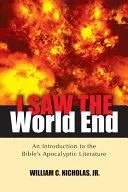
I Saw the World End
 83
83

I Saw the World End
William C. Nicholas, Jr.'s "I Saw the World End" tackles the daunting subject of biblical apocalyptic literature with commendable directness. The book’s strength lies in its commitment to the "average reader," stripping away layers of jargon that often obscure texts like Daniel and Revelation. Nicholas successfully translates dense prophetic visions into understandable concepts, particularly his elucidation of the historical-critical method applied to these scriptures. A notable section details the multi-layered symbolism of the "beast" in Revelation, offering a grounded perspective. However, the work occasionally feels constrained by its own accessibility mandate, sometimes simplifying potential theological nuances for the sake of clarity. While it avoids sensationalism, a deeper engagement with alternative, non-literal interpretive frameworks could have enriched its scope. Nonetheless, it serves as a solid introductory text for those navigating these challenging biblical books.
📝 Description
83
### What It Is William C. Nicholas, Jr.'s "I Saw the World End" offers a focused examination of apocalyptic literature found within canonical scripture. This work serves as a guide, aiming to demystify complex prophetic passages for the general reader. It prioritizes clarity and accessibility, moving beyond purely academic discourse to provide a structured understanding of texts that have long captured the imagination and anxieties of various traditions.
### Who It's For This book is intended for the "average reader" curious about the end-times prophecies in the Bible, particularly the Books of Daniel and Revelation. It is designed for individuals who may find traditional theological interpretations dense or inaccessible. Those seeking a straightforward introduction to eschatological themes, without necessarily adhering to a specific denominational viewpoint, will find this guide particularly useful for initial exploration.
### Historical Context Published in 2007, "I Saw the World End" emerged during a period of renewed interest in eschatology, fueled by anxieties surrounding global events and the turn of the millennium. The work engages with a long tradition of biblical interpretation stretching back to early Christian exegesis and continuing through figures like Joachim of Fiore and later Protestant reformers. While not directly engaging with specific contemporaries like Hal Lindsey, whose popular works also addressed end-times prophecy, Nicholas's study provides a more structured, less sensationalist approach to the scriptural texts themselves, situating them within their literary and historical framework.
### Key Concepts The book meticulously breaks down the symbolic language and historical references embedded within Daniel and Revelation. Nicholas focuses on understanding these texts not just as predictions, but as complex literary works addressing the concerns of their original audiences. Central to his approach is the idea of contextual exegesis, where the meaning of prophecy is illuminated by understanding the political and social circumstances surrounding its composition. The work also explores common apocalyptic motifs such as beast imagery, celestial disturbances, and divine judgment, offering interpretations grounded in scholarly consensus.
💡 Why Read This Book?
• Gain a structured understanding of biblical apocalyptic texts, specifically focusing on the historical-critical approach to Daniel and Revelation, enabling clearer comprehension of prophecy beyond sensationalist claims. • Learn to interpret key symbols within apocalyptic literature, such as the "beast" imagery and celestial signs, by understanding their original context and symbolic weight as presented in the book. • Develop a framework for analyzing prophetic literature that prioritizes textual context and historical background, offering a method applicable to other complex scriptural passages and providing a foundation for personal theological study.
⭐ Reader Reviews
Honest opinions from readers who have explored this book.
❓ Frequently Asked Questions
What is the primary focus of "I Saw the World End"?
The book primarily focuses on providing a study guide for understanding apocalyptic literature in Scripture, with a specific emphasis on the Books of Daniel and Revelation for the average reader.
Who is William C. Nicholas, Jr. and what is his background?
Information on William C. Nicholas, Jr.'s specific background is not detailed in the provided blurb, but the book positions him as an author aiming to demystify complex biblical texts for a general audience.
When was "I Saw the World End" first published?
The book "I Saw the World End" by William C. Nicholas, Jr. was first published in 2007.
Does the book require prior knowledge of biblical studies?
No, the book is designed for the "average reader" and aims to make the study of apocalyptic literature accessible without requiring extensive prior knowledge of biblical studies.
What specific biblical books are analyzed in detail?
The book particularly focuses on the Books of Daniel and Revelation, examining their apocalyptic literature and prophetic passages in detail.
What is the main goal of this study guide?
The main goal is to provide a clear and accessible guide to the complex and often misunderstood apocalyptic literature found within the Bible, particularly Daniel and Revelation.
🔮 Key Themes & Symbolism
Apocalyptic Literature
The book centers on the genre of apocalyptic literature within the Hebrew Bible and New Testament, specifically Daniel and Revelation. It explores the characteristic features of this genre, such as symbolic language, visions, and eschatological themes. Nicholas aims to equip readers with tools to understand the historical context and symbolic meaning of these texts, moving beyond literalist or sensationalist interpretations to appreciate their theological and literary significance. The work emphasizes that understanding the original audience and purpose is crucial for deciphering these complex prophecies.
Symbolism of Beasts and Visions
A significant theme is the interpretation of recurring symbols within apocalyptic texts, particularly the symbolic beasts found in Daniel and Revelation. Nicholas examines how these figures represent political powers, empires, or forces antagonistic to the divine will. The book also addresses other common motifs like celestial signs, divine judgment, and the ultimate triumph of good over evil. By dissecting these symbols, the author provides a framework for readers to engage with the rich, often allegorical, nature of biblical prophecy and its layered meanings.
Contextual Exegesis
Nicholas champions the principle of contextual exegesis, arguing that the meaning of prophetic passages is deeply tied to the historical, social, and political circumstances of their original composition and reception. This approach contrasts with purely futuristic or allegorical readings that detach the text from its historical roots. The book demonstrates how understanding the pressures faced by the original authors and audiences of Daniel and Revelation offers vital clues to the texts' intended messages and their relevance to contemporary readers seeking deeper scriptural understanding.
The End Times
Central to the book is the exploration of eschatological themes – the doctrines concerning end times and final events. "I Saw the World End" addresses the biblical narratives and prophecies that speak to the culmination of history. It seeks to provide a balanced perspective, distinguishing between scriptural accounts and popular speculation. The work guides readers through concepts of divine judgment, the establishment of God's kingdom, and the ultimate resolution of cosmic conflict, offering interpretations that are both theologically informed and accessible.
💬 Memorable Quotes
“The symbolic language of prophecy often reflects the immediate socio-political realities of its time.”
— This interpretation highlights Nicholas's emphasis on historical context. It suggests that the visions and beasts described in books like Daniel and Revelation are not arbitrary but deeply connected to the specific political powers and struggles the original authors and their audiences were experiencing.
“Understanding the Book of Revelation requires looking beyond its imagery to the message it conveyed to its first readers.”
— This paraphrase underscores the book's commitment to contextual exegesis. It posits that the primary key to unlocking the meaning of Revelation lies in comprehending the historical circumstances and concerns of the early Christian communities to whom it was originally addressed.
“Daniel's prophecies offer a framework for discerning divine sovereignty amidst human empires.”
— This concept emphasizes the theological core of Daniel's visions. It suggests that the book's prophetic content serves to illustrate God's ultimate control over earthly kingdoms and historical events, offering reassurance of divine purpose even in times of political upheaval.
“The average reader can navigate these complex texts with the right tools.”
— This paraphrased statement reflects the book's central aim: to democratize the study of difficult biblical passages. It conveys Nicholas's belief that through clear explanations and a focus on textual analysis, complex scriptures like Revelation become accessible to all.
“Apocalyptic literature often speaks to periods of crisis and persecution.”
— This interpretation points to the functional role of apocalyptic texts. It suggests that such writings emerged during times of significant societal stress, offering hope, judgment, and a divine perspective to those facing hardship or oppression.
🌙 Esoteric Significance
Tradition
While primarily focused on scriptural exegesis, the book touches upon themes that resonate with broader esoteric traditions concerned with cosmology, divine judgment, and the unfolding of history towards a final culmination. Its focus on symbolic interpretation and hidden meanings aligns with hermeneutic approaches found in Gnostic and Kabbalistic studies, though Nicholas grounds his interpretations firmly within biblical scholarship rather than syncretic esoteric systems. The work's exploration of prophecy can be seen as a bridge between exoteric religious study and esoteric contemplation of divine will and cosmic cycles.
Symbolism
Key symbols explored include the 'beast' (often representing oppressive political or spiritual powers), celestial phenomena (portending divine intervention or cosmic shifts), and divine judgment (symbolizing a final reckoning and restoration). In esoteric traditions, these symbols often represent archetypal forces or stages in spiritual evolution. The 'beast' can signify the material ego or societal corruption, while celestial signs may denote shifts in consciousness or cosmic order, and judgment reflects the soul's reckoning with divine law.
Modern Relevance
Contemporary thinkers and groups interested in the intersection of theology, philosophy, and speculative futures often draw upon or re-examine foundational texts like Daniel and Revelation. While direct citation of Nicholas's work might be less common in academic esoteric circles, his accessible breakdown of core apocalyptic themes aids modern readers engaging with concepts of societal collapse, spiritual transformation, and cosmic destiny found in various New Age, post-theological, and critical theory discussions about the future.
👥 Who Should Read This Book
• Students of comparative religion and biblical studies seeking a clear, non-sectarian introduction to apocalyptic literature, particularly the Books of Daniel and Revelation. • Individuals interested in understanding the historical context and symbolic language of end-times prophecies, moving beyond sensationalized interpretations to a more grounded analysis. • Lay readers of scripture who find traditional theological commentaries dense and wish for an accessible guide to interpreting challenging prophetic passages within the Bible.
📜 Historical Context
Published in 2007, "I Saw the World End" entered a literary landscape where end-times prophecy continued to capture public imagination, often through popular media and evangelical literature. The work itself is a product of the long-standing tradition of biblical eschatology, which has roots stretching back to the intertestamental period and early Christian writings. While Nicholas’s study focuses on scriptural analysis, it implicitly engages with interpretive approaches that gained prominence in the 20th century, such as dispensationalism, often popularized by authors like Hal Lindsey. However, Nicholas’s approach prioritizes a historical-critical method, aiming for a more grounded interpretation than some of the more speculative contemporary works. The book's publication year also places it within a period of heightened global awareness of potential catastrophic events, a context that may have amplified interest in apocalyptic themes.
📔 Journal Prompts
The symbolic representation of the 'beast' in Revelation: how does its interpretation reflect contemporary societal anxieties?
Daniel's visions of empires: what parallels, if any, can be drawn to modern global power structures?
The concept of divine judgment as presented in scripture: what does it signify beyond simple retribution?
The role of celestial disturbances in apocalyptic prophecy: explore their potential symbolic meanings.
How does understanding the original audience of Daniel and Revelation alter one's perception of the text's message?
🗂️ Glossary
Apocalyptic Literature
A genre of religious literature characterized by visions, symbolism, and prophecies concerning the end of the world, divine judgment, and the establishment of a new cosmic order. Found in both Jewish and Christian traditions.
Eschatology
The theological study of 'last things,' including concepts such as death, judgment, the end of the world, and the ultimate destiny of humanity and the cosmos.
Daniel
A biblical book containing prophetic visions and narratives, traditionally attributed to the prophet Daniel during the Babylonian exile, offering insights into future kingdoms and divine sovereignty.
Revelation
The final book of the New Testament, attributed to John of Patmos, known for its highly symbolic and visionary account of the end times, divine judgment, and the ultimate triumph of God.
Symbolic Language
The use of words, images, or concepts to represent abstract ideas or deeper meanings, common in prophetic and mystical texts, requiring interpretation beyond their literal sense.
Contextual Exegesis
An approach to biblical interpretation that emphasizes understanding a text's meaning by considering its original historical, cultural, linguistic, and literary context.
Beast Imagery
Symbolic representations, often of monstrous creatures, appearing in apocalyptic texts like Daniel and Revelation, typically interpreted as representing oppressive empires, rulers, or forces hostile to God.