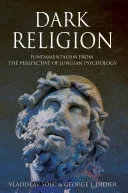
Dark Religion
 78
78

Dark Religion
Vladislav Šolc and George J. Didier's Dark Religion presents a compelling argument that religious fanaticism is not merely an ideological failing but a psychic event, a possession by the unconscious Self. The authors, drawing from Jungian analysis, meticulously dissect how individuals and groups can become conduits for overwhelming archetypal energies, leading to destructive zealotry. A particular strength is the book’s insistence that spirituality is an innate human need, not an optional add-on. The central thesis, that this inherent drive becomes 'dark' only when severed from its roots, offers a fresh perspective on phenomena like cults and extremist movements. However, the dense psychological terminology, while precise, may present a barrier for readers less familiar with Jungian concepts. A more accessible bridge for newcomers could have enhanced its reach. The work’s exploration of how the unconscious energies of the Self can manifest in literal 'possession' is particularly striking. Ultimately, Dark Religion provides a sophisticated psychological framework for understanding the human propensity towards fervent belief and its potential for darkness.
📝 Description
78
### What It Is Dark Religion, by Jungian analysts Vladislav Šolc and George J. Didier, offers a rigorous psychological exploration into the roots of religious fundamentalism and fanaticism. It examines the internal states that lead individuals to become conduits for powerful, often unacknowledged, unconscious energies of the Self. The work posits spirituality not as an optional pursuit, but as a fundamental human dimension that can turn destructive when severed from its vital connections.
### Who It's For This book is intended for readers interested in the psychological underpinnings of belief systems, particularly those who explore the darker manifestations of spirituality. It appeals to academics in psychology and religious studies, as well as individuals seeking to understand the dynamics of group psychology and the impact of unconscious drives on conscious belief, especially concerning religious fervor.
### Historical Context First published in December 2018, Dark Religion emerged in an era marked by a resurgence of interest in Jungian psychology and a growing global discourse on religious polarization. It situates itself within the tradition of depth psychology, extending analytical psychology's inquiry into the collective unconscious and its impact on societal phenomena. The work engages with critiques of established religious institutions and the rise of new spiritual movements, offering a psychological lens on phenomena often debated in sociological or theological terms.
### Key Concepts The core of Dark Religion lies in its analysis of the 'Self' not as a benign ego-support, but as a potent psychic totality whose energies, when misdirected or suppressed, can fuel fanaticism. It introduces concepts like the 'possessed' individual, where ego consciousness is overwhelmed by archetypal energies, and the 'dark religion' itself, representing spirituality that has become distorted through denial or isolation from its essential human grounding. The book emphasizes the inherent human need for spiritual connection and the dangers when this need is met by rigid, exclusionary belief structures.
💡 Why Read This Book?
• Understand the psychological mechanics behind religious fanaticism, learning how the unconscious 'Self' can manifest destructively as explored in Šolc and Didier's analysis of 'possessed' individuals. • Gain insight into the inherent human need for spirituality and why its distortion into 'dark religion' arises from disconnection, as detailed in their examination of severed vital roots. • Explore the Jungian concept of the 'Self' as a powerful, sometimes overwhelming, psychic totality, and its role in both healthy individuation and unhealthy fundamentalism, as first published in 2018.
⭐ Reader Reviews
Honest opinions from readers who have explored this book.
❓ Frequently Asked Questions
What is the primary psychological framework used in Dark Religion?
The book primarily employs Jungian psychology, specifically drawing on concepts like the unconscious, the Self, archetypes, and the dynamics of psychic possession to analyze religious fundamentalism.
Who are the authors of Dark Religion?
The authors are Vladislav Šolc and George J. Didier, both Jungian analysts who applied their expertise to the psychological roots of religious extremism.
When was Dark Religion first published?
Dark Religion was first published on December 1, 2018.
What does the book mean by 'dark religion'?
'Dark religion' refers to spirituality that has become destructive or fanatical, arising when the inherent human need for spiritual connection is denied, ignored, or separated from its essential psychological and existential roots.
Does the book offer solutions to religious fanaticism?
While not providing simplistic solutions, the book aims to foster understanding by revealing the psychological dynamics at play, suggesting that re-establishing vital connections to the Self's authentic expression is key.
Is this book suitable for someone unfamiliar with Jungian psychology?
While written by Jungian analysts, the book's clear explanations of concepts like the 'Self' and 'possession' make it accessible to those with a general interest in psychology and spirituality, though prior knowledge enhances comprehension.
🔮 Key Themes & Symbolism
Psychic Possession by the Self
The book posits that religious fanaticism can be understood as a form of psychic possession, where the ego consciousness becomes overwhelmed by the powerful, untamed energies of the unconscious Self. This is not a supernatural event but a psychological phenomenon where an individual's identity is subsumed by archetypal forces, leading to zealous, often destructive, behavior. Šolc and Didier explore how this can manifest in both individuals and collective movements, turning spiritual fervor into a rigid, exclusionary ideology that loses its connection to the vital needs of the human psyche.
Spirituality as an Essential Need
Dark Religion argues forcefully that spirituality is an inherent and essential dimension of human existence, not merely a cultural artifact or personal preference. It is presented as a fundamental need akin to food or shelter. The work suggests that when this innate drive is denied, ignored, or forced into rigid, dogmatic frameworks, it becomes distorted. This distortion is what gives rise to the 'dark' manifestations of religion, characterized by fanaticism and a severing from the deeper, life-affirming sources of the human spirit.
The Roots of Fundamentalism
The analysis delves into the psychological causes of religious fundamentalism and fanaticism, viewing them as symptoms of a severed connection to the vital roots of spiritual life. The book examines what happens internally when individuals become identified with an absolute, unyielding belief system that denies complexity or personal psychological integration. It explores the unconscious dynamics that fuel such rigidity, suggesting that a failure to integrate the shadow aspects of the psyche and the unconscious energies of the Self contributes significantly to extremist viewpoints.
Integrity of the Self
A central concern is the integrity of the Self as a psychological totality. The work contrasts healthy individuation, where the Self's energies are integrated into conscious life, with pathological states where these energies dominate, leading to 'possession'. This distinction is crucial for understanding how spiritual impulses can become perverted. The book implies that maintaining a connection to the vital roots of spirituality is essential for the psychological well-being and the authentic expression of the human Self, preventing its descent into destructive fanaticism.
💬 Memorable Quotes
“Spirituality is an inherent dimension of human life and one of its most essential needs. It only becomes 'dark' when it denies, ignores, or separates itself from its vital roots.”
— This core statement encapsulates the book's thesis: spirituality is fundamental to human well-being. Its transformation into something destructive, or 'dark,' occurs not because of spirituality itself, but due to its disconnection from authentic psychological sources and vital life energies.
“What happens when a person becomes possessed by the unconscious energies of the Self.”
— This phrase highlights the central psychological dynamic explored. It suggests that fanaticism and extremism can be understood as a state where an individual's consciousness is dominated by potent, untamed archetypal forces originating from the unconscious Self.
“The book offers an in-depth-psychological analysis of what happens when a person becomes possessed by the unconscious energies of the Self.”
— This interpretation emphasizes the book's analytical approach, focusing on the internal psychological mechanisms that lead to extreme religious or ideological adherence, framing it as a consequence of overwhelming unconscious forces.
“Jungian analysts Vlado Solc and George J. Didier set out to explore the psychological dynamics and causes of religious fundamentalism and fanaticism.”
— This sets the stage by identifying the authors' credentials and their primary objective: to apply psychological principles, specifically from a Jungian perspective, to understand the origins and workings of extreme, rigid belief systems.
“Dark Religion also reveals that spirituality is an inherent dimension of human life.”
— This highlights a key finding or assertion of the book, positioning spirituality not as an external belief system but as an intrinsic part of the human psyche and experience, a fundamental aspect of our being.
🌙 Esoteric Significance
Tradition
While not strictly adhering to a single esoteric lineage, Dark Religion draws heavily from Jungian analytical psychology, which itself has significant esoteric underpinnings and influences. Jung's exploration of archetypes, the collective unconscious, and the individuation process aligns with Gnostic and Hermetic ideas about the soul's journey and the hidden structures of the psyche. The book positions itself as an extension of this psychological tradition, applying its concepts to understand the darker manifestations of spiritual impulses, thus engaging with the perennial philosophical quest for the nature of the divine within the human.
Symbolism
The book frequently engages with the concept of the 'Self' as a potent, sometimes overwhelming, psychic totality that can manifest in symbolic ways. When this Self becomes 'possessed' or disconnected from its vital roots, its symbolic expression can become distorted, leading to rigid dogma and fanaticism. The 'darkness' itself can be seen as a symbol of the shadow aspect of the psyche and spirituality, representing that which is repressed, denied, or has become untamed, rather than a purely evil force. The idea of 'vital roots' symbolizes the connection to authentic psychological and spiritual sources necessary for healthy integration.
Modern Relevance
In contemporary discourse, Dark Religion resonates with thinkers and practitioners interested in the psychological dimensions of cult dynamics, political extremism, and the crisis of meaning in secularized societies. It informs discussions within Jungian circles, depth psychology communities, and those studying the psychology of religion. Its insights are relevant to contemporary spiritual seekers grappling with the authenticity of their paths and to therapists working with individuals exhibiting obsessive or fanatical tendencies, offering a framework for understanding the unconscious forces driving such behaviors.
👥 Who Should Read This Book
• Students of Jungian psychology: Individuals seeking to understand how core Jungian concepts like the Self, archetypes, and the unconscious apply to real-world phenomena like religious extremism. • Scholars of religion and comparative studies: Researchers interested in psychological explanations for fundamentalism and fanaticism, offering a depth-psychological perspective beyond sociological or theological analyses. • Individuals exploring personal spirituality: Those seeking to understand the potential pitfalls and psychological dynamics that can distort spiritual impulses into rigid or harmful belief systems.
📜 Historical Context
Published in December 2018, Dark Religion emerged at a time of heightened global awareness of religious extremism and political polarization. The work situates itself within the ongoing legacy of Carl Jung's analytical psychology, extending its inquiry into the collective unconscious and archetypal dynamics as applied to societal phenomena. It engages with contemporary discussions on the resurgence of fundamentalism across various faiths and the psychological allure of rigid ideologies. Within the broader intellectual landscape, it offers a counterpoint to purely sociological or political analyses of fanaticism, emphasizing the internal psychic drivers. While not a direct engagement, it operates in a similar intellectual space as works exploring the psychology of belief and mass movements, such as those by thinkers influenced by Jungian or psychoanalytic traditions. Its reception, while not marked by specific major events, contributes to the academic discourse on the intersection of psychology, religion, and extremism in the early 21st century.
📔 Journal Prompts
The unconscious energies of the Self: In what personal or collective contexts have you observed these energies manifesting destructively?
Spiritual connection and vital roots: Reflect on what constitutes 'vital roots' for your own spiritual or psychological well-being.
The 'possessed' individual: Consider how ego identification with rigid belief systems mirrors the concept of psychic possession.
The denial of spirituality: Explore the consequences when an individual or society actively denies its inherent need for spiritual connection.
Integration versus fanaticism: How can the tension between integrating unconscious energies and succumbing to fanaticism be navigated?
🗂️ Glossary
The Self
In Jungian psychology, the Self is the central archetype of order, wholeness, and the totality of the psyche, encompassing both the conscious and unconscious. It is the organizing principle of personality and the goal of individuation.
Psychic Possession
A state described in the book where an individual's ego consciousness is overwhelmed and dominated by powerful, unconscious archetypal energies, leading to a loss of personal agency and the manifestation of zealous, often destructive, behavior.
Vital Roots
Refers to the essential, authentic sources from which spirituality and psychological well-being draw their life force. When these roots are denied or severed, spirituality can become distorted and 'dark'.
Religious Fundamentalism
A form of religion, especially Islam or Protestant Christianity, that upholds belief in the strict, literal interpretation of scripture. In this context, it is analyzed as a psychological manifestation of severed spiritual roots.
Fanaticism
The excessive, uncritical zeal, often in religious or political matters. The book explores its psychological underpinnings as a potential outcome of psychic possession by unconscious energies.
Analytical Psychology
The school of psychology founded by Carl Jung, which emphasizes the importance of the unconscious, archetypes, and the process of individuation in understanding the human psyche.
Archetypes
Universal, archaic patterns and images that derive from the collective unconscious and are the psychic counterpart of the instincts. They are often expressed in myths, fairy tales, and religious symbols.