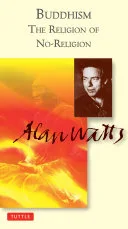
Buddhism the Religion of No-Religion
 76
76

Buddhism the Religion of No-Religion
Alan Watts approached Buddhism with a characteristic blend of academic rigor and accessible, almost playful, philosophical inquiry. "Buddhism: The Religion of No-Religion" showcases this particularly well, cutting through the often dense theological layers to reveal the practical, existential core of the teachings. Watts’s strength lies in his ability to draw parallels between Eastern thought and Western philosophical concerns, making concepts like sunyata (emptiness) feel relevant to a modern, often secular, audience. He skillfully traces the historical spread of Buddhism from India, noting its adaptability. A limitation, however, is that in his eagerness to present a unified, accessible "no-religion" path, Watts occasionally simplifies the vast diversity within Buddhist traditions. His discussion of the radical methods, while intriguing, could benefit from more explicit engagement with the specific meditative practices or tantric elements that characterize some schools. Ultimately, Watts offers a compelling argument for Buddhism as a philosophy of existence rather than a fixed creed, a perspective that remains valuable for contemporary spiritual seekers.
📝 Description
76
Alan Watts's 1999 book argues Buddhism is a religion of no-religion, a path beyond formal doctrine.
Alan Watts's "Buddhism: The Religion of No-Religion" examines the historical development and philosophical underpinnings of Buddhism. Originally lectures, the work shows how Buddhist teachings, originating in ancient India, adapted their core message of enlightenment as they spread. Watts focuses on the accessible nature of these teachings, highlighting their capacity to offer a path beyond conventional religious frameworks. The book is for individuals curious about Buddhism's principles beyond superficial dogma. It appeals to those interested in comparative religion, Eastern philosophies, and secular approaches to spiritual inquiry. Readers seeking to understand the historical trajectory of Buddhist thought, from its Indian roots to its Western reception, will find this work relevant. It is also suited for students of Alan Watts's broader work on consciousness and existentialism.
Watts's lectures, first published in 1999, reflect a mid-to-late 20th-century Western engagement with Eastern thought. This period saw a surge of interest in Zen Buddhism and Tibetan traditions, often filtered through Western philosophical lenses. The book situates Buddhism against the backdrop of its Indian origins, differentiating it from Brahmanical Hinduism and other contemporary Indian religious movements. It acknowledges the transmission of these ideas to the West, where they were often interpreted through existentialist and psychological frameworks, a trend Watts himself contributed to significantly.
This book fits within the Western esoteric tradition's engagement with Eastern religions in the 20th century. Watts's work often sought to translate concepts from traditions like Buddhism and Taoism for a Western audience, emphasizing their experiential and philosophical dimensions over dogmatic adherence. His approach highlighted the practical application of these ideas for personal transformation, aligning with an esoteric interest in inner knowledge and liberation that transcends conventional religious structures. The "religion of no-religion" concept directly addresses this, pointing towards a path of self discovery that sidesteps institutionalized belief systems.
💡 Why Read This Book?
• Gain an understanding of Buddhism's historical journey from its Indian origins, as Watts details its spread and adaptation across diverse cultures, offering context beyond mere philosophical tenets. • Grasp the concept of "no-religion" as Watts presents it, focusing on Buddhism as a practical method for liberation and direct experience rather than a formal creed. • Explore the differences Watts delineates between Buddhism and other religions, providing a framework for comparative study and clarifying Buddhism's unique philosophical stance.
⭐ Reader Reviews
Honest opinions from readers who have explored this book.
❓ Frequently Asked Questions
When was Alan Watts's "Buddhism: The Religion of No-Religion" first published?
Alan Watts's "Buddhism: The Religion of No-Religion" was first published on October 15, 1999, compiling lectures and writings that explored the essence of Buddhist philosophy.
What is the core message of "Buddhism: The Religion of No-Religion"?
The core message is that Buddhism functions less as a conventional religion and more as a practical path or "no-religion" for achieving liberation through direct experience and understanding existence.
How does Watts differentiate Buddhism from other religions in this book?
Watts emphasizes Buddhism's focus on experiential realization and its non-theistic or trans-theistic aspects, contrasting it with religions that rely heavily on dogma, divine revelation, or worship of a creator deity.
What historical periods or regions does Watts cover regarding Buddhism?
Watts traces Buddhism from its origins in ancient India, discussing its philosophical development and its subsequent spread, particularly touching upon its reception and interpretation in the West.
What key Buddhist concepts does Alan Watts explain?
The book explains fundamental concepts such as emptiness (sunyata), the nature of the self, and the interconnectedness of phenomena, framing them within a practical, existential context.
Is "Buddhism: The Religion of No-Religion" suitable for beginners?
Yes, it is suitable for beginners and those with some background, as Watts's accessible style breaks down complex ideas from Indian Buddhism and Zen into understandable terms.
🔮 Key Themes & Symbolism
Liberation as No-Religion
This theme centers on Watts's central thesis: Buddhism's essence lies not in creedal adherence but in a method for personal liberation. He presents it as a "no-religion" because its core practices aim for direct experiential realization, transcending the need for formal worship, divine intermediaries, or fixed dogma. This perspective highlights Buddhism as a pragmatic philosophy of existence, focusing on understanding the nature of reality and the self to achieve freedom from suffering, a concept that appeals to individuals seeking spiritual paths outside traditional religious structures.
Indian Origins and Western Reception
Watts meticulously traces the historical trajectory of Buddhist thought from its inception in ancient India, emphasizing the philosophical innovations and cultural adaptations that allowed it to flourish. He contrasts early Indian Buddhism with prevailing Brahmanical traditions and explores how these teachings evolved. The narrative then shifts to the 20th-century Western discovery of Buddhism, particularly Zen and Tibetan traditions. Watts addresses how these teachings were interpreted and integrated into Western philosophical and psychological discourse, often stripped of their original cultural context but retaining their core existential import.
The Nature of the Self and Reality
A significant exploration within the book concerns the Buddhist understanding of the self (anatman or non-self) and the nature of reality, particularly through the lens of Mahayana and Zen Buddhism. Watts discusses concepts like sunyata (emptiness) not as nihilism, but as the absence of inherent, independent existence. This leads to an understanding of interconnectedness and the illusion of a separate, enduring ego. The work argues that recognizing this fundamental interconnectedness and the illusory nature of the self is crucial for achieving the liberation that Buddhism offers, challenging Western notions of individual identity.
Radical Methods for Enlightenment
Watts touches upon the "radical methods" employed by Buddhist traditions to facilitate enlightenment. This refers to practices and philosophical approaches designed to shock the practitioner out of habitual modes of thought and perception. These methods often involve direct confrontation with the nature of mind, reality, and suffering, aiming to bypass intellectualization and induce immediate insight. While not exploring specific tantric or advanced meditative techniques in great detail, Watts points to the efficacy of these direct approaches in achieving the profound transformation that defines the Buddhist path to liberation.
💬 Memorable Quotes
Direct passages from the work, attributed to the author.
“Buddhism is not a religion in the sense of belief in a creator God.”
— This statement expresses Watts's core argument that Buddhism should be understood as a path or philosophy focused on experiential wisdom rather than adherence to divine commandments or worship of a supreme being.
“The influence of Buddhism comes from its skillful refinement of a way of liberation.”
— This interpretation points to the historical success and widespread appeal of Buddhism, attributing it to the clarity and effectiveness with which its teachings on achieving enlightenment were developed and transmitted across cultures.
“The universe is not separate from us; we are the universe experiencing itself.”
— This interpretation reflects a common non-dualistic theme in Buddhist philosophy, particularly Mahayana, suggesting that the perceived separation between the observer and the observed, or the individual and the cosmos, is an illusion.
💡 Key Ideas
Editorial paraphrase of the work's core concepts — not direct quotes.
The way to go beyond suffering is to realize that there is no permanent self to suffer.
This paraphrased concept highlights the Buddhist doctrine of anatta (non-self), suggesting that attachment to the illusion of a fixed, independent ego is the root cause of suffering, and its dissolution leads to liberation.
Zen Buddhism emphasizes direct experience over scripture.
This paraphrase captures a key tenet of Zen, differentiating it from more text-centric religious traditions. It highlights Zen's focus on immediate, intuitive understanding cultivated through practice rather than solely through study.
🌙 Esoteric Significance
Tradition
While Buddhism itself is a major world religion, Watts's interpretation often leans into an esoteric understanding, particularly through his engagement with Zen and Mahayana philosophies. His approach emphasizes the experiential and transformative aspects, aligning with esoteric traditions that seek direct knowledge of ultimate reality beyond dogma. He bridges the gap between orthodox Buddhism and Western esoteric thought by highlighting the non-dualistic, consciousness-focused elements that resonate with Hermetic, Gnostic, and even certain Vedantic perspectives on the unity of existence.
Symbolism
The concept of "emptiness" (sunyata) serves as a central symbolic motif. In an esoteric context, it represents not mere voidness but the unconditioned ground of being, the potential from which all phenomena arise and to which they return. Another implicit symbol is the "Buddha-mind" or "original mind," representing an inherent state of enlightenment or pure consciousness accessible to all beings. Watts uses these concepts to point toward an inner reality that transcends ordinary perception and conventional understanding.
Modern Relevance
Watts's work continues to be highly relevant for contemporary thinkers exploring consciousness, mindfulness, and non-dual philosophies. Schools of psychotherapy, such as Acceptance and Commitment Therapy (ACT), draw heavily on Buddhist principles of acceptance and detachment from the ego, concepts Watts articulated clearly. Furthermore, secular mindfulness movements and modern interpretations of Advaita Vedanta and Zen Buddhism often echo Watts's emphasis on direct experience and the "religion of no-religion" as a path to psychological well-being and existential clarity.
👥 Who Should Read This Book
• Students of comparative religion and philosophy seeking to understand Buddhism's unique place outside traditional theistic frameworks, as Watts presents its historical development and core tenets. • Individuals interested in Alan Watts's broader philosophical inquiries into consciousness and existentialism, who will find this work a clear exposition of his views on a major Eastern tradition. • Seekers exploring secular spirituality or methods for personal liberation who are drawn to Buddhism's emphasis on practice and direct experience rather than dogma.
📜 Historical Context
Alan Watts's "Buddhism: The Religion of No-Religion," first published in 1999, emerged from a rich period of Western intellectual engagement with Eastern philosophies, particularly the mid-to-late 20th century. This era witnessed a significant influx of Buddhist thought, especially Zen and Tibetan traditions, into Western academic and counter-cultural circles. Scholars and thinkers like D.T. Suzuki had already laid groundwork in the preceding decades, making Buddhist concepts accessible. Watts himself was a prominent figure in this movement, known for translating complex Eastern ideas into language understandable to a Western audience, often drawing parallels with existentialism and depth psychology. His work implicitly engaged with the spiritual and philosophical currents of the time, offering an alternative to prevailing Western religious and secular frameworks. While not a direct academic treatise, it reflected and contributed to the popularization and philosophical reinterpretation of Buddhism, differentiating it from the more theistic religions prevalent in the West and positioning it as a path to self-discovery.
📔 Journal Prompts
The concept of "no-religion" as a path to liberation.
Differentiating Buddhism from other religious traditions as explored by Watts.
The implications of anatta (non-self) for personal suffering.
Watts's tracing of Buddhism from India to the West.
Understanding sunyata (emptiness) beyond nihilism.
🗂️ Glossary
Sunyata
A central concept in Mahayana Buddhism, often translated as "emptiness." It refers to the absence of inherent, independent existence in all phenomena, suggesting interconnectedness and impermanence rather than a void.
Anatman
Also known as "anatta," this is the doctrine of "non-self" or "no-soul." It asserts that there is no permanent, unchanging, independent self or ego, challenging fundamental assumptions about personal identity.
Zen Buddhism
A school of Mahayana Buddhism that originated in China, emphasizing direct experience, meditation (zazen), and intuitive understanding over scriptural study or dogma.
Mahayana Buddhism
One of the two major branches of Buddhism, characterized by its emphasis on the Bodhisattva ideal and the concept of emptiness (sunyata). It encompasses traditions like Zen and Tibetan Buddhism.
Liberation
In Buddhist contexts, refers to freedom from the cycle of suffering (samsara) and the attainment of enlightenment or Nirvana, achieved through wisdom and ethical conduct.
Brahmanical Hinduism
The religious and philosophical traditions associated with the Brahmins, the priestly class in ancient India, which formed the backdrop against which early Buddhism developed.
Nirvana
The ultimate goal of Buddhism; a state of profound peace, liberation, and the extinguishing of suffering and the cycle of rebirth.