Una corte de niebla y furia
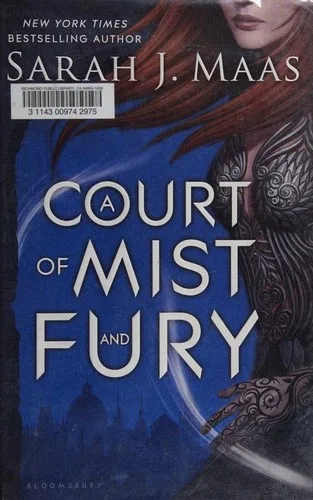
 81
81

Una corte de niebla y furia
The sheer narrative momentum of "Una corte de niebla y furia" is undeniable, propelling the reader through Feyre's harrowing journey in the Night Court. Maas excels at portraying the slow burn of healing, particularly Feyre's internal struggle against the shadows of her past trauma, a significant improvement from the first book. However, the romantic elements, while central to the plot's progression, occasionally overshadow the nuanced exploration of Feyre's burgeoning independence. The depiction of Tamlin's continued possessiveness, juxtaposed with Rhysand's more supportive, albeit still intense, presence, creates a compelling dynamic that drives much of the emotional conflict. The introduction of the Inner Circle, particularly Cassian and Azriel, adds welcome depth and complexity to the fae political landscape. While the plot’s resolution feels earned, some of the interpersonal conflicts resolve a bit too conveniently. Ultimately, "Una corte de niebla y furia" solidifies the series' appeal by focusing on character resilience and the difficult path to self-acceptance.
📝 Description
81
Sarah J. Maas's 2016 novel, 'Una corte de niebla y furia,' continues Feyre's story after a brutal war.
In 'Una corte de niebla y furia,' published in 2016, Sarah J. Maas follows Feyre Archeron as she recovers from immense trauma and begins to understand her place in the world. The narrative shifts focus to the Night Court, a place of both danger and unexpected alliances.
Feyre grapples with the psychological weight of her past experiences, seeking a new definition of strength beyond mere survival. Her journey involves navigating complex relationships, uncovering secrets about the fae world, and confronting lingering threats. The book examines the aftermath of oppression and the difficult path toward healing and self-empowerment.
While not directly academic, 'Una corte de niebla y furia' draws on archetypal narratives found in occult literature, exploring themes of transformation and the reclamation of power. The novel's depiction of magical courts, ancient pacts, and curses echoes mythic structures present in various esoteric traditions. It taps into a desire for narratives that explore the psychological impact of suffering and the emergence of inner strength, resonating with a broader interest in the symbolic and transformative aspects of fantasy.
💡 Why Read This Book?
• Gain insight into the psychological reconstruction after trauma, as depicted through Feyre's arc within the Night Court, learning how narrative can illustrate complex healing processes. • Experience a nuanced portrayal of fae society and magic, specifically the lore surrounding the High Fae and the ancient pacts that govern their world, offering a distinct fantasy framework. • Witness the evolution of a protagonist's agency and self-definition, moving beyond victimhood to actively shape her destiny and understanding of power, a theme explored through Feyre's choices in 2016.
⭐ Reader Reviews
Honest opinions from readers who have explored this book.
❓ Frequently Asked Questions
What is the primary focus of "Una corte de niebla y furia"?
The novel centers on Feyre Archeron's emotional and psychological recovery after surviving Tamlin's court, her subsequent journey to the Night Court, and her developing relationships and understanding of her own powers.
Who is Rhysand in "Una corte de niebla y furia"?
Rhysand is the High Lord of the Night Court, a powerful and enigmatic fae figure who becomes central to Feyre's life and healing process in this installment, first introduced in the prior book published in 2016.
Does "Una corte de niebla y furia" contain mature themes?
Yes, the book deals with mature themes including the aftermath of trauma, psychological manipulation, violence, and complex romantic relationships, suitable for a New Adult audience.
How does this book differ from "A Court of Thorns and Roses"?
It delves deeper into the fae world, particularly the Night Court, and focuses more intensely on Feyre's internal struggles and growth, shifting the narrative focus from initial survival to active healing and self-discovery.
What is the significance of the Night Court in the story?
The Night Court serves as a sanctuary and a place of profound transformation for Feyre. It is depicted as a realm of both danger and intricate political maneuvering, home to Rhysand and his Inner Circle.
When was "Una corte de niebla y furia" originally published?
"Una corte de niebla y furia" was originally published in 2016 as the second book in the "A Court of Thorns and Roses" series.
🔮 Key Themes & Symbolism
Trauma and Healing
The novel meticulously charts Feyre's arduous path toward recovery from the physical and psychological wounds inflicted in the previous book. It explores the lingering effects of abuse and the slow, often painful, process of reclaiming one's sense of self and agency. This focus on internal damage and resilience offers a more grounded perspective on magical protagonists, moving beyond simple plot progression to examine the character's inner landscape after significant hardship.
Redefining Strength and Power
Feyre’s journey is one of discovering that true strength lies not only in magical prowess or physical might but also in emotional fortitude, self-awareness, and the ability to form genuine connections. The book challenges traditional notions of power by contrasting brute force with strategic intelligence and empathetic leadership, particularly evident in the dynamics within the Night Court and its inhabitants.
Found Family and Loyalty
Central to the narrative is the formation of a surrogate family within the Night Court, led by Rhysand and comprising characters like Cassian and Azriel. This found family offers Feyre a sense of belonging and unwavering support, contrasting sharply with the manipulative dynamics she experienced previously. The theme emphasizes the wide impact of loyalty, trust, and mutual acceptance in overcoming isolation and adversity.
The Nature of Morality
The characters in "Una corte de niebla y furia" operate within shades of gray, questioning simplistic definitions of good and evil. Rhysand, in particular, embodies this complexity, challenging Feyre's preconceived notions. The narrative explores how circumstances, trauma, and societal pressures shape individual morality, suggesting that actions and intentions are often more nuanced than black-and-white judgments allow.
💬 Memorable Quotes
Direct passages from the work, attributed to the author.
“I was not a pet, or a prize, or a pawn. I was Feyre. And I was finally free.”
— This statement marks a key moment of self-realization for Feyre, signifying her liberation from oppressive relationships and her reclamation of personal identity and autonomy after enduring significant hardship.
“You do not bow to me. I do not bow to anyone. We are equals.”
— Spoken within the context of the Night Court hierarchy, this declaration emphasizes a rejection of subservience and an assertion of mutual respect and parity between individuals, regardless of their social standing or power.
“To the stars who listen— and the dreams that are answered.”
— This phrase, uttered by Rhysand and the Inner Circle, functions as a toast and a ritualistic invocation, connecting the characters to a sense of cosmic destiny, hope, and the acknowledgment of unseen forces or fate.
“My magic is a curse. It is a blight. It is the reason I am alone.”
— This internal reflection reveals a character's deep-seated insecurity and self-loathing stemming from their magical abilities, portraying magic not as a gift but as a source of isolation and suffering.
💡 Key Ideas
Editorial paraphrase of the work's core concepts — not direct quotes.
When you fall in love, it is a temporary madness. It erupts, like volcanically, and then it subsides. And when it subsides, you have to make a choice. Whether you continue to feed it, or you let it burn out.
This quote highlights the volatile and often irrational nature of romantic infatuation, framing love not as a constant state but as an active choice requiring sustained effort and commitment beyond the initial intense phase.
🌙 Esoteric Significance
Tradition
While "Una corte de niebla y furia" does not align with a specific, codified esoteric tradition like Hermeticism or Kabbalah, it draws heavily on archetypal themes found in universal mythology and folklore, which are often foundational to esoteric thought. The narrative's exploration of primal forces, hidden realms, and the transformation of the self through trials echoes Gnostic and Neoplatonic ideas about spiritual journeys and overcoming material limitations. The fae themselves can be seen as embodying elemental or nature spirits, a concept present in various animistic and Western magical traditions.
Symbolism
The Night Court itself functions as a potent symbol, representing the shadow self, the underworld, or a place of profound psychological transformation—a common motif in shamanic journeys and Jungian psychology. Rhysand, with his immense power and reputation, embodies the archetype of the wounded king or the dark lord who possesses less-obvious layers and a capacity for profound love, challenging simplistic interpretations of good and evil. The motif of the 'stars' and 'dreams' invoked in the Inner Circle's toast symbolizes destiny, hope, and the acknowledgment of a higher, guiding force or the power of aspiration.
Modern Relevance
Contemporary readers and writers continue to engage with Maas's work, particularly its nuanced portrayal of trauma recovery and the formation of chosen families. Online communities and book clubs frequently dissect the characters' journeys and the exploration of complex relationships, drawing parallels to modern psychological understandings of healing and attachment. While not directly cited in academic esoteric circles, the novel's popularization of fae lore and its blend of fantasy, romance, and character development influence current trends in speculative fiction, inspiring new works that explore similar themes of resilience and self-discovery.
👥 Who Should Read This Book
• Readers interested in the psychological aftermath of trauma and the process of healing within a fantastical setting will find Feyre's journey compelling. • Fans of character-driven epic fantasy who appreciate intricate world-building, complex romantic subplots, and morally ambiguous characters will be drawn to the Night Court's inhabitants. • Young adults and New Adult readers seeking stories about empowerment, self-discovery, and the formation of supportive, chosen families will connect with the core themes.
📜 Historical Context
Sarah J. Maas's "Una corte de niebla y furia," published in 2016, arrived during a period when the New Adult fantasy market was rapidly expanding, fueled by digital self-publishing and the growth of online reading communities. While not a direct engagement with historical occultism, the novel taps into archetypal mythologies and the enduring appeal of fae lore, which has roots in European folklore stretching back centuries. Its success positioned Maas alongside contemporaries like Leigh Bardugo, whose Grishaverse also gained significant traction around the same time, catering to an audience seeking character-driven narratives with mature themes and romantic elements. The book's reception was largely enthusiastic among its target demographic, contributing to the series' status as a bestseller, although it did not face significant controversy or academic scrutiny typical of more overtly philosophical or religious texts.
📔 Journal Prompts
The Inner Circle's 'To the stars who listen— and the dreams that are answered' toast, and its implications for destiny.
Feyre's internal conflict between her past trauma and her burgeoning sense of self within the Night Court.
The symbolic weight of the High Lord's powers and responsibilities as depicted through Rhysand.
Cassian's role as a mentor and his approach to training Feyre, contrasting with other authority figures.
The significance of the Spring Court's manipulation versus the Night Court's protective, albeit intense, environment.
🗂️ Glossary
High Fae
The most powerful and ancient race of faeries, possessing significant magical abilities and long lifespans. They rule over various courts and territories within the fae realms.
Night Court
One of the seven ruling territories of Prythian, ruled by High Lord Rhysand. It is often portrayed as a dangerous and shadowy realm, home to powerful magic and intrigue.
High Lord
The male ruler of one of the seven High Fae courts. They possess immense power and are responsible for the welfare and governance of their respective territories.
Prythian
The continent or world where the "A Court of Thorns and Roses" series is set, divided among various fae courts and lands.
Velaris
A hidden, utopian city within the Night Court, known for its beauty, peace, and freedom from the political turmoil plaguing other fae territories.
Inner Circle
Rhysand's closest confidants and most powerful allies within the Night Court, serving as his advisors and protectors. Key members include Cassian, Azriel, and Mor.
The Cauldron
A primordial source of magic in the fae world, believed to be responsible for creating and empowering fae beings. It is a place of immense power and mystery.
🔮 Readers Also Liked
Browse all →








More by Sarah J. Maas
All books →



More Free Occult Philosophy Books
View all →