The Semiotics of the Zodiac
 79
79

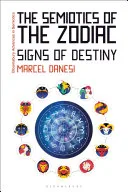
The Semiotics of the Zodiac
Danesi’s "The Semiotics of the Zodiac" offers a compelling analysis of astrology as a linguistic and symbolic system. The book's strength lies in its systematic dissection of how zodiacal signs operate as a code, influencing belief structures and cosmic interpretations. Danesi's exploration of the Zodiac's evolution from Babylonian origins to its post-Enlightenment reception provides crucial historical grounding. A limitation, however, is the dense academic prose, which may challenge readers not accustomed to semiotic theory. The discussion of the "semiotic code" as a means of affirming cosmic logic is particularly insightful, though the work could benefit from more direct engagement with contemporary astrological practice. Danesi provides a valuable, analytical perspective on a subject often approached through purely mystical lenses.
📝 Description
79
### What It Is Marcel Danesi's "The Semiotics of the Zodiac" examines the astrological system not merely as a divinatory tool, but as a complex semiotic code. The book analyzes how the twelve zodiacal signs function as a symbolic language, shaping belief systems and offering a framework for understanding the cosmos and individual destinies. It traces the evolution of Western astrology from its Mesopotamian roots through its historical trajectory.
### Who It's For This work is suited for scholars of cultural semiotics, comparative religion, and the history of ideas. It will also appeal to serious students of Western esotericism who seek a rigorous, analytical approach to astrological symbolism. Readers interested in how ancient systems of meaning persist and adapt in modern thought will find considerable value.
### Historical Context The book contextualizes the Zodiac's development, noting its origins in Babylonian astronomy and astrology around the 2nd millennium BCE. Danesi explores how these celestial interpretations became embedded in various cultural belief systems, influencing everything from agricultural practices to philosophical thought. The work discusses the intellectual shifts that led to astrology's decline in scientific circles following the Enlightenment, contrasting it with the persistence of astrological belief.
### Key Concepts Danesi frames the Zodiac as a "semiotic code," a system of signs and symbols through which meaning is constructed. This code, he argues, is used to interpret personal destinies as reflections of stellar influences and to affirm a cosmic order. The book investigates how these interpretations have evolved across different cultures and historical periods, demonstrating the Zodiac's enduring role as a framework for understanding human existence in relation to the universe.
💡 Why Read This Book?
• Understand the Zodiac as a structured semiotic system, moving beyond simplistic interpretations, by analyzing its historical development from Babylonian roots as detailed in the book. • Gain insight into how astrological symbolism has shaped belief systems across cultures, examining specific instances of its integration into philosophical thought. • Grasp the intellectual currents that influenced astrology's historical trajectory, particularly the impact of the Enlightenment on its reception in Western scholarship.
⭐ Reader Reviews
Honest opinions from readers who have explored this book.
❓ Frequently Asked Questions
What is the primary focus of "The Semiotics of the Zodiac"?
The book primarily examines the Zodiac as a complex semiotic code, analyzing its meaning-making functions, its impact on belief systems, and its historical evolution from ancient Babylon to modern times.
When was "The Semiotics of the Zodiac" first published?
The first edition of "The Semiotics of the Zodiac" by Marcel Danesi was published on February 5, 2026.
Who is the author of "The Semiotics of the Zodiac"?
The author of "The Semiotics of the Zodiac" is Marcel Danesi, a scholar known for his work in semiotics and cultural studies.
What historical periods does the book cover regarding Western astrology?
The book traces the international history of Western astrology from its origins in Babylon, covering its development through various cultural epochs up to its decline in post-Enlightenment scientific discourse.
How does Danesi view the function of the Zodiac?
Danesi views the Zodiac as a semiotic code for interpreting personal destinies as manifestations of stellar influences and as a means of affirming the logic governing the cosmos.
Is this book suitable for beginners in astrology?
While offering historical and semiotic context, the book's analytical and academic approach may be more suited for scholars and advanced students of esotericism rather than absolute beginners.
🔮 Key Themes & Symbolism
Astrology as Semiotic Code
Danesi posits the Zodiac as a sophisticated semiotic system, akin to a language, used for interpreting human lives and cosmic order. This perspective moves beyond predictive functions to analyze how the signs and their relationships create meaning. The book explores how this code has been applied historically to understand personal destinies as tied to stellar influences, reflecting an underlying logic perceived in the universe.
Historical Evolution of Zodiacal Systems
The work meticulously traces the lineage of Western astrology, beginning with its roots in ancient Babylonian astronomical and astrological practices. It examines how these systems were adopted and transformed across different cultures and eras, highlighting the significant shifts in understanding and reception, particularly the impact of the scientific revolution and Enlightenment thought.
Cultural Significance and Belief Systems
"The Semiotics of the Zodiac" investigates the profound impact of astrological frameworks on human belief systems. It analyzes how the Zodiac has served not only as a tool for divination but also as a cultural construct that affirms a particular worldview, linking personal experience to universal principles and cosmic harmony. The book discusses its persistence despite intellectual challenges.
Cosmic Logic and Personal Destiny
A central theme is the Zodiac's role in articulating a perceived logic governing the cosmos. Danesi examines how astrological interpretations present personal destinies not as random occurrences, but as manifestations of stellar influences, thereby affirming an ordered universe. This perspective connects individual lives to a larger, meaningful cosmic pattern, providing a framework for existential understanding.
💬 Memorable Quotes
“The Zodiac functions as a semiotic code for interpreting personal destinies.”
— This highlights Danesi's core argument: astrology is not just about prediction, but about a symbolic language that structures our understanding of ourselves and our place in the universe.
“The work explores how astrological systems have evolved over time.”
— This points to the book's historical depth, emphasizing its examination of the changing meanings and applications of zodiacal systems from antiquity to the modern era.
“It investigates how zodiacal systems affect belief systems.”
— This interpretation underscores the book's focus on the sociological and psychological impact of astrology, analyzing its role in shaping collective and individual worldviews.
“The book considers the cultural significance of the Zodiac.”
— This suggests a broad scope, indicating that Danesi analyzes astrology not just as an esoteric practice but as a significant element within various cultural traditions and historical contexts.
“The Zodiac affirms the logic that governs the cosmos as a whole.”
— This interpretation emphasizes the philosophical dimension of astrology discussed in the book, presenting it as a system that provides order and meaning to the universe and human existence within it.
🌙 Esoteric Significance
Tradition
While not strictly adhering to a single esoteric lineage like Hermeticism or Kabbalah, Danesi's work engages with the symbolic and structural aspects of astrology that are foundational to many Western esoteric traditions. It approaches astrology as a system of meaning-making, a perspective shared by esotericists who view celestial patterns as a language of the divine or cosmic mind, offering a framework for spiritual understanding and self-realization.
Symbolism
The book focuses on the Zodiac itself as the primary symbolic motif. The twelve signs are analyzed not just as archetypes but as distinct semiotic units within a larger code. Danesi likely explores how concepts like the cyclical nature of time, the archetypal influences of planetary placements, and the relationship between the microcosm (individual) and macrocosm (universe) are encoded within this system.
Modern Relevance
Contemporary thinkers interested in cultural semiotics, the psychology of belief, and the persistent influence of archetypal symbolism on modern consciousness can draw from Danesi's work. Researchers examining how ancient symbolic systems continue to inform popular culture, self-help methodologies, and even therapeutic approaches may find his analytical framework particularly relevant today.
👥 Who Should Read This Book
• Academic researchers in semiotics, cultural studies, and the history of science seeking a structured analysis of astrological symbolism. • Advanced students of Western esotericism looking to understand the theoretical underpinnings and historical development of astrological systems beyond practical application. • Intellectual historians interested in how symbolic languages shape belief systems and cultural understanding across different epochs.
📜 Historical Context
First published in 2026, Marcel Danesi's "The Semiotics of the Zodiac" emerges in an era of renewed interest in esoteric studies and symbolic analysis, yet it grounds itself firmly in historical scholarship. The work revisits the intellectual currents that shaped Western astrology, tracing its lineage from Babylonian practices around the 2nd millennium BCE. Danesi situates his analysis against the backdrop of the Enlightenment, a period that saw a significant decline in astrology's academic standing, largely due to the rise of empirical science and rationalism. This intellectual shift, championed by figures like Isaac Newton, led to astrology being increasingly marginalized from mainstream scientific discourse. Danesi's approach, however, seeks to understand astrology's enduring appeal not through its predictive accuracy, but through its structural semiotic properties, offering a counterpoint to purely debunking historical accounts.
📔 Journal Prompts
The Zodiac as a semiotic code: How do its structures influence your understanding of cosmic logic?
Personal destiny interpretation: How has the evolution of astrological systems impacted modern self-perception?
Belief systems and stellar influences: Reflect on the historical relationship between celestial observation and cultural narratives.
Babylonian origins of astrology: Consider the earliest forms of celestial interpretation and their foundational impact.
The Enlightenment's challenge to astrology: Analyze how scientific rationalism reshaped the discourse around cosmic logic.
🗂️ Glossary
Semiotics
The study of signs and symbols and their interpretation, focusing on how meaning is created and communicated through various systems.
Semiotic Code
A structured system of signs and symbols, like language or astrology, that allows for the creation and interpretation of meaning within a specific cultural or intellectual context.
Zodiacal Systems
The various frameworks and interpretations associated with the twelve astrological signs and their celestial positions, used historically for divination and understanding cosmic order.
Stellar Influences
The concept, central to astrology, that the positions and movements of celestial bodies (stars and planets) exert an effect on earthly events and individual lives.
Cosmic Logic
The perceived inherent order, rationality, or underlying principles believed to govern the universe, often interpreted through symbolic systems like astrology.
Enlightenment
An 18th-century intellectual and cultural movement emphasizing reason, individualism, and skepticism towards traditional authority, which significantly impacted the reception of astrology.
Babylonian Origins
Refers to the early development of astrology and astronomy in ancient Mesopotamia, considered a foundational period for Western astrological traditions.