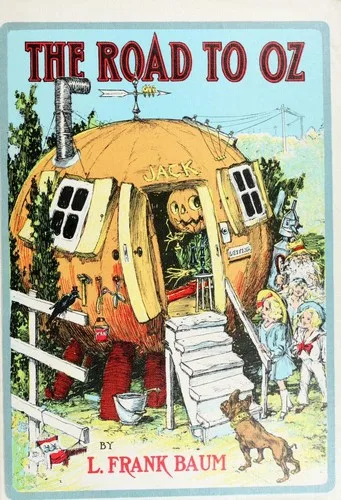
The Road to Oz
 79
79

The Road to Oz
Baum's "The Road to Oz" continues the established Ozian formula with predictable, yet comforting, regularity. The narrative feels less driven by a singular, urgent purpose than some earlier installments, opting instead for a more episodic progression. This can be both a strength and a weakness; the episodic nature allows for a wider array of whimsical encounters and character introductions, but it occasionally diffuses the narrative momentum. A notable strength is the introduction of characters like the Cuddleburgers, whose peculiar nature perfectly encapsulates the unique, often bizarre, logic of Oz. However, the central quest for the "grand prize" feels somewhat underdeveloped, lacking the thematic weight of Dorothy's earlier returns to Kansas. Ultimately, "The Road to Oz" offers more of the familiar charm that made the series beloved, serving as a pleasant, if not groundbreaking, continuation of the saga.
📝 Description
79
The Road to Oz, published in 1927, is the fourteenth book in L. Frank Baum's Oz series.
This installment follows Dorothy on a new adventure through the land of Oz. She encounters both familiar faces and new companions as she faces a series of challenges. The central plot revolves around a peculiar competition and a quest for a mythical prize, a twist on the traditional heroic journey.
Readers who enjoy serialized fantasy with established characters and settings will find this volume engaging. It is especially suited for those interested in archetypal journeys within a fantastical framework. The book also appeals to those studying the development of early 20th-century children's literature and the stylistic shifts within a long running series.
While often categorized as children's fantasy, The Road to Oz, like other Baum works, contains symbolic elements that invite allegorical interpretation. The Oz series emerged during a period of burgeoning interest in children's literature as a distinct genre and a cultural fascination with escapism. Baum's creation of a complex mythology through serialized storytelling tapped into imaginative worlds. The narrative's structure and character introductions can be seen as reflecting broader trends in early 20th-century thought regarding symbolism and the subconscious.
💡 Why Read This Book?
• Learn about the specific challenges presented in the "grand prize" competition, understanding how Baum uses this to explore themes of aspiration and effort. • Experience the introduction of unique characters like the Cuddleburgers, appreciating their symbolic representation of unusual forms of companionship within the Oz narrative. • Trace Dorothy's journey and her interactions, noting how the narrative in "The Road to Oz" (1927) builds upon her established character arc within the extended Oz series.
⭐ Reader Reviews
Honest opinions from readers who have explored this book.
❓ Frequently Asked Questions
What is the "grand prize" that Dorothy seeks in "The Road to Oz"?
The "grand prize" in "The Road to Oz" is a competition with a mysterious and ultimately elusive reward. It serves as a narrative driver for the characters' journey and their efforts to reach the Emerald City.
Who are some of the new characters introduced in "The Road to Oz"?
New characters include the Cuddleburgers, who are made of butter and melt when hugged, and Betsy Bobbin, a girl from Kansas who joins Dorothy on her adventure.
When was "The Road to Oz" first published?
"The Road to Oz" was first published in 1927, making it the fourteenth book in L. Frank Baum's Oz series.
Does "The Road to Oz" feature the Scarecrow and Tin Woodman?
Yes, familiar characters such as the Scarecrow and the Tin Woodman make appearances in "The Road to Oz," alongside new acquaintances.
What is the primary setting for the adventures in "The Road to Oz"?
The primary setting is the magical Land of Oz, with much of the journey taking place as Dorothy and her companions travel towards the Emerald City.
How does "The Road to Oz" differ from earlier books in the series?
"The Road to Oz" is noted for its more episodic structure and the introduction of a unique competition as a central plot element, differing from the more direct quest narratives of some predecessors.
🔮 Key Themes & Symbolism
The Nature of Competition
The narrative centers on a peculiar competition for a grand prize, which Baum uses to explore different motivations for striving. It’s not merely about winning, but about the journey and the characters encountered along the way. This theme contrasts with the simpler quests of earlier Oz books, introducing a more complex dynamic of aspiration and the often-unforeseen outcomes of intense rivalry within the whimsical Land of Oz.
Unconventional Companionship
This installment introduces a host of unusual characters, most notably the Cuddleburgers, beings made of butter who are susceptible to melting. Their presence, along with other unique allies, highlights Baum’s knack for creating unconventional friendships. These relationships underscore the idea that companionship can be found in the most unexpected forms and places, reflecting a broader commentary on social bonds within fantastical settings.
Enduring Character Arcs
While a new adventure, "The Road to Oz" builds upon the established character of Dorothy. Her interactions and reactions showcase her growth and resilience, even within a familiar magical world. The return of beloved characters like the Scarecrow and Tin Woodman, alongside new faces, allows Baum to revisit and deepen the dynamics that have made the series a success, exploring how familiar figures adapt to new challenges.
The Symbolic Field of Oz
The journey through Oz is itself a symbolic landscape. From the varied terrains to the magical inhabitants, each element contributes to the overall allegorical weight of the narrative. The quest for the "grand prize" and the encounters along the road can be interpreted as stages in a personal journey, reflecting trials and revelations that are common in various esoteric traditions' depictions of spiritual progression.
💬 Memorable Quotes
Direct passages from the work, attributed to the author.
“The competition was for a grand prize, the nature of which was not fully revealed.”
— This highlights a central, yet ambiguous, driving force of the plot. The unknown nature of the prize suggests that the journey and the effort are more significant than the final reward, a common theme in allegorical tales.
“Dorothy met many strange folk on her journey to the Emerald City.”
— This simple statement expresses the episodic nature of the adventure and Baum's creative capacity for inventing peculiar characters, each potentially carrying a symbolic meaning or serving a narrative function.
“The Cuddleburgers were made of butter and would melt if hugged too tightly.”
— This whimsical detail about the Cuddleburgers illustrates the unique logic and fragility of life within Oz, emphasizing the need for gentle interaction and the consequences of misguided affection.
“Betsy Bobbin joined Dorothy, eager for adventure.”
— Betsy's inclusion signifies the introduction of a new perspective and companion, reflecting the series' ability to bring fresh energy and characters into Dorothy's ongoing story.
💡 Key Ideas
Editorial paraphrase of the work's core concepts — not direct quotes.
The journey required perseverance and resourcefulness.
This paraphrased concept emphasizes the core qualities Dorothy and her companions must exhibit. It speaks to the archetypal hero's journey, where challenges are overcome through inner strength and adaptability.
🌙 Esoteric Significance
Tradition
While not explicitly aligned with a specific esoteric tradition, "The Road to Oz" shares thematic resonance with Gnostic and Hermetic narratives of journey and self-discovery. The quest through a fantastical, often perilous landscape towards a center of wisdom (the Emerald City) mirrors the soul's path towards enlightenment or gnosis. The series as a whole can be viewed as an accessible allegory for the Western Mystery Tradition's emphasis on overcoming illusion and achieving inner transformation.
Symbolism
The Emerald City itself functions as a potent symbol, often representing an idealized state of consciousness, spiritual attainment, or the illusory nature of material wealth. Dorothy's recurring journey can be seen as an archetypal representation of the soul's descent and ascent, working through the psychic planes. Characters like the Scarecrow (intellect), the Tin Woodman (emotion/heart), and the Cowardly Lion (will/courage) embody fundamental aspects of the human psyche that must be integrated for wholeness.
Modern Relevance
Contemporary readers and practitioners often revisit Baum's Oz books for their foundational archetypal narratives. Elements of the Oz mythos, particularly the journey structure and the symbolic characters, are referenced in modern discussions of psychology, mythology, and even New Age spiritual practices. The enduring appeal lies in its accessible portrayal of the individuation process and the quest for inner balance, making it a touchstone for exploring personal growth through imaginative literature.
👥 Who Should Read This Book
• Readers interested in serialized fantasy narratives who wish to explore the evolution of a long-running magical world and its characters. • Students of early 20th-century American children's literature seeking to understand the thematic and structural trends of the era. • Individuals who enjoy allegorical storytelling and wish to analyze the symbolic layers within seemingly simple children's adventures.
📜 Historical Context
Published in 1927, "The Road to Oz" emerged well into the established popularity of L. Frank Baum's Oz series. The early 20th century was a golden age for children's literature, with authors like Beatrix Potter and A.A. Milne also crafting enduring worlds. Baum’s work stood apart through its sheer imaginative scope and its consistent output, creating a complex, interconnected mythology. Unlike the more didactic or overtly moralistic tales prevalent earlier, Baum's Oz books offered pure escapism and adventure. While Baum himself passed away in 1919, the series continued under his successors, maintaining the established tone and world-building. The reception of "The Road to Oz" was generally positive, adding another volume to a beloved canon, though critical engagement often focused on its place within the larger series rather than as a standalone work.
📔 Journal Prompts
The nature of the "grand prize" competition and its elusive goal.
The unique characteristics and symbolic meaning of the Cuddleburgers.
Dorothy's motivations for undertaking new journeys within Oz.
The role of Betsy Bobbin as a new companion on the road.
Reflections on the journey towards the Emerald City as a symbolic path.
🗂️ Glossary
Emerald City
The magnificent capital city of Oz, famed for its buildings and pathways made of emeralds and green jewels. It often symbolizes a goal of great achievement or illusion.
Cuddleburgers
A race of beings in "The Road to Oz" who are made of butter and prone to melting if handled too roughly or exposed to warmth.
Betsy Bobbin
A new character introduced in "The Road to Oz," a girl from Kansas who joins Dorothy on her adventure to the Emerald City.
Grand Prize
A central element of the plot in "The Road to Oz," representing a competition with a coveted but undefined reward that drives the characters' actions.
Oz
The magical Land where the stories take place, populated by various fantastical creatures, peoples, and magical phenomena.
Scarecrow
A beloved character in the Oz series, made of straw, who seeks to gain a brain. He represents intellect and wisdom.
Tin Woodman
Another key Oz character, originally a human woodchopper turned to tin, who seeks to gain a heart. He represents emotion and compassion.
🔮 Readers Also Liked
Browse all →







More by L. Frank Baum
All books →





More Free Occult Philosophy Books
View all →