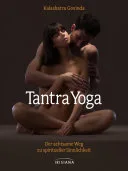
Tantra-Yoga
 76
76

Tantra-Yoga
Kalashatra Govinda’s *Tantra-Yoga*, first published in 2020, attempts to demystify a path often obscured by sensationalism. The work’s strength lies in its methodical presentation of practices, moving from foundational concepts to specific exercises like Yoni and Lingam massage. Govinda’s approach grounds Tantra in a philosophical framework, which is commendable for readers seeking substance beyond mere titillation. However, the book sometimes feels like a practical manual seeking to translate complex energetics into accessible steps, occasionally sacrificing the deeper, more intuitive aspects of Tantric practice for clarity. A particularly effective section details the subtle energy flows during partnered practices, illustrating how intention and breath can elevate physical union. The limitation here is the inherent difficulty in conveying embodied wisdom through text alone; some readers might find the instructions too clinical. Ultimately, *Tantra-Yoga* offers a structured entry point for the earnest seeker into a rich, ancient tradition, provided they supplement the text with personal experience.
📝 Description
76
Kalashatra Govinda's Tantra-Yoga redefines the practice as a spiritual discipline beyond mere sensuality.
This work presents Tantra-Yoga not as simple sensuality, but as a cohesive spiritual discipline grounded in old Indian philosophy. It advocates a practical method for increasing self awareness and human connection through consistent practice. The book systematically introduces methods intended to awaken and direct life force energy, uniting the physical, emotional, and spiritual aspects of human existence. It moves past common misunderstandings by describing Tantra-Yoga as a way toward deeper communion, with oneself and with a partner.
This text is for people who want a deeper connection to their own bodies and sexuality, seeing it as a way to spiritual growth. It will interest those who wish to study the hidden aspects of intimacy and energy work, especially within a committed relationship. Readers open to meditative states, subtle energy practices, and the philosophical basis of Tantra will find value. It also suits those who have encountered basic yoga or meditation and want to find advanced applications for personal and relationship development.
The philosophies behind Tantra-Yoga come from ancient Indian subcontinent traditions, with roots going back millennia. It evolved alongside Vedic and Puranic systems. The practice gained distinct forms during the medieval period in India, influencing religious and philosophical movements. Unlike more ascetic yogic paths, Tantra-Yoga often uses the material world and sensory experience for spiritual realization. Its practices, including mantra, visualization, and ritual, were passed down through lineages, sometimes kept secret due to their potency.
💡 Why Read This Book?
• Learn specific techniques like Yoni and Lingam massage, detailed in the book, to explore the energetic potential of the sexual organs as outlined by Kalashatra Govinda. • Understand the philosophical underpinnings of Tantra-Yoga, including the concepts of Shakti and Shiva, to reframe sensuality as a spiritual path, as explored in the original publication. • Discover practical applications of yogic postures and meditations specifically adapted for couples, as presented in the book's section on Tantric love positions, to enhance intimacy and energy.
⭐ Reader Reviews
Honest opinions from readers who have explored this book.
❓ Frequently Asked Questions
What is the primary goal of Tantra-Yoga as presented in Kalashatra Govinda's book?
The primary goal is to foster greater self-connection and deepen intimacy with a partner by exploring the spiritual dimensions of sensuality and life force energy through practical exercises.
Does Tantra-Yoga by Kalashatra Govinda focus on traditional yoga postures?
Yes, the book incorporates specific yogic postures adapted for Tantric practice, alongside meditations and sensual massage techniques like Yoni and Lingam massage.
When was Tantra-Yoga by Kalashatra Govinda first published?
The work was first published on August 24, 2020, making it a contemporary exploration of ancient Tantric principles.
Is Tantra-Yoga suitable for beginners?
The book aims to offer a simple path, presenting practical exercises for those interested in exploring the spiritual side of eroticism, suggesting it is accessible to those new to Tantra.
What is the significance of Yoni and Lingam massage in this context?
Yoni and Lingam massage are presented as key practices within Tantra-Yoga to awaken and energize the reproductive centers, facilitating the circulation of sexual energy for spiritual development.
Does the book discuss the philosophical roots of Tantra-Yoga?
Yes, the work explores the ancient Indian philosophy of Tantra-Yoga, positioning it as a method for achieving greater self-awareness and connection, rather than solely focusing on physical aspects.
🔮 Key Themes & Symbolism
Integration of Spirituality and Sexuality
The book posits that sensuality and life lust are not antithetical to spiritual pursuit but can serve as powerful pathways. It argues against ascetic traditions by integrating the physical and erotic into a holistic spiritual practice. This perspective challenges conventional views by suggesting that fully embracing and understanding one's sexual energy, through practices like specific Tantric love positions, can lead to profound self-awareness and divine connection, rather than being a distraction from it.
Energy Cultivation and Circulation
A central theme is the understanding and directed cultivation of vital life force energy, often referred to as Shakti. The work details how practices such as breathwork, meditation, and specialized massage techniques (Yoni and Lingam) are employed to awaken, purify, and circulate this energy throughout the body. The goal is to transmute sexual energy into higher forms of consciousness and vitality, thereby enhancing both personal well-being and relational harmony.
Self-Awareness Through Embodiment
Tantra-Yoga is presented as a tool for profound self-discovery through direct experience of the body and its energies. By engaging in practices that heighten sensory awareness and explore subtle energetic currents, practitioners are encouraged to develop a deeper, more intimate relationship with themselves. This focus on embodied practice aims to break down psychological barriers and foster a sense of wholeness, integrating the physical, emotional, and spiritual selves.
Partnered Connection and Ritual
While individual practice is important, the book also emphasizes the potential for Tantra-Yoga to transform intimate relationships. It introduces techniques for couples to engage in shared practices, fostering deeper communication, trust, and energetic synchronicity. These practices often involve elements of ritual and conscious intention, elevating sexual intimacy into a sacred act that strengthens the bond between partners and contributes to mutual spiritual growth.
💬 Memorable Quotes
Direct passages from the work, attributed to the author.
“Explore the spiritual side of eroticism through practical exercises.”
— This concise statement captures the book's core thesis: that Tantra-Yoga offers a practical methodology to elevate sexual experience from the mundane to the sacred, integrating it into a path of spiritual development.
“Discover simple paths to greater connection with yourself and your partner.”
— This highlights the accessible nature of the techniques presented, suggesting that the profound benefits of Tantra-Yoga are not reserved for advanced practitioners but can be realized through straightforward, actionable steps.
“Learn fundamental Tantra love positions to unfold sexual energy.”
— This points to the specific, actionable content within the book, focusing on the practical application of Tantric principles in partnered intimacy to consciously channel and expand sexual vitality.
“Yoni and Lingam massage are presented as key practices.”
— This emphasizes the inclusion of specific, often misunderstood, Tantric techniques designed to work directly with the primary energetic centers of the body for purification and empowerment.
“Awaken sensuality and the joy of life.”
— This captures the experiential promise of Tantra-Yoga as presented in the work, suggesting a path toward reclaiming and celebrating fundamental aspects of human experience often suppressed or overlooked.
🌙 Esoteric Significance
Tradition
Tantra-Yoga belongs to the broad spectrum of Tantric traditions originating in the Indian subcontinent, which are distinct from the more widely known Hatha Yoga or Raja Yoga in their philosophical approach. While many Western esoteric paths draw inspiration from Indian traditions, Tantra's emphasis on integrating the material world and sensual experience as a means of spiritual liberation places it uniquely within the esoteric landscape. It challenges ascetic ideals prevalent in some other yogic and monastic systems by viewing the body and its energies as sacred vehicles for enlightenment.
Symbolism
Key symbols often employed in Tantric traditions, and implicitly referenced in works like this, include the *Yoni* (vulva) and *Lingam* (phallus), representing the divine feminine creative energy (Shakti) and divine masculine consciousness (Shiva), respectively. Their union symbolizes cosmic creation and the integration of opposites. Another significant symbol is the *Kundalini* energy, often depicted as a coiled serpent at the base of the spine, representing dormant spiritual potential that can be awakened through practice to ascend the central energy channel (*Sushumna*).
Modern Relevance
Contemporary movements focusing on somatic experiencing, conscious sexuality, and holistic wellness frequently draw upon principles and practices found within Tantra-Yoga. Thinkers and practitioners exploring the integration of the spiritual and the sexual, aiming to overcome modern psychological repressions, often find resonance with Tantric philosophy. Furthermore, various forms of energy healing and mindful relationship coaching subtly incorporate Tantric concepts of energy circulation and embodied awareness, making its influence felt across diverse modern spiritual and therapeutic modalities.
👥 Who Should Read This Book
• Individuals seeking to explore the spiritual dimensions of sexuality and intimacy, moving beyond purely physical or recreational perspectives, and looking for practical guidance. • Practitioners of yoga or meditation who wish to deepen their understanding of energy work and subtle body practices, particularly those interested in the energetic aspects of relationships. • Students of comparative religion and esoteric traditions interested in the philosophical underpinnings and practical applications of Tantra as a path to self-realization and connection.
📜 Historical Context
The philosophies underpinning Tantra-Yoga emerged from ancient Indian subcontinent traditions, with roots tracing back millennia, evolving alongside Vedic and Puranic systems. It gained significant traction and distinct forms during the medieval period in India, influencing various religious and philosophical movements. Unlike more ascetic yogic paths that emphasize renunciation, Tantra-Yoga often incorporates the material world and sensory experience as valid means for spiritual realization. Its practices, particularly those involving mantra, visualization, and ritual, have been transmitted through lineages, sometimes shrouded in secrecy due to their potent nature and potential for misuse. The modern resurgence of interest in Tantra, particularly in the West, often began in the mid-20th century, with figures like Sir John Woodroffe (writing as Arthur Avalon) playing an important role in translating and interpreting Tantric texts, though often through a lens shaped by Western esoteric interests. This 2020 publication by Kalashatra Govinda engages with these ancient traditions within a contemporary context, seeking to offer a more direct and accessible approach.
📔 Journal Prompts
Reflection on the integration of sensuality and spirituality as presented in the book.
Mapping personal energy centers and their connection to emotional states, inspired by Tantric concepts.
Exploring the dynamic between Shiva and Shakti within your own relationships or self-perception.
Consider the practice of Yoni and Lingam massage as described, and its potential for energetic release.
How can the fundamental Tantra love positions be adapted for greater energetic awareness?
🗂️ Glossary
Tantra-Yoga
An ancient Indian philosophical and spiritual discipline that integrates sensual experience and life force energy cultivation as a path toward self-awareness, connection, and spiritual realization.
Shakti
In Tantric philosophy, the divine feminine energy, representing the active, creative, and dynamic force of the universe, often associated with power and consciousness.
Shiva
In Tantric philosophy, the divine masculine principle, representing pure consciousness, stillness, and awareness, often seen as the potentiality that Shakti activates.
Yoni Massage
A Tantric practice involving gentle massage of the female sexual organs to awaken energy, promote healing, and enhance sexual and spiritual awareness.
Lingam Massage
A Tantric practice involving massage of the male sexual organ, focused on energy cultivation, mindful arousal, and the channeling of sexual energy for spiritual purposes.
Pranayama
The yogic practice of controlling breath, often used in conjunction with other techniques to regulate vital energy (prana) and influence consciousness.
Kundalini
A dormant spiritual energy believed to reside at the base of the spine, which can be awakened through yogic and Tantric practices to ascend the central energy channel and lead to spiritual enlightenment.