The Lost Book of Enki

 80
80

The Lost Book of Enki
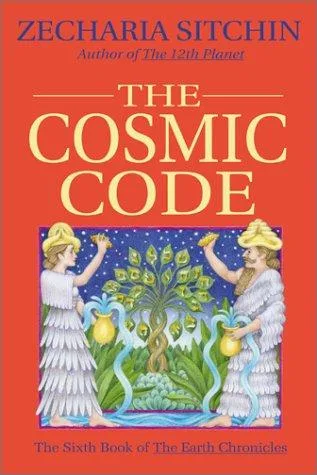
Zecharia Sitchin’s The Lost Book of Enki, first appearing in 2001, continues to be a polarizing text within esoteric circles. Sitchin's ambitious attempt to translate and interpret Sumerian cuneiform as literal historical accounts of extraterrestrial intervention is undeniably compelling, particularly his detailed exposition of the Anunnaki’s supposed societal structure and their genetic engineering of humanity. He presents a coherent, albeit speculative, narrative that challenges mainstream archaeology and history. However, the work's strength is also its primary limitation: its reliance on a highly selective and idiosyncratic reading of ancient texts. Sitchin often asserts his interpretations as fact without sufficient scholarly consensus or direct translation support, particularly concerning the precise dating of events like the creation of Homo sapiens. A particularly striking element is his detailed description of the Anunnaki's home planet, Nibiru, and its orbital mechanics, which, while imaginative, lacks corroboration beyond his own textual analysis. Ultimately, The Lost Book of Enki serves as a fascinating, if controversial, exploration of ancient mysteries that demands critical engagement from its readers.
📝 Description
80
### What It Is
The Lost Book of Enki presents an unorthodox interpretation of ancient Sumerian texts, suggesting they are not myths but records of extraterrestrial visitors known as the Anunnaki. Zecharia Sitchin, the author, posits that these beings from the planet Nibiru influenced early human civilization, contributing to technological advancements and even genetic manipulation. The work seeks to decode cuneiform tablets and artifacts, claiming they hold detailed accounts of the Anunnaki's interactions with humanity, including their social structures, conflicts, and their role in creating Homo sapiens.
### Who It's For
This volume appeals to readers intrigued by ancient astronaut theories, alternative history, and esoteric interpretations of mythology. It is suited for those who question conventional historical narratives and are open to exploring the possibility of non-human intervention in human development. Individuals interested in Sumerian civilization, early religions, and the potential origins of human intelligence will find this book a focal point for their inquiries. It's for the skeptic and the believer alike, prompting re-evaluation of our past.
### Historical Context
Published in 2001, The Lost Book of Enki emerged during a period of renewed public interest in ancient astronaut theories, partly fueled by popular media. Sitchin's work builds upon earlier speculative ideas about extraterrestrial influence on ancient cultures, notably echoing themes explored by writers like Erich von Däniken. It arrived in an academic climate largely dismissive of such interpretations, which favored archaeological and linguistic evidence over textual readings that proposed literal, non-mythological accounts of the past. The book gained traction in fringe historical and esoteric circles.
### Key Concepts
The central thesis revolves around the Anunnaki, beings from a hypothetical planet Nibiru, who allegedly visited Earth thousands of years ago. Sitchin interprets Sumerian texts as historical documents detailing their arrival, their mining operations for gold, and their genetic engineering of humans for labor. Concepts like the "gods" being technologically advanced aliens, the creation of Adam and Eve as a result of genetic mixing, and the cyclical return of Nibiru are fundamental. The book posits that much of human history, religion, and culture is a direct consequence of these interactions.
💡 Why Read This Book?
• Gain a unique perspective on human origins by understanding Sitchin's interpretation of the Anunnaki's alleged genetic engineering of Homo sapiens, detailed in his analysis of Sumerian texts. • Explore the proposed history of Nibiru and its inhabitants, as Sitchin outlines their interactions with Earth and the development of early civilizations based on his translations. • Re-evaluate ancient myths through the lens of extraterrestrial contact, examining Sitchin's specific claims about the "gods" and their impact on human society and technology.
⭐ Reader Reviews
Honest opinions from readers who have explored this book.
❓ Frequently Asked Questions
What is the primary theory presented in The Lost Book of Enki?
The book posits that ancient Sumerian civilization was influenced by extraterrestrial beings called the Anunnaki, who originated from a planet named Nibiru. Sitchin interprets their texts as records of these aliens' interactions with early humans, including genetic manipulation and technological guidance.
Who is Zecharia Sitchin and what is his background?
Zecharia Sitchin (1920-2010) was an author known for his theories about ancient astronauts. He claimed to have a background in ancient Near Eastern languages and archaeology, which he used to support his interpretations of Sumerian texts and their connection to Nibiru.
What evidence does Sitchin use to support his claims about the Anunnaki?
Sitchin primarily relies on his interpretations of ancient Sumerian cuneiform texts, artifacts, and iconography. He argues these sources describe the Anunnaki's arrival, their society, their gold mining activities on Earth, and their role in human creation.
When was The Lost Book of Enki first published?
The Lost Book of Enki was first published in 2001. It is part of a larger series by Sitchin exploring his theories about the Anunnaki and their influence on Earth.
Does mainstream archaeology or history accept Sitchin's theories?
No, Sitchin's theories are widely rejected by mainstream archaeologists, historians, and linguists. Critics argue his interpretations are selective, lack rigorous scholarly backing, and often misrepresent or ignore established findings in the fields of ancient Near Eastern studies.
What is Nibiru according to Sitchin's book?
Nibiru is presented as a hypothetical planet in our solar system, orbiting the Sun on a long, elliptical path, with a period of approximately 3,600 Earth years. Sitchin claims it is the home world of the Anunnaki.
🔮 Key Themes & Symbolism
The Anunnaki of Nibiru
This theme centers on Sitchin's central assertion: that the "gods" described in ancient Sumerian texts were not divine beings but technologically advanced extraterrestrials from a planet called Nibiru. The work details their alleged origins, their long orbital period around our sun, and their interplanetary voyages. Sitchin interprets Sumerian cosmology and mythology as literal accounts of this alien civilization's presence on Earth, their societal structures, their political dealings, and their motivations for visiting our planet, primarily for mineral resources like gold.
Human Origins and Genetic Engineering
A significant focus is placed on Sitchin's hypothesis that the Anunnaki were responsible for the creation of Homo sapiens. He interprets texts like the Epic of Gilgamesh and Enuma Elish as records of genetic engineering, where the Anunnaki combined their own genes with those of early hominids to create a subservient workforce. This theme explores the biblical narrative of Adam and Eve as a potential allegory for this scientific intervention, suggesting that key figures in human history were products of alien genetic manipulation.
Sumerian Civilization as Alien Record
The book proposes that the advanced civilization of Sumer, which emerged around the 4th millennium BCE in Mesopotamia, was not solely a human achievement but was significantly influenced, if not directly established, by the Anunnaki. Sitchin reads Sumerian cuneiform tablets, cylinder seals, and monumental architecture as evidence of alien knowledge transfer. He argues that concepts like advanced mathematics, astronomy, writing, and complex societal organization were gifts from these visitors, embedded within what we traditionally understand as mythology and religious texts.
The Return of Nibiru
This theme addresses the cyclical aspect of Sitchin's theory, focusing on the planet Nibiru and its recurring passage through the inner solar system. The work suggests that these close encounters with Earth have historically coincided with major cataclysms and significant shifts in human civilization, possibly even influencing the rise and fall of empires. Sitchin interprets ancient calendars and prophecies as evidence for Nibiru's predictable, albeit infrequent, return, implying potential future impacts.
💬 Memorable Quotes
“The gods came from the sky; they made humanity.”
— This paraphrased concept encapsulates Sitchin's core argument that ancient deities were extraterrestrial beings who engineered humans, challenging traditional religious and evolutionary explanations for our existence.
“Nibiru's orbit is not like Earth's; it's a long, elliptical path.”
— This highlights Sitchin's specific astronomical claim about the Anunnaki's home planet, presenting it as a scientifically observable, albeit unusual, celestial body crucial to his extraterrestrial hypothesis.
“Sumerian texts are not myths, but historical accounts of alien visitors.”
— This represents Sitchin's fundamental reinterpretation of ancient literature, asserting that the stories of gods and heroes are literal records of technological interactions rather than symbolic narratives.
“Gold was the primary reason the Anunnaki came to Earth.”
— This paraphrased concept points to the alleged motivation behind the Anunnaki's presence, suggesting their advanced civilization required specific resources found on our planet for their survival or technology.
“Humanity's development was guided by alien intervention.”
— This statement summarizes Sitchin's view on human progress, positing that key advancements in civilization, technology, and possibly even consciousness were directly influenced or imparted by the Anunnaki.
🌙 Esoteric Significance
Tradition
Sitchin's work draws heavily from but departs significantly from established esoteric traditions. While it echoes ancient astronaut themes found in Theosophy and later New Age literature, his specific focus on Sumerian texts and the planet Nibiru creates a unique branch. It can be seen as a modern, pseudo-scientific interpretation of ancient mythologies, attempting to ground esoteric concepts in a materialist, extraterrestrial framework rather than purely spiritual or symbolic ones.
Symbolism
Key symbols include the winged disc, frequently interpreted as representing the Anunnaki's spacecraft or their divine status. The number 3600, representing Nibiru's orbital period, becomes a recurring numerical motif, linking celestial cycles to terrestrial events and human history. The Anunnaki themselves, often depicted with elaborate headdresses and beards in ancient art, symbolize a technologically superior, authoritative 'other' that shaped human destiny.
Modern Relevance
The Lost Book of Enki continues to influence contemporary discussions on ancient aliens, alternative history, and consciousness studies. Authors and researchers in these fields frequently cite Sitchin's theories on Nibiru and the Anunnaki. His work has also inspired elements within certain ufological subcultures and conspiracy theories, demonstrating its enduring, albeit controversial, impact on how some individuals perceive humanity's past and potential cosmic connections.
👥 Who Should Read This Book
• Enthusiasts of ancient astronaut theories seeking detailed arguments for extraterrestrial influence on early civilizations. • Researchers of Sumerian history and mythology interested in an alternative, literal interpretation of cuneiform texts. • Individuals exploring unconventional origin stories and the potential for non-human involvement in human development.
📜 Historical Context
Published in 2001, The Lost Book of Enki arrived in an era where ancient astronaut theories, popularized in the late 20th century by figures like Erich von Däniken, were finding a new audience through cable television and the internet. Zecharia Sitchin’s work, however, distinguished itself by its deep engagement with Sumerian cuneiform texts, which he interpreted literally rather than metaphorically. This approach stood in stark contrast to mainstream Assyriology and archaeology, which viewed these texts as mythological or historical records of human societies. While Sitchin claimed scholarly expertise, his interpretations were largely outside the academic consensus. His work gained traction in esoteric and fringe history communities, often cited alongside or as an extension of theosophical ideas that emerged in the late 19th century, though Sitchin’s specific focus on Nibiru and the Anunnaki was his unique contribution. Reception within academic circles was predominantly one of dismissal due to methodological differences and lack of corroborating evidence.
📔 Journal Prompts
The Anunnaki's alleged genetic engineering of Homo sapiens.
The proposed orbital mechanics of Nibiru.
The role of gold in the Anunnaki's motivations.
Sitchin's interpretation of the "gods" as physical beings.
The impact of the Anunnaki on Sumerian civilization.
🗂️ Glossary
Anunnaki
In Sitchin's theory, a race of extraterrestrials from the planet Nibiru who allegedly visited Earth in antiquity and influenced human civilization and development.
Nibiru
A hypothetical planet proposed by Sitchin, said to orbit our Sun on a long, elliptical path with a period of approximately 3,600 years, serving as the home world of the Anunnaki.
Sumer
An ancient civilization in Mesopotamia (modern-day Iraq), whose culture and texts Sitchin interprets as containing records of the Anunnaki's activities.
Cuneiform
The system of writing developed by the ancient Sumerians, using wedge-shaped marks impressed on clay tablets. Sitchin bases his interpretations on these texts.
Homo sapiens
The biological species to which modern humans belong. Sitchin controversially claims that the Anunnaki genetically engineered Homo sapiens.
Adapa
A figure from Sumerian mythology whom Sitchin interprets as the first genetically engineered human, created by the Anunnaki.
Enuma Elish
The Babylonian creation epic, which Sitchin reinterprets as a historical account of the Anunnaki's arrival and conflicts on Earth.