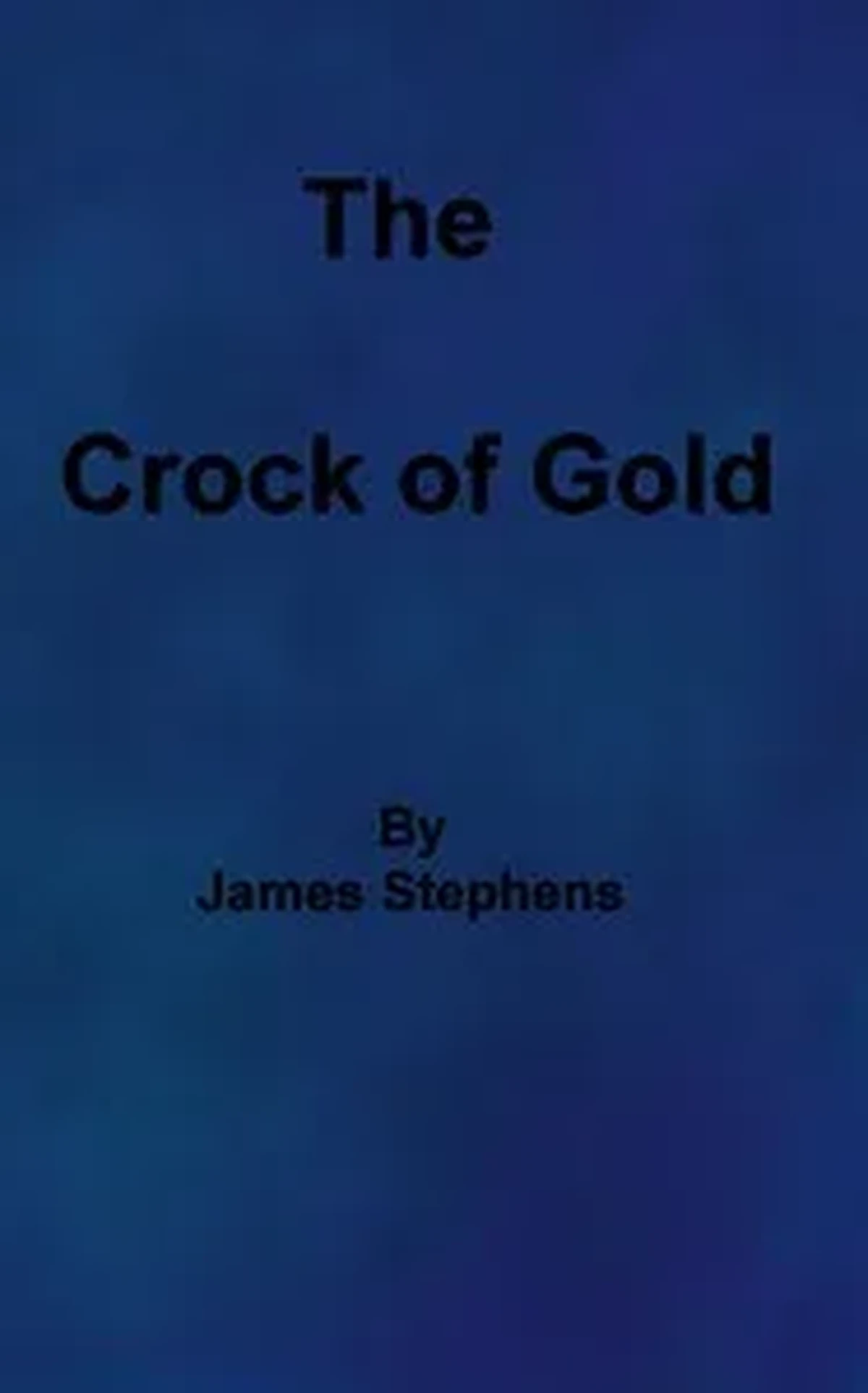
The Crock of Gold
 76
76

The Crock of Gold
James Stephens' *The Crock of Gold* presents a curious, often delightful, excursion into mythic Ireland, populated by gods, fairies, and humans whose interactions feel both ancient and surprisingly contemporary. The novel's strength lies in its prose, which possesses a distinctive, almost incantatory rhythm that sweeps the reader along. Stephens masterfully imbues his characters, from the weary god Pan to the pragmatic giants, with relatable motivations, even as they inhabit a world governed by fable. However, the plot can sometimes feel diffuse, a series of episodes rather than a tightly wound narrative, which may frustrate readers seeking a more conventional arc. A particularly memorable sequence involves the philosophical debates between the gods and the giants, a clever device that allows Stephens to satirize human obsessions with power and material wealth. Ultimately, *The Crock of Gold* is a charming, intellectually playful work that rewards patient engagement with its unique vision.
📝 Description
76
James Stephens published The Crock of Gold in 1922, a novel that weaves Irish folklore with satire.
This 1922 novel by James Stephens mixes Irish folklore and mythology with a satirical view of human nature. The story follows the god Pan and a group of humans, including a fairy and a giant, as they interact in a world where divine and earthly elements frequently meet. Stephens uses lyrical prose to examine ancient themes through a contemporary perspective.
The book appeals to readers who enjoy imaginative stories that move beyond standard narrative structures. Those interested in the connections between mythology, folklore, and philosophical thought will find much to consider. Its unique voice draws readers who appreciate humor and the absurd, used to explore fundamental truths about existence and desire. It offers a literary experience that is both engaging and thought provoking.
Published in 1922, The Crock of Gold appeared during a time of literary experimentation after World War I. It is part of the Irish Literary Revival, where writers like W.B. Yeats explored Irish mythology. Stephens' work fits this tradition but adds a modern, surreal quality. The blend of pagan ideas and social critique may recall the modernist movement's use of myth, though Stephens' whimsical approach set him apart from figures like Joyce or Eliot.
The Crock of Gold engages with pagan elements and Irish mythology, placing it within a tradition of reinterpreting ancient beliefs for a modern audience. Stephens' use of figures like Pan and fairies suggests an interest in the enduring power of myth and the supernatural. The novel's satirical approach to human foibles alongside its exploration of divine interactions hints at a deeper commentary on humanity's relationship with the sacred and the unseen, a common thread in esoteric literature that seeks to uncover hidden truths beneath everyday reality.
💡 Why Read This Book?
• Gain an appreciation for the idiosyncratic blend of Irish folklore and philosophical inquiry that James Stephens masterfully employs, particularly in his reimagining of the god Pan's interactions with mortals. • Understand the literary landscape of 1922 Ireland, where this novel stood alongside the works of contemporaries like W.B. Yeats, offering a unique folkloric perspective. • Explore the symbolic weight of the 'Crock of Gold' motif, a concept central to the narrative that critiques human desire and the pursuit of ephemeral wealth.
⭐ Reader Reviews
Honest opinions from readers who have explored this book.
❓ Frequently Asked Questions
What is the primary mythological figure in James Stephens' The Crock of Gold?
The god Pan is a central mythological figure in *The Crock of Gold*. His presence and interactions with both divine and mortal characters drive much of the narrative's exploration of desire and existence.
When was The Crock of Gold first published?
The Crock of Gold was first published in 1922, placing it within the vibrant literary period of early 20th-century Ireland.
Does The Crock of Gold draw from Irish folklore?
Yes, the novel is deeply rooted in Irish folklore and mythology. James Stephens incorporates elements of ancient Irish myths, fairy tales, and legendary figures into its fantastical narrative.
What is the overall tone of The Crock of Gold?
The novel possesses a tone that is simultaneously lyrical, satirical, and whimsical. It uses fantastical elements to comment on human nature and societal obsessions with a light, often humorous, touch.
Who are some of the key characters interacting with Pan?
Key characters interacting with Pan include various humans, such as the philosopher, his daughter, and a fairy, as well as mythical beings like giants and the Seven Old Women of the Traveller's Gate.
What literary movement does The Crock of Gold align with?
While distinct, *The Crock of Gold* shares thematic and stylistic inclinations with the Irish Literary Revival and early modernist literature's engagement with myth and folklore, though Stephens maintained a unique voice.
🔮 Key Themes & Symbolism
Divine-Mortal Interaction
The novel meticulously details the encounters between immortal beings, primarily the god Pan, and the human realm. Stephens uses these interactions to highlight the differences and surprising similarities between divine perspectives and human desires, struggles, and follies. The work explores how the presence of the eternal impacts the transient, often leading to both profound revelations and absurd complications. It questions the nature of divinity and its role, or lack thereof, in the lives of ordinary people, suggesting a persistent, often indifferent, divine presence.
Satire of Human Obsession
A significant undercurrent of *The Crock of Gold* is its sharp satire of human preoccupations. The pursuit of wealth, represented by the titular crock of gold, is presented as a misguided and ultimately hollow endeavor. Stephens critiques humanity's tendency to prioritize material gain and superficial status over genuine happiness and spiritual fulfillment. Through the often-bemused observations of Pan and other mythical figures, the novel exposes the absurdity of human ambition and the cyclical nature of societal desires.
The Nature of Love and Desire
Love and desire are explored in their complex forms throughout the narrative. The novel examines divine love, mortal romantic entanglements, and possessive affections, often showing how these forces drive the actions of both humans and gods. Stephens looks at the complexities of attraction, longing, and the consequences that arise when these powerful emotions are indulged or thwarted. The interactions between characters reveal different facets of desire, from the elemental urges of Pan to the more nuanced affections of mortals.
Folklore and Mythology as Lenses
Stephens employs Irish folklore and classical mythology not merely as setting but as fundamental tools for understanding human nature. Figures like Pan and the giants, along with the fairy folk, provide archetypal perspectives that allow for commentary on timeless human conditions. The work demonstrates how ancient stories and mythical frameworks can offer enduring insights into contemporary life, suggesting that the core elements of human experience—love, fear, ambition, and joy—remain constant across ages.
💬 Memorable Quotes
Direct passages from the work, attributed to the author.
“The world is full of sorrow, and the world is full of joy.”
— This simple dichotomy expresses Stephens' view of existence as presented in the novel. It suggests that life is a balance, where profound happiness and deep sadness are equally present and intertwined, driving the actions and experiences of both mortals and immortals.
“Gods are not to be troubled with the affairs of men.”
— This statement reflects the detached or perhaps indifferent nature of the divine as depicted in the book. It implies that while gods may exist and observe, they often do not intervene directly in human struggles, leaving humanity to navigate its own path.
“It is not the business of the gods to make men happy.”
— This interpretation highlights the novel's nuanced view of divinity and happiness. It suggests that happiness is an internal pursuit or a consequence of one's own actions and choices, rather than a gift bestowed by external divine powers.
“There is no greater evil than the desire for wealth.”
— This sentiment directly addresses the satirical element of the novel, particularly concerning the 'Crock of Gold' itself. It critiques materialism and underscores the idea that the pursuit of riches can be a destructive force, overshadowing more meaningful aspects of life.
“Love is a beautiful and a terrible thing.”
— This observation speaks to the dual nature of love as portrayed in the story. It can be a source of profound joy and connection, but also of pain, obsession, and conflict, reflecting its complex and often overwhelming power over individuals.
🌙 Esoteric Significance
Tradition
While not strictly aligned with a single esoteric lineage like Gnosticism or Theosophy, *The Crock of Gold* speaks to Hermetic and Neopagan traditions due to its direct engagement with classical mythology, particularly the figure of Pan. It reflects a broader turn-of-the-century interest in pre-Christian European beliefs and the enduring power of nature deities. The novel can be seen as exploring themes of immanence—the divine present within the natural world—and the cyclical nature of existence, ideas explored in various occult philosophies.
Symbolism
The 'Crock of Gold' itself symbolizes the often-illusory nature of human desire, particularly for material wealth and external validation, contrasting with true inner fulfillment. Pan, the goat-footed god of nature, shepherds, and wild music, represents untamed life force, primal instincts, and the ecstatic, sometimes chaotic, energy of the natural world. The Seven Old Women of the Traveller's Gate can be interpreted as embodying aspects of fate, wisdom, or the ancient feminine divine, representing forces that govern destiny and knowledge.
Modern Relevance
Contemporary Neopaganism and eco-spiritual movements often draw inspiration from figures like Pan, seeing him as a symbol of nature's vitality and humanity's connection to the earth. Modern fantasy literature, particularly works that blend folklore with philosophical depth, owes a debt to Stephens' imaginative approach. Thinkers interested in comparative mythology and the archetypal psychology of Jungian analysis may also find value in the novel's exploration of enduring myths and their psychological resonance.
👥 Who Should Read This Book
• Enthusiasts of Irish mythology and folklore who seek a literary reimagining of ancient tales, appreciating how James Stephens integrates figures like Pan into a modern narrative context. • Readers interested in early 20th-century literature and the broader context of the Irish Literary Revival, who wish to explore works that engage with national myths alongside emerging modernist sensibilities. • Individuals drawn to philosophical fiction that uses fantastical elements to explore themes of desire, happiness, and the human condition, offering satirical commentary on societal obsessions.
📜 Historical Context
Published in 1922, James Stephens' *The Crock of Gold* emerged from the rich soil of the Irish Literary Revival and the burgeoning modernist era. The period was marked by a fervent interest in reclaiming and reinterpreting Irish mythology, a movement championed by figures like W.B. Yeats and Lady Gregory. Stephens' novel participates in this trend by drawing heavily on folklore and ancient deities, offering a combination of the mythical and the mundane. Unlike the more overtly experimental works of James Joyce or T.S. Eliot, Stephens retained a lyrical, almost whimsical, prose style that, while critically acclaimed, set his work apart. The novel's reception was generally positive, noted for its imaginative scope and engaging narrative, though its philosophical undertones and satirical edge perhaps prevented it from being a mainstream bestseller. It stood as a distinctive voice within a decade that was redefining literary expression.
📔 Journal Prompts
The pursuit of the Crock of Gold, reflect on what ephemeral desires currently hold your focus.
Pan's perspective on human folly, consider a recent human interaction through an objective, detached lens.
The contrast between eternal and mortal life, explore the value you place on fleeting moments versus lasting impact.
The nature of love as depicted by the characters, analyze a personal experience of love's complexities.
The wisdom of the Seven Old Women of the Traveller's Gate, contemplate a decision you made based on intuition rather than logic.
🗂️ Glossary
Pan
In Greek mythology, the god of the wild, shepherds, and flocks, often depicted with the legs and horns of a goat. In Stephens' novel, he represents a primal, ancient force interacting with the mortal world.
Fairy
Mythical beings from folklore, often depicted as supernatural entities with magical powers. In *The Crock of Gold*, they inhabit a realm distinct from but interacting with the human world.
Giants
Mythical beings of great size and strength, often portrayed as primitive or antagonistic figures in folklore. Stephens uses them in philosophical dialogues, subverting typical portrayals.
The Seven Old Women of the Traveller's Gate
Mysterious, ancient female figures in the novel who seem to possess great wisdom or control over destiny, representing a potent, perhaps fated, aspect of existence.
The Philosopher
A human character in the novel whose intellectual pursuits and rational outlook provide a foil to the magical and divine elements, representing human reason grappling with the inexplicable.
The Crock of Gold
A symbol within the novel representing wealth, ultimate desire, or perhaps an unattainable ideal that drives much of the human characters' actions and motivations.
Irish Literary Revival
A late 19th and early 20th-century movement that celebrated and promoted Irish literature, language, and folklore, seeking to establish a distinct national identity.
🔮 Readers Also Liked
Browse all →








More by James Stephens
All books →

More Free Occult Philosophy Books
View all →