Temples, Tombs, and Hieroglyphs

 78
78

Temples, Tombs, and Hieroglyphs
Barbara Mertz's Temples, Tombs, and Hieroglyphs offers a refreshingly direct account of ancient Egyptian civilization, eschewing sensationalism for informed analysis. Her strength lies in synthesizing complex archaeological and textual evidence into a coherent narrative, particularly when discussing the evolution of religious thought. For instance, her explanation of the shift in focus from the king's afterlife to the concept of universal resurrection in the Middle Kingdom provides crucial context. However, the book, first published in 2010, occasionally feels dated in its engagement with newer archaeological findings or theoretical approaches, a limitation inherent in any work of this scope. The discussion of the Book of the Dead, while informative, could benefit from incorporating more recent translations and interpretations of its spells and purpose. Despite this, Mertz provides a solid, grounded introduction to a civilization that continues to fascinate.
📝 Description
78
Barbara Mertz wrote Temples, Tombs, and Hieroglyphs under her own name and as Barbara Michaels.
Barbara Mertz, also known as Barbara Michaels, wrote this book on ancient Egypt. It looks at the culture, religion, and everyday life that made Egypt last so long. Mertz uses her many years of studying Egyptology to go beyond simple timelines. She explains the beliefs and practices that were important to Egyptian society for thousands of years.
This book is for people who want to learn more about ancient Egypt than what a tourist might see. It is useful for students of history, archaeology, and religion. Anyone interested in how early civilizations developed will find it valuable. The book also covers how ancient myths and rituals changed over time.
The book discusses Egypt's history along the Nile River, starting around 3100 BCE. Mertz writes about the different ruling periods, how big buildings like pyramids were made, and how religious ideas changed. She includes the many gods and beliefs about death. The book also mentions how Egypt interacted with other cultures in the ancient Near East.
This work touches upon how Egyptian symbolism influenced later esoteric traditions. While not strictly an esoteric text itself, its detailed examination of Egyptian religious and symbolic systems provides a foundation for understanding subsequent occult and mystical movements that drew inspiration from ancient Egypt. The book's focus on concepts like Ma'at and the afterlife offers a window into the worldview that fueled these later developments.
💡 Why Read This Book?
• Gain insight into the concept of Ma'at, understanding its central role in Egyptian cosmology and justice, as detailed in sections concerning Egyptian law and religious order. • Explore the practicalities and spiritual significance of Egyptian funerary practices, learning about the elaborate tomb construction and mummification techniques described when discussing pharaonic burials. • Appreciate the development of hieroglyphic writing, understanding its function not just as communication but as a sacred and magical tool, as illuminated in Mertz's examination of Egyptian scribal traditions.
⭐ Reader Reviews
Honest opinions from readers who have explored this book.
❓ Frequently Asked Questions
What is the significance of hieroglyphs according to Barbara Mertz?
Barbara Mertz explains that hieroglyphs in ancient Egypt were more than just a writing system; they held religious and magical significance, believed to possess inherent power and used in monumental inscriptions and religious texts.
When did Barbara Mertz's 'Temples, Tombs, and Hieroglyphs' first appear?
The book 'Temples, Tombs, and Hieroglyphs' by Barbara Mertz was first published in 2010, making it a relatively modern synthesis of Egyptological knowledge.
What does the book say about Egyptian beliefs in the afterlife?
The work details the complex Egyptian beliefs surrounding the afterlife, including the importance of mummification, the construction of elaborate tombs, and the journey the deceased undertook, often guided by funerary texts.
Does Barbara Mertz discuss specific pharaohs or dynasties?
Yes, the book touches upon various pharaohs and dynasties, providing context for their reigns and contributions to Egyptian history and culture, such as the Old Kingdom pyramid builders.
How does the book explain the concept of Ma'at?
Mertz clarifies that Ma'at represents the fundamental principle of order, truth, and justice in the Egyptian worldview, essential for the functioning of the cosmos, society, and the individual's journey in the afterlife.
What is Barbara Mertz's background?
Barbara Mertz was a distinguished Egyptologist with a Ph.D. from the University of Chicago and a prolific author, also known for her mystery novels under the name Barbara Michaels.
🔮 Key Themes & Symbolism
The Sacredness of the Nile
The book emphasizes the Nile River's centrality not just as a geographical feature but as a divine force shaping Egyptian life, agriculture, and cosmology. Its predictable inundation was seen as a manifestation of cosmic order (Ma'at), influencing religious festivals, agricultural cycles, and the very concept of rebirth and renewal central to Egyptian belief systems. Mertz illustrates how the river's rhythm permeated daily existence and spiritual thought.
Pharaoh as Divine Mediator
Temples, Tombs, and Hieroglyphs examines the role of the Pharaoh not merely as a political ruler but as a divine intermediary between the gods and humanity. The king was responsible for maintaining Ma'at on Earth, performing essential rituals, and ensuring the prosperity of the land. This divine kingship legitimized their absolute authority and influenced the monumental architecture and elaborate religious practices associated with royal power.
The Journey to the Afterlife
A significant portion of the work is dedicated to the Egyptians' profound preoccupation with death and the afterlife. Mertz details the intricate processes of mummification, the construction of elaborate tombs designed as eternal homes, and the spiritual journey the deceased was believed to undertake. Funerary texts like the Book of the Dead are presented as crucial guides for reading through the perils of the underworld and achieving eternal life.
Hieroglyphs as Sacred Script
The book treats hieroglyphic writing as more than a communication tool, highlighting its sacred and magical dimensions. Mertz explains how these intricate symbols were believed to possess power, capable of invoking the things they represented. Their use in temples, tombs, and religious artifacts underscores their role in maintaining cosmic order and facilitating the transition to the afterlife.
💬 Memorable Quotes
Direct passages from the work, attributed to the author.
“The Egyptian view of life was extraordinarily optimistic.”
— This statement suggests that despite the emphasis on death and the afterlife, the fundamental orientation of Egyptian culture was one of affirmation and confidence in the continuation of existence and the inherent order of the universe.
“The concept of Ma'at was the foundation of Egyptian society.”
— This highlights Ma'at not just as a religious ideal but as the core principle that structured Egyptian law, ethics, and the relationship between rulers, the divine, and the populace, ensuring stability and cosmic balance.
“Tombs were not merely burial places but eternal homes.”
— This interpretation underscores the Egyptian belief in a corporeal afterlife, where the tomb served as a permanent dwelling equipped with provisions and inscriptions necessary for the deceased's continued existence and well-being.
“The pyramids stand as enduring symbols of Egyptian ambition.”
— This points to the monumental architecture of the pyramids as physical manifestations of the ancient Egyptians' immense organizational capacity, technological prowess, and profound spiritual aspirations related to kingship and the afterlife.
💡 Key Ideas
Editorial paraphrase of the work's core concepts — not direct quotes.
Religion permeated every aspect of Egyptian life.
This paraphrased concept emphasizes the pervasive influence of religious beliefs and practices on daily activities, governance, art, and social structures in ancient Egypt, indicating a lack of strict separation between the sacred and the secular.
🌙 Esoteric Significance
Tradition
While Mertz's work is primarily scholarly Egyptology, its detailed exploration of Egyptian cosmology, funerary rituals, and divine kingship provides foundational material for various Western esoteric traditions. Hermeticism, in particular, draws heavily on ancient Egyptian symbolism and philosophy, viewing figures like Thoth (as Hermes Trismegistus) as central. This book serves as an authoritative source for understanding the original context from which many Hermetic concepts were later adapted and reinterpreted.
Symbolism
Key symbols explored include the Ankh, representing life and immortality, and the Scarab beetle (Khepri), symbolizing rebirth and the morning sun, deeply connected to the concept of the cyclical nature of existence. The Eye of Horus (Wadjet) signifies protection, royal power, and good health, a potent amulet found extensively in Egyptian artifacts. These symbols, central to Egyptian religion, have been adopted into various esoteric systems for their perceived mystical potency.
Modern Relevance
Contemporary practitioners of Western esotericism, including Hermeticists, Rosicrucians, and students of comparative mythology, continue to draw upon the detailed symbolism and philosophical underpinnings detailed in works like Mertz's. The book's factual grounding in ancient Egyptian beliefs provides a crucial reference point for understanding how concepts like divine order (Ma'at), the afterlife, and sacred geometry have influenced modern occult philosophy and magical practices.
👥 Who Should Read This Book
• Students of ancient history and archaeology seeking a comprehensive overview of Egyptian civilization, moving beyond basic timelines to understand cultural and religious underpinnings. • Aspiring practitioners of Western esoteric traditions who need to understand the historical and symbolic roots of concepts often found in Hermeticism and related philosophies. • Readers fascinated by comparative religion and mythology, looking to explore one of the world's most influential ancient belief systems and its enduring impact.
📜 Historical Context
Published in 2010, Barbara Mertz's Temples, Tombs, and Hieroglyphs emerged in a period where Egyptology continued to evolve, building upon decades of archaeological discovery and scholarly debate. The book's approach, blending rigorous academic research with engaging prose, sought to make complex Egyptian civilization accessible to a broader audience. It engaged with established narratives concerning the Old, Middle, and New Kingdoms, and the intermediate periods, situating Egyptian developments within the context of the ancient Near East. While not directly engaging in contemporary theoretical debates that might have been more prevalent in specialized journals, Mertz's work implicitly offered a counterpoint to purely materialistic interpretations of ancient cultures, emphasizing the enduring power of belief systems. Its reception was largely positive among general readers and students for its clarity and comprehensiveness, though seasoned academics might note the absence of engagement with more recent, niche scholarly discussions.
📔 Journal Prompts
The Egyptian concept of Ma'at and its role in daily life.
Reflections on the elaborate Egyptian beliefs surrounding the afterlife.
The function and perceived power of hieroglyphs in ancient Egyptian society.
The significance of the Nile River in shaping Egyptian religious and cultural practices.
The Pharaoh's role as a divine mediator and its impact on Egyptian governance.
🗂️ Glossary
Ma'at
The ancient Egyptian concept representing truth, balance, order, law, morality, and justice. It was personified as a goddess and seen as the fundamental cosmic order that the pharaoh was responsible for maintaining.
Hieroglyphs
The formal writing system used in ancient Egypt, combining logographic, syllabic, and alphabetic elements. It was considered sacred and was used for religious texts, monumental inscriptions, and decorative purposes.
Ankh
A hieroglyphic symbol representing 'life'. It is often depicted as a cross with a loop at the top and is a prominent symbol in Egyptian art and religious contexts, signifying eternal life.
Book of the Dead
A collection of ancient Egyptian funerary spells intended to assist a dead person's journey through the Duat (underworld) and into the afterlife. It was placed in tombs.
Pharaoh
The title given to the rulers of ancient Egypt, considered divine kings who held supreme political and religious authority. They were seen as intermediaries between the gods and humans.
Duat
The ancient Egyptian concept of the underworld. It was the field of the dead and the god Osiris, through which the sun god Ra traveled each night.
Scarab
A beetle amulet or representation, particularly the dung beetle, symbolizing rebirth, transformation, and the morning sun (associated with the god Khepri). It was a popular motif in amulets and seals.
🔮 Readers Also Liked
Browse all →








More by Barbara Mertz, Barbara Michaels
All books →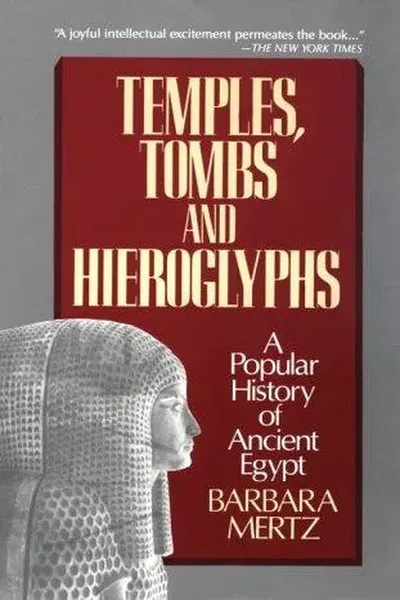


More Free Occult Philosophy Books
View all →