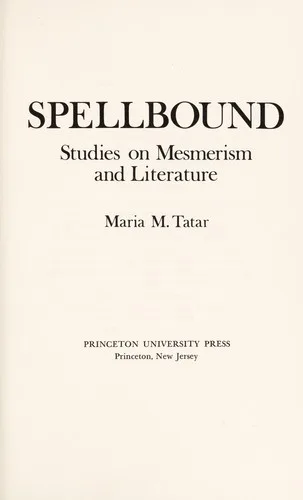
Spellbound
 75
75

Spellbound
Maria Tatar’s 'Spellbound' offers a rigorous, if at times dense, exploration of folklore and the persistent human fascination with magical thinking. Its strength lies in its comprehensive historical sweep, tracing the concept of spellcraft from its earliest manifestations through to more modern literary and cultural representations. Tatar avoids sensationalism, instead focusing on the socio-cultural functions and intellectual currents that gave rise to and sustained belief in magic. A particularly illuminating section discusses the anxieties surrounding the efficacy and morality of spells as depicted in early modern texts. While the academic tone might deter casual readers, the book's limitation is precisely this scholarly distance; it prioritizes analysis over evocative narrative, occasionally making the subject feel more like an artifact than a living tradition. Nevertheless, 'Spellbound' provides a solid foundation for understanding the deep historical roots of magical belief.
📝 Description
75
### What It Is
'Spellbound,' originally published in 1978 by Maria Tatar, offers a scholarly examination of folklore, myth, and the enduring power of magical beliefs across cultures. It is not a grimoire or a practical guide to casting spells, but rather an in-depth analysis of how spells, enchantments, and the belief in magical efficacy have been understood and represented in various historical and literary contexts. The book traces the evolution of these ideas, from ancient oral traditions to their manifestation in printed works and popular imagination.
### Who It's For
This work is suited for academic readers, folklore enthusiasts, cultural historians, and literary scholars interested in the societal and psychological underpinnings of magic. It appeals to those who seek to understand the historical roots of magical thinking, its literary depictions, and its role in shaping human understanding of the world. Individuals curious about the intersection of belief, narrative, and cultural practice will find substantial material here. It is for the reader who appreciates rigorous research and detailed historical analysis.
### Historical Context
Published in 1978, 'Spellbound' emerged during a period of renewed academic interest in folklore studies and the anthropology of belief. The late 20th century saw scholars like Carlo Ginzburg re-examining historical witchcraft accusations through microhistory and cultural lenses, a trend Tatar's work aligns with by exploring the broader cultural imagination surrounding magic. The book also engages with earlier folkloristic traditions and literary criticism that analyzed supernatural elements in texts, positioning itself within ongoing scholarly debates about the nature and function of myth and folklore.
### Key Concepts
The book explores the concept of 'folk magic' as distinct from learned or ceremonial magic, examining its transmission through oral traditions and its representation in popular culture. It delves into the psychology of belief, questioning why humans have historically turned to magical solutions for life's problems, from healing to love. Tatar also investigates the role of narrative in constructing magical realities, analyzing how stories about spells and enchantments shape collective understanding and reinforce social norms or challenge them. The inherent duality of magic—its potential for both good and ill—is a recurring motif.
💡 Why Read This Book?
• Gain insight into the historical evolution of folk magic, understanding how beliefs about spells and enchantments have been documented and debated since at least the early modern period, a critical context for many esoteric traditions. • Analyze the literary and cultural representations of magic, learning how narratives shape societal perceptions of magical practices, as explored in Tatar's examination of folklore. • Understand the psychological and social drivers behind belief in magic, appreciating how 'Spellbound' frames these phenomena not as mere superstition but as integral aspects of human history and culture.
⭐ Reader Reviews
Honest opinions from readers who have explored this book.
❓ Frequently Asked Questions
Is 'Spellbound' a practical guide to performing magic?
No, 'Spellbound' is a scholarly work that examines the history and cultural significance of magic and spellcraft. It analyzes folklore and literary representations rather than providing instructions for magical practice.
What historical periods does Maria Tatar's 'Spellbound' cover?
The book spans a broad historical range, discussing the origins of magical beliefs in oral traditions and tracing their evolution through medieval times, the early modern period, and into later literary and cultural expressions.
What is the primary focus of 'Spellbound'?
The primary focus is on understanding the cultural, historical, and psychological dimensions of magic and belief in spells. It explores how these concepts have been perceived, represented, and utilized across different societies and eras.
Who would benefit most from reading 'Spellbound'?
Students of folklore, cultural history, literary studies, and those interested in the anthropology of belief systems would find 'Spellbound' particularly valuable for its academic rigor and historical scope.
Does 'Spellbound' discuss specific magical traditions?
While not a practitioner's manual, the book analyzes concepts like folk magic and enchantment, touching upon the societal context in which various magical beliefs, including those with roots in older traditions, were understood and transmitted.
When was Maria Tatar's 'Spellbound' first published?
'Spellbound' by Maria Tatar was first published in 1978, placing its scholarly analysis within the context of late 20th-century folklore and cultural studies.
🔮 Key Themes & Symbolism
The Anthropology of Belief
Tatar meticulously investigates the societal and psychological underpinnings of why humans have historically relied on magical thinking. The work unpacks how belief systems, particularly those involving spells and enchantments, function to provide explanations, exert control, and offer comfort in the face of uncertainty. It examines the transmission of these beliefs through oral traditions and their eventual codification in literature, highlighting the enduring human need for agency and meaning-making in a complex world.
Literary Representations of Magic
A significant portion of 'Spellbound' is dedicated to analyzing how magic, witchcraft, and spellcasting have been depicted in literature across various epochs. Tatar scrutinizes narratives, folklore collections, and scholarly treatises to understand how cultural anxieties, moral frameworks, and imaginative possibilities surrounding magic are shaped and perpetuated through storytelling. This theme explores the power of narrative to both reflect and influence societal perceptions of the supernatural.
Folk vs. Learned Magic
The book distinguishes between 'folk magic'—often transmitted orally and tied to everyday concerns like healing or protection—and more formalized 'learned' or ceremonial magic. Tatar explores the social contexts and practitioners associated with each, examining how these different forms of magic interacted with, and were perceived by, the broader society. This analysis sheds light on the diverse manifestations of magical practice throughout history.
The Social Function of Enchantment
Tatar explores how the concept of enchantment and the practice of spellcasting served specific social functions throughout history. This includes their role in social control, community cohesion, and as mechanisms for addressing personal and collective anxieties. The work examines how narratives of magic reinforced or challenged existing social structures and moral orders, offering a nuanced view of magic's place within human societies.
💬 Memorable Quotes
“The persistence of magical thinking across cultures.”
— This highlights Tatar's central argument: that belief in magic is not a primitive relic but a recurring and adaptable aspect of human cognition and culture, present even in modern societies.
“The narrative construction of witchcraft and sorcery.”
— This points to the book's focus on how stories and literary depictions have shaped public and scholarly understanding of magic, often reflecting societal fears and biases rather than objective reality.
“The distinction between folk remedies and formalized magical rites.”
— This suggests an exploration of different categories of magical practice, differentiating between informal, community-based traditions and more structured, perhaps elite, magical systems.
“Magic as a response to existential uncertainty.”
— This interpretation emphasizes the psychological dimension of magic, viewing it as a coping mechanism or a tool for seeking control and meaning in a world perceived as unpredictable or dangerous.
“The role of oral tradition in disseminating magical lore.”
— This indicates the book's attention to how knowledge about spells and magical practices was historically passed down through spoken word, influencing its evolution and interpretation.
🌙 Esoteric Significance
Tradition
While 'Spellbound' is primarily a work of folklore and cultural history, it illuminates the historical roots and cultural expressions that underpin various esoteric traditions. It engages with the broader concept of 'magic' as a historical phenomenon, providing context for practices found within Hermeticism, folk magic, and ceremonial traditions by examining their societal reception and conceptualization. The book departs from esoteric lineages by focusing on scholarly analysis rather than participatory practice, but its research into historical belief systems offers valuable background.
Symbolism
The book frequently touches upon symbols associated with protection, healing, and divination, though not always in a codified esoteric sense. For instance, the symbolism of the 'spell' itself—as an act of focused intent and verbal or ritualistic command—is a core motif. Tatar also implicitly discusses symbols of agrarian magic and domestic enchantments, reflecting their historical prevalence in folk practices aimed at ensuring prosperity and well-being, which often carry deeper symbolic meanings within traditional cultures.
Modern Relevance
Contemporary practitioners and scholars of Western Esotericism, particularly those interested in the historical development of magical thought and its cultural manifestations, find 'Spellbound' a crucial reference. Modern witchcraft movements, neo-paganism, and academic fields like religious studies and anthropology of magic draw upon Tatar's contextualization of historical belief systems. Her work helps contemporary readers understand the deep historical currents that inform modern magical discourse and practice, bridging academic inquiry with esoteric interests.
👥 Who Should Read This Book
['• Folklore and cultural history enthusiasts: Individuals seeking a deep dive into the historical understanding and representation of magic and spellcraft across different societies and eras.', "• Literary scholars and students: Those analyzing the presence and function of magical themes in literature, who will benefit from Tatar's textual analysis and historical context.", '• Academic researchers in anthropology and religious studies: Scholars interested in the anthropology of belief, the sociology of magic, and the historical development of supernatural worldviews.']
📜 Historical Context
Maria Tatar's 'Spellbound,' published in 1978, emerged within a vibrant academic landscape of folklore studies and cultural history. This era saw significant scholarly re-evaluations of belief systems, moving beyond simplistic dismissals of magic as mere superstition. Contemporaries like Carlo Ginzburg were pioneering microhistory, using detailed case studies to understand popular belief and witchcraft accusations from the perspective of the accused. The book also engaged with the broader field of literary criticism, which was increasingly exploring the social and cultural functions of myth and folklore. While not directly engaging with specific magical societies, Tatar’s work provided a critical framework for understanding the historical and cultural roots of magical thinking, situating it within the complex intellectual currents of the late 20th century. Its scholarly approach offered a counterpoint to more sensationalized accounts of magic prevalent in popular culture.
📔 Journal Prompts
The societal anxieties that fueled narratives of witchcraft.
The function of spells in ancient oral traditions.
Literary tropes used to depict magical practitioners.
The evolution of belief in enchantment over time.
Personal reflections on the enduring appeal of magic.
🗂️ Glossary
Folk Magic
A category of magical beliefs and practices typically transmitted orally within a community, often concerned with practical matters like healing, protection, love, and fortune.
Enchantment
The act or state of being under a magic spell; the casting of spells or incantations, often with the intent to influence events or people.
Oral Tradition
The transmission of cultural knowledge, beliefs, and stories from generation to generation by spoken word, as opposed to written records.
Folklore
The traditional beliefs, customs, and stories of a community, passed through the generations by word of mouth or practice.
Superstition
An excessive or irrational belief in supernatural influences, especially as leading to unwarranted fear or trust in signs and omens.
Grimoire
A textbook of magic or witchcraft, typically containing instructions for summoning spirits and performing magical rites, often associated with ceremonial magic.
Witchcraft Accusations
The historical process of accusing individuals of practicing malevolent magic, often leading to persecution and societal upheaval, particularly prominent in early modern Europe.