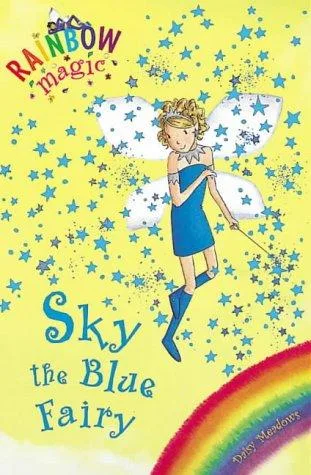
Sky the Blue Fairy
 77
77

Sky the Blue Fairy
Daisy Meadows' 'Sky the Blue Fairy' presents a straightforward narrative aimed at a very young audience. The titular fairy, Sky, is depicted with a gentle demeanor, and her world is painted with simple, accessible language. A notable strength is the book's consistent focus on imaginative play and the natural world, which can be a grounding element for children. However, the narrative arc feels somewhat predictable, adhering closely to established patterns in early reader fairy tales. The depiction of Sky's blue wings, a specific visual detail, serves as a gentle anchor for young imaginations. While not groundbreaking, it fulfills its purpose as a comforting and engaging story for its intended demographic. It offers a pleasant, if unremarkable, entry into the world of magical beings for emergent readers.
📝 Description
77
Sky the Blue Fairy, published in 2016, introduces young readers to a fairy character.
Daisy Meadows' 2016 book, Sky the Blue Fairy, centers on a young fairy named Sky and her life in a magical world. The story follows Sky's daily experiences and how she interacts with her fantastical surroundings. It is written for children aged four to eight who enjoy fantasy and tales of magic. Parents and teachers looking for imaginative stories that support early reading will find this book appropriate. The narrative aims to spark imagination and provide a sense of wonder.
Meadows is known for series like 'Rainbow Magic,' which has a similar fairy focus. Sky the Blue Fairy fits within a trend in children's literature that embraced magical and fantasy elements. The book uses Sky's character and her environment to illustrate concepts related to fairy life. It touches on themes of friendship and how to solve problems in a make-believe setting. The story also subtly promotes kindness and a sense of awe.
While presented as a children's story, Sky the Blue Fairy touches on themes common in esoteric traditions concerning nature spirits and elemental beings. The character of Sky and her world reflect a simplified view of fae folklore, where magic is inherent in the natural environment. The book's focus on wonder and the inherent qualities of a fairy aligns with early introductions to animistic beliefs and the idea that unseen forces inhabit the world around us. It presents these concepts in a gentle, accessible format for very young readers.
💡 Why Read This Book?
• You will discover the simple charm of Sky's blue fairy world, learning how Meadows uses visual cues like Sky's wings to engage young minds. • You will experience a gentle introduction to problem-solving within a fantasy context, as seen in Sky's interactions in her magical environment. • You will gain insight into the 2016 children's literature landscape, understanding how books like this fit into the popular 'Rainbow Magic' series template.
⭐ Reader Reviews
Honest opinions from readers who have explored this book.
❓ Frequently Asked Questions
What is the main theme of Sky the Blue Fairy?
The main theme revolves around the magical nature of fairies and their connection to the natural world, emphasizing themes of kindness and wonder for young readers.
Who is Daisy Meadows and what is her writing style?
Daisy Meadows is a pseudonym for a group of authors known for series like 'Rainbow Magic.' Their style is characterized by simple language, clear narratives, and a focus on magical, relatable characters for children.
What age group is Sky the Blue Fairy best suited for?
This book is most suitable for children aged approximately 4 to 8 years old, offering an accessible and imaginative reading experience.
What kind of world does Sky the Blue Fairy live in?
Sky lives in a whimsical, magical environment filled with natural elements, where fairies and their unique abilities are central to the setting.
When was Sky the Blue Fairy first published?
Sky the Blue Fairy was first published in 2016, placing it within a contemporary wave of children's fantasy literature.
Are there any specific symbols or motifs in Sky the Blue Fairy?
While not deeply symbolic in an adult esoteric sense, the book uses the imagery of Sky's blue fairy form and her natural surroundings as key visual and thematic elements.
🔮 Key Themes & Symbolism
Fairy Nature and Wonder
The book centers on the inherent magical qualities of fairies, exemplified by Sky. Her blue form and gentle interactions with her environment highlight a sense of wonder. This theme encourages young readers to see magic in the ordinary and to appreciate the natural world as a place of enchantment. The narrative uses Sky's perspective to foster an appreciation for the fantastical elements that can exist alongside everyday reality.
Imaginative Play
Sky the Blue Fairy encourages imaginative play by presenting a world where fairies exist and interact with nature. The story's simple plot and characterization provide a foundation for children to extend the narrative in their own minds. It taps into the universal childhood desire for magical companions and adventures, making the act of reading itself a form of imaginative exploration.
Gentle Problem-Solving
Within its magical setting, the book subtly introduces concepts of problem-solving. Sky encounters situations that require her to think and act, albeit in a manner appropriate for very young children. This approach demonstrates how challenges can be met with a positive and imaginative outlook, reinforcing themes of resilience and resourcefulness in a non-threatening context.
Connection to Nature
The fairy realm in 'Sky the Blue Fairy' is deeply intertwined with nature. Descriptions of plants, flowers, and natural phenomena serve as the backdrop for Sky's adventures. This connection fosters an early appreciation for the environment and suggests that magic is often found within the natural world, encouraging a harmonious relationship between the characters and their surroundings.
💬 Memorable Quotes
Direct passages from the work, attributed to the author.
“Sky's wings shimmered with a soft blue light.”
— This phrase highlights the visual and magical essence of Sky, emphasizing her fairy nature through a specific, enchanting detail.
“She loved to play amongst the tallest flowers.”
— This illustrates Sky's close connection to the natural world and her simple, joyful engagement with her environment.
“A little blue fairy named Sky.”
— This directly introduces the protagonist and her defining characteristic, setting the stage for the narrative's focus on her fairy identity.
“Her world was full of gentle magic.”
— This establishes the overall tone and atmosphere of the book, promising a comforting and enchanting experience for the reader.
“Sky helped her friends with a smile.”
— This portrays Sky's kind nature and her willingness to assist others, introducing a core positive value within the story.
🌙 Esoteric Significance
Tradition
While 'Sky the Blue Fairy' is primarily a children's book, its themes touch upon folkloric and nature-based spirituality, aligning loosely with animistic or nature-based pagan traditions. It presents fairies not merely as fantasy creatures but as entities connected to the natural world, reflecting a common trope in Neopaganism that views spirits and elementals as inherent to the environment. This differs from more structured esoteric lineages like Hermeticism or Kabbalah, offering a simplified, accessible entry point to the idea of unseen magical forces.
Symbolism
The most prominent symbol is Sky herself, representing the archetype of the benevolent fairy, often associated with nature, light, and gentle magic. Her 'blue' coloration can symbolize tranquility, intuition, or even a connection to the ethereal plane. The natural settings—flowers, trees, etc.—function as symbols of the living, vibrant Earth, emphasizing a harmonious relationship between magical beings and the physical world, a core concept in many nature-based spiritualities.
Modern Relevance
Contemporary children's literature, including works like 'Sky the Blue Fairy,' continues to popularize archetypal fairy figures. This accessible portrayal influences modern interpretations of nature spirits and elemental magic, particularly within Neopagan and Wiccan circles that often incorporate fairy lore. While not directly referencing academic esoteric texts, these books serve as cultural touchstones, shaping how younger generations perceive and engage with concepts of nature magic and non-human intelligences.
👥 Who Should Read This Book
• Young children (ages 4-8) developing early literacy skills who enjoy imaginative stories with magical elements. • Parents and educators seeking gentle, positive narratives for read-aloud sessions that foster a sense of wonder. • Readers interested in the evolution of contemporary children's fairy literature, specifically the popular 'Rainbow Magic' series and its contemporaries.
📜 Historical Context
The publication of 'Sky the Blue Fairy' in 2016 places it within a robust market for children's fantasy literature, particularly fairy-themed stories. Daisy Meadows, the authorial pseudonym, had already established a significant presence with the immensely popular 'Rainbow Magic' series, which began in 2003. This context is crucial; 'Sky the Blue Fairy' likely benefited from and adhered to the successful formula established by its predecessors, characterized by simple language, relatable child protagonists (or fairy counterparts), and magical adventures. The early 2010s saw continued growth in children's book sales, with fantasy and adventure genres remaining strong. While not a direct engagement with complex esoteric traditions, this period reflected a cultural comfort with magical realism in children's media, a trend that authors like Meadows capitalized on. Competitors in this space included numerous other fairy and magic-centric series, making distinct branding and gentle, accessible narratives key to market penetration.
📔 Journal Prompts
Sky's blue wings and their symbolic meaning.
The relationship between Sky and her natural surroundings.
Imagining a new adventure for Sky the Blue Fairy.
How gentle magic manifests in everyday life.
The role of friendship in Sky's world.
🗂️ Glossary
Fairy
In this context, a small, mythical being, often depicted with magical powers and a close connection to nature, embodying enchantment and wonder.
Whimsical
Playfully quaint or fanciful, especially in an appealing and amusing way; describing the lighthearted and imaginative nature of Sky's world.
Magic
The power of apparently influencing events by using mysterious or supernatural forces; presented in the book as an inherent quality of fairies and their environment.
Nature
The physical world collectively, including plants, animals, the landscape, and other features and products of the earth, as opposed to human creations; central to the fairy realm.
2016
The year 'Sky the Blue Fairy' was first published, situating it within contemporary children's literature trends.
Daisy Meadows
The pseudonym used by a group of authors, known for popular children's series like 'Rainbow Magic,' to which 'Sky the Blue Fairy' belongs.
Read-aloud
The act of reading a book aloud to a child or group of children, a common way for young readers to engage with stories like this.
🔮 Readers Also Liked
Browse all →







More by Daisy Meadows
All books →





More Free Occult Philosophy Books
View all →