Shang di di zhi wen

 76
76

Shang di di zhi wen
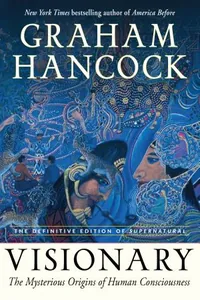
Graham Hancock's exploration in Shang di di zhi wen of a lost global civilization is ambitious, attempting to redraw the map of human history. The strength of the work lies in its synthesis of diverse sources—from Egyptian hieroglyphs to South American ruins—to construct a compelling narrative of a forgotten past. Hancock is particularly adept at drawing parallels between disparate myths, suggesting a common origin story. However, the book's primary limitation is its reliance on interpretation over conclusive evidence. While it presents intriguing correlations, the leap from symbolic similarity to a lost civilization often feels speculative. A passage discussing the alignment of certain megalithic sites, for example, offers a persuasive argument for astronomical knowledge but stops short of proving a singular, global culture. Ultimately, Shang di di zhi wen serves as a provocative question to established history, rather than a definitive answer.
📝 Description
76
### What It Is
Shang di di zhi wen, first published in 1999 by Graham Hancock, is not a typical historical survey. It engages with the notion of a lost global civilization, proposing that advanced societies existed far earlier than mainstream archaeology accepts. The work examines evidence from ancient myths, megalithic sites, and geological records to support its thesis. It challenges conventional timelines by suggesting a sophisticated pre-Ice Age culture influenced global development.
### Who It's For
This book is aimed at readers curious about alternative histories and the mysteries of ancient civilizations. It will appeal to those who question established narratives in archaeology and anthropology. Individuals interested in topics such as ancient technologies, lost continents, and the potential for hidden human knowledge will find material for consideration. It's for the seeker willing to explore hypotheses that diverge from academic consensus.
### Historical Context
The late 1990s saw a growing interest in fringe archaeological theories and ancient mysteries, partly fueled by popular books and documentaries. Hancock's work emerged during a period when scholars like John Anthony West were popularizing theories about ancient Egyptian dynastic origins predating known history. The academic establishment, however, largely dismissed these ideas, often labeling them as pseudoscience. This book contributed to a broader public discourse on the limits of historical knowledge.
### Key Concepts
Central to Shang di di zhi wen is the idea of a sophisticated global civilization that predates the last Ice Age, approximately 12,000 years ago. Hancock posits that this civilization, destroyed by cataclysmic events, left behind remnants in the form of megalithic structures and encoded knowledge in myths worldwide. The book explores how survivors of this catastrophe may have seeded nascent cultures with advanced astronomical, architectural, and possibly spiritual understanding. The 'Great Year' or precessional cycle is often invoked as a marker for such ancient epochs.
💡 Why Read This Book?
• Gain a perspective on alternative timelines of human civilization, examining the proposed existence of a sophisticated pre-Ice Age culture as detailed in the book's analysis of global myths. • Explore the concept of a global cataclysm around 12,000 years ago and its potential impact on early human societies, as presented through Hancock's synthesis of geological and archaeological data. • Consider the symbolic connections between ancient sites and myths worldwide, offering a framework for understanding potential shared ancestral knowledge systems discussed in the text.
⭐ Reader Reviews
Honest opinions from readers who have explored this book.
❓ Frequently Asked Questions
What is the central argument of Shang di di zhi wen?
The book argues for the existence of a highly advanced global civilization that predates the last Ice Age, around 12,000 years ago. It suggests this civilization was destroyed by cataclysmic events and its survivors influenced later cultures.
What kind of evidence does Graham Hancock present?
Hancock presents evidence from a wide range of sources, including ancient myths from different cultures, megalithic structures like those found at Göbekli Tepe, and geological data suggesting sudden environmental changes.
When was Shang di di zhi wen first published?
Shang di di zhi wen was first published in 1999, contributing to a wave of popular interest in alternative historical theories.
Does the book suggest specific locations for this lost civilization?
While not pinpointing a single location, the work explores evidence from various regions, including Egypt, South America, and the Near East, suggesting a global reach for the proposed ancient culture.
Is this book accepted by mainstream archaeology?
No, the theories presented in Shang di di zhi wen are generally considered fringe by mainstream archaeology and are often categorized as speculative or pseudoscientific.
What is the significance of the 'Great Year' concept in the book?
The 'Great Year,' referring to the 26,000-year cycle of the Earth's axial precession, is used to frame the potential timeline of advanced ancient civilizations and their cyclical rise and fall.
🔮 Key Themes & Symbolism
Pre-Ice Age Civilization
The core concept is the existence of an advanced global society that flourished before the last Ice Age, around 12,000 years ago. Hancock suggests this civilization possessed sophisticated knowledge of astronomy, engineering, and possibly spiritual practices. Evidence is drawn from the interpretation of myths worldwide and the architectural sophistication of ancient sites, which he argues point to a common, advanced origin predating known historical records. This theme challenges the linear progression of human development favored by conventional archaeology.
Global Cataclysm and Survivors
Shang di di zhi wen posits that this advanced civilization was wiped out by a sudden, cataclysmic event, likely tied to the end of the Ice Age. The book explores the idea that a select group of survivors managed to preserve and transmit crucial knowledge to nascent cultures around the globe. This transmission is seen as the seed for many later mythologies and early religious systems, explaining recurring motifs and symbols across disparate ancient societies.
Mythology as Historical Record
A significant theme is the reinterpretation of global myths not as mere folklore, but as distorted historical accounts of real events. Hancock analyzes flood myths, creation stories, and tales of wise ancestors from diverse cultures, arguing they contain fragmented memories of a lost epoch and its demise. By comparing these narratives, he seeks to reconstruct a coherent picture of a forgotten human past and the knowledge passed down through generations.
Megalithic Sites and Astronomy
The book extensively examines megalithic sites, such as those in Egypt and elsewhere, as evidence of advanced ancient engineering and astronomical understanding. Hancock suggests these structures were built with a precision and purpose that aligns with sophisticated cosmological models, particularly the precessional cycle of the equinoxes (the 'Great Year'). He argues their alignment and construction indicate a level of knowledge far beyond what is attributed to early Neolithic cultures.
💬 Memorable Quotes
“The world's myths are not fantasies but memories.”
— This encapsulates Hancock's central thesis: that ancient stories, often dismissed as fiction, are actually garbled recollections of a lost historical epoch and its cataclysmic end.
“Evidence of a lost civilization lies not in ruins, but in the echoes of its knowledge.”
— This highlights the book's focus on interpreting symbolic patterns, astronomical alignments, and recurring myths as the surviving fragments of a sophisticated pre-Ice Age culture.
“The end of the Ice Age was not just a warming period, but a reset for humanity.”
— This suggests the author views the geological and climatic shifts around 12,000 years ago not merely as environmental changes, but as a catastrophic event that fundamentally altered human history and civilization.
“Megalithic alignments point to a forgotten astronomical calendar.”
— This refers to the book's argument that ancient stone structures worldwide were deliberately aligned with celestial bodies, indicating an advanced understanding of astronomical cycles like the Great Year.
“Flood narratives across continents suggest a shared global memory of destruction.”
— This emphasizes Hancock's comparative approach, using similar flood myths from diverse cultures to support the idea of a singular, widespread cataclysm that impacted a global civilization.
🌙 Esoteric Significance
Tradition
Shang di di zhi wen engages with esoteric traditions by positing a hidden history of humanity, often a core theme in Hermetic, Gnostic, and Theosophical thought. It echoes the idea of a lost Golden Age or an ancient, advanced spiritual lineage that predates current epochs. While not adhering to a specific lineage, Hancock's work taps into the universal esoteric concept of cyclical time and forgotten wisdom, suggesting that modern humanity has lost contact with a more profound ancestral understanding of the cosmos and its workings.
Symbolism
The book frequently interprets symbols found in ancient cultures as remnants of a lost universal language. For instance, flood myths, common across disparate cultures like those of the Sumerians and indigenous Americans, are seen not as local events but as distorted memories of a global cataclysm that destroyed a primordial civilization. The serpent symbol, appearing in myths of wisdom and creation globally, is often interpreted as representing cyclical time or esoteric knowledge passed down from this ancient era.
Modern Relevance
Hancock's work continues to influence contemporary alternative history circles and independent research communities. Thinkers exploring archaeoastronomy, lost civilizations, and consciousness studies often cite his theories as foundational. Modern esoteric practitioners interested in ancient cosmologies and forgotten spiritual lineages may find resonance in his ideas about a sophisticated pre-Ice Age culture. His arguments have also been a touchstone for discussions on the limitations of scientific paradigms when confronting anomalous historical and archaeological findings.
👥 Who Should Read This Book
• Readers interested in alternative archaeological theories and challenging conventional historical timelines, particularly those seeking to understand the evidence presented for a pre-Ice Age global civilization. • Individuals fascinated by comparative mythology and the potential for shared ancestral memories across disparate ancient cultures, as explored through the book's analysis of flood myths and creation stories. • Those curious about the interpretation of megalithic sites and astronomical alignments as indicators of advanced ancient knowledge, offering a different perspective on human history's earliest chapters.
📜 Historical Context
Published in 1999, Shang di di zhi wen emerged at a time of burgeoning public fascination with alternative histories and ancient mysteries. This period saw figures like Erich von Däniken gaining significant traction, though often met with academic derision. Hancock's work distinguished itself by attempting a more rigorous synthesis of archaeological evidence, mythology, and geological data, proposing a specific pre-Ice Age civilization. It directly challenged the prevailing archaeological consensus, which firmly placed the origins of civilization around 3000 BCE in Mesopotamia and Egypt. The book entered a discourse already populated by proponents of esoteric traditions and Atlantis theories, but Hancock sought to ground his arguments in physical evidence, however interpreted. While mainstream scholars largely dismissed his claims, the book found a receptive audience among those questioning established narratives, contributing to a broader cultural conversation about humanity's deep past.
📔 Journal Prompts
The recurring flood myths across cultures, as discussed in the book, and their potential connection to a global cataclysm.
Ancient astronomical alignments in megalithic sites and what they might reveal about pre-Ice Age understanding.
The concept of survivors transmitting knowledge after a global catastrophe and its implications for early societies.
Interpreting symbols like the serpent across different ancient traditions as echoes of a lost civilization.
The potential existence of a sophisticated pre-Ice Age global civilization and its impact on current historical understanding.
🗂️ Glossary
Precession of the Equinoxes
The slow, conical wobble of the Earth's axis over approximately 26,000 years. Hancock uses this 'Great Year' cycle as a potential marker for ancient epochs of advanced civilization.
Megalithic Sites
Ancient structures constructed from large stones, such as Stonehenge, Göbekli Tepe, and pyramids. The book argues their sophistication points to a lost advanced culture.
Global Cataclysm
A catastrophic event affecting the entire Earth, proposed by Hancock to be the cause of the destruction of a supposed advanced pre-Ice Age civilization.
Great Year
Synonymous with the Precession of the Equinoxes, a cyclical period used in some ancient traditions and by Hancock to denote vast epochs of time.
Flood Myths
Stories from diverse cultures recounting widespread deluges. Hancock interprets these as fragmented historical accounts of a global cataclysm.
Archaeoastronomy
The interdisciplinary study of how people in past cultures understood celestial phenomena and integrated them into their lives and structures.
Lost Civilization
A hypothetical advanced society from the past that has disappeared, leaving behind enigmatic ruins or cultural influences. This is the central premise of the book.