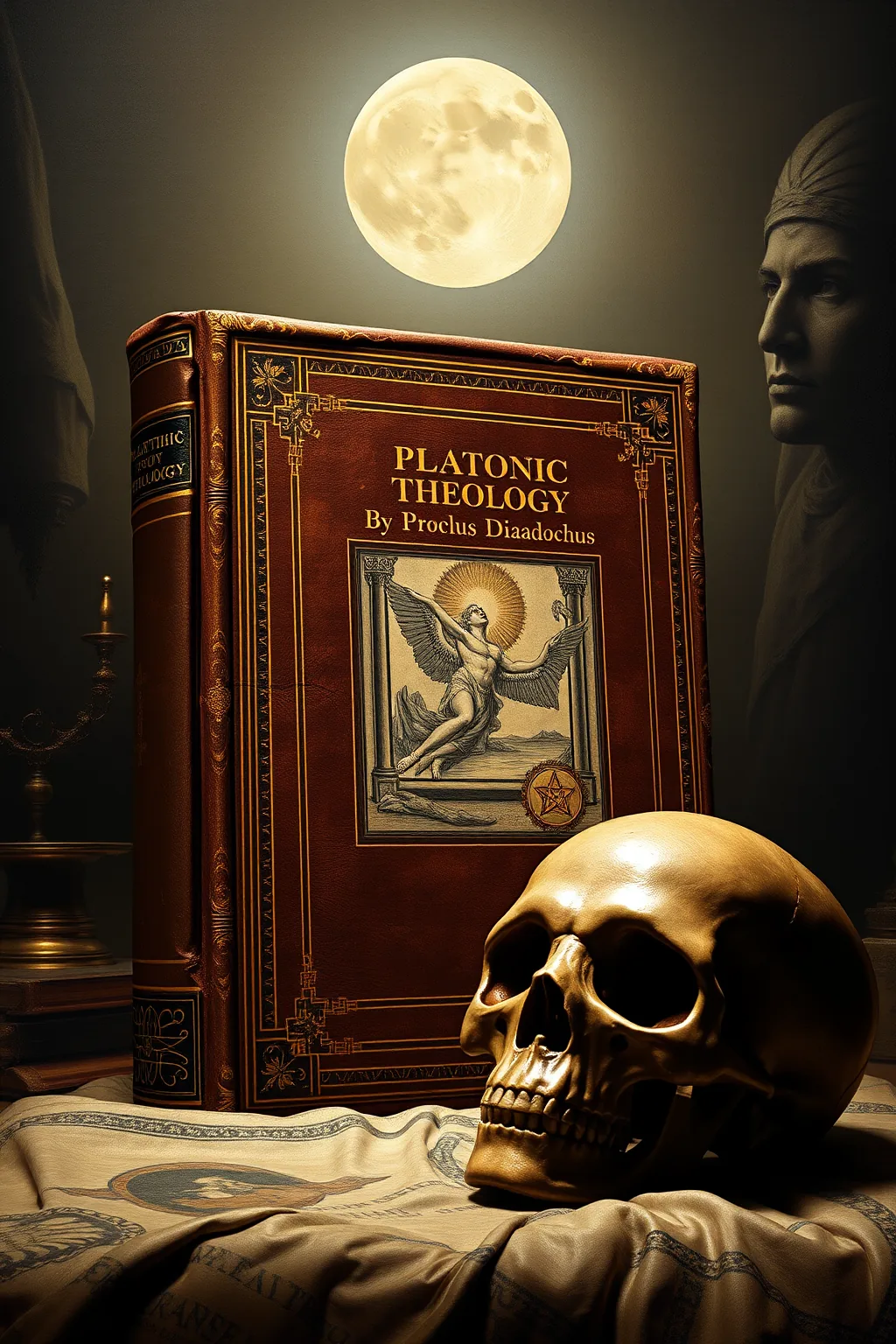
Platonic Theology
 75
75

Platonic Theology
Proclus Diadochus's *Platonic Theology*, particularly in its modern English translations, presents a formidable, yet rewarding, exploration of Neoplatonic metaphysics. The sheer systematic rigor with which Proclus constructs his hierarchy of being, tracing the procession from the ineffable One through Intellect and Soul to the material world, is astonishing. His detailed exposition of the henads, those divine unities that bridge the gap between absolute transcendence and manifested reality, offers a unique perspective on intermediary divine principles. A notable strength lies in the sheer scope of Proclus’s synthesis, which attempts to reconcile Plato, Aristotle, and Pythagoreanism within a unified metaphysical framework. However, the text’s density and reliance on extensive prior knowledge of Platonic dialogues can present a significant barrier to entry. A passage concerning the different levels of Soul, for instance, requires careful unpacking to grasp its implications for consciousness and cosmic order. Despite its challenges, *Platonic Theology* remains an indispensable text for understanding the philosophical architecture underpinning much of Western esotericism. It is a dense but essential pillar of late antique thought.
📝 Description
75
### What It Is Platonic Theology is a foundational text by Proclus Diadochus, a prominent Neoplatonist philosopher of the 5th century CE. This work systematically outlines the hierarchical structure of the divine realm as understood through the lens of Plato's philosophy, as interpreted by Proclus. It presents a complex cosmology that moves from the absolute unity of the One to the multiplicity of the sensible world, detailing the procession and reversion of all things. The text is not a theology in the Abrahamic sense, but rather a philosophical explication of divine principles and their emanations.
### Who It's For This book is essential for scholars of ancient philosophy, particularly those focusing on Neoplatonism and its influence on subsequent Western thought. It is also crucial for practitioners of esoteric traditions that draw heavily on Platonic and Neoplatonic metaphysics, such as certain branches of Hermeticism, Kabbalah, and Renaissance magic. Readers interested in the philosophical underpinnings of mystical cosmology and the systematic articulation of divine hierarchies will find significant value here.
### Historical Context Proclus Diadochus wrote his *Elements of Theology* (often translated as *Platonic Theology*) in Athens around the mid-5th century CE. This period marked the twilight of classical paganism and the rise of Christianity. Neoplatonism, as developed by Plotinus and further systematized by Porphyry and Iamblichus, represented a sophisticated philosophical counterpoint to emerging Christian doctrines. Proclus, the last great head of the Athenian Academy before its closure by Emperor Justinian in 529 CE, sought to synthesize the entirety of Plato's philosophy into a coherent metaphysical system. His work became a dominant force in late antique philosophy and profoundly influenced medieval Islamic, Jewish, and Christian thinkers, as well as Renaissance humanists.
### Key Concepts The text elaborates on several core Neoplatonic concepts. The 'One' is the ultimate, ineffable source of all reality, beyond being and thought. 'Intellect' (Nous) is the first emanation, containing the Platonic Forms. 'Soul' (Psyche) is the mediating principle between the intelligible and sensible realms. Proclus details the 'henads,' divine unities that mediate between the One and the Intellect. The process of 'emanation' describes how reality flows from the One, and 'reversion' explains how all things strive to return to their divine source. The structured unfolding of these principles forms the 'Theology' Proclus expounds.
💡 Why Read This Book?
• Gain a systematic understanding of Neoplatonic cosmology, particularly Proclus's intricate hierarchy of divine hypostases, which forms the bedrock of many esoteric traditions. • Grasp the concept of the 'henads' as divine unities mediating between the ultimate source and the created order, a key Neoplatonic doctrine influential in Hermeticism. • Appreciate the philosophical context of the 5th century CE, understanding how Proclus synthesized Platonic thought to counter prevailing philosophical and emerging religious currents.
⭐ Reader Reviews
Honest opinions from readers who have explored this book.
❓ Frequently Asked Questions
What is the primary philosophical system presented in Proclus's Platonic Theology?
The primary system is Neoplatonism, a philosophical school that developed from Plato's teachings. Proclus systematically elaborates on concepts like the One, Intellect (Nous), Soul (Psyche), and the process of emanation and reversion, as articulated in Athens around the 5th century CE.
When was Proclus Diadochus active, and what was the historical period like?
Proclus was active in Athens in the 5th century CE, a period of significant intellectual and religious transition. He was the head of the Neoplatonic Academy until its closure in 529 CE, during the rise of Christianity and the decline of classical paganism.
What is the concept of 'The One' in Proclus's philosophy?
In Proclus's *Platonic Theology*, 'The One' (or the Good) is the ultimate, ineffable, and transcendent source of all existence. It is beyond being, intellect, and all categories, from which all reality emanates in a hierarchical fashion.
How does Platonic Theology relate to Hermeticism or other esoteric traditions?
Proclus's work provides a detailed metaphysical framework that directly influenced later esoteric traditions. Concepts such as divine hierarchies, emanation, and the structure of the cosmos found in *Platonic Theology* are foundational to Hermeticism and other mystical systems.
Is this book a translation of an ancient Greek text?
Yes, *Platonic Theology* (originally titled *Stoicheiosis Theologike*) is a philosophical treatise written by Proclus Diadochus in Greek. Modern editions, like the one published in 1968, are translations into contemporary languages, making this ancient philosophy accessible.
What is the 'henads' concept discussed by Proclus?
The henads are divine unities, a crucial concept in Proclus's *Platonic Theology*. They act as intermediaries between the ultimate One and the lower levels of reality, such as Intellect and Soul, distributing divine unity.
🔮 Key Themes & Symbolism
The Divine Hierarchy
This work meticulously charts the Neoplatonic hierarchy of being, a cascade of divine realities emanating from the absolute 'One'. Proclus details the distinct hypostases: the One, Intellect (Nous), and Soul (Psyche), along with the mediating 'henads'. This structured ascent and descent of divinity is central to understanding Proclus's system and its subsequent influence on esoteric thought, providing a blueprint for the cosmos that informs magical and mystical practices seeking to align with higher principles.
Emanation and Reversion
Proclus's cosmology hinges on the principles of emanation and reversion. Emanation describes the necessary outflow of reality from the One, a process that creates multiplicity without diminishing the source. Reversion is the natural tendency of all created things to return to their divine origin. This dialectic explains the dynamic interplay of existence, from the highest divine realms to the material world, offering a framework for spiritual practice aimed at recollecting the soul's divine source.
The Nature of the One
Central to Proclus's philosophical theology is the concept of 'The One' (or the Good). This ultimate principle is utterly transcendent, ineffable, and beyond all predication, including being itself. It is the absolute source from which all existence proceeds. Understanding the One is paramount, as it serves as the ultimate goal of philosophical and spiritual inquiry, representing a state of pure unity and ultimate reality that all things strive to apprehend.
Platonic Forms and Intellect
Proclus interprets Plato's Forms not as static ideas but as dynamic principles residing within the divine Intellect (Nous). This Intellect is the first emanation from the One, containing the totality of intelligible realities. The Forms, in this context, are the perfect archetypes that structure existence and serve as the objects of divine thought. This concept is vital for understanding how the divine mind orders the universe and influences the sensible world.
💬 Memorable Quotes
“All things that exist proceed from the One.”
— This statement encapsulates the Neoplatonic doctrine of emanation. It asserts that the ultimate reality, the ineffable One, is the sole source from which all levels of existence, from the divine Intellect to the material world, originate.
“The henads are the fountains of the gods.”
— This highlights the role of the henads as divine unities. They are seen as the primary sources or powers that bestow divinity upon the various gods and cosmic principles within the Neoplatonic hierarchy.
“The Soul is a divine principle that mediates between the intelligible and sensible worlds.”
— This paraphrased concept emphasizes the Soul's intermediary function. It bridges the gap between the higher, purely intellectual realm of divine Forms and the lower, material realm of physical existence, playing a crucial role in the cosmic structure.
“The aim of philosophy is to achieve union with the divine.”
— This interpretation reflects the ultimate goal of Neoplatonic practice. Through intellectual and spiritual disciplines, the philosopher seeks to ascend and ultimately merge with the divine source, transcending the limitations of the material self.
“The intelligible world is the archetypal reality.”
— This conveys the Neoplatonic view that the realm of Intellect, containing the Platonic Forms, is the true, perfect model upon which the physical, sensible world is patterned and derived.
🌙 Esoteric Significance
Tradition
Platonic Theology is a cornerstone of the Neoplatonic tradition, which itself forms a crucial underpinning for much of Western esotericism. It provides a detailed philosophical architecture for understanding the divine, cosmology, and the soul's journey, directly influencing Hermeticism, Kabbalah, and various schools of magic and mysticism that seek to map and interact with higher realities.
Symbolism
Key symbols include 'The One,' representing absolute unity beyond conception; the 'henads,' divine unities that act as conduits of divine power; and the structured procession from the intelligible to the sensible world, symbolizing the unfolding of divine order. The hierarchy itself functions as a symbolic map of spiritual attainment and cosmic structure.
Modern Relevance
Contemporary esoteric practitioners, particularly those in Hermetic and ceremonial magic traditions, frequently draw upon Proclus's hierarchical model of reality. Thinkers exploring consciousness, metaphysics, and the integration of ancient philosophy with modern thought also find value in his systematic approach to the divine and the cosmos.
👥 Who Should Read This Book
• Students of ancient philosophy and Neoplatonism seeking a rigorous exposition of Platonic metaphysics. • Practitioners of Western esotericism, including Hermeticists and ceremonial magicians, who require a detailed understanding of divine hierarchies and cosmic principles. • Scholars of comparative religion and intellectual history interested in the philosophical landscape of late antiquity and its enduring impact.
📜 Historical Context
Proclus Diadochus composed his *Elements of Theology* in Athens circa 470-480 CE, a period marking the end of classical antiquity. Neoplatonism, particularly as systematized by Plotinus and Iamblichus, represented the most sophisticated philosophical response to the intellectual and spiritual currents of the time, including the burgeoning influence of Christianity. Proclus, as the final head of the Athenian Academy before its closure by Emperor Justinian in 529 CE, aimed to create a comprehensive metaphysical system that synthesized Plato, Aristotle, and Pythagorean thought. His work stood in contrast to nascent Christian theological doctrines, offering a highly structured, hierarchical model of reality. While often engaged with by pagan philosophers, its influence extended dramatically into the medieval period, shaping Islamic philosophy (e.g., Al-Farabi, Ibn Sina) and Jewish Kabbalah, and later re-emerging in the Renaissance through figures like Marsilio Ficino.
📔 Journal Prompts
The procession of all things from the One: map your personal understanding.
Reflect on the role of the henads in mediating divine influence.
Analyze the concept of 'reversion' in relation to spiritual goals.
Consider the Soul's function as a bridge between realms.
How does Proclus's Intellect (Nous) differ from a modern concept of consciousness?
🗂️ Glossary
The One
The ultimate, ineffable, transcendent source of all reality in Neoplatonism. It is beyond being, thought, and all categories, the absolute principle of unity.
Nous (Intellect)
The first emanation from the One, containing the Platonic Forms. It is the realm of pure thought and the archetypal world, the divine mind.
Psyche (Soul)
The mediating principle between the intelligible (Nous) and sensible (material) worlds. It encompasses both divine and individual souls, responsible for life and consciousness.
Henads
Divine unities that stand between the One and the Intellect. They are the sources of the gods and distribute divine power throughout the cosmos.
Emanation
The Neoplatonic concept describing the outflow or procession of reality from the ultimate source (the One) in a hierarchical manner.
Reversion
The Neoplatonic process by which all things strive to return to their divine origin, seeking unity and perfection.
Hypostasis
A fundamental reality or principle of being within the Neoplatonic system, such as the One, Intellect, or Soul.