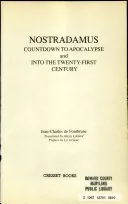
Nostradamus, nouvelles prophéties

 71
71

Nostradamus, nouvelles prophéties
Jean-Charles de Fontbrune's 1995 examination of Nostradamus's prophecies, "Nostradamus, nouvelles prophéties," provides a methodical approach to interpreting the enigmatic quatrains. Fontbrune’s strength lies in his detailed historical contextualization; he doesn't just present prophecies but attempts to link them to specific historical periods and events, particularly evident in his analysis of quatrain I.72 concerning the "King of Terror." However, the work sometimes feels overly deterministic, presenting interpretations as definitive rather than as possibilities. The reliance on Fontbrune's own interpretative framework, while consistent, can feel limiting to readers who might approach the text with different assumptions. The book offers a grounded perspective for those seeking to understand the historical resonance of Nostradamus's predictions, avoiding the more outlandish claims often associated with the seer's work. It serves as a solid reference for deciphering specific verses within a defined historical lens.
📝 Description
71
Jean-Charles de Fontbrune's 1995 work tackles Nostradamus's quatrains, seeking historical context over simple prediction.
Published in 1995, Jean-Charles de Fontbrune's "Nostradamus, nouvelles prophéties" offers a detailed examination of Michel Nostradamus's cryptic quatrains. Fontbrune moves beyond forecasting future events to interpret the prophecies through the lens of historical occurrences and their potential wider implications. He analyzes the allegorical language and the historical moments he connects to Nostradamus's visions, establishing a methodical way to approach these widely read verses.
This book is aimed at those seriously interested in esotericism, history, and prophetic traditions. Readers keen on Nostradamus's life and writings, especially those desiring a thorough yet understandable look at his "Centuries," will find it valuable. It suits individuals who prefer careful analysis and historical connections to sensationalist assertions. Those curious about how older prophecies relate to current times will also find it an engaging study.
Fontbrune's analysis of Nostradamus fits within a long tradition of interpreting prophetic texts, particularly those from Renaissance figures. This work engages with the historical scholarship surrounding Nostradamus, which often seeks to uncover underlying patterns and meanings within the verses. It positions itself against purely speculative or sensationalist approaches, favoring a structured method that connects the prophecies to documented historical periods and events. This approach aligns with a desire to find order and significance in seemingly obscure pronouncements, a common pursuit in esoteric studies.
💡 Why Read This Book?
• You will learn to identify specific historical markers Nostradamus purportedly used, as detailed in Fontbrune's analysis of quatrain I.72, gaining a structured method for historical prophecy interpretation. • You will understand the concept of "prophetic cycles" as explored by Fontbrune, allowing you to see patterns in historical events that may align with Nostradamus's foresight. • You will feel equipped to analyze the linguistic nuances and allegorical potential within Nostradamus's "Centuries," moving beyond simple prediction to a deeper appreciation of his method.
⭐ Reader Reviews
Honest opinions from readers who have explored this book.
❓ Frequently Asked Questions
When was Jean-Charles de Fontbrune's "Nostradamus, nouvelles prophéties" first published?
Jean-Charles de Fontbrune's "Nostradamus, nouvelles prophéties" was first published in 1995, offering a modern interpretation of the 16th-century prophecies.
What is the primary focus of Fontbrune's interpretation of Nostradamus?
Fontbrune's primary focus is on systematically deciphering Nostradamus's quatrains by linking them to specific historical events and identifying recurring prophetic cycles, rather than mere prediction.
Does the book offer concrete examples of Nostradamus's prophecies being fulfilled?
Yes, the book offers concrete examples by cross-referencing quatrains with historical occurrences, such as Fontbrune's interpretation of quatrain I.72.
Is "Nostradamus, nouvelles prophéties" suitable for beginners in prophecy studies?
While accessible, the book's detailed analytical approach makes it most suitable for those with a foundational interest or prior engagement with Nostradamus studies or esoteric history.
What historical period does Fontbrune primarily use to contextualize Nostradamus's prophecies?
Fontbrune uses a broad range of historical periods to contextualize the prophecies, but he often draws parallels with events from the 16th century onwards, including specific wars and political shifts.
Does the book discuss the linguistic aspects of Nostradamus's work?
Yes, the book touches upon the linguistic nuances and the original French used by Nostradamus, recognizing the importance of language in interpreting the prophecies.
🔮 Key Themes & Symbolism
Prophetic Cycles and Markers
Fontbrune posits that Nostradamus's prophecies are not isolated visions but part of recurring "prophetic cycles." The book identifies specific "markers"—historical events or periods—that serve as anchors for interpreting the quatrains. This approach suggests a patterned unfolding of history, allowing readers to analyze events through the lens of Nostradamus's alleged foresight. The work emphasizes understanding the sequence and interconnectedness of prophecies rather than viewing them in isolation, providing a framework for historical divination.
Historical Verification of Quatrains
A central theme is the attempt to historically verify specific quatrains. Fontbrune meticulously cross-references Nostradamus's verses with documented events, proposing correlations that suggest the prophecies possessed a degree of accuracy. For instance, the interpretation of quatrain I.72, often linked to a significant future conflict or ruler, is explored through historical parallels. This theme appeals to readers seeking rational explanations for prophetic phenomena, grounding the mystical in empirical historical analysis.
Linguistic and Allegorical Interpretation
The book acknowledges the crucial role of language in deciphering Nostradamus's work. Fontbrune delves into the nuances of the original French used by Nostradamus, suggesting that allegorical and symbolic meanings are embedded within the text. This theme highlights the complexity of the "Centuries," indicating that a literal reading is insufficient. Understanding the allegorical layers is presented as key to unlocking the deeper meanings and intended scope of the prophecies.
The 'Great Cataclysm' Concept
Fontbrune dedicates significant attention to Nostradamus's references to a "Great Cataclysm." This concept, interpreted through astrological and historical lenses, explores potential periods of immense global upheaval. The book examines how Nostradamus's verses might allude to such transformative events, offering a framework for understanding apocalyptic prophecies not just as doomsday predictions but as indicators of profound societal or environmental shifts.
💬 Memorable Quotes
“Nostradamus's quatrains are not isolated predictions but part of a larger, cyclical flow of history.”
— This interpretation highlights Fontbrune's core thesis: that the prophecies should be understood as interconnected parts of recurring historical patterns, suggesting a divinely ordained or cosmically patterned destiny for humanity.
“The identification of historical markers is crucial for unlocking the true meaning of the prophecies.”
— This emphasizes Fontbrune's methodological approach, which relies on finding concrete historical events that correspond to specific lines or quatrains, thereby validating the prophetic claims.
“Linguistic ambiguity in the original French text allows for multiple layers of interpretation.”
— This points to the author's acknowledgment of the challenges in translating and interpreting Nostradamus, suggesting that a deep understanding requires careful attention to the original language and its symbolic potential.
“The concept of a 'Great Cataclysm' suggests periods of profound global transformation, not necessarily annihilation.”
— This interpretation frames apocalyptic prophecies in a less literal, more evolutionary light, suggesting that major historical shifts are indicated, leading to significant changes in civilization or the planet.
“Cross-referencing quatrains with documented historical events provides a more grounded approach to prophecy.”
— This paraphrased concept underscores Fontbrune's effort to move beyond pure speculation, grounding his interpretations in factual historical occurrences to lend credibility to his analysis of Nostradamus.
🌙 Esoteric Significance
Tradition
Fontbrune's work operates within the Western Esoteric tradition, specifically the lineage of prophetic interpretation that has followed Michel Nostradamus since the 16th century. It aligns with Hermetic principles of correspondence and macrocosm/microcosm, suggesting that historical events reflect underlying cosmic patterns. While not strictly Kabbalistic or Gnostic, it draws upon a general Neoplatonic worldview where history is seen as a unfolding of divine or cosmic will, accessible through divinatory arts like astrology and cryptic verse.
Symbolism
Key symbols explored include celestial events (eclipses, comets) often linked to historical portents, and allegorical figures representing nations or leaders. The "Great Cataclysm" itself functions as a powerful symbol of transformative upheaval, representing not just destruction but radical change. Fontbrune also emphasizes the symbolic weight of specific dates or numerical sequences within the quatrains, treating them as coded messages pointing to crucial junctures in human history.
Modern Relevance
Fontbrune's approach to historical prophecy continues to influence contemporary enthusiasts of Nostradamus. His methodology, which emphasizes systematic cross-referencing with historical events and the identification of cyclical patterns, is echoed in many online forums and popular books dedicated to the seer. Thinkers and writers focusing on predictive history or the interpretation of ancient texts for future guidance often implicitly or explicitly draw upon the analytical frameworks established by Fontbrune and similar interpreters.
👥 Who Should Read This Book
• Students of Nostradamus seeking a structured, historically-oriented interpretation of the "Centuries," moving beyond sensationalism to analytical depth. • Researchers of Western Esotericism interested in the evolution of prophetic traditions and the methods used to decode visionary texts since the Renaissance. • Individuals fascinated by the intersection of history and prophecy, who want to explore how past events are interpreted as fulfilling ancient predictions.
📜 Historical Context
Published in 1995, Jean-Charles de Fontbrune's "Nostradamus, nouvelles prophéties" arrived during a late 20th-century resurgence of interest in esoteric subjects and prophetic literature, fueled by global anxieties and the approaching millennium. This period saw numerous popularizations of Nostradamus, often bordering on sensationalism. Fontbrune's work distinguished itself by attempting a more systematic and historically grounded interpretation, contrasting with purely speculative or New Age approaches. His method of identifying historical "markers" and "cycles" within the quatrains sought to provide a rational framework for understanding the prophecies. The book engaged with a long tradition of Nostradamus scholarship dating back to the 16th century, notably to scholars like Vintras and Le Pelletier, who also sought to decode the seer's cryptic verses. While not a mainstream academic text, Fontbrune's work contributed to the ongoing popular discourse surrounding Nostradamus, offering a structured perspective to an eager public.
📔 Journal Prompts
Nostradamus's use of "prophetic cycles": How might recurring historical patterns influence contemporary events?
The "Great Cataclysm": Reflect on historical periods of massive societal change and their potential symbolic meaning.
Fontbrune's method of "historical markers": Identify a significant historical event and consider if it aligns with any known prophetic themes.
Linguistic interpretation: Analyze a short piece of text from a historical document, considering how word choice affects its perceived meaning.
The role of ambiguity: How does the intentional or unintentional ambiguity in communication shape our understanding of messages over time?
🗂️ Glossary
Quatrain
A stanza or verse consisting of four lines, the form in which Nostradamus wrote his prophecies, often rhyming or with a specific meter.
Centuries
The title given to Nostradamus's main collection of prophecies, published in installments, organized into supposed blocks of one hundred quatrains.
Historical Marker
A specific, identifiable event, person, or period in history that Fontbrune uses as a key to interpreting a particular quatrain or set of quatrains.
Prophetic Cycle
The concept, central to Fontbrune's work, that Nostradamus's prophecies describe recurring patterns or sequences of events throughout history.
Great Cataclysm
A term used to describe periods of immense, world-altering upheaval or transformation, as alluded to in certain Nostradamus prophecies.
Allegorical Interpretation
Reading prophecies not literally, but as symbolic representations of deeper meanings, spiritual truths, or hidden historical processes.
Divination
The practice of seeking knowledge of the future or the unknown by supernatural means, such as interpreting prophecies, astrology, or other symbolic systems.