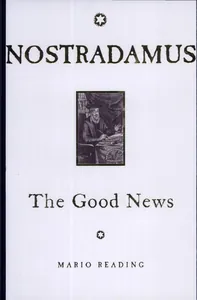
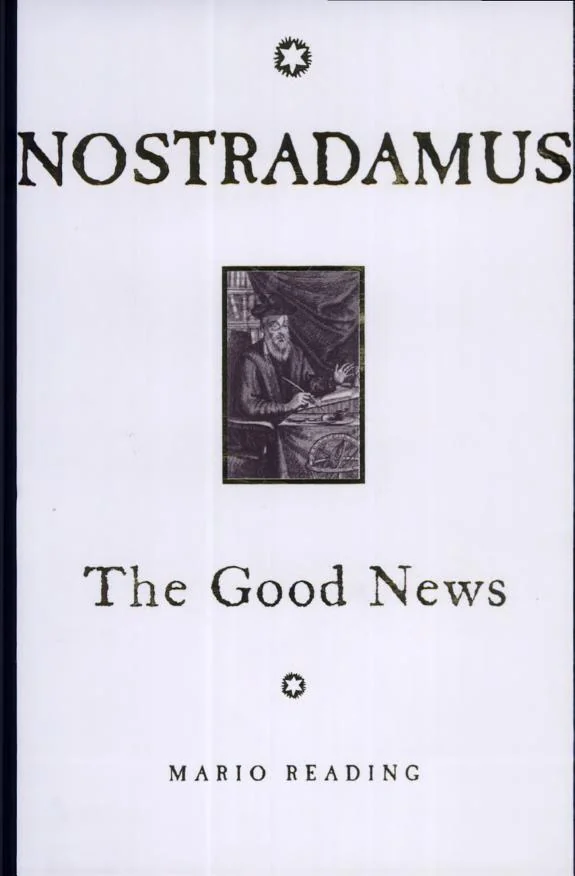
Nostradamus
 75
75

Nostradamus
Mario Reading's "Nostradamus" offers a grounded examination of the famous seer, moving beyond mere sensationalism to engage with the historical and astrological underpinnings of his work. Reading excels at placing Nostredame within his 16th-century context, detailing the intellectual currents that shaped his worldview and the reception of his prophecies. A particular strength is the meticulous dissection of the quatrains, highlighting their inherent ambiguity and the often-forced interpretations applied to them over time. However, the book occasionally leans towards a dryness that might deter casual readers seeking more dramatic accounts. A memorable passage details the supposed astrological significance of the year 1558, showing how Nostradamus derived predictive power from celestial alignments. While the scholarly approach is commendable, it sometimes overshadows the sheer mystery that continues to surround the prophet. Ultimately, Reading provides a valuable, critical perspective on a figure frequently shrouded in myth.
📝 Description
75
Mario Reading's 2009 book analyzes Michel de Nostredame, the 16th-century astrologer, and his cryptic prophecies.
Mario Reading's "Nostradamus" is an analytical examination of the life and writings of Michel de Nostredame, the 16th-century astrologer known for his enigmatic quatrains. The book moves beyond a simple biography to investigate the historical circumstances surrounding Nostradamus's work, his methods of astrological calculation and prediction, and the lasting effect of his verses on Western esotericism and popular consciousness.
Reading seeks to clarify the figure behind the enduring legend, offering an account of Nostradamus's astrological and prophetic activities that is grounded in scholarship yet remains accessible. The work is designed for readers interested in the history of prophecy, Renaissance occultism, and Nostradamus himself. It will appeal to those who seek a historically informed perspective rather than sensational interpretations, offering substantial material for scholars of occult history, students of divination, and those fascinated by historical enigmas. It also addresses anyone curious about how one individual's writings have shaped centuries of speculation and interpretation.
This book situates Nostradamus within the intellectual currents of 16th-century Europe, a period marked by significant religious upheaval and a concurrent interest in occult sciences like alchemy and astrology. Reading examines how Nostradamus's blend of medical knowledge, astrological calculation, and poetic foresight fit into this milieu. The reception of his prognostications, which oscillated between awe and suspicion, and their subsequent adaptation by various groups are also considered.
💡 Why Read This Book?
• Gain a scholarly understanding of Nostradamus's "Centuries," learning how their structure and language facilitate diverse interpretations across history, a depth not found in popular accounts. • Discover the specific astrological and medical knowledge prevalent in 16th-century France that informed Nostradamus's prophetic methods, providing concrete historical context beyond generalized claims. • Analyze the critical reception and historical debates surrounding Nostradamus's predictions, understanding how figures like Voltaire engaged with his work, offering a nuanced view of his legacy.
⭐ Reader Reviews
Honest opinions from readers who have explored this book.
❓ Frequently Asked Questions
When was Nostradamus's "Centuries" first published?
The first ten "Centuries" of Nostradamus's prophecies were published in 1555, with subsequent additions appearing later in his lifetime and posthumously.
What was Nostradamus's profession before becoming a prophet?
Michel de Nostredame was trained as a physician and apothecary, practicing medicine in various towns in southern France during the mid-16th century.
Did Nostradamus claim to predict future events?
Yes, Nostradamus claimed his prophecies were based on astrological calculations and divine inspiration, presenting them in cryptic quatrains within his "Centuries."
What is a "quatrain" in the context of Nostradamus?
A quatrain is a stanza of four lines. Nostradamus's prophecies are famously written in this poetic form, with each quatrain allegedly containing a prediction.
How does Mario Reading's book approach Nostradamus's predictions?
Reading's work analyzes the historical context, linguistic ambiguity, and various interpretations of Nostradamus's quatrains, offering a critical rather than purely credulous perspective.
What was the historical period in which Nostradamus lived?
Nostradamus lived during the Renaissance, a period of significant intellectual, artistic, and religious change in Europe, specifically from 1503 to 1566.
🔮 Key Themes & Symbolism
The Ambiguity of Quatrains
The core of Nostradamus's prophetic output lies in his "Centuries," collections of four-line verses, or quatrains. Reading's work emphasizes how the deliberate obscurity, archaic language, and allegorical nature of these quatrains allow for a vast range of retrospective interpretations. This section explores how historical events are often retrofitted to match the verses, rather than the verses being clear predictions. It examines the linguistic devices Nostradamus employed, such as anagrams and mixed languages, which contribute to their elusive meaning and enduring appeal to those seeking hidden knowledge.
Astrology as Foundation
This work details Nostradamus's background as an astrologer and physician, highlighting how celestial events and astrological charts formed the bedrock of his predictive system. Reading analyzes the specific astronomical conjunctions and planetary alignments that Nostradamus referenced, attempting to ground the prophecies in the scientific and divinatory practices of the 16th century. The exploration focuses on how the perceived order and influence of the cosmos provided a framework for understanding and forecasting earthly occurrences, a common esoteric pursuit of the era.
Historical Context and Reception
Reading situates Nostradamus and his prophecies within the volatile socio-political and religious climate of Renaissance Europe. This theme addresses the reception of his work by contemporaries and subsequent generations, examining how royal patronage, accusations of heresy, and later popular fascination shaped his legacy. The book investigates instances where Nostradamus's predictions were cited during times of crisis or political upheaval, illustrating the potent cultural impact of his enigmatic verses and the complex relationship between prophecy and historical power.
The Seer as Physician
An often-overlooked aspect explored is Nostradamus's identity as a physician. The book considers how his medical training and experiences, particularly his work during plague outbreaks, might have influenced his worldview and his approach to understanding human affairs and mortality. This perspective suggests that his prophecies were not solely detached astrological pronouncements but were perhaps informed by a grounded, albeit esoteric, understanding of life, death, and the forces that govern them, connecting the physical and metaphysical realms.
💬 Memorable Quotes
“The quatrains are so artfully vague that they can be made to fit almost any event.”
— This interpretation highlights the core critical argument regarding Nostradamus's prophecies: their inherent ambiguity is key to their longevity. It suggests that the power of the "Centuries" lies not in precise foresight but in their adaptability to narrative.
“Nostradamus was a product of his time, blending medical science with astrological lore.”
— This paraphrased concept emphasizes the historical positioning of Nostradamus. It points to the integration of empirical knowledge (medicine) with divinatory arts (astrology) as a defining characteristic of his intellectual milieu and practice.
“The interpretation of the quatrains often reveals more about the interpreter than the prophet.”
— This observation underscores the subjective nature of prophecy interpretation. It suggests that the act of deciphering Nostradamus's verses is a projection of the reader's own biases, historical context, and desires onto the text.
“Celestial alignments formed the structural basis for many of Nostradamus's predictions.”
— This highlights the importance of astrology in Nostradamus's method. It frames his prophecies as being rooted in the systematic observation and calculation of astronomical phenomena prevalent in 16th-century occult studies.
“Royal courts often sought out prophets like Nostradamus for guidance and reassurance.”
— This points to the socio-political function of prophecy in the Renaissance. It illustrates how figures like Nostradamus could hold influence by providing a perceived connection to divine or cosmic insights for those in power.
🌙 Esoteric Significance
Tradition
Nostradamus's work aligns with the Western Hermetic tradition, which posits a universe governed by correspondences between the celestial and terrestrial realms. His use of astrology, a core Hermetic art, to predict future events places him within a lineage stretching back to Hellenistic Egypt and medieval Islamic scholarship. While not strictly Kabbalistic or Gnostic, his method shares with these traditions a belief in hidden meanings within texts and a desire to understand divine will through symbolic language and cosmic patterns.
Symbolism
Key symbols in Nostradamus's work include celestial bodies (planets, stars) representing cosmic forces and influences, and animals (e.g., the lion, eagle) often used as allegorical representations of nations, rulers, or significant figures. The "Centuries" themselves, structured numerically, can be seen as symbolic of divine order or a divine unfolding of time. His references to specific geographical locations and historical events, though often veiled, also function symbolically within his predictive framework.
Modern Relevance
Contemporary esoteric practitioners and historians of prophecy continue to engage with Nostradamus's "Centuries." While academic study focuses on historical context and linguistic analysis, various New Age and occult circles still interpret his quatrains for guidance on current events, global crises, and future possibilities. His enduring fame has also influenced modern forms of predictive arts and popular culture's fascination with apocalyptic and prophetic figures, demonstrating a persistent human interest in foretelling the unknown.
👥 Who Should Read This Book
• Students of Renaissance history seeking to understand the intersection of science, religion, and esotericism in 16th-century Europe. • Aspiring astrologers and practitioners of divination interested in historical methods and the evolution of predictive arts. • Critical thinkers and researchers of occult phenomena who wish to analyze the enduring legacy and interpretative challenges posed by Nostradamus's "Centuries."
📜 Historical Context
Mario Reading's "Nostradamus" meticulously reconstructs the intellectual milieu of 16th-century France, a period rife with religious upheaval and a fervent interest in the occult. Nostradamus, a physician by training, operated within a landscape where astrology, alchemy, and natural philosophy were not distinct disciplines but often intertwined pursuits. His "Centuries," first published in 1555, emerged during the reign of Henry II, a time when royal courts frequently consulted astrologers for political and personal guidance. The work contrasts Nostradamus's approach with contemporary divinatory practices and considers how his prophecies were received—sometimes with favor by the monarchy, other times with suspicion by religious authorities. The era was also marked by the intellectual currents of humanism, which encouraged a re-examination of classical texts and a burgeoning scientific inquiry, yet paradoxically coexisted with deep-seated belief in supernatural phenomena.
📔 Journal Prompts
The astrological charts referenced in the "Centuries": how might they have informed Nostradamus's worldview?
Ambiguity in quatrains: consider how a single verse could be applied to multiple historical events.
Nostradamus's dual role as physician and prophet: explore the connection between healing and foresight.
The reception of prophecies: reflect on why people in the 16th century, and today, seek pronouncements about the future.
Compare the symbolism of celestial bodies in Nostradamus's work with their use in other esoteric traditions.
🗂️ Glossary
Quatrain
A stanza of four lines, typically rhyming. Nostradamus famously composed his prophecies in this poetic form, with each quatrain often containing a prediction.
Centuries
The title given to the collected prophecies of Nostradamus, organized into books of one hundred quatrains each, though some contain fewer. The first collection appeared in 1555.
Astrology
The study of the movements and relative positions of celestial bodies interpreted as having an influence on human affairs and the natural world. Nostradamus was trained as an astrologer.
Hermeticism
A philosophical and religious tradition based on writings attributed to Hermes Trismegistus, emphasizing divine knowledge, cosmic correspondences, and the interconnectedness of all things.
Renaissance
The period in European history, roughly from the 14th to the 17th century, marked by a revival of classical art, architecture, literature, and learning.
Divination
The practice of seeking knowledge of the future or the unknown by supernatural means. Nostradamus's prophecies are a form of divination.
Allegory
The expression by means of symbols of truths about the human condition. Nostradamus's quatrains are often interpreted allegorically.