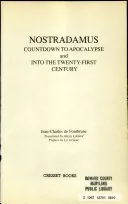
Nostradamus de 1999 à 2025

 82
82

Nostradamus de 1999 à 2025
Jean-Charles De Fontbrune's 'Nostradamus de 1999 à 2025' attempts a Herculean task: to impose a precise timeline onto the notoriously cryptic verses of Michel de Nostredame. The strength of the work lies in its diligent, almost academic, approach to textual analysis. De Fontbrune doesn't shy away from deep dives into specific quatrains, meticulously cross-referencing them against historical occurrences and projecting them forward. However, the book's limitation is its inherent subjectivity; the very nature of prophecy allows for infinite interpretations, and De Fontbrune's framework, while internally consistent, relies heavily on his unique hermeneutic. A particular passage concerning the 'Great King of Terror' offers a compelling, albeit speculative, link to modern conflicts, showcasing the author's interpretive reach. Ultimately, this is a significant scholarly endeavor for dedicated followers of Nostradamus, though it demands a critical reader.
📝 Description
82
Jean-Charles De Fontbrune's 2001 book analyzes Nostradamus's prophecies from 1999 to 2025.
Nostradamus de 1999 à 2025 by Jean-Charles De Fontbrune offers a detailed interpretation of Nostradamus's quatrains, specifically examining predictions set between 1999 and 2025. De Fontbrune works to connect these prophecies to historical events and forecast future occurrences within this defined period. He undertakes a close analysis of Nostradamus's original text, aiming to establish a clear chronological and thematic order for the predicted events. This book is structured as a specific argument for one reading of the prophecies, rather than a simple collection of interpretations.
This work is suitable for dedicated students of esotericism, especially those already interested in prophetic traditions and Nostradamus's writings. Readers will benefit from a solid grasp of historical contexts and an openness to in-depth textual examination. It will appeal to individuals who wish to link ancient prophecies with current world events and explore methods of prediction. Those new to occult philosophy or seeking a brief overview may find it less accessible.
Published in 2001, De Fontbrune's work engages with a centuries-old tradition of interpreting Nostradamus's prophecies. This tradition includes earlier commentators such as Elbridge Colby and Edgar Leoni. The book emerged during a time of heightened interest in millennial prophecies, coinciding with the start of the 21st century. De Fontbrune's analysis seeks to update and refine the predictive timeline of Nostradamus for contemporary times, particularly in light of significant events that occurred shortly after its publication.
💡 Why Read This Book?
• Gain a structured interpretive framework for Nostradamus's prophecies concerning the period 1999-2025, moving beyond anecdotal interpretations to a chronological analysis presented by De Fontbrune. • Understand the methodology De Fontbrune employs to link specific quatrains, such as those referencing the 'Great King of Terror,' to historical events and potential future developments. • Explore the tradition of Nostradamus exegesis and how Jean-Charles De Fontbrune's 2001 publication sought to update and refine these interpretations for the early 21st century.
⭐ Reader Reviews
Honest opinions from readers who have explored this book.
❓ Frequently Asked Questions
What is the primary focus of Nostradamus de 1999 à 2025?
The book focuses on interpreting Nostradamus's quatrains to predict events specifically between the years 1999 and 2025, offering a detailed chronological analysis of these prophecies.
Who is Jean-Charles De Fontbrune and what is his background?
Jean-Charles De Fontbrune is an author known for his extensive work on Nostradamus. His background is in detailed textual analysis and historical research applied to prophetic literature, aiming to demystify the quatrains.
Does the book predict specific major world events?
Yes, De Fontbrune's work attempts to link specific quatrains to potential major world events within the 1999-2025 timeframe, including geopolitical shifts and conflicts.
When was Nostradamus de 1999 à 2025 first published?
The book was first published in 2001, shortly after the beginning of the period it analyzes, making its interpretations relevant to contemporary events at the time of its release.
What is the core interpretive method used in the book?
The core method involves a chronological and thematic mapping of Nostradamus's quatrains, cross-referencing them with historical patterns and projecting future occurrences based on specific symbolic and linguistic keys.
Is this book suitable for beginners in Nostradamus studies?
While accessible, the book's depth of analysis and reliance on prior knowledge of Nostradamus's work might be more suited to those with some existing familiarity with prophetic interpretation.
🔮 Key Themes & Symbolism
Chronological Prophetic Mapping
De Fontbrune's central thesis is the systematic arrangement of Nostradamus's quatrains into a linear predictive sequence. He argues that the prophecies are not isolated visions but form a coherent narrative arc, particularly focusing on the era spanning 1999 to 2025. This involves identifying specific markers within the verses—names, dates, geographical locations, and symbolic events—and aligning them with historical occurrences or projected future scenarios. The work presents a detailed timeline, suggesting that Nostradamus foresaw key developments of the early 21st century with remarkable precision.
The 'Great King of Terror'
A significant concept explored in the book is Nostradamus's prediction of a 'Grand Roy de Terreur' or 'Great King of Terror.' De Fontbrune dedicates considerable analysis to interpreting this figure and the era associated with him. He attempts to identify this figure not just as an individual but as a symbol of a period marked by widespread conflict, upheaval, and a significant global threat. The interpretation often links this prophecy to major geopolitical crises and the rise of influential, potentially destructive, leaders within the analyzed timeframe.
Geopolitical Cycles and Empires
The work delves into Nostradamus's insights on the rise and fall of empires and the cyclical nature of geopolitical power. De Fontbrune interprets quatrains that seem to describe shifts in global dominance, the emergence of new powers, and the decline of existing ones. He analyzes references to specific regions and nations, suggesting that Nostradamus possessed an awareness of the long-term dynamics of international relations. This theme connects the prophecies to broader historical patterns of conquest, political transformation, and the establishment of new world orders.
Symbolic Language and Hermeneutics
Central to De Fontbrune's approach is the decoding of Nostradamus's highly symbolic and often obscure language. The book highlights the importance of understanding the historical and cultural context in which Nostradamus wrote, as well as the esoteric traditions he may have drawn upon. De Fontbrune proposes specific keys for interpreting recurring symbols, such as celestial bodies, natural disasters, and allegorical figures, arguing that these are not mere poetic devices but coded indicators of specific events and epochs.
💬 Memorable Quotes
“The quatrains are a precise calendar, not a random collection of visions.”
— This statement encapsulates De Fontbrune's core argument: that Nostradamus's prophecies possess a deliberate chronological structure. It suggests that the verses should be read as a sequential unfolding of events, allowing for the precise dating and prediction of future occurrences.
“The 'Great King of Terror' heralds an era of unprecedented global conflict.”
— This paraphrase points to De Fontbrune's interpretation of a specific prophecy concerning a major threat. It suggests that Nostradamus foresaw a period of intense global turmoil, characterized by a powerful, destructive force or leader.
“Specific celestial alignments often precede significant geopolitical shifts.”
— This concept highlights De Fontbrune's emphasis on astrology within Nostradamus's work. It proposes that astronomical events are not coincidental but serve as harbingers or indicators of major changes in world power and political landscapes.
“Understanding the symbolism of the eagle and the lion reveals dynastic struggles.”
— This interpretation focuses on the use of animal symbolism in Nostradamus's prophecies. De Fontbrune suggests that these figures represent specific nations, ruling houses, or political factions engaged in significant power struggles.
“The period from 1999 to 2025 is a critical nexus foretold in the prophecies.”
— This paraphrase directly references the book's temporal focus. It frames the 26-year period as a pivotal era where multiple significant prophecies converge and are expected to manifest.
🌙 Esoteric Significance
Tradition
This work firmly sits within the tradition of Western esoteric prophecy, specifically the lineage of Nostradamus exegesis. While Nostradamus himself drew from various sources including Renaissance hermeticism, kabbalistic concepts, and astrological lore, De Fontbrune's contribution is primarily analytical, seeking to systematize and update these ancient predictions for the modern era. It departs from purely mystical or philosophical interpretations by focusing on a literal, chronological mapping of events, a characteristic often found in more literalist schools of prophetic interpretation.
Symbolism
Key symbols De Fontbrune interprets include the 'Great King of Terror,' often seen as representing a period of immense global strife and a powerful, potentially tyrannical, leader or force. Another recurring motif is the 'three brothers' or 'three leaders,' which he analyzes in the context of political alliances and conflicts. Celestial phenomena, such as comets or specific planetary conjunctions, are also treated as significant indicators, not merely as astrological curiosities but as direct harbingers of geopolitical events foretold by Nostradamus.
Modern Relevance
De Fontbrune's work remains relevant for contemporary students of prophecy and esotericism who are interested in predictive systems. Its detailed chronological approach and attempt to link specific quatrains to 21st-century events, such as geopolitical conflicts and societal shifts, continue to inform discussions within communities focused on Nostradamus. Thinkers and practitioners who explore patterns in history and seek to understand potential future trajectories often reference or engage with the interpretive framework established by De Fontbrune and similar analysts.
👥 Who Should Read This Book
• Students of Nostradamus seeking a detailed chronological interpretation of prophecies for the 1999-2025 period, moving beyond generalized readings. • Esoteric researchers interested in the history of prophetic interpretation and how authors like De Fontbrune updated these traditions for the early 21st century. • Individuals fascinated by the intersection of history, astrology, and prophecy, looking for a structured analysis of potential future global events as foreseen by Nostradamus.
📜 Historical Context
Jean-Charles De Fontbrune's 'Nostradamus de 1999 à 2025', published in 2001, emerged in a milieu ripe for apocalyptic and prophetic speculation, particularly with the dawn of the new millennium. This period saw a resurgence of interest in Nostradamus, building on the work of earlier interpreters like Erika Cheetham, whose own analyses had gained considerable traction. De Fontbrune’s text engages with a long tradition of exegesis that stretches back to the 16th century, attempting to provide a contemporary update to the prophetic timeline. The intellectual currents of the time included not only esoteric circles but also broader cultural anxieties about globalization, technological advancement, and potential conflicts. The book's reception was part of a larger phenomenon of popular interest in divination and end-times scenarios, often amplified by media coverage of perceived fulfillments of Nostradamus's predictions in the wake of events like the September 11th attacks in 2001.
📔 Journal Prompts
The 'Great King of Terror' and its potential manifestations in the 21st century.
Mapping specific quatrains to events between 1999 and 2025.
Nostradamus's use of celestial symbolism in predicting geopolitical shifts.
The concept of cyclical empires as presented by De Fontbrune.
Personal reflection on the predictive power of esoteric texts.
🗂️ Glossary
Quatrain
A stanza of four lines, typically with a rhyming scheme. Nostradamus's prophecies are primarily composed of quatrains, which are the primary units of analysis in De Fontbrune's work.
Exegesis
The critical explanation or interpretation of a text. In the context of Nostradamus, exegesis refers to the scholarly and often esoteric attempts to decode the meaning of his prophecies.
Hermeneutics
The theory and methodology of interpretation, especially the interpretation of biblical texts, wisdom literature, or, in this case, prophetic writings. De Fontbrune applies specific hermeneutic principles to Nostradamus.
Grand Roy de Terreur
French for 'Great King of Terror.' This refers to a specific prophecy by Nostradamus that De Fontbrune interprets as foretelling a period of intense global conflict and a significant, potentially tyrannical, leader.
Geopolitical
Relating to politics, especially international relations, as influenced by geographical factors. De Fontbrune analyzes Nostradamus's prophecies through a geopolitical lens, looking for predictions of power shifts and conflicts.
Millennium
A period of one thousand years. The book's focus on the period starting in 1999 aligns with the cultural and spiritual significance attached to the turn of the millennium.
Celestial Alignment
The configuration of planets and stars in the sky. De Fontbrune interprets specific celestial alignments mentioned or alluded to by Nostradamus as indicators of significant world events.